Roger Gracie: Widely Considered the Greatest Gi Competitor in History
A factual profile of Roger Gracie, the 10-time IBJJF World Champion widely regarded as the greatest gi competitor in BJJ history: his record, ADCC titles, lineage, and MMA career.
Training, technique, and the culture of Brazilian Jiu-Jitsu
392 more articles

A factual profile of Roger Gracie, the 10-time IBJJF World Champion widely regarded as the greatest gi competitor in BJJ history: his record, ADCC titles, lineage, and MMA career.

A factual profile of Gordon Ryan, the American submission grappler widely called the greatest no-gi competitor of all time: his record, ADCC titles, team, and legacy.

Injured but don't want to quit BJJ? Here's how to keep training safely around common injuries, when to rest, how to communicate with partners, and how to come back smart.

Should you compete in BJJ? An honest look at the pros and cons of competing in jiu-jitsu, what you gain, what holds people back, and how to decide if it's for you.

Choose classes your real week can support, make a backup plan, and return after a missed session without creating training debt.

Should you play top or bottom in BJJ? An honest look at the pros and cons of top pressure vs guard play, and how to decide which game fits you as a beginner.

Guard passing is one of the hardest skills in BJJ. Here are the principles that make passing work — pressure, posture, grips, and patience — plus beginner mistakes to fix.

Which supplements actually help your jiu-jitsu? An honest look at the supplements worth considering for BJJ — protein, creatine, electrolytes — and the ones to skip.

Recovery is what lets you train BJJ hard, often, and injury-free. A practical guide to recovering after jiu-jitsu: sleep, nutrition, hydration, mobility, and soreness.

Mobility makes your jiu-jitsu better and keeps you injury-free. A practical guide to stretching and mobility for BJJ: what to focus on, when to do it, and key areas.

Does lifting help your jiu-jitsu? A practical guide to strength training for BJJ: what to train, how to avoid overtraining, the best exercises, and recovery.

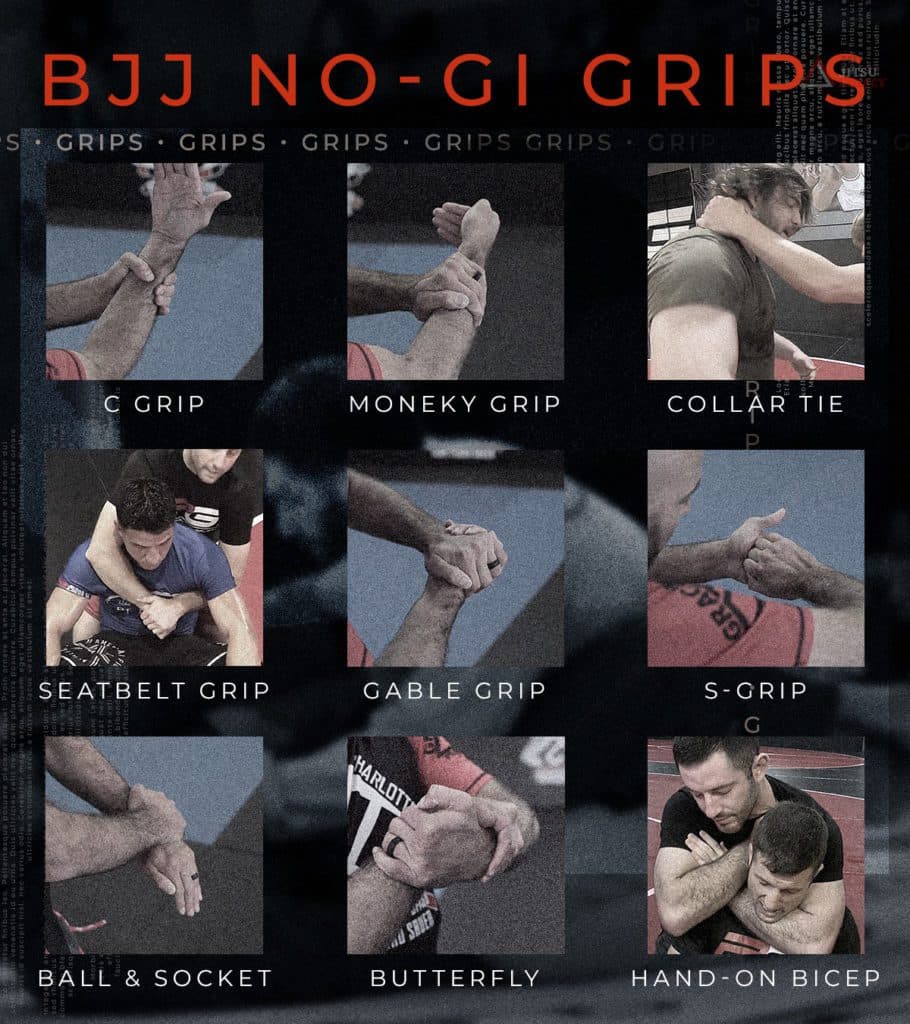
Grip fighting decides most BJJ exchanges. Here's a beginner's guide to the essential gi and no-gi grips, how to break grips, and why winning the grips wins the position.

'Rolling' is live sparring in Brazilian jiu-jitsu. Here's what rolling means, how it works, rolling etiquette, how hard to go, and how to survive your first rolls.

More BJJ students quit at blue belt than any other rank. Here's why the 'blue belt blues' happen, the real reasons people leave, and how to push through the plateau.

Skin infections like ringworm and staph spread on dirty mats and gear. Here's how to prevent them in BJJ: showering, washing gear, covering cuts, and spotting issues early.

The highest-percentage beginner escapes from mount and side control in BJJ — the bridge-and-roll, elbow-escape, and framing — plus the principles that make them work.

A welcoming beginner's guide to BJJ for women: why it's great for women, what to expect, how to handle a male-dominated gym, what to wear, and finding the right gym.

BJJ, wrestling, and judo are all grappling arts, but they're very different. Here's how each one works, their strengths, and which is best for you to start with.

How to choose your first BJJ gi: how gi sizing (A1, A2, A3) works, gi weaves explained, what to spend, IBJJF-legal colors, and the mistakes beginners make.

Is Brazilian jiu-jitsu effective for real self-defense? An honest look at BJJ's strengths, its limitations, and how to train it so it actually transfers to the street.

A beginner's map of the main BJJ positions — guard, mount, side control, back control, half guard and turtle — what each one is, who's winning, and why position matters.

The highest-percentage BJJ submissions for beginners — armbar, rear naked choke, triangle, kimura, guillotine and more — what they are and why to learn them first.

How to wash your BJJ gi so it stays clean, odor-free, and the right size: water temperature, drying, fighting shrinkage, killing bacteria, and the mistakes to avoid.

The white belt phase is the hardest in BJJ. Here are 11 honest survival tips — from tapping early to surviving your first rolls — to help you get past it and stay.