
Top vs Bottom Position in BJJ: Which Should You Play?
Quick answer: Neither top nor bottom is "better" — they're two halves of BJJ. Top players pass guard and pin with pressure; bottom players use the guard to sweep and submit. Beginners should learn both, but it's smart to eventually lean into the game that fits your body and personality: pressure and athleticism favor top, while flexibility and patience suit a guard-based bottom game.
One of the friendliest debates in any BJJ gym is top versus bottom — should you build a game based on passing and pinning, or on playing guard off your back? The honest answer is that you need both, but understanding the trade-offs helps you develop faster. Here's the breakdown.
What "top" and "bottom" mean
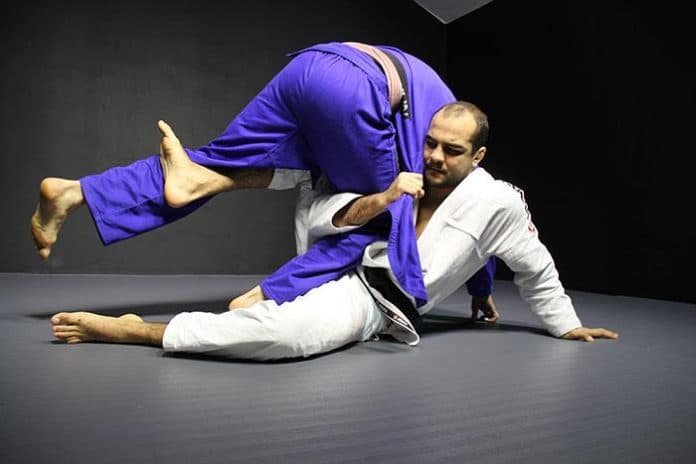
In BJJ, the person on top is usually trying to pass the guard and pin their opponent in dominant positions like side control and mount. The person on bottom is usually playing guard — using their legs and hips to defend, sweep the top player over, or attack submissions. (For the full map, see our guide to BJJ positions.) Most rolls flow between the two as people sweep, pass, and scramble.
The case for the top game
Playing top has real advantages:
Gravity is on your side. Pressure, weight, and pins are powerful and tiring for the bottom player.
It's often safer in self-defense and MMA contexts, where being on your back has downsides.
It scores well in competition — passes, takedowns, and dominant positions all earn points.
The trade-offs: top play, especially passing, is a grind that demands pressure, conditioning, and patience, and getting swept means losing your hard-won position.
The case for the bottom game
Playing guard is what makes BJJ unique, and it has its own strengths:
It's a force multiplier for smaller and flexible players — a great guard lets you control and submit bigger opponents.
Endless creativity. The guard has more variations and attacks than almost any other area of the sport.
You're never "losing" off your back. A strong guard is an offensive position, not a defensive one.
The trade-offs: a beginner's guard gets passed and smashed a lot before it becomes dangerous, and pure guard players can struggle in self-defense scenarios on hard ground.
Which should you play?
As a beginner, learn both — you'll be put in both positions constantly, and being one-dimensional makes you easy to deal with. Over time, though, it's smart to lean into the game that fits you:
Bigger, stronger, or more athletic? A top, pressure-passing game often suits you.
Smaller, flexible, or patient? A guard-based bottom game can become your superpower.
Older or injury-conscious? Many find a controlled half guard or closed guard easier on the body than scrambly top passing.
There's no wrong answer — the best players are dangerous in both, but most have a favorite.
The takeaway
Top versus bottom isn't a question of which is better — it's two sides of the same coin. Top wins with pressure, passing, and pins; bottom wins with the guard's sweeps and submissions. Learn both as a beginner, then develop the game that matches your body and personality. The goal is to be comfortable and dangerous wherever the roll takes you.
You'll spend time in both no matter what
Here's the practical reality that settles the debate for beginners: you don't actually get to pick. In live rolling you'll constantly be put on top and on bottom, swept from one to the other, and forced to scramble in between. A player who only knows the top game gets stuck and helpless the moment they're swept, and a pure guard player struggles whenever they end up on top. So even if you eventually specialize, your early months should build basic competence in both — a guard that can sweep and recover, and a top game that can pass and pin. Treat the "which is better" debate as interesting bar talk, not a training plan. The goal in your first year is simple: stop being lost wherever the roll happens to put you, then let a preferred style emerge naturally over time.
Build both halves of your game
Find a BJJ gym near you on Let's Roll → — a good fundamentals program develops your top and bottom games together.
FAQ
Is it better to play top or bottom in BJJ? Neither is better — they're complementary. Top uses pressure to pass and pin; bottom uses the guard to sweep and submit. Learn both, then lean into the one that fits you.
Should beginners play guard or pass? Both. You'll be put in both positions constantly, so being one-dimensional makes you easy to handle. Develop a basic guard and basic passing in parallel.
Which game is better for smaller grapplers? A guard-based bottom game often suits smaller, flexible players, because a strong guard lets you control and submit larger opponents through leverage.
Is playing off your back bad in BJJ? No — in BJJ, fighting from guard is a skill, not a defeat. A strong guard is offensive. (In self-defense on hard ground, though, getting up has value, so train both.)
Related Posts

Mikey Musumeci gives up the belt to make room for MMA
Musumeci is vacating his UFC BJJ title to focus on MMA training. What he is leaving, what continues, and why the transition matters.
IBJJF membership: finish the paperwork before the deadline
IBJJF membership and tournament entry are separate steps. Plan documents, professor approval, renewals, and junior accounts before registration closes.
Choosing a BJJ seminar worth your time and travel
Choose a BJJ seminar by the subject, teaching format, access, and total cost. Know what to ask the host before buying a ticket.
Comments (0)
Loading comments...