
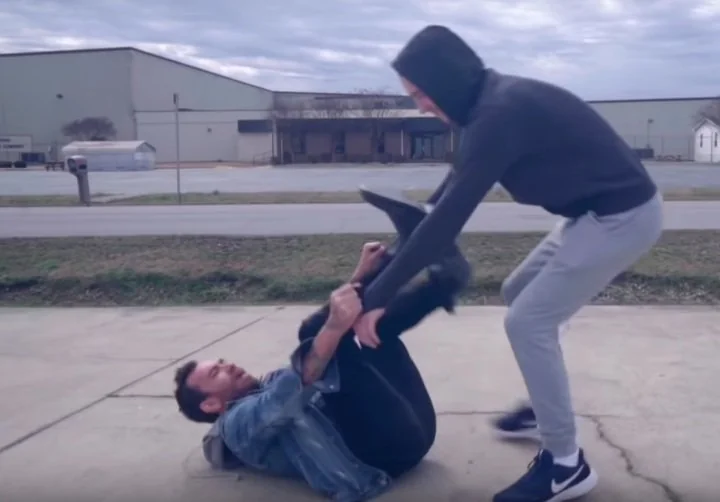
Is BJJ Good for Self-Defense? An Honest Look
Quick answer: Yes — BJJ is one of the most effective martial arts for real self-defense, because most fights end up clinched or on the ground, where BJJ excels at controlling a bigger attacker and ending a confrontation without striking. Its main limitations are multiple attackers and weapons, so smart self-defense pairs BJJ's control skills with awareness and de-escalation.
"Does BJJ actually work in a real fight?" is one of the most common questions beginners ask, and it deserves an honest answer rather than a sales pitch. The short version: BJJ is genuinely excellent for self-defense, with real strengths most martial arts lack — and a few honest limitations you should understand. Here's the full picture.
Why BJJ works for self-defense
The case for BJJ is strong and, unlike a lot of martial-arts marketing, backed by evidence:
Most fights end up clinched or on the ground. That's exactly BJJ's home territory. Once a confrontation closes distance, a striker's reach and power advantages shrink, and the grappler's control takes over.
It works against bigger, stronger people. BJJ was specifically designed so a smaller person can control and submit a larger one through leverage and position. In self-defense, where you don't get to pick your attacker's size, that's the single most valuable quality a system can have.
It offers control, not just damage. You can pin an aggressor or choke them unconscious without throwing a single strike. That matters ethically and legally — "I restrained him until he stopped" is a very different story than "I knocked his teeth out."
You pressure-test it live, every class. This is the quiet superpower of BJJ. Because you spar against fully resisting partners constantly, you actually know what works for you against someone trying to stop you — instead of practicing techniques that only work on a compliant partner.
The honest limitations
No martial art is a magic shield, and anyone who tells you otherwise is selling something. BJJ's real weaknesses:
Multiple attackers. Taking one person to the ground is dangerous if they have friends. Against multiple people, staying mobile, creating distance, and escaping matter far more than finishing a submission.
Weapons. Grappling does not solve a knife or a gun. Awareness, distance, and avoidance do. No amount of mat skill changes that math.
Pure-sport habits. Training that's 100% competition-focused can build habits — like pulling guard or turtling — that are fine in a tournament but risky on concrete with no referee. The fix is context, not abandoning sport training.
How to train BJJ for the street
You can keep all of BJJ's benefits and patch its blind spots with how you train:
Learn to get up safely and create distance, not just to play guard on the ground.
Drill standing self-defense and clinch control, including breaking grips and defending against a swinging attacker, not only seated sport positions.
Prioritize dominant control and chokes over flashy, low-percentage submissions.
Pair your mat skills with awareness and de-escalation — the overwhelming majority of real violence is avoidable by not being there. The best fight is the one that never happens.
BJJ vs other martial arts for self-defense
People love to argue "BJJ vs boxing" or "BJJ vs Muay Thai," but the honest answer is they cover different ranges. Striking arts own punching distance; BJJ owns the clinch and the ground. That's exactly why so many self-defense-minded people cross-train a striking art and BJJ — and why mixed martial arts blends them. But if you could only train one and wanted the most reliable way for a smaller person to control a larger attacker without striking, BJJ is hard to beat.
The takeaway
BJJ is one of the best martial arts for self-defense because it solves the part of a real altercation most systems ignore: what happens when it gets close and goes to the ground. Respect its limits — multiple attackers and weapons — train with some self-defense context, and combine your skills with awareness and good judgment. Do that, and you'll be far more capable than the version of you that walked in the door.
Start learning real, pressure-tested skills
Find a BJJ gym near you → — look for a gym that includes self-defense context alongside its sport training.
FAQ
Is BJJ better than boxing for self-defense? They cover different ranges — boxing for striking distance, BJJ for the clinch and ground. Many people cross-train both, but BJJ uniquely lets a smaller person control a larger attacker without striking.
Can BJJ work against a bigger attacker? Yes — that's exactly what it was built for. Leverage and technique let a smaller, weaker person control and submit someone much larger.
What's BJJ's biggest self-defense weakness? Multiple attackers and weapons. Going to the ground is risky if others are involved, so awareness, control, and escape matter more than finishing a submission.
How long until BJJ is useful for self-defense? You'll be meaningfully harder to handle within a few months, and after a year of consistent training you'll be genuinely difficult for an untrained person to control.
Related Posts

Mikey Musumeci gives up the belt to make room for MMA
Musumeci is vacating his UFC BJJ title to focus on MMA training. What he is leaving, what continues, and why the transition matters.
IBJJF membership: finish the paperwork before the deadline
IBJJF membership and tournament entry are separate steps. Plan documents, professor approval, renewals, and junior accounts before registration closes.
Choosing a BJJ seminar worth your time and travel
Choose a BJJ seminar by the subject, teaching format, access, and total cost. Know what to ask the host before buying a ticket.
Comments (0)
Loading comments...