
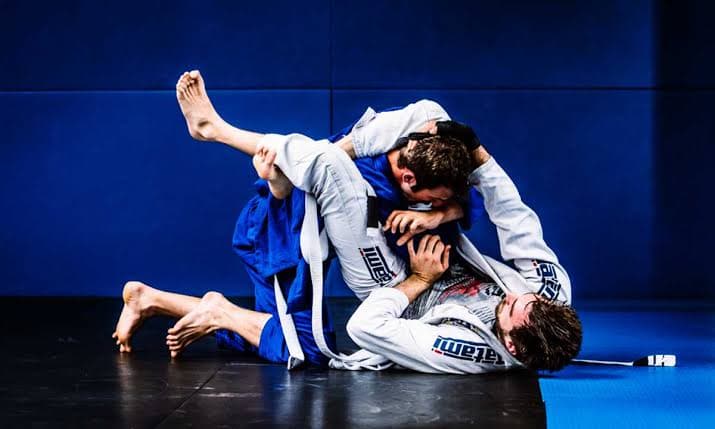
BJJ White Belt Survival Guide: 11 Tips to Get Past the Hard Part
Quick answer: Surviving white belt comes down to a few habits: show up consistently, tap early and often, focus on escapes and survival before submissions, breathe and relax instead of muscling everything, protect your partners, and don't quit during the inevitable plateau. Master those and you'll cruise past the stage where most people give up.
White belt is the hardest belt in Brazilian jiu-jitsu — not physically, but mentally. You'll get tapped constantly, feel uncoordinated, and quietly wonder if everyone else got a manual you missed. They didn't. Every black belt in the room was exactly where you are. Here's how to get through the hardest belt and actually start enjoying it.
1. Just keep showing up
The single biggest predictor of progress isn't talent or athleticism — it's attendance. Two or three classes a week, every week, beats five hard sessions followed by a month off. BJJ rewards consistency more than almost any other skill, because your body slowly absorbs movements that your conscious mind can't yet explain. Protect your schedule and the rest takes care of itself.
2. Tap early and often
Tapping isn't losing — it's the safety system that lets you train for years instead of months. Tap before it hurts, not after. The vast majority of beginner injuries come from refusing to tap or from "spazzing." There is no medal for getting your arm bent. Good upper belts respect people who tap smart, because it means they're safe to train with.
3. Survive first, submit later
As a white belt, your job isn't to tap people — it's to not get tapped. Learn to escape mount and side control, defend your neck, and stay calm in bad positions. Survival is the foundation; offense is what you build on top once you stop drowning. A white belt who's hard to submit is already ahead of one who only hunts flashy attacks.
4. Breathe and relax
Beginners burn enormous energy fighting everything at 100%. You'll gas out in two minutes and wonder how the calm purple belt isn't even sweating. The answer is relaxation. Breathe steadily, use only the strength a movement actually needs, and let technique do the rest. "Relax" is the most-repeated word in any BJJ gym for a reason — your mat cardio improves dramatically once you stop muscling.
5. Ask questions during drilling
Drilling time is for learning, not performing. Ask your partner or coach to slow down and show you the exact detail you missed — where a grip goes, which way the hips turn. Nobody expects you to be smooth yet, and the people who ask good questions improve fastest.
6. Protect your training partners
Don't be the spazzy white belt nobody wants to roll with. Control your movements, especially with smaller or newer partners, and never crank a submission — apply it slowly so they can tap. Being a safe, pleasant person to train with earns you better partners, more help, and a faster learning curve. Your reputation in the room matters.
7. Drill the boring fundamentals
Hip escapes, bridges, posture, framing, and grip basics aren't flashy, but they're the foundation everything else sits on. The beginner who obsesses over a fancy submission they saw online will plateau; the one who drills clean fundamentals quietly passes them. Master the unglamorous stuff.
8. Don't buy $400 of gear on day one
You need clean clothes and a borrowed or basic gi to start — that's it. Resist the urge to buy a closet full of gear before you even know you'll stick with it. See our BJJ gear for beginners guide for what actually matters and what to skip.
9. Use open mat once you can move safely
After a class or two, open mat becomes unlimited reps and rolling on your own terms. It's where a huge amount of real learning happens, because you can drill the exact thing you're struggling with as many times as you want, and roll at a relaxed pace with no curriculum to keep up with.
10. Stop comparing yourself to the room
Everyone there was once exactly as lost as you feel right now. The blue belt smashing you was tapping daily a couple years ago; the brown belt was a clumsy white belt before that. Compare yourself to who you were last month, not to the person who's been training for five years.
11. Expect the plateau — and push through it
Around the blue-belt stage, progress feels invisible and a lot of people quit. This is so common it has a name: the "blue belt blues." Knowing it's coming is half the battle. The plateau isn't a sign you're failing — it's the normal shape of getting good at something hard. The people who keep showing up through it are the ones who become upper belts.
The takeaway
Surviving white belt is less about talent and more about habits: attend consistently, tap smart, prioritize survival, relax, protect your partners, and refuse to quit during the plateau. Do that, and the belt that humbles almost everyone becomes the foundation of a skill you'll have for life.
The hardest part is walking in the door
Find a beginner-friendly BJJ gym near you → — look for a real fundamentals class and a welcoming room where new people are normal.
FAQ
How long does white belt last in BJJ? Usually one to two years of consistent training, though it varies by gym, athleticism, and how often you show up.
Why do I get so tired in BJJ? Beginners tense up and fight everything at full power. As you learn to relax and use technique, your "mat cardio" improves dramatically within a couple of months.
Is it normal to be terrible at first? Completely. Every black belt was a clumsy, gassed-out white belt once. The only thing that matters early is showing up and coming back.
Should I compete as a white belt? It's optional, but a local tournament can sharpen your focus and humble your ego in a useful way. Only do it if it sounds fun, not because you feel obligated.
Related Posts

Mikey Musumeci gives up the belt to make room for MMA
Musumeci is vacating his UFC BJJ title to focus on MMA training. What he is leaving, what continues, and why the transition matters.

IBJJF membership: finish the paperwork before the deadline
IBJJF membership and tournament entry are separate steps. Plan documents, professor approval, renewals, and junior accounts before registration closes.
Choosing a BJJ seminar worth your time and travel
Choose a BJJ seminar by the subject, teaching format, access, and total cost. Know what to ask the host before buying a ticket.
Comments (0)
Loading comments...