
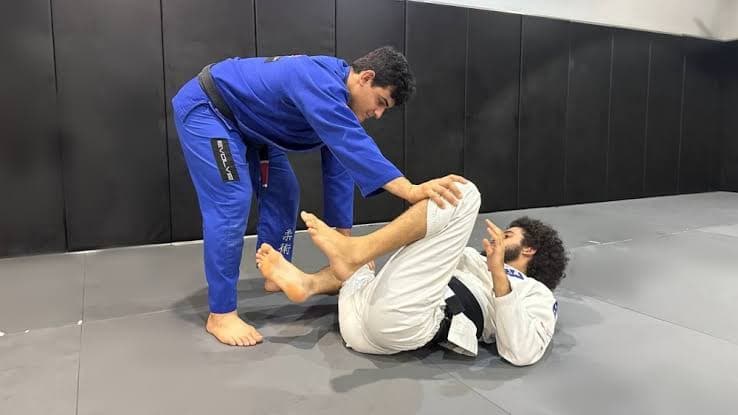
How to Be a Better Guard Passer in BJJ
Quick answer: Better guard passing comes from principles, not just memorizing passes: control your opponent's hips and legs, keep strong posture and grips, use pressure and a low center of gravity, and stay patient instead of forcing it. Master a couple of passes deeply (one pressure pass, one speed pass) rather than collecting dozens.
Passing the guard — getting past your opponent's legs to a dominant pin like side control or mount — is one of the most frustrating skills in BJJ for beginners. Your opponent has two legs, two arms, and gravity helping them keep you out. But great passing isn't about knowing a hundred passes; it's about understanding the principles that make any pass work. Here's how to get better.
Understand what you're fighting
In the guard, your opponent uses their legs and hips to control distance and angle. To pass, you have to nullify those legs and get your hips past theirs while staying safe from sweeps and submissions. Everything below serves that one goal: get past the legs, control the hips, and arrive in a strong pin.
The core principles
Control the hips and legs. You can't pass what you can't control. Pin or clear the legs and control the hips so your opponent can't re-guard or off-balance you. Strong grips on the pants, hips, or knees are your starting point.
Keep your posture. Hunching forward into a closed guard gets you broken down, swept, and submitted. Stay tall when you need to, get heavy when you're past — but never let your opponent control your head and posture.
Use pressure and a low base. Many of the best passes are pressure passes: you stay heavy, low, and connected, smothering your opponent's hips so they can't move. Pressure tires and frustrates them into making space.
Be patient. The most common passing mistake is rushing. Forcing a pass against good grips gets you swept. Settle, control, clear one obstacle at a time, and the pass opens up. Passing is methodical chess, not a sprint.
Pick a couple of passes and drill them
Don't try to learn every pass. Choose one pressure pass (like a knee-cut or over-under) and one speed/standing pass (like a toreando), and drill them until they're automatic against resistance. Depth beats breadth: a passer with two reliable passes and great fundamentals beats one who dabbles in twenty.
Common beginner passing mistakes
Standing in range with no grips — you'll get swept or submitted. Establish control first.
Rushing past the legs without controlling the hips — you get re-guarded instantly.
Losing posture and letting them break you down.
Giving up after one attempt — passing is a sequence of small wins, not one big move.
Drill it with positional sparring
The fastest way to improve passing is positional sparring: start in your opponent's guard and only work to pass, reset when you pass or get swept. This focused repetition builds the timing and pressure that full rolls don't teach efficiently.
The takeaway
Better guard passing is about principles — control the hips and legs, keep posture and grips, apply pressure from a low base, and stay patient — far more than memorizing passes. Pick a pressure pass and a speed pass, drill them with positional sparring, and fix the rushing and posture mistakes most beginners make. Passing is a grind, but it's one of the most satisfying skills to develop.
Pass with your hips, not just your hands
A subtle shift that helps many beginners: stop trying to pass with your arms and start passing with your hips and pressure. New passers tend to grab and shove with their hands while their hips float free, which lets the bottom player re-guard easily. Better passers connect their hips to their opponent, stay heavy and low, and move their own hips around the legs rather than muscling with their upper body. Think of your chest and hips as the heavy part that does the passing, and your hands as the tools that clear obstacles out of the way. When you lead with pressure and hip position instead of arm strength, passes that used to feel impossible against bigger people suddenly start working, because you're using structure and weight rather than a strength battle you'll usually lose.
Sharpen your passing on the mat
Find a BJJ gym near you on Let's Roll → — a good gym drills passing with positional sparring, the fastest way to improve.
FAQ
Why is guard passing so hard in BJJ? Because your opponent uses two legs, two arms, and gravity to keep you out, while you have to clear their legs and control their hips without getting swept or submitted. It's one of the hardest skills to develop.
How do I get better at passing guard? Focus on principles — control the hips and legs, keep posture and grips, use pressure, and be patient — and drill a couple of passes with positional sparring rather than collecting many.
Should I learn pressure passing or speed passing? Learn one of each: a pressure pass (like the knee-cut) for control and a standing/speed pass (like the toreando) for mobility. Together they cover most situations.
What's the most common passing mistake? Rushing — forcing a pass against good grips, which gets you swept. Control the hips first and clear obstacles patiently, one at a time.
Related Posts

Mikey Musumeci gives up the belt to make room for MMA
Musumeci is vacating his UFC BJJ title to focus on MMA training. What he is leaving, what continues, and why the transition matters.
IBJJF membership: finish the paperwork before the deadline
IBJJF membership and tournament entry are separate steps. Plan documents, professor approval, renewals, and junior accounts before registration closes.
Choosing a BJJ seminar worth your time and travel
Choose a BJJ seminar by the subject, teaching format, access, and total cost. Know what to ask the host before buying a ticket.
Comments (0)
Loading comments...