
BJJ vs Wrestling vs Judo: What's the Difference?
Quick answer: All three are grappling arts, but they emphasize different things. Wrestling is about takedowns and top control. Judo is about throws from standing using the gi. BJJ (Brazilian jiu-jitsu) is about ground control and submissions — chokes and joint locks. If you want submissions and ground fighting, start with BJJ; for explosive takedowns, wrestling; for dynamic throws, judo.
If you're new to grappling, the differences between Brazilian jiu-jitsu, wrestling, and judo can be confusing — they all involve two people trying to control each other without striking. But each has a distinct goal, ruleset, and feel. Here's the clear breakdown.
Wrestling: takedowns and top control
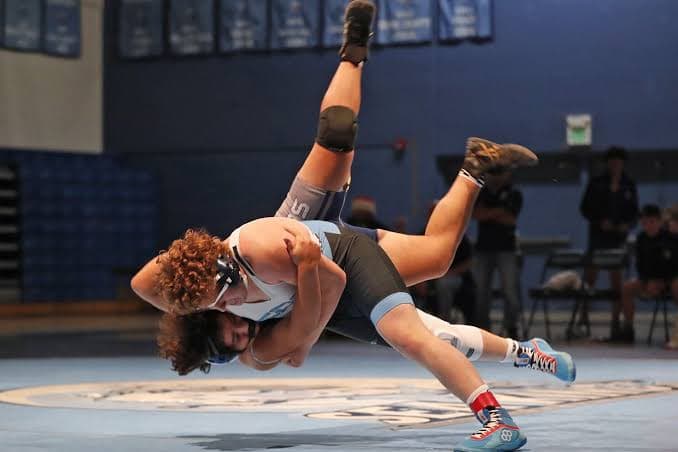
Wrestling is the oldest and most widespread grappling sport, practiced worldwide and in nearly every school system in some countries. Its core is the takedown — shooting in, securing a leg or body lock, and putting your opponent on the ground — followed by pinning them or controlling the top position. There are no submissions in folkstyle or freestyle wrestling; you win by takedowns, control, and pins.
Wrestlers are famous for explosive athleticism, relentless pace, and exceptional top pressure. A wrestler's ability to dictate where the fight happens — standing or on the ground — makes wrestling one of the most valuable bases in mixed martial arts.
Judo: throws from standing
Judo, developed in Japan, is built around the throw. Using grips on the gi, a judoka off-balances their opponent and throws them to the ground, ideally landing them flat on their back for an instant win (ippon). Judo also includes pins, chokes, and armlocks on the ground (newaza), though competition rules limit ground time.
Judo's strength is its devastating standing throws and grip fighting. If you've seen someone launched through the air in a clean arc, that's judo. It shares deep roots with BJJ — in fact, BJJ evolved largely from judo.
BJJ: ground control and submissions
Brazilian jiu-jitsu takes the fight to the ground and focuses on positional control and submissions — chokes and joint locks that force an opponent to tap out. While BJJ includes takedowns, its heart is what happens on the mat: passing the guard, advancing position, and finishing. (New to it? See what BJJ is.)
BJJ's defining idea is that a smaller, weaker person can control and submit a larger one through leverage and technique on the ground — which is why it became famous for proving that ground skills could beat much larger strikers.
How they overlap and differ
Standing vs ground: Judo and wrestling start standing and prize takedowns/throws; BJJ prizes the ground game.
Submissions: BJJ is built around them; judo has some; wrestling has none.
The gi: Judo always uses the gi; BJJ trains both gi and no-gi; wrestling uses a singlet.
Pace: Wrestling and judo are explosive and scramble-heavy; BJJ can be more methodical, though no-gi is faster.
Which should you start with?
It depends on your goal:
Want submissions, self-defense, and a methodical ground game? Start with BJJ — it's the most beginner-friendly to roll live safely from day one.
Want explosive takedowns and elite conditioning? Wrestling is unmatched, though access as an adult beginner can be harder.
Love dynamic throws and gi grip fighting? Judo is beautiful and effective.
Many serious grapplers eventually cross-train: a BJJ player adds wrestling or judo takedowns to complete their standing game. They complement each other beautifully.
The takeaway
Wrestling wins the takedown and top control; judo wins the throw; BJJ wins the ground and the submission. They're cousins, not rivals, and each makes you better at the others. For most beginners who want ground control, submissions, and the ability to spar safely right away, BJJ is the most accessible starting point.
Can you train more than one?
Absolutely — and many grapplers do. It's common to have a BJJ home base and add a weekly wrestling or judo class to sharpen takedowns, or for a wrestler to cross over into BJJ to learn submissions and the guard. The skills transfer and reinforce each other: judo grip fighting helps your gi game, wrestling scrambles sharpen your top pressure, and BJJ teaches everyone what to do once the fight hits the floor. If your gym offers more than one, sampling them is a great way to find which style fits your body and personality best.
Try the ground game
Find a BJJ gym near you on Let's Roll → — many academies also offer wrestling or judo crossover classes, so you can sample all three.
FAQ
Is BJJ better than wrestling or judo? None is "better" — they emphasize different things. BJJ focuses on ground submissions, wrestling on takedowns and control, judo on throws. The best choice depends on your goals, and many people cross-train.
Did BJJ come from judo? Yes — Brazilian jiu-jitsu evolved largely from judo (and older Japanese jujutsu) in the early 20th century, then specialized in the ground game.
Which grappling art is best for self-defense? BJJ is often favored because it lets a smaller person control a larger attacker on the ground without striking, but wrestling's takedown control and judo's throws are also valuable.
Can I train BJJ and wrestling together? Absolutely — they complement each other. Wrestling adds takedowns and top pressure; BJJ adds submissions and a guard game.
Related Posts

Mikey Musumeci gives up the belt to make room for MMA
Musumeci is vacating his UFC BJJ title to focus on MMA training. What he is leaving, what continues, and why the transition matters.
IBJJF membership: finish the paperwork before the deadline
IBJJF membership and tournament entry are separate steps. Plan documents, professor approval, renewals, and junior accounts before registration closes.
Choosing a BJJ seminar worth your time and travel
Choose a BJJ seminar by the subject, teaching format, access, and total cost. Know what to ask the host before buying a ticket.
Comments (0)
Loading comments...