Prep checklist
First class + checklist
Jiu-jitsu for beginners
What to wear, how a class works, when to tap, and how to choose a gym you can actually get back to.
By Owen Bellamy 15 min read

The Let’s Roll learning room
Choose a class, learn the language, and understand what happens on the mat. Practical guides to Brazilian jiu-jitsu, from your first visit or a child’s trial to private lessons, positional sparring, travel plans, and tournament decisions.
Read a little. Ask a better question. Go train.
01 / The starting points
Start with the question in front of you. Each guide has the context, the sources, and a practical tool to help with the next step.
A short way in
Two choices can give you a useful starting point. The full library is below.
Changing the situation clears the second choice. Your choices stay on this page.
Choose a situation to find a starting point.
Choose the practical decision in front of you. You can explore another topic whenever you need it.
Look for a topic, a practical task, or a word you heard in class.
36 guides to explore.
First class + checklist
What to wear, how a class works, when to tap, and how to choose a gym you can actually get back to.
By Owen Bellamy 15 min read
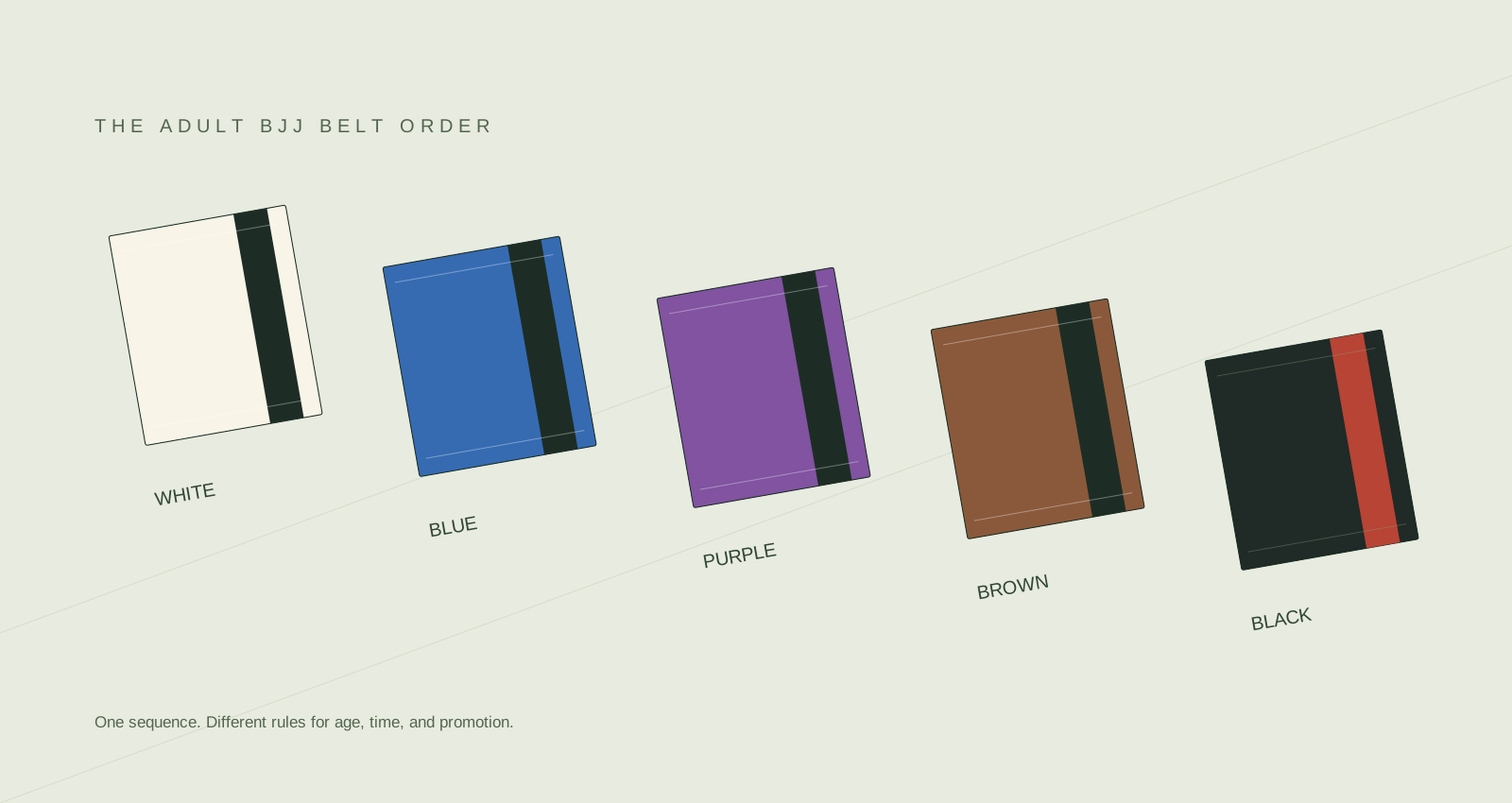
Ranks + interactive belt chart
Adult and kids’ belts in order. Minimum ages, stripes, and the difference between eligibility and your next promotion.
By Nina Okada 14 min read
Published prices + budget calculator
Real gym examples, billing periods, equipment, and the terms behind a quote. Build a budget using your own numbers.
By Tess Hanley 14 min read
Format comparison + class planner
Compare the kit, grips, and rules. Then work out which beginner classes fit the week you actually have.
By Kit Langford 13 min read
Clothing guide + kit planner
Work out what you can wear, borrow, or confirm before buying. Gi, no-gi, first-class kit, and competition requirements.
By Owen Bellamy 12 min read
Trial questions + shortlist planner
Compare beginner access, the timetable, and the terms. Keep track of the questions to settle before booking a trial.
By Maya Corbett 12 min read
Weekly options + schedule planner
Start with classes you can actually attend. Separate confirmed weekly options from the sessions you still need to check.
By Owen Bellamy 12 min read
Visitor guide + visit planner
Understand the format, check who can attend, and settle booking, kit, and fees before visiting another mat.
By Maya Corbett 12 min read
Position reference + explorer
Recognize guard, side control, mount, and the back. Compare top and bottom perspectives before choosing the next question.
By Nina Okada 12 min read
IBJJF points + scoring examples
Understand points, advantages, penalties, and submissions. Work through examples and know which rules belong to your event.
By Tess Hanley 12 min read
Entry guide + preparation planner
Check the entry, division, deadlines, and match-day arrangements. Keep confirmed details separate from questions for the organizer.
By Miles Serrano 12 min read
Sport comparison + crossover examples
Compare throws, pins, ground exchanges, and class choices. See how a similar situation can mean something different under each ruleset.
By Kit Langford 11 min read
Maker charts + size explorer
Compare published charts for specific gis. Understand height, weight, garment measurements, and the questions to ask before buying.
By Tess Hanley 12 min read
Adult IBJJF charts + division explorer
Read the adult gi and no-gi limits in kilograms and pounds. Keep weight categories, the absolute, and weigh-in procedures separate.
By Nina Okada 11 min read
Parent guide + trial planner
Check age groups, class arrangements, and trial terms. Prepare questions for the coach and leave room for your child’s answer.
By Maya Corbett 11 min read
Booking guide + lesson brief
Choose a question worth working on, compare the actual booking terms, and prepare a brief for the coach before paying.
By Miles Serrano 12 min read
Class routes + program explorer
Compare named women’s programs, beginner routes, and mixed-class access. See which questions belong to the actual session.
By Maya Corbett 11 min read
Training vocabulary + searchable glossary
Look up common class and competition vocabulary. Keep an everyday coaching cue separate from a ruleset’s exact definition.
By Kit Langford 6 min read
Competition comparison + situation explorer
Compare selected contest situations under ADCC and IBJJF rules. Keep the event, division, clock, and scoring conditions in view.
By Nina Okada 8 min read
Manufacturer guidance + care explorer
Compare named manufacturers’ care instructions. Check the label, washing and drying directions, and product-specific shrinkage claims.
By Tess Hanley 5 min read
Published models + buying comparison
Compare named gis, published prices, what comes in the bag, and return terms. Build a shortlist around the class you attend.
By Tess Hanley 8 min read
Instructor references + practice planner
Review a lesson, organize a task from class, and plan a short session. Keep one useful observation to bring back to the mat.
By Owen Bellamy 6 min read
Sport comparison + match examples
Compare pins, submissions, takedowns, and ground exchanges. Read complete examples under named wrestling and BJJ rules.
By Kit Langford 7 min read
Training reference + planning examples
Understand strength work alongside BJJ, read the evidence in context, and compare practical ways to fit lifting around mat time.
By Miles Serrano 8 min read
Submission families + reference explorer
Recognize common chokes and joint locks, distinguish positions from submissions, and follow each name to its source.
By Nina Okada 7 min read
Class scope + program comparison
Understand BJJ in a self-defense context and compare the practice, entry route, and stated scope of real programs.
By Maya Corbett 8 min read
Application steps + process reference
Follow membership documents, professor approval, renewals, and academy changes. Keep membership separate from tournament entry.
By Tess Hanley 8 min read
Class routes + first-visit reference
Compare real introductory options, understand partner practice, and make room for a first visit around work and family.
By Rafael Moura 5 min read
Model references + buying checks
Compare exact model charts, sleeve choices, care, returns, and the separate requirements for an IBJJF event.
By Tess Hanley 8 min read
Sourced timeline + lineage reference
Trace the Japanese and Brazilian chapters, read competing accounts, and distinguish teaching, promotion, and affiliation.
By Kit Langford 8 min read
Named programs + format reference
Compare actual beginner programs, partner practice, and the different modern Ju-Jitsu competition formats.
By Maya Corbett 8 min read
Conditioning research + practical examples
Understand aerobic work, round pacing, and grip fatigue. Compare practical choices around the classes you already attend.
By Owen Bellamy 9 min read
Published policies + practical situations
Join a new class, agree on a round, respect a stop, and ask before filming. Work through six ordinary gym situations.
By Maya Corbett 8 min read
Four-person diagrams + final-path comparison
Trace single elimination, true round robin, and true double elimination. Change the first final’s winner to see the reset.
By Miles Serrano 7 min read
Five worked rounds + reset comparisons
Choose a starting position, compare both partners’ tasks, and see what different reset rules let you practise.
By Nina Okada 9 min read
Visit-time calculator + worked trips
Fit a class around the trip you actually have. Add travel, check-in, changing, and your own buffer before committing.
By Maya Corbett 9 min read
02 / Follow the next question
The timetable, the trial, the kit. Sort out the practical details before worrying about your guard.
Choosing your first BJJ gym What to wear to BJJ class A beginner course or regular classes?Learn the language of training, compare formats, and arrive at another gym knowing what to ask.
Training gi and no-gi on the same day What to expect at your first class BJJ drop-in etiquetteA belt color starts a conversation. These reads get into the details that a simple chart leaves out.
What blue belt means Kids’ jiu-jitsu belt colors IBJJF black belt certification03 / Put a class on the calendar
Make a shortlist of nearby jiu-jitsu gyms. Then ask which class welcomes complete beginners, what the trial costs, and what to bring. Confirm the details directly before you go.
How we build these guides
Learning jiu-jitsu brings up small, practical questions that can be surprisingly hard to answer. Do you need a gi before trying a class? Does a stripe mean the same thing at every school? Which belt rules belong to a federation, and which decisions belong to your instructor?
Our writers approach those questions differently. Owen Bellamy keeps the beginner, clothing, and training schedule guides grounded in the realities of making it back next week. Nina Okada explains positions, practice tasks, ranks, weight-class charts, and the differences between competition rulesets. Tess Hanley follows membership costs, equipment care, and the rules behind a score. Kit Langford compares formats and sports, and explains the words that change meaning between a class and a match. Miles Serrano follows competition entries, bracket paths, and private lesson bookings. Maya Corbett turns class choices, a child’s trial, an open-mat visit, a travel schedule, or an unfamiliar room’s etiquette into specific questions to settle. Rafael Moura considers the practical decisions behind starting jiu-jitsu later in life. Each resource lists its sources and the date they were checked.
Use these pages to prepare and to understand the language. Practice needs an instructor, a suitable partner, and a shared agreement about what you are doing. When a gym’s policy or a tournament’s rules are the deciding factor, check with the people running it.