
BJJ black belt certification is separate from the promotion
Quick answer: An IBJJF black belt certificate is a federation recognition process separate from a coach's promotion and from ordinary membership. The application has its own documentation requirements and published fees. Find out what you need the certificate to do before assuming every black belt, instructor, or competition entry requires the same paperwork.
A black belt, a membership card, and a certificate can refer to three connected records. They are not three versions of the same document. Confusing them can turn a straightforward administrative question into an unnecessary argument about someone's rank.
The useful starting point is the purpose. An athlete may need active membership to enter an event. A professor may need a particular recognized degree for an approval task. A certificate applicant needs to complete the federation's process. Identify the task first, then find the document that answers it.
Start with the promotion, membership, and certificate as separate records
The IBJJF certification help page distinguishes black belt certification from membership. It explains that certification recognizes eligible black belts and can recognize their degrees. Applicants must have active, non-provisional membership to begin the process.
That description starts with a person already holding the rank and seeking a particular federation recognition. It should not be rewritten as a universal requirement that nobody can be a black belt until this one organization has printed a certificate.
For your own application, ask what is missing from your record. The answer may concern membership status, a document, or the recognition of a degree. Those are specific administrative issues. They do not all mean that the original promotion itself is being repeated.
For a reader evaluating an instructor, ask the relevant question plainly. Who awarded the rank, and what does the displayed certificate identify? A document becomes easier to understand when its issuer and purpose stay attached, instead of using the general word certified to cover every qualification a person might hold.
The application has a defined document checklist
Article 5 of the June 2026 graduation system requires affiliation, non-provisional status, a First Aid or CPR certificate, and an eligible IBJJF rules or referee-training certificate completed within the preceding twelve months. It also notes that additional requirements may apply.
Use the current portal instructions to establish which documents you should submit. Do not assume that a course's promotional use of the word certification guarantees it satisfies a federation requirement. If you are unsure, ask before paying for the course or attaching the file.
Put the documents in one folder with dates that are easy to identify. A file called final-final-certificate is less useful than a name showing the course and completion date. This is a suggested organizational habit, not another federation requirement.
Check that each upload is complete and readable. An application reviewer needs the actual evidence requested. A photograph missing the issuer or a screenshot cut off at the date may create another question even if the underlying course was completed correctly.
Degrees require a record of qualifying activity
Article 4 of the current graduation document describes proven activity under IBJJF as part of degree recognition. It lists ways activity can be documented, including active membership, academy registration, and specified federation roles or achievements. Read the current criteria rather than assuming elapsed calendar time automatically settles the application.
The practical question is what evidence your own record contains. Gather the relevant confirmations before asking the federation to recognize a degree. If a period is unclear, identify the dates and activity you want reviewed instead of sending a general statement about having trained for many years.
Ask the approving organization how it handles the particular gap or uncertainty. Do not invent a way to reconstruct an activity record after the fact, and do not assume a teammate's accepted application proves that yours has the same documents or status.
The membership guide covers the broader account process. Degree recognition has another layer of evidence, so keep the two tasks separate when planning a renewal or an application. Paying one fee should not be treated as confirmation that every other record has changed.
The published price is specific to this process
As checked on October 14, 2026, the IBJJF help page lists $400 for the first black belt certificate and $150 for a renewal. It says the certificate does not require annual renewal; renewal is used when the applicant wishes to certify a new degree.
Those figures describe the federation's published certificate charges. They do not establish a universal price for receiving a black belt, joining a gym, attending a course, or maintaining membership. Put each charge beside the service it actually buys.
For an application budget, confirm any other costs that apply to you. A required course, membership renewal, or document preparation may be a separate purchase. Use the actual provider's current price rather than subtracting an assumed bundle from the certificate fee.
You can decide whether the recognition serves a task you currently need. That is a practical decision, not a referendum on the value of the federation or the person's years of training. Paying for the process makes more sense when you understand what it changes in the record.
A teaching role has its own requirements
The certification help page says a head professor does not need the black belt certificate itself to register an academy, but does need non-provisional black belt registration in the IBJJF system. It also distinguishes ordinary membership approvals from tasks involving recognized degrees.
That distinction is worth preserving in a gym conversation. A person can ask which role or approval a document supports without implying that the absence of one certificate makes every aspect of teaching invalid. The system's specific conditions should be discussed at the scale of the specific task.
If you are taking responsibility for membership approvals at a school, ask the federation which status is required for the ranks involved. A broad answer about being a black belt may not settle a degree-dependent approval. The academy should know which registered professor is handling that process.
For prospective students, combine administrative information with the actual class questions: who teaches, how the curriculum works, and which session suits your experience. A certificate identifies a recognition process. It does not by itself describe how a Tuesday evening lesson is organized.
Keep review time separate from receiving the printed document
An application can involve submission, review, recognition, printing, and delivery. Avoid treating them as one event when deciding whether you have enough time for a particular administrative task. The current graduation document states that review varies with the documents and athlete's circumstances.
Ask which stage has been completed if you need an update. Has the application been received? Is additional evidence requested? Has the record been approved? A question tied to a stage is easier to answer than repeatedly asking why the entire process is unfinished.
Save the relevant confirmations. If another task depends on the recognized status, establish whether it requires the updated account, the certificate, or something else. Do not assume a postal package and a portal record become available at the same moment.
Use the official support process when an application needs attention. Provide the account and application details through the appropriate private channel. Posting an unredacted document in a public discussion may reveal information without reaching the person who can resolve the application.
Decide what you need before starting another application
A useful next step is a short audit of the task, rather than a search for the broadest possible collection of credentials. Identify what you want to do and what the organization administering it actually requires.
Use a simple planning list:
Name the competition, degree recognition, or academy role involved.
Check the current membership and provisional status in your account.
Identify the specific documents and courses the current process requests.
Confirm the fee and which record changes after approval.
These are suggested preparation steps. The federation's actual requirements remain the authority for its process. A personal checklist helps you ask a complete question; it does not replace the review or create an exception the organization has not granted.
The affiliation guide covers another related distinction. Association membership, an academy relationship, and individual federation certification can involve different arrangements. Keeping the names precise prevents a banner, a membership card, and a certificate from being asked to prove the same thing.
Once the task is defined, finish that task. You do not need to keep adding paperwork because another instructor displays a larger collection on the wall. The useful record is the one that accurately supports the role or recognition you intend to use.
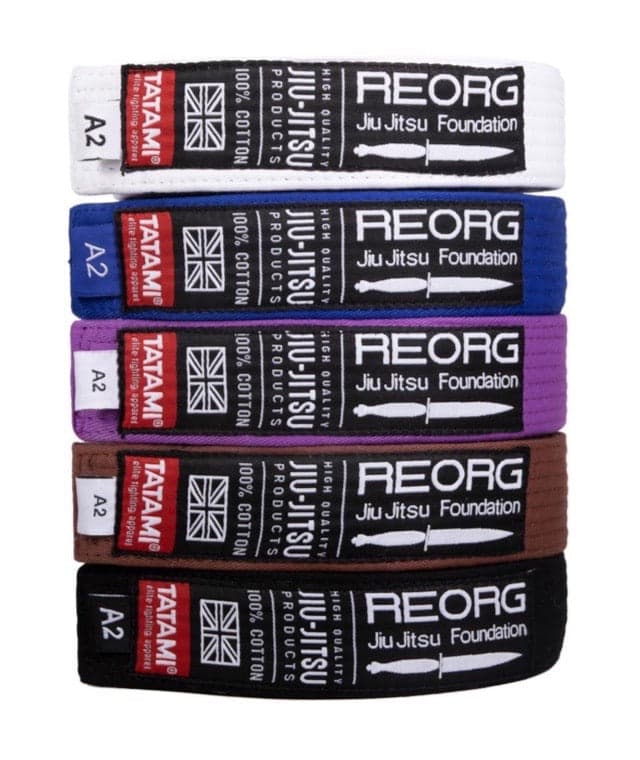
Main photo: Tatami Fightwear, REORG belt product photograph; illustrative rank equipment, not a certificate.
The takeaway
Treat the IBJJF certificate as a defined federation recognition process with its own documents, costs, and degree criteria. Keep it separate from the original promotion and ordinary membership. That makes the application easier to organize and the credential easier to describe accurately.
Before paying, name the task the certificate will serve and confirm the requirements for your account and role. When evaluating a school, ask both the administrative questions and the practical class questions. One document should not be made to answer more than its issuer says it does.
Find a school and ask about the actual classes
Explore gyms on Let's Roll, then contact the school about its instructors, timetable, and the program appropriate to your experience.
FAQ
Is IBJJF black belt certification the same as promotion? No. It is a federation recognition process for applicants who already hold the rank and meet the applicable conditions. Membership is a separate process too.
Does the certificate need annual renewal? The current IBJJF help page says it does not. Renewal is used when certifying a new degree; check the current fees and requirements before applying.
Does every head professor need the certificate itself? The help page distinguishes the certificate from the registration required for that role. Check the current conditions for the particular academy or approval task rather than applying one document requirement to every activity.
Should I buy a rules course before checking the application? First confirm which certificates the current process accepts and how recent they must be. A course description alone should not decide whether it satisfies your application's requirement.

Tess Hanley
Tess Hanley reads the rulebooks, the entry fees and the fine print. When a federation or a gym changes something, her first question is who ends up paying for it.
Related Posts

Lucas “Hulk” Barbosa’s best work is in the details
Lucas Barbosa’s nickname explains the first impression. His gi world title, no-gi record, and 2022 ADCC final give viewers more to study.

João Miyao’s record deserves its own first name
João Miyao’s adult world title and 2026 Master1 results tell a distinct story, even when his brother appears beside him on the podium.

Jena Bishop made time for a second sporting life
Jena Bishop’s 2026 PFL title followed a deliberate move from championship jiu-jitsu into learning a different sport.
Comments (0)
Loading comments...