
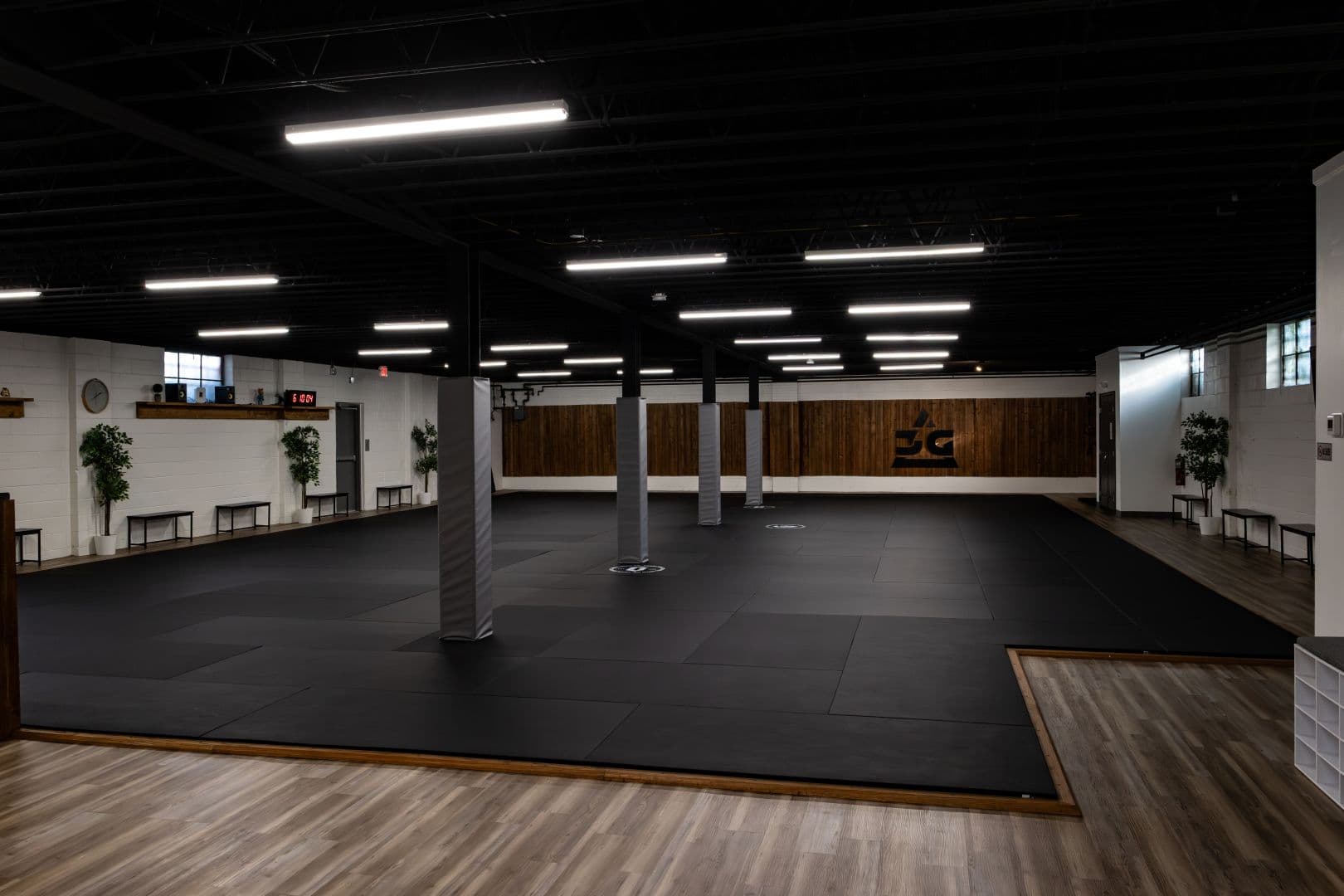
How to Choose Your First BJJ Gym
There is no perfect gym. There's the gym you'll actually show up to three times a week, and there's everything else.
Most "how to pick a BJJ gym" advice online treats this like buying a car — compare features, read reviews, make a spreadsheet. After fifteen years on the mats, I'll tell you the only feature that matters is whether you're still walking through the door six months in. Everything in this guide is built around that one outcome.
Drop in before you sign anything
Every BJJ gym worth training at lets you visit at least once. Some let you train a whole week for free. Take them up on it.
A trial class is the worst possible signal — it's a sales funnel. A regular open mat or a midweek fundamentals class is the real product. Show up to the class you'd actually take if you joined, see who's there, see what the warm-up looks like, see how the head instructor treats white belts.
If a gym won't let you drop in, that's information. Move on.
You can find drop-in-friendly gyms via the open mats directory or filter the find-gyms search by drop-in welcome.
Schedule fit matters more than anything else
The single best predictor of whether you'll keep training is whether the schedule fits your life. Not "fits if you really stretch." Fits.
If the only fundamentals class is Monday at 6pm and you commute home at 6:30, you'll go for two weeks and quit. If there are three windows that work — say a 6am, a noon, and a 7:30pm — you'll find one that survives a hard work week.
Open the schedule. Highlight every class you could plausibly attend. If you can't find three a week, the gym is wrong, not you.
Beginner culture is a real thing
Some gyms are openly competition-focused. Others are casual. Neither is better — they're different products. What you want is honesty about which one a gym actually is.
A few quick signals from a single visit:
How does the head instructor talk to white belts during the warm-up? Casual hello, or studied indifference?
Is there a "fundamentals" class on the schedule, or just one general class? A real fundamentals program is a quiet promise that beginners aren't supposed to figure it out alone.
When you watch open mat, are higher belts inviting white belts to roll, or staying with their own training partners? Both are normal — but they predict very different first six months.
Lineage tells you something, but not what people think
The internet will tell you lineage matters. It does, sort of. A Gracie Barra gym in Wichita is going to feel similar to a Gracie Barra gym in Atlanta — same curriculum, same belt promotion criteria, same general vibe. That's what a strong affiliation buys.
But that consistency works both ways. A 10th Planet gym is going to be no-gi-only and lean toward submission-only competitive play. If you want to train in the gi, that's a hard mismatch regardless of how good the instruction is.
Lineage helps you predict the kind of training. It doesn't tell you anything about whether you'll actually like this room with these coaches.
Cost is less of a factor than you think
BJJ tuition in the US runs roughly $150–$220 a month for unlimited classes. Drop-ins are typically $25–$40 per visit. Annual contracts at premium gyms can push closer to $250.
Cost variance within a single city is usually under 25%. Cost variance between cities (San Diego vs. small-town Kansas) is much bigger. If you're inside the typical range for your area, every gym is "affordable enough" — pick on schedule and culture, not price.
The exception: avoid year-long contracts as a beginner. Month-to-month is standard. Anyone locking you in for 12 months is selling something other than jiu-jitsu.
What to watch for that signals a problem
Things that should make you pause:
The head instructor is also the front-desk person, the cleaner, and the only coach for every class. That's a one-person show — be aware they'll be on vacation eventually and the gym will close that week.
No clear belt promotion criteria. Stripe and belt timelines vary wildly across the sport, but a gym that can't explain how it promotes is a gym that promotes by feel.
Lots of injured students. Some hard rolls produce injuries. Constantly injured students suggest a culture problem.
The mats smell bad. This sounds obvious. Walk in and breathe.
High instructor turnover. Instructors leave; that's normal. But if every coach is new in the last six months, ask why.
What's negotiable, what isn't
Negotiable: distance from home (anything under 25 minutes is fine if the schedule and culture click), facility size, locker rooms.
Not negotiable: head-instructor presence at the classes you'd actually attend, a fundamentals track or equivalent, at least one open mat per week.
After you decide
Sign month-to-month. Buy one gi (it's enough to start). Buy a mouthguard. Skip every other piece of gear until you've been training six months — you'll learn what you actually want as you go.
Show up three times a week for ninety days. After that, you'll have a much better answer to every question above than any article can give you.
If you're still hunting, browse gyms by city or filter by open mat, no-gi), or kids program from any city page. The hub pages list every gym we've verified with schedules, drop-in info, and current contact details.
Related Posts

Mikey Musumeci gives up the belt to make room for MMA
Musumeci is vacating his UFC BJJ title to focus on MMA training. What he is leaving, what continues, and why the transition matters.
IBJJF membership: finish the paperwork before the deadline
IBJJF membership and tournament entry are separate steps. Plan documents, professor approval, renewals, and junior accounts before registration closes.
Choosing a BJJ seminar worth your time and travel
Choose a BJJ seminar by the subject, teaching format, access, and total cost. Know what to ask the host before buying a ticket.
Comments (0)
Loading comments...