
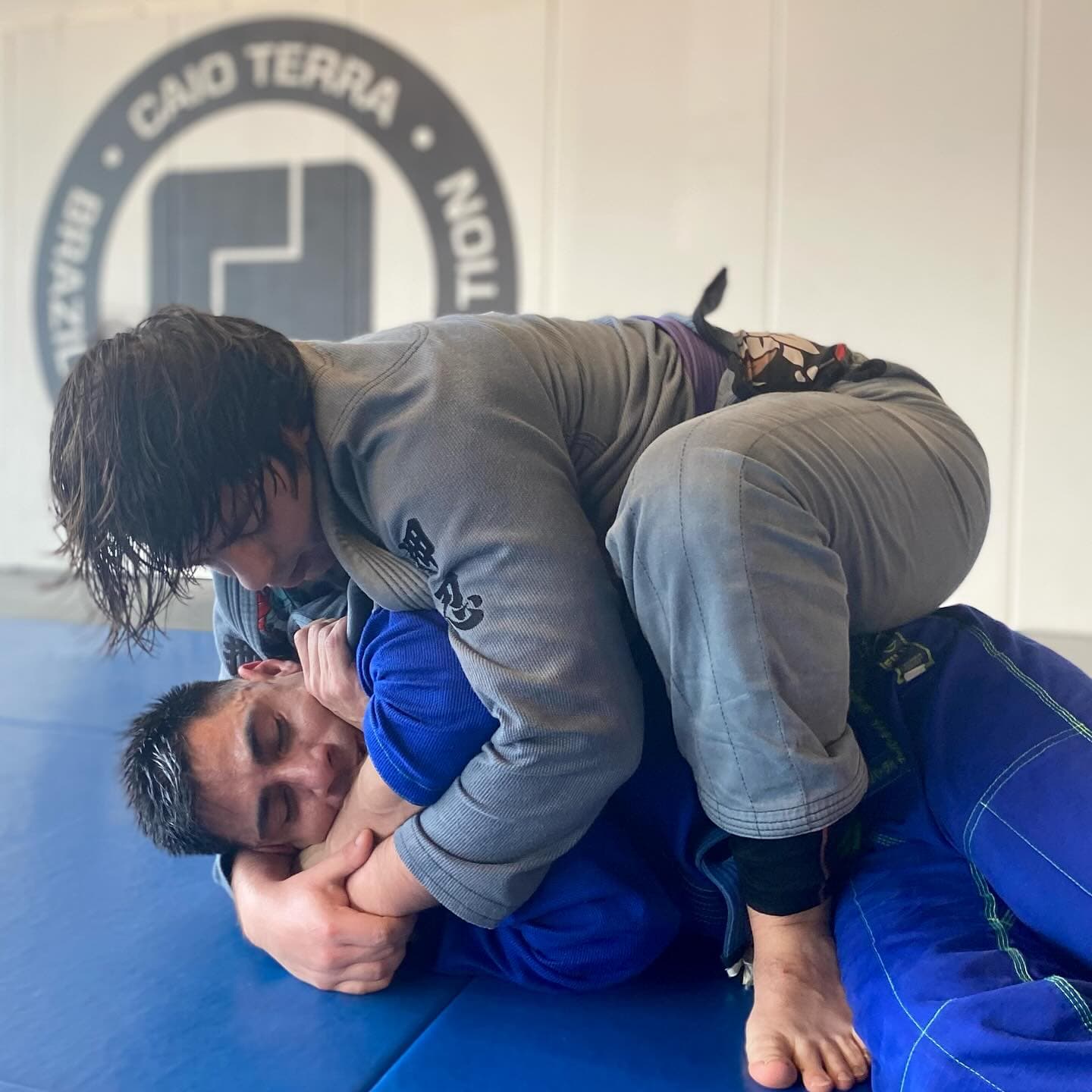
BJJ drop-in etiquette: make the visit easy for everyone
Quick answer: Contact the gym before visiting and confirm the session, price, equipment and booking requirements. Arrive with time to check in, explain your experience honestly, and agree on the round with each partner. Follow the host's rules without assuming that a timetable or a famous name guarantees access.
A confirmed class is worth more than a saved gym address. You can cross a city with clean equipment and good intentions and still arrive at a session that does not accept visitors. The useful preparation happens before you leave the hotel.
Drop-in etiquette begins with making the visit easy to arrange. The instructor needs to know who is coming; you need to know what you are joining. Once those details are settled, there is less to negotiate with a bag on your shoulder and a warm-up already underway.
Ask about the session you can actually attend
Pick a day and a particular class, then contact the gym through its stated booking channel. A general message asking whether visitors are welcome may get a general answer. Give the host enough information to confirm the visit you mean to make.
Include your belt or approximate experience, your home academy if you have one, and whether you want gi or no-gi training. Mention a long break if it affects which class would suit you. An accurate introduction is useful; a list of people you have submitted is not.
Ask whether a booking or completed waiver is required. If you are bringing a friend, say so rather than treating one invitation as permission for two people. If you hope to attend several sessions, confirm that arrangement at the same time.
No reply leaves the visit unconfirmed. Check whether the website offers a booking process you missed, or choose another session you can arrange. Our guide to training while traveling covers the wider planning around transport and your available time.
Settle the price before arriving
Ask for the total price of the visit, including any equipment rental you will need, and the accepted payment method. A single class and a full day of training may be different purchases. Find out which one you are making.
There is no price ceiling that separates a welcoming gym from an unfriendly one. If the fee is outside your budget, decline politely and look elsewhere. The useful comparison is whether the actual session, location and terms work for you.
Some arrangements offer free visitor training. In its FAQ, checked on October 9, 2026, BJJ Globetrotters describes a free week at affiliated academies for traveling members. That is a specific network benefit, not permission to assume any gym owes you a free class. Confirm your eligibility and the local arrangements with the host.
Pay through the requested process. If the host waives a fee, accept the gesture with thanks; there is no need to bargain for additional sessions. Keep a receipt or booking confirmation where you can find it without searching through a long message history at the desk.
Pack for this gym's class
Your usual training bag may not cover the host's requirements. Ask about permitted gi colors, rash guards and any other uniform rules before traveling. If the answer means buying or renting something, include that cost in your decision.
Prepare the practical details together:
Check the address, entrance instructions and travel time.
Confirm the clothing required for the selected session.
Bring clean equipment and a separate bag for it after training.
Save the booking confirmation and a way to contact the gym.
Clean equipment is the starting point for a considerate visit. Arrange laundry around the sessions you want to attend rather than assuming a damp gi will become suitable again in a suitcase. For several visits, consider whether you have enough time and equipment to make that work.
Bring your ordinary personal items without spreading them across the mat edge. Ask where shoes, bags and water bottles belong. The entrance that looks convenient for a quick change may be the route everyone else needs to use between classes.
Check in before joining the mat
Leave enough time for the host's arrival instructions, payment and paperwork. Do not choose an exact arrival time from a universal etiquette rule; use the gym's instructions and allow for a journey you do not know well.
Introduce yourself to the person running the session. Mention that you arranged a visit and identify the class you booked. A reply from a front-desk account does not guarantee that every instructor knows your name or circumstances.
Ask how visitors join the warm-up, whether partners are assigned, and whether there are restrictions you should know before sparring. Follow the answer even if your home gym does things differently. A different routine is not automatically a problem to correct.
If transport makes you late, contact the gym when practical. On arrival, wait for permission to enter instead of walking through an explanation. The host may offer a different session or ask you to sit out part of this one. Decide whether that still works for you without making the class wait for a negotiation.
Describe the round instead of guessing its intensity
A belt introduces some information. It does not tell a new partner how you want to train today. Say if you are returning after time away, want a controlled round, or need to avoid a particular position. You do not owe a stranger a detailed medical history.
Avoid relying on percentages. Your idea of sixty percent may have little in common with theirs. A more useful agreement describes what you will do: start seated, work from a particular position, or pause when either person needs to reset. Ask the instructor for help if you are unsure what fits the class.
A competition-focused partner can still agree to a controlled round. A casual-looking session can still contain people who want something different from you. Ask the person in front of you instead of assigning an intention to the room.
The agreement remains open during the round. If it becomes faster or rougher than you wanted, stop and discuss it. You can decline another round or ask for a different partner. Matching an escalation is not an obligation that comes with visiting.
Treat unfamiliar rules as a reason to ask
Before sparring, check which submissions and movements the class permits at your experience level. Do not assume that a rule used at your academy, in a tournament, or in a video applies here. The instructor can explain the session's boundaries.
Make stopping clear. Tap or say tap while you can communicate comfortably, and release immediately when your partner signals. If you cannot tell whether someone is asking to stop, stop and check. A visitor has no reason to test how late another person is willing to concede.
If something hurts or you feel unwell, end the round. This article cannot determine whether a symptom is safe to train through. A trip with limited training time is still not a reason to turn an unfamiliar partner into the person responsible for that decision.
You can also ask to watch a round before joining. Notice how the instructor organizes the session and ask about anything unclear. Watching provides context; it does not replace the conversation about what you and your own partner agree to do.
Keep the visit separate from a content shoot
Ask before taking photos or setting up a camera. Permission to attend class is not permission to record it, and an instructor's agreement does not answer for everyone who might appear in a clip.
Explain whether you want a souvenir photo, a private training recording, or something to post publicly. Those are different requests. A person can be happy to train with you and prefer not to appear on your account. Accept that without asking them to defend the preference.
If a photo is agreed, let the host choose a suitable time and place. Avoid interrupting instruction or blocking the next class while arranging a group. Check names and tags before posting, and do not present an ordinary training exchange as a competition result.
A thank-you message does not need footage. You can describe what you appreciated without naming a partner, publishing their performance or claiming the visit proves something about the whole academy. Keep the account proportionate to the session you actually attended.
Leave without creating another job for the host
Follow the gym's departure routine and ask whether there is anything appropriate to help with. Do not pick up cleaning products or equipment on the assumption that every visitor should use them. The staff may have a particular process they want followed.
Collect your belongings, return borrowed items, and settle anything still outstanding. Thank the instructor and the people who trained with you. A simple, specific acknowledgment is enough; there is no requirement to make a public endorsement in return for an ordinary paid visit.
If you hope to return during the trip, arrange the next session. Avoid treating a friendly goodbye as an unlimited invitation. A different day's class may have different availability or visitor terms.
For feedback about a problem, be precise about what occurred and what you had agreed. Give the host a chance to understand the issue. You can decide not to return without converting one uncomfortable round into a claim about every person who trains there.
The takeaway
A good visit has a few details settled early: the right session, its cost, the required equipment and the process for joining. Confirm those with the host, then leave enough time to arrive and check in. Once you are on the mat, clear agreements with partners matter more than trying to demonstrate your level immediately.
You are free to ask questions, decline a round and choose a different gym next time. The host is free to set the terms of the session. Knowing those terms before traveling gives both sides a better chance of an uncomplicated visit.
Find a session to confirm
Browse open mats on Let’s Roll, then contact the host to verify the time and visitor arrangements before making the trip.
FAQ
Can I arrive without contacting the gym? Follow its published visitor process. If walk-ins are not explicitly confirmed, contact the host first. A timetable shows that a class is scheduled; it does not establish that you can join it.
Should a visiting higher belt expect free training? No. Ask about the fee and any applicable visitor benefit without assuming rank changes the price. If the gym offers a waiver, thank the host and confirm which sessions it covers.
Do I have to accept every offered round? You can decline a round or ask the instructor for help choosing a partner. Be clear about the training you want, and stop if the arrangement is not working.
Is it rude to ask about uniform requirements? Asking before the visit helps avoid a problem at the desk. Confirm the actual rules for your session, including rental options if you cannot bring the required clothing.

Maya Corbett
Maya Corbett answers the questions you have before walking into an unfamiliar academy — what to book, what to bring, who to ask. Every detail in her guides traces back to something the gym published itself.
Related Posts

Mikey Musumeci gives up the belt to make room for MMA
Musumeci is vacating his UFC BJJ title to focus on MMA training. What he is leaving, what continues, and why the transition matters.

IBJJF membership: finish the paperwork before the deadline
IBJJF membership and tournament entry are separate steps. Plan documents, professor approval, renewals, and junior accounts before registration closes.
Choosing a BJJ seminar worth your time and travel
Choose a BJJ seminar by the subject, teaching format, access, and total cost. Know what to ask the host before buying a ticket.
Comments (0)
Loading comments...