
What to Expect at Your First BJJ Class
The first BJJ class is roughly two parts physical, one part awkward. The awkward part fades in about three weeks. The physical part you adapt to. This is what's actually going to happen.
Before you arrive
Wear something you can move in. Shorts and a t-shirt are fine. No metal jewelry, no shoes on the mat, trim your nails the night before. If the gym requires a gi, they'll usually lend you a loaner for the first session — call ahead or check the schedule notes.
Hydrate. You will sweat more than you expect. The gym will probably be warm; the mats hold heat.
Show up 15 minutes early. The front desk will ask you to sign a waiver and they'll point you to a changing room. Don't worry about a locker — most gyms have open cubbies and people leave their stuff out. Phones get stolen at gyms about as often as they get stolen at a coffee shop, which is almost never.
The first ten minutes
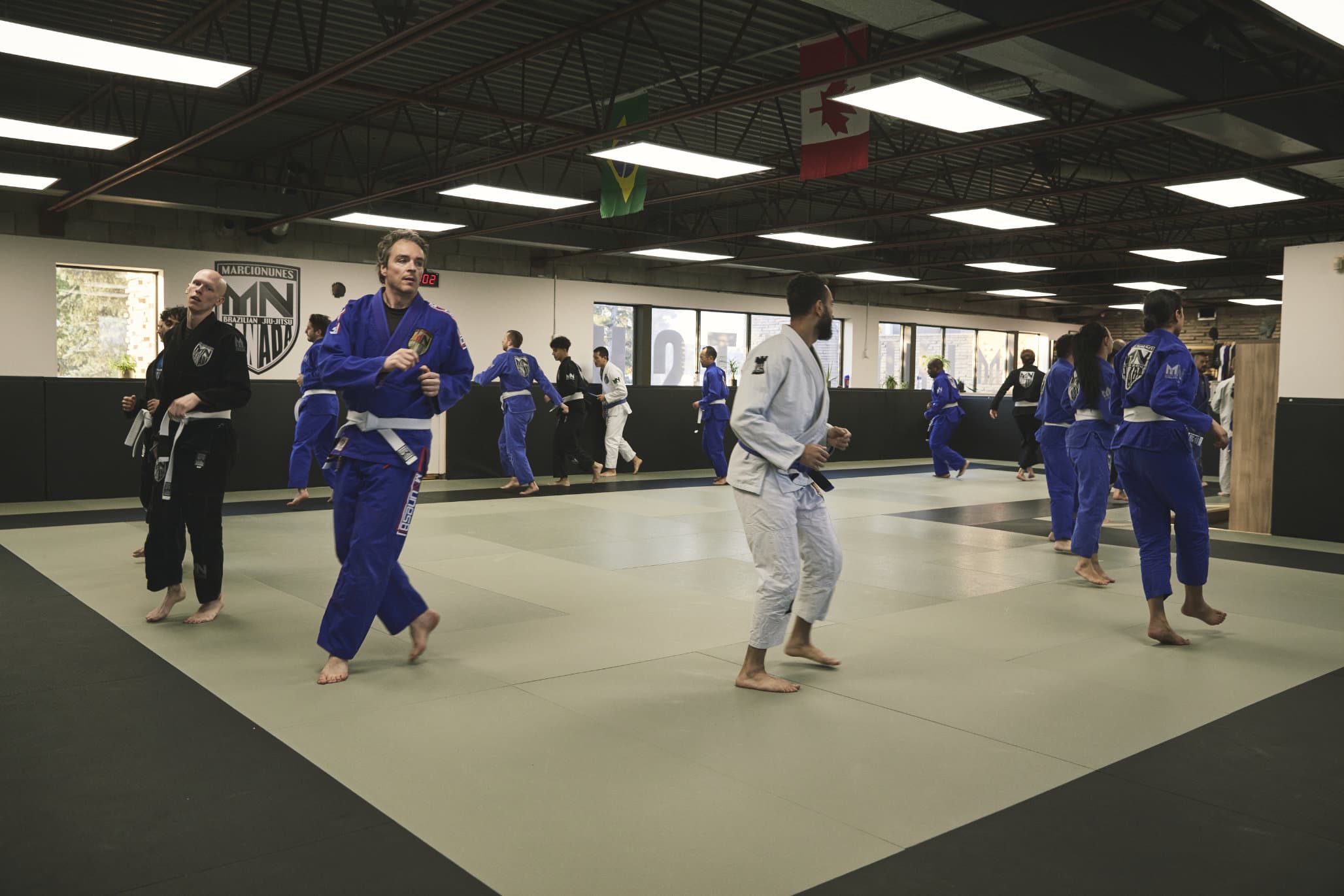
Class starts with a warm-up. Solo movements: shrimping, technical stand-ups, hip escapes, the occasional somersault that nobody warned you about. You'll feel uncoordinated. Everyone felt uncoordinated. Six months from now you'll be doing the same warm-up without thinking.
If you can't do a movement, slow it down or stop. No one cares if you're not keeping up. People care if you hurt yourself trying to keep up.
Drilling
After the warm-up, the instructor demonstrates a technique — usually one or two related moves. You'll partner up. Newer students often get paired with someone more experienced who's been told to take care of you. Trust that.
Drilling is the part of class where you do the move slowly, with no resistance, again and again. Most beginners are uncomfortable with it because nothing is "happening." Sit with the discomfort. The rep count is the point.
Two practical things:
Ask questions. Your partner will probably answer better than you'd expect. If you don't understand the technique, you won't get it from watching once. Stop and ask.
Don't force the move. If your partner is heavier or stronger, you can't muscle through. The whole sport is built on the assumption that strength alone doesn't work.
Rolling
"Rolling" is BJJ sparring. Some gyms have beginners roll on day one. Others wait. If you do roll, here's what nobody tells you.
You will not "win." You're going to spend most of the round being held in positions you don't understand. You will get tired in a way you've never been tired before — it's grappling cardio, and it doesn't transfer from anything else. Your hands will feel like they're made of lead.
That's all normal.
The most important word in BJJ is "tap." When something hurts, when you can't breathe, when you're stuck and you don't know how to escape — you tap. You tap on your partner's body, you tap on the mat, you say "tap" out loud. There is zero shame in tapping. Black belts tap. The whole sport is built around tapping as a feedback signal.
If you don't tap and you try to "tough it out" of a submission, you injure yourself. Tap early. Tap often. There are no points awarded for not tapping.
After class
You will be tired in unexpected ways. Grip-strength tired. Neck-and-jaw tired. Tomorrow morning your traps will hurt.
The traditional protocol is to thank your partners, thank the instructor, and shake hands or fist-bump everyone on the mat. You'll see this happen. Just follow what the room does.
Then go home, eat real food, and sleep. The single best thing you can do for your first month of training is to recover properly between sessions.
The two beginner mistakes nobody warns you about
Mistake one: skipping the next class because the first was hard. It's supposed to be hard. The second class is easier because you know roughly what's coming. The third is easier still. By the tenth you'll feel like a different person. The dropout cliff is around session three — get past it.
Mistake two: trying to learn BJJ from YouTube between classes. Watching technique videos when you have zero context is mostly noise. Show up to class, drill what's being taught, and resist the urge to load your head with five competing systems. After your first six months, video study compounds. Before then, it mostly confuses.
A few first-class FAQs
Should I roll if I'm offered? Yes. Tap early.
What if I cry, panic, or get claustrophobic? This is common, especially under side control or mount. Tap. Sit out a round. Drink water. Come back when you're ready.
What if I get hurt? Most "injuries" on day one are tweaks, mat burn, or sore ribs. If something feels wrong-wrong, stop, ice it, and rest a few days. A real injury usually announces itself loudly.
Do I have to know any moves? No. Pretend you know nothing — it's the most useful posture.
Should I bring a friend? If you have one who'll come, yes. If not, you'll have new training partners by the end of the first month.
After class one, three actions
Pick the next two classes you'll attend this week. Put them in your calendar. Pre-commit.
Find an open mat in your city for week two — open mat is where most beginners realize they actually like BJJ.
If you don't have a gym yet, browse by city or read the how to choose your first BJJ gym guide first. The right gym makes everything else easier.
Related Posts

Mikey Musumeci gives up the belt to make room for MMA
Musumeci is vacating his UFC BJJ title to focus on MMA training. What he is leaving, what continues, and why the transition matters.
IBJJF membership: finish the paperwork before the deadline
IBJJF membership and tournament entry are separate steps. Plan documents, professor approval, renewals, and junior accounts before registration closes.
Choosing a BJJ seminar worth your time and travel
Choose a BJJ seminar by the subject, teaching format, access, and total cost. Know what to ask the host before buying a ticket.
Comments (0)
Loading comments...