
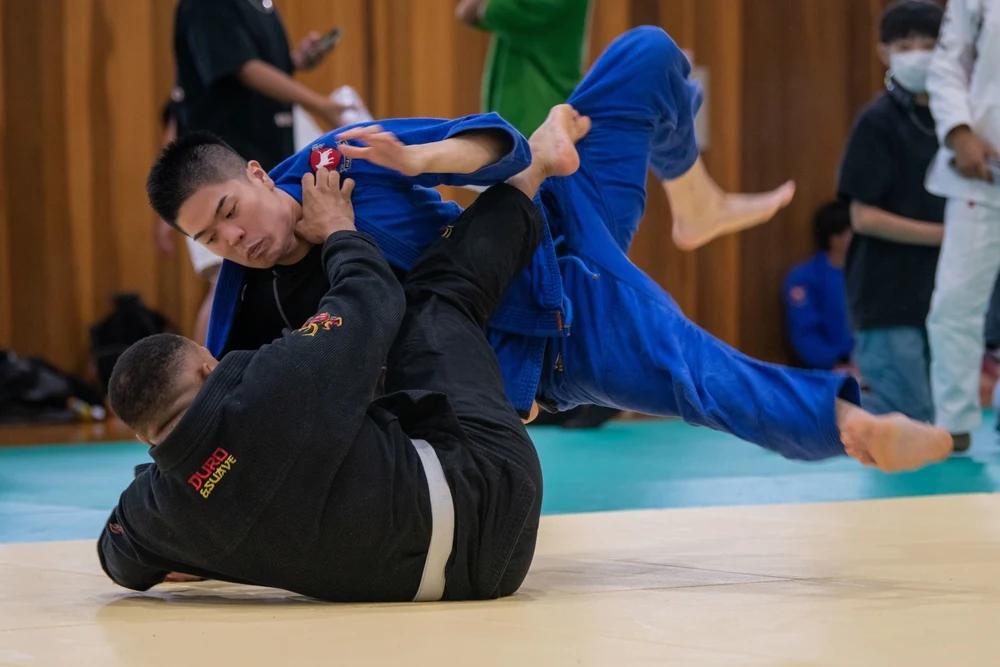
Keep score for one BJJ practice round
Quick answer: Keep score for one BJJ practice round when both partners want to test a specific decision. Agree on the starting position and score, ask a teammate to keep time and call the agreed scores, then replay the moment that changed the round. Choose the tournament's rules if you need a realistic rehearsal.
Forty seconds left. You're underneath half guard, down by two. The pass attempt stalls for a moment and you get your knee back in front. In a regular roll, that's a decent result. With the score on the floor next to the timer, the round still has a question for you.
This is a made-up practice situation with a real distinction. Recovering guard can give you more choices. It takes a separate decision to use those choices before the buzzer. One round with a score can bring that decision into view.
Tell your partner what you're testing
Ask the coach if there's room for one scored round. Tell your partner what you'd like to work on before you start. Maybe a pass regularly falls apart the instant you turn toward mount. Maybe you spend the end of a match underneath an opponent who already has the lead. Pick the situation you can describe in one sentence.
Then give both people a job. For the half-guard round, the bottom player needs to improve the position and work toward a score before time expires. The top player can stay ahead by moving, passing, or responding to the escape. Agree on the permitted attacks, the intensity, and the signal for stopping. An agreed score gives the round a problem to solve. The usual training boundaries still apply.
Choose a partner who wants that kind of round on that day. If someone has offered to help you drill a knee shield, ask before adding a clock and a deficit. When both people know what they are trying to accomplish, you can switch roles and learn something from each side. Let's Roll on giving a training partner feedback
Give the observer one clear call
A teammate at the edge of the mat can keep the time and the score. Make sure they have space to stay out of the exchange. Give them a narrow job to begin with. If all you want to examine is the end of a pass, agree that they will call when the passer clears the legs and establishes the control you chose. Have them keep the clock visible, or agree on when they should call the time remaining.
For a competition rehearsal, use the organizer's rulebook to decide exactly what you count. The IBJJF rulebook, for example, gives the guard pass three points and describes stabilization for three seconds as part of the scoring action. A teammate can practise looking for that control. An ordinary training exercise can use an even simpler count if the group understands what it's recording. IBJJF rulebook page
Leave the rest of the calls out of a simplified round unless you need them. If your observer is watching for pass control and keeping a clock, asking them to guess at every possible advantage will change the job. In a full mock match, use a coach or experienced referee to run the rules from the start. Let's Roll's IBJJF points explainer
Begin late in the round
Give the first repetition a short clock. In the example below, the starting score and time are invented. The point is to see which decision the score changes.
Set forty seconds and start in a half guard you can repeat. The top player starts two points ahead.
Name the scoring actions you will count. In a pass-focused practice round, the observer can record a controlled pass for top and a completed sweep for bottom under the agreed rules.
Run the clock through a score if there is room and both partners are still safe. At a tap or a safety stop, stop immediately. At the buzzer, name the action you would replay.
The bottom player's first improvement may be to make enough space to put a frame back in place. The clock can tell you how long that took. Your observer might notice that the recovery came quickly and the next attack came very late. That gives you a place to restart in the next repetition.
Let the top player move as well. If they only sit there to run down a short practice clock, ask the coach what active responses fit your chosen rules. You can rehearse holding a lead while still getting a look at the pressure, angle, or pass you wanted to work on.
Finish the pass long enough to recognise it
Try another round where the start score is level and the passer begins partway through a familiar pass. Put the legs where they were the last time that particular attempt failed. The bottom player tries to recover guard or come up. The observer watches what happens after the top player gets around the legs.
A useful practice distinction is the moment the legs are cleared and the moment the position can be held. If a knee slips back between you immediately, ask where you lost contact. If the hips are still controlled when you change your grip, see what made that adjustment possible. The points are a record of the agreed finish. Have the observer explain what they saw around it.
Call a stop if the pair drifts into the edge of another round. Set the next rep farther from the boundary. You want to compare whether you could keep the position from the same starting point. Moving the whole drill across the room so you have safe space is a reasonable change.
Give the tied score a purpose
Once the pair can run the drill without pausing over the rules, try a tie with a minute left. Agree what you want to learn from it. For a beginner, it may be enough to see whether you can put together a sweep attempt without giving up a reliable guard position. A competitor might want to run their event's actual tie procedures and see how those change a late choice. Read that part of the rulebook with the coach before starting.
Consider the top player in standing open guard. The observer calls twenty seconds. The top player can reach for a grip they recognise and attempt to pass, or back up and spend half the remaining time coming in again. If they back up, ask what they were trying to see from farther away. Then replay from the last usable grip so they can compare the two choices in the same position.
You may get no score in either repetition. The second look can still tell you something about the grip you chose and the time it left you. That is worth recording in a few words beside the tally.
Compare the two sides of the same exchange
Switch roles for a second round. Keep the score difference and the starting position as close as possible. You might learn that the top player's lead felt small from underneath, then discover it seemed generous once you had a good half-guard position above your partner. Both perceptions are part of the rehearsal.
Ask the observer for the first moment the choices changed. A useful answer can be as simple as the bottom player getting an underhook with fifteen seconds left. Now you can replay those fifteen seconds. For a pass you lost, ask where the knee returned and whether you had already taken your weight off the hips. These are details you can carry to a free round later.
When you go back to ordinary rolling, let the other people in the room choose their rounds. Save the score for training partners who have agreed to use it. A quick note afterward about the position and the time you had is enough to plan the next practice.
The takeaway
Use a scored BJJ round to put a specific choice under time pressure. Pick the start, agree on the calls, and keep the observer's assignment small enough to handle.
Replay one exchange after the clock stops. Work on the pass you couldn't hold or the sweep you waited too long to try. Switch roles and see what the same situation looks like from the other side.
Find time for a practice round
Ask the host if there is space for a short partner drill at a local session. Find a BJJ open mat on Let's Roll
FAQ
Should I keep score in every BJJ training round? Save it for an agreed purpose, such as testing a late decision before a tournament. Both partners should know the scoring format before the clock starts.
What is a good starting score for a competition practice round? Try an invented two-point lead with forty seconds remaining and switch roles on the second rep. Adapt the score, start position, and allowed techniques to the question you and your coach are working on.
Who should keep score in a BJJ practice round? An agreed teammate can keep time and record a specific call from the edge of the mat. Ask a coach or experienced referee to handle a rehearsal of the full rules.
What should I review after the round? Pick the first moment that changed your options, such as the knee slipping back in after a pass attempt. Return to that position and see what you can do from there with the time that remained.

Owen Bellamy
Owen Bellamy writes for the person training twice a week around a job. Nothing he suggests requires quitting the job.
Related Posts
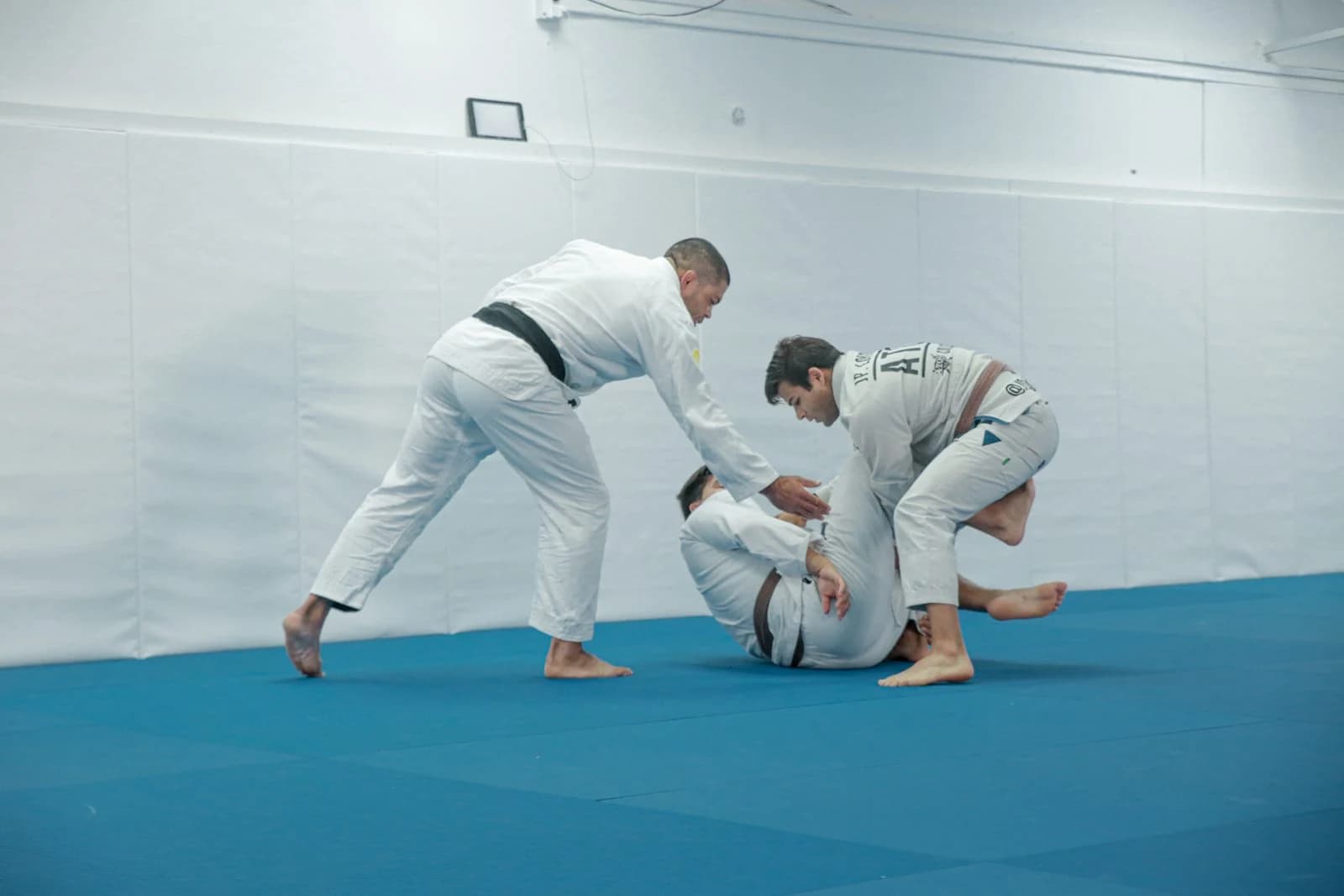
Drilling BJJ with three people: give the third person a job
A six-turn rotation gives three training partners a clear order, an observation task and a way to keep drilling the coach’s actual lesson.
BJJ with low vision: make the class easier to follow
A useful first session starts with access arrangements, clear explanations, and asking the student what works for them.
Cycling to BJJ: plan the ride home before the first round
Make riding to jiu-jitsu workable with a route check, secure kit, a parking plan, and an honest decision about the journey home.
Comments (0)
Loading comments...