
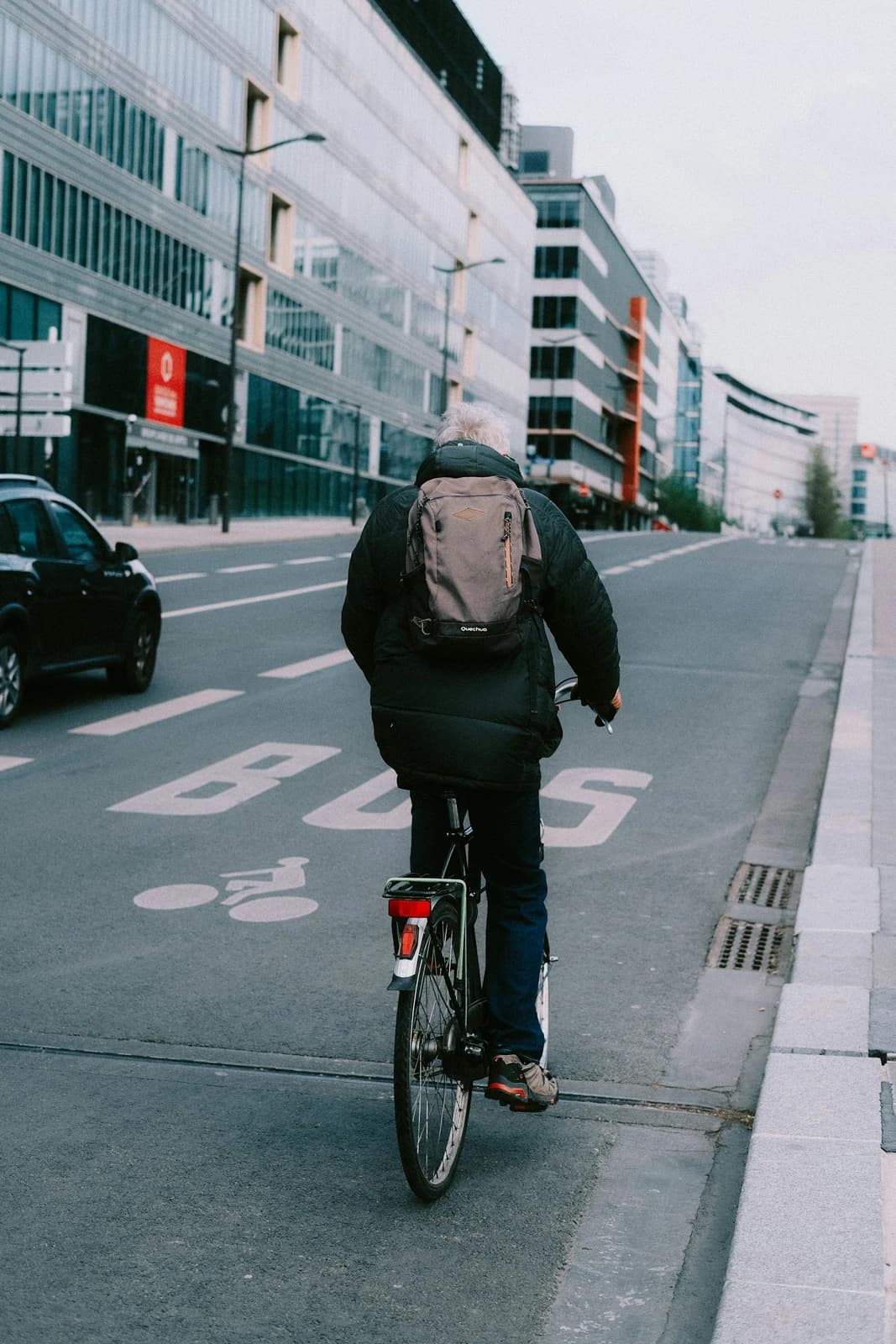
Cycling to BJJ: plan the ride home before the first round
Quick answer: Cycling to BJJ works best when the journey home is planned as carefully as the journey there. Test the route with your normal kit, ask about secure parking and changing space, and carry clothing where it cannot interfere with the bike. Keep a realistic alternative for a session after which riding no longer feels sensible.
A gi is quite portable until it is hanging from a handlebar. Then it has become involved in steering, which is more responsibility than any pair of trousers should have.
The appeal of riding to class is straightforward: it may fit your route and spare you another journey by car or public transport. The awkward details arrive around it. There is a helmet to store, clean clothing to carry, and a ride home after you have already spent an evening training.
I think the right test is a deliberately ordinary class night. If the arrangement only works with perfect weather, very little luggage, and a miraculous final round, it probably needs another look.
Test the route at the time you intend to use it
A route that feels comfortable on Sunday afternoon may be a different proposition around the time an evening class starts. Try the actual journey, including the approach to the academy, before attaching a fixed class deadline to it.
NHTSA's bicycle safety guidance recommends planning routes with less traffic and slower speeds where possible, using suitable cycling infrastructure, and riding a bike that fits and works properly. Check your local road rules as well; a general article cannot establish the rules for every street or city.
Choose a route you can follow without repeatedly handling your phone. If you need to check directions, stop somewhere suitable. An unfamiliar shortcut is not automatically an improvement simply because a mapping app gives it a smaller number.
Time the whole arrival rather than the moment your front wheel reaches the building. Parking, locking up, changing, and finding your equipment all belong before class. A ten-minute ride may still require leaving considerably more than ten minutes before the lesson begins.
Ask where the bike can stay
Find out what parking is available and what the academy permits before arriving. A hallway that looks conveniently empty may be an access route that needs to stay clear. The mat area is not an overflow bicycle store.
Ask whether there is a designated rack or another approved location. If the gym shares a building, check whether its answer depends on the building's rules. Staff may be able to describe available parking without being able to guarantee its security.
Decide what lock and storage arrangement you will use, and follow the bike and lock manufacturers' instructions. Keep removable lights or other items with you when appropriate. Avoid leaving a phone, wallet, or work laptop attached to the bike because the training bag is already full.
If the parking arrangement does not work for your bike, that is a real constraint. It may mean a different transport choice for that class. The solution does not need to involve persuading the coach to supervise expensive equipment while also teaching a room full of people.
Put the kit in a bag that belongs on a bike
The load should stay secure and out of the moving parts. NHTSA advises carrying items in a backpack or secured to the back of the bicycle, rather than giving one hand a second job holding a bag.
A backpack and properly fitted panniers each involve tradeoffs. Use equipment designed for its purpose and follow its attachment instructions. Do a short test with the actual load; an empty bag cannot tell you how the arrangement behaves with a gi inside.
Before that test, check:
Whether straps, cords, or clothing can reach the wheels or chain.
Whether the load blocks your lights or interferes with control.
Whether clean training clothes are protected from the journey's weather.
Whether the return load fits after used clothes have been separated.
That last point is easy to miss. A neatly folded clean gi has a different attitude to space from one hurriedly packed after class. Leave enough room to put everything away securely without staging a wrestling match of your own beside the rack.
Bring riding clothes and training clothes as separate decisions
You do not need to arrive wearing the same clothes you will roll in. Pack clean equipment for class and give the riding clothing somewhere to go while you train.
Ask whether the academy has suitable changing space. If you need a towel, bring one rather than assuming the gym provides it. Think about what you want to put on afterward, especially when the weather for the return differs from the outward ride.
The Montana Department of Transportation's commuting tips discuss practical equipment such as fenders, layers, and bicycle luggage. Those are useful categories to consider, not an instruction to buy every accessory before trying a short journey.
Start with the conditions you actually face. A bag that keeps clean kit separate from a wet outer layer may solve more than another highly technical item. Our training-clothes-at-work guide covers a related problem: making the transition to class manageable instead of treating it as an exercise in heroic packing.
Keep the ride home out of the bargain over one more round
Before class, decide what would make you choose another way home. That decision should include weather, the state of the bike, and whether you feel able to ride attentively. You do not need a numerical fatigue score to acknowledge that riding has stopped being a sensible choice.
If something changes during training, reconsider. The return journey is transportation, not a test of commitment to your sport. Ask for help with another arrangement when you need it, and know in advance what can happen to the bike if you leave it overnight.
This is also a reason to avoid promising every extra round. You may need time to change, pack the load securely, and leave while your planned route remains suitable. Tell a partner that you are finished when you are finished.
Our article on taking a round off makes space for that ordinary decision. On a cycling night, the class is one part of the evening. You still have to get home, and the plan should admit that rather than quietly hoping the ride takes care of itself.
Check the return conditions before leaving the building
NHTSA recommends a properly fitted helmet and equipment that makes a cyclist more visible, including appropriate lights and reflective gear when visibility is poor or it is dark. Check the applicable local requirements and the condition of your equipment before setting out.
A daytime outward ride does not establish what you need afterward. Check whether your lights are working and charged, and whether the route still makes sense under the current conditions. Do not discover that the rear light is hidden by your bag only after reaching the road.
Put your phone away before riding. If you need to change the route or contact someone, stop appropriately rather than trying to finish the conversation on the move. A booking message can wait while you get yourself and the bike to a suitable stopping place.
These checks can be brief once the arrangement is familiar. They should still happen. The point of a routine is to make the necessary decisions easier to remember, not to make them disappear after the third successful trip.
Try one repeatable night before changing the whole week
Choose a session that gives you some room to learn the logistics. Avoid making the first test the evening when you must leave work late, carry a laptop, attend class, and reach another appointment immediately afterward.
Afterward, identify the actual awkward part. Perhaps the ride was comfortable but locking up took longer than expected. Perhaps the bag worked going out but needed more space on return. Perhaps the changing arrangement was the only inconvenience. Change that part before buying an entirely new commuting identity.
Try the revised plan again if the route and conditions remain suitable. If cycling fits one class each week, that can be its whole role. It does not need to replace every other journey in order to be worth doing.
There will also be nights when another transport choice is simply more convenient. Use it. The aim is a workable way to reach training, not an additional rule that makes attending class harder whenever the weather refuses to cooperate.
The takeaway
Cycling to BJJ is a transport arrangement with a gi in it. Give it a sensible route, secure luggage, an approved parking place, and enough arrival time. Check the return journey while you still have choices about it.
Start with one class and fix the specific inconvenience you discover. If the arrangement makes that evening easier, keep it. If it creates more problems than it solves, choosing another way to class is a perfectly useful result from the experiment.
Choose a location that fits the route
Compare nearby academies in Let's Roll's gym directory before testing the journey with your normal kit.
FAQ
Can I ride to BJJ carrying a gi? Yes, if the load is carried securely and does not interfere with riding. Use suitable luggage and test the actual setup before depending on it for a class appointment.
Can I keep my bike inside the academy? Ask the host. Shared access routes and training areas may need to stay clear, and an indoor space is not automatically available or supervised storage.
Does the ride replace the class warm-up? Follow your coach's instructions for joining and preparing for class. Do not assume that arriving by bicycle exempts you from the session's opening activities.
What if I do not feel able to ride home after training? Use an appropriate alternative and arrange what happens to the bike. Consider that possibility before class so you are not trying to solve both problems at closing time.

Owen Bellamy
Owen Bellamy writes for the person training twice a week around a job. Nothing he suggests requires quitting the job.
Related Posts

Take BJJ seminar notes without missing the seminar
When filming is off limits, a few well-timed notes can preserve the starting position, the sticking point and the question you need to ask.
Drilling BJJ with three people: give the third person a job
A six-turn rotation gives three training partners a clear order, an observation task and a way to keep drilling the coach’s actual lesson.
BJJ with low vision: make the class easier to follow
A useful first session starts with access arrangements, clear explanations, and asking the student what works for them.
Comments (0)
Loading comments...