
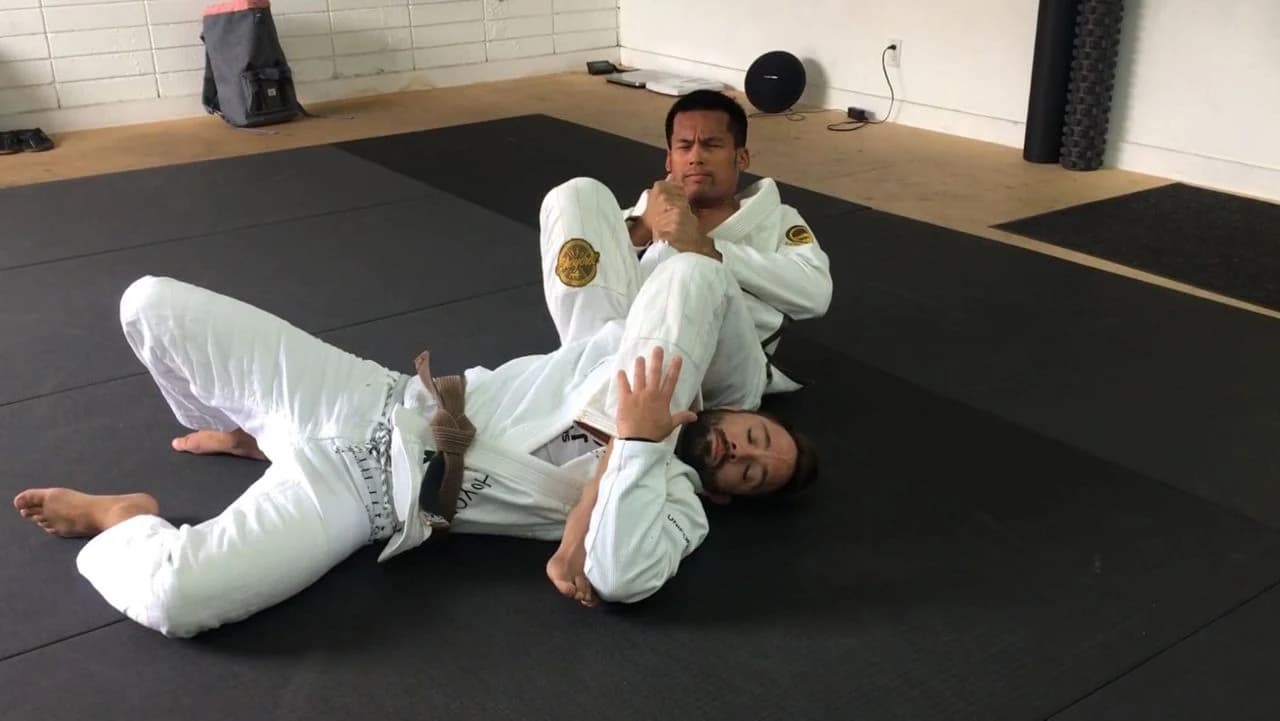
BJJ with low vision: make the class easier to follow
Quick answer: Blind and partially sighted people train Brazilian jiu-jitsu, but a welcoming sentence on a website doesn't settle how a particular class will work. Ask about the route through the building, the teaching format, partner arrangements, and communication during rounds. The student should help decide the arrangements rather than have a whole plan assigned to them.
Two students, an unfamiliar academy, and somebody willing to make the visit happen. The Royal National College for the Blind's account of Tait and Rico trying BJJ describes coaches at Combat Academy Hereford who had experience working with visually impaired people, with a college staff member supporting the visit.
That's a modest story, and I think its modesty is useful. The students went somewhere, received instruction, and tried the activity. We don't need to turn the afternoon into evidence that every barrier disappears once someone puts on a gi.
The more interesting question is how another person could arrange their own first session. That starts before the demonstration and continues after everyone else thinks the directions were perfectly obvious.
Ask what the person needs to know
Blindness and low vision don't tell a coach everything about how someone receives information. Nor do those words describe their grappling experience, confidence in an unfamiliar room, or preference for assistance. Treating the label as a complete lesson plan skips the person standing in front of you.
A useful opening conversation is specific. Ask how the student would like demonstrations described, whether they want to examine a position with a willing partner, and how they prefer to be alerted when somebody approaches. Give them time to answer without an audience forming around the discussion.
Don't make a medical assessment from that conversation. Questions about individual health restrictions belong with the appropriate clinician; the gym's job is to explain the activity and work out practical arrangements it can actually provide.
An experienced grappler visiting a new academy may need help locating the changing area while needing no explanation of half guard. A complete beginner may need the reverse. Let those be separate questions. Independence in one task doesn't cancel a request for help in another.
The route through the building belongs in the plan
The lesson begins later than the journey to the mat. An entrance with confusing access, an unannounced flight of stairs, or shoes left across a walkway can make the first visit unnecessarily difficult before anybody has attempted a technique.
Ask the academy to describe the entrance and meeting point before traveling. If assistance is wanted, agree who will meet the visitor and where. Saying somebody will probably be around is less useful than naming a role, a place, and an arrival time.
Once inside, explain the layout without assuming that pointing supplies the answer. Identify the edge of the training area, the route to the bathroom, and where belongings can be left. Ask before physically guiding somebody. The person may have a preferred method or may want only a spoken description.
For a gym, keeping ordinary walkways clear is a practical place to begin. The guide to choosing a BJJ gym can help organize broader trial questions, but an accessibility conversation needs details beyond whether the timetable suits you.
Replace pointing with information a partner can use
Put your foot there is an incomplete instruction when there isn't equally available to everyone in the room. It can also be an incomplete instruction for a sighted beginner who can't tell which of four feet the coach means.
Use names for the relevant body parts and explain whose body is being described. Left and right should have a clear reference point. Describe the starting relationship before discussing a change: who is seated, who is kneeling, and where the contact already exists. A student can then ask about the part that remains unclear.
A coach may offer a tactile demonstration with consent from everyone involved. That is an option to discuss, not permission to move somebody's hands around without asking. The student should be able to decline or ask for a different explanation.
Keep the teaching task manageable. If a demonstration contains several transitions, return to the first position and check understanding there. The goal is access to the lesson being taught, rather than a separate performance about how unusually adaptable everyone is.
A partner agreement should survive the first reset
Before beginning, the partners need a shared way to start, pause, and stop. State what position the exercise begins from, what each person is trying to do, and what will count as a reset. Confirm how both people will communicate a stop, including when their hands are occupied.
These are recommendations for arranging training. They don't establish what any tournament will permit. A gym drill can be adapted by agreement with the coach; an event's competition conditions need a separate conversation with its organizer.
Be clear about changes during the session. A new partner should introduce themselves rather than assume their presence is obvious. If the coach moves the pair to another part of the mat, explain the move and restart deliberately. An unexpected break in contact doesn't need to become a test.
Ask afterward what helped and what needs changing. There is room for a straightforward answer. A student shouldn't have to express gratitude for every arrangement before mentioning that the explanation was difficult to follow.
The room has responsibilities beyond the pair
Two partners can agree on their own pace and still be affected by neighboring rounds. The coach should consider where the exercise takes place, how the pair will be alerted to nearby movement, and who will help manage a crowded training area.
That doesn't mean putting a student on display in the center or isolating them indefinitely at the edge. Discuss the actual choices with them. A different part of the mat or a more structured exercise may make sense for one session and need revisiting later.
A short planning note can prevent the same conversation from restarting with every staff change:
Record the assistance the student requested, with their permission.
Confirm the communication and reset arrangements with the relevant coach.
Give the student a clear contact for changing the plan.
Keep private information private. Coaches and partners need the practical arrangements that concern them; they don't automatically need a person's medical history. A welcoming gym can be organized without making somebody explain their circumstances to an entire room.
Historical projects offer examples, not guarantees
Brazilian Black Belt's account of its social project describes classes begun in 2006 at Rio de Janeiro's Instituto Benjamin Constant by Rodrigo Comprido, Michelle Matta, and Felipe Costa, with João Marcello joining later. The account reports that the project ended in 2012.
Those dates matter because a historical project isn't a current class listing. Linking to it should help a reader understand that this work has precedents; it shouldn't send them to a session that no longer exists. Nor does the account establish that every academy has the experience or arrangements that project developed.
The same restraint applies to a college news story about a successful visit. It supports what happened on that visit, according to the college. It cannot promise another person's experience at another time.
I would rather have a gym give a specific, limited answer about what it can arrange than make an enormous claim about inclusion with no one responsible for the next email.
Training access and competition entry are different tasks
A student who enjoys classes may eventually want to compete, or may have no interest in it. Neither choice needs to be made before the trial session. Don't let the conversation jump from first-class arrangements straight to a medal story.
If competition becomes relevant, identify the governing organization and contact the event about its actual rules. The SJJIF's historical adapted jiu-jitsu document demonstrates that classification and procedures can be formal matters. It is an older document, not confirmation of current eligibility or a rulebook for every tournament.
Ask about current requirements, starting arrangements, and whom to contact on the day. Save the organizer's response. Avoid assuming that a practice used in training automatically carries into competition.
For everyday participation, the more immediate standard is whether the class can be followed, questions can be asked, and agreed assistance actually appears. Our article on hearing access in BJJ considers another communication problem without treating the two experiences as interchangeable.
The takeaway
A first class should provide enough information to decide whether to come back. For a blind or partially sighted student, that includes ordinary matters such as teaching, partners, and scheduling, alongside the access arrangements they actually want. None should depend on being an exceptionally patient visitor.
Begin with a conversation, make a small plan, and review it after the session. A college account or historical project can show what people have arranged before. The academy still needs to answer what it can arrange for the person contacting it now.
Find an academy to contact
Use Let's Roll's gym directory to make a shortlist, then ask each academy directly about your class and access arrangements.
FAQ
Can blind or partially sighted people train BJJ? Yes, documented projects and individual class visits show participation. Whether a particular session suits a particular person requires a conversation about their experience, preferred assistance, and the arrangements the academy can provide.
Should partners change the starting position? Discuss that with the student and coach before training. A mutually agreed practice arrangement doesn't establish a universal requirement or determine what an outside competition allows.
Do I need to explain my whole medical history to the class? No public explanation should be assumed. Share relevant health or participation concerns with the appropriate professional and academy contact, while agreeing what practical information coaches and partners need.
Does an accessible class mean I can enter any tournament? No. Competition eligibility, classification, and procedures belong to the event's governing rules and organizer. Confirm the current requirements separately before registering or making travel plans.

Rafael Moura
Rafael Moura profiles competitors as people with lives outside the bracket. Some of those stories are comebacks. Most are not, and he does not force them.
Related Posts

Take BJJ seminar notes without missing the seminar
When filming is off limits, a few well-timed notes can preserve the starting position, the sticking point and the question you need to ask.
Drilling BJJ with three people: give the third person a job
A six-turn rotation gives three training partners a clear order, an observation task and a way to keep drilling the coach’s actual lesson.
Cycling to BJJ: plan the ride home before the first round
Make riding to jiu-jitsu workable with a route check, secure kit, a parking plan, and an honest decision about the journey home.
Comments (0)
Loading comments...