
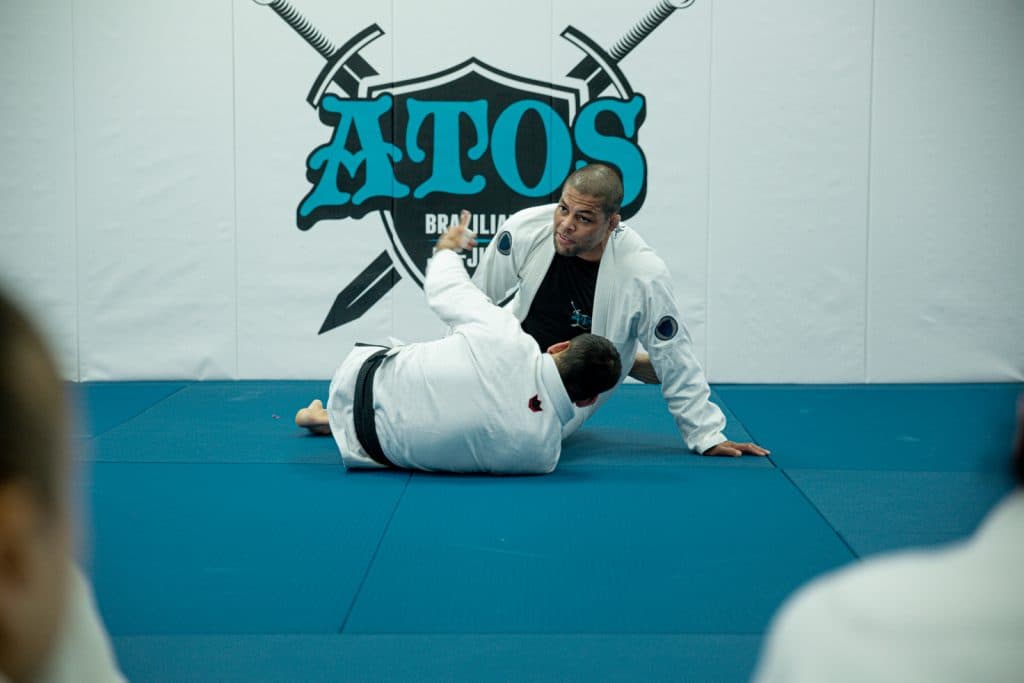
Bring a problem to your first BJJ private lesson
Quick answer: Bring a position you can describe, a small sample of what goes wrong, and a realistic goal for the lesson. Confirm the price, length, and cancellation terms before booking. Leave with a correction you can test in ordinary class, plus a clear idea of when to come back for more help.
An hour disappears quickly when its first twenty minutes are spent deciding what the hour should cover. You wanted help with passing. The instructor asks which guard causes trouble, and suddenly you are listing every guard you have ever heard named.
A little preparation changes that conversation. The objective is not to arrive with your own curriculum and make the instructor follow it. It is to show them a problem they can examine. “My right knee cut stalls here” gives them somewhere to start. “Make my jiu-jitsu better” leaves them doing the diagnosis from scratch.
Describe an exchange you can reproduce
Pick a problem that happens often enough for you to recreate it. Your partner gets a collar grip and breaks your posture. Your mount disappears whenever the bottom player turns onto their side. You reach a single leg but cannot finish without falling underneath.
You do not need the correct technical name. A short description of the sequence is enough, especially if you can demonstrate the grips. The instructor can supply the vocabulary. Avoid supplying a confident explanation of the cause before they have looked at it.
Atos HQ's June 2018 private-lesson article describes individualized work on positions and problem areas as a reason to book. That is a more useful expectation than assuming the lesson must contain an impressive technique you have never seen.
Bring a second topic only as a reserve. If the coach solves the first issue quickly, there is room to expand. If the first issue exposes a larger misunderstanding, let the session stay there. Paying for an hour does not obligate you to collect an hour's worth of new move names.
Send a small amount of evidence before you arrive
Ask whether the instructor wants a video or a written description in advance. Do not assume that booking mat time also buys an evening of unpaid video analysis.
If they agree to watch footage, choose one or two short passages and include timestamps. Start the clip before the failure. A video beginning after the guard pass has already happened may show the position you dislike while hiding the grip exchange that caused it.
Use footage you have permission to share. Tell the instructor which person you are and what you thought you were trying to do. That last part can be surprisingly useful: the action visible on screen and your intended action may be different.
Your training journal can do the same job without a camera. Pull out the recurring note, rather than handing over three months of class summaries. If every Friday entry mentions losing the same underhook, that is a workable topic. If the problem happened once against a visiting black belt, it may deserve less attention than the guard you encounter in every class.
Choose the teacher for the question you are bringing
A famous competition record can make a lesson exciting. It does not tell you, by itself, whether the person will enjoy diagnosing a beginner's difficulty with the elbow escape. Ask what they like to teach and whether your proposed topic fits.
Your regular instructor has a practical advantage: they may already have watched the pattern develop. A visiting specialist can be useful when you have a narrow technical question and enough background to work with the answer. Neither choice is automatically better.
Be direct about your experience. A newer student does not need to apologize for bringing a basic problem. An advanced student should not disguise a disagreement with their usual coach as a request for a second opinion and then turn the lesson into a debate.
If you book outside your academy, explain the relevant rules and constraints. A gi competitor preparing for a particular division needs material suitable for that context. A hobbyist who cannot reliably attend more than two classes a week needs homework that fits those two classes. Those are useful facts for a teacher, not excuses.
Settle the booking details before stepping on the mat
Price discussions are easier while everyone is still wearing shoes. Get the total and the duration in writing, and ask whether the quoted amount changes if you bring a training partner.
Atos HQ's September 2019 booking guidance separated arranging instructor availability from purchasing and confirming the lesson. It also stated a no-show policy. That is an example of why it is worth checking the academy's process rather than assuming a casual conversation after class is a confirmed appointment. Historical pricing on that page should not be treated as a current quote.
Before booking, confirm these details:
The instructor, date, start time, and actual length of mat time.
The full price and whether a partner can attend.
The policy for cancellation or rescheduling.
What you should wear and whether filming a brief recap is allowed.
Ask where to wait and how early to arrive. If the coach is teaching immediately beforehand, they may need a few minutes to finish that class. If you are late, do not assume the next student's appointment will move to make room for you.
Let the instructor change your diagnosis
You might arrive asking for a better sweep and spend most of the lesson on the grip that makes any sweep possible. That can feel underwhelming if you expected a sequence worth posting online.
Judge the explanation by whether you understand the problem more clearly. Ask the coach to show you the difference between your old version and the correction. Then perform it yourself. Watching a black belt demonstrate their own movement is useful, but the paid time should include them watching yours.
Try to explain the correction back in plain language. If you cannot describe when to use it, ask again while the instructor is still there. There is no prize for nodding convincingly through the lesson and discovering in the parking lot that you cannot remember which arm goes underneath.
Leave room for the coach to disagree with your preferred answer. Perhaps the move you want is available, but it does not address what is costing you position. You can still choose to study it. Make that choice consciously instead of spending the lesson persuading the teacher to endorse a plan you had already settled on.
Ask to feel the correction under an agreed amount of resistance
Once the movement makes sense, ask how to test it. The instructor may use a constrained exercise, a short positional exchange, or a cooperative repetition with a specific defensive response. Follow their choice and make the purpose clear.
The goal is to notice the condition that tells you the correction is available. For a passing lesson, that might be an opponent's frame you can now recognize. For an escape lesson, it might be the moment their weight shifts enough for your first movement. Do not demand a full competitive round to prove that you learned something in forty minutes.
A regular partner can help if the teacher welcomes one. They can reproduce the response that has been causing trouble, and they leave knowing what you intend to practice. On the other hand, a partner who keeps interrupting with their own problems can turn your private lesson into two unrelated sessions. Agree on their role beforehand.
If the position feels painful or unsuitable for you, say so immediately. You do not need to finish a demonstration out of politeness. The coach needs that information to adjust the lesson.
Leave with a small assignment and a way to evaluate it
Reserve a few minutes for the recap. Ask the instructor which correction deserves your attention first and what a common failure will look like. If filming is allowed, record a short demonstration or your own explanation, with permission from everyone involved.
Write the homework as an action you can perform in your regular training. “Ask for a positional start with the knee shield already established” is clearer than “work on half guard.” Decide who can help and where the exercise fits without interrupting the class your academy is running.
At the next session, try the assignment before looking for another private. Record where it works and where it breaks. Our guide to using instructional material makes the same practical distinction between recognizing an explanation and being able to use it. The follow-up question should come from your attempts, not from the next appealing video in your feed.
Do not turn one lesson into a verdict on a teacher. You may need more practice before the correction becomes clear. But you should leave knowing what you were asked to practice. If that is missing, contact the instructor for a brief clarification before assuming the answer is another paid hour.
Main photo: Atos Jiu-Jitsu HQ.
The takeaway
The useful product of a private lesson is a more precise understanding of a problem you can work on. New techniques may be part of that. So might ten minutes spent correcting a grip you thought you already understood.
Book the time with clear expectations, bring a reproducible example, and leave enough room for the instructor to change your plan. Afterward, use the correction in ordinary training and keep a record of what still fails. That gives a second lesson a reason to exist beyond the fact that the first one was enjoyable.
Find an instructor near your regular training
Browse BJJ academies on Let's Roll, then ask the school directly about private instruction and who teaches your proposed topic. Confirm availability and the full booking terms with the academy before making plans around a lesson.
FAQ
Are private BJJ lessons useful for beginners? They can be useful when a beginner needs focused help with a particular problem. They are not a prerequisite for starting. Regular classes give you practice and context; ask your instructor whether a private is the best use of your time and budget.
How many techniques should one lesson cover? There is no required number. A lesson that fixes one recurring problem can be more usable than a long sequence you cannot reproduce. Agree on the topic, then let the instructor decide how much detail the session can support.
Should I bring a partner to a private lesson? Ask first. A familiar partner may help recreate your problem, but the instructor's format and price may change. Confirm whether the partner is assisting your lesson or also receiving instruction so everyone has the same expectation.
Can I record the lesson? Only with the instructor's permission and the agreement of anyone else being filmed. A short recap may be more practical than recording the whole hour. Also agree on whether the recording is for private study or may be shared publicly.
Related Posts
Covering Your First BJJ Class Without Overteaching
Cover an adult BJJ class with a plan agreed by the head coach. Keep the lesson focused, supervise partners, and leave clear handover notes afterward.
What to Do After a BJJ Seminar: A One-Week Follow-Up
Turn a BJJ seminar into a useful week of practice. Organize your notes, mark missing details, choose one task, and follow the host's recording rules.
Better BJJ Rounds When Your Partner Is a Different Size
A weight gap changes a BJJ round. Use clear starting positions, agreed tasks, and controlled resets so training partners of different sizes get useful work.
Comments (0)
Loading comments...