
You can sit out a BJJ round without explaining your entire life
Quick answer: You can decline or pause a BJJ round without giving the room a personal explanation. Tell your partner clearly, follow the class procedure, and decide whether you want to resume, change the session, or finish for the day.
An invitation to roll needs an answer, not a defense statement. You can say you are taking this round off. The sentence can end there.
That sounds simple until everybody else is pairing up and you are trying to decide whether sitting against the wall will be interpreted as laziness, nerves, or a complaint about the person who asked. Those interpretations are not yours to manage in advance. What you do owe a training partner is a clear answer and a reliable response when either person wants to stop.
Declining a round is different from rejecting a person
A partner may ask because they enjoy training with you, because you are nearby, or because you are the only unpaired person they can see. You do not have to know which reason applies before answering. A straightforward refusal leaves less room for confusion than avoiding eye contact while hoping somebody else appears.
Try ordinary language: you are sitting this one out, you are finished rolling today, or you are waiting for the next round. There is no need to attach a detailed explanation about work, sleep, family, or your body. You can share that information if you want to. It is not the price of a break.
If you would like to train with that person later, say so only if you mean it. A vague promise can leave them waiting while other partners become available. It is kinder to give an honest answer now than to create a future obligation simply because saying no feels awkward.
For the person asking, accepting the answer is part of being a good training partner. A declined round does not require a follow-up investigation. Choose another partner or take your own pause.
Choose the kind of pause you actually need
Sitting out one round, changing the exercise, and ending the session are separate options. You do not need to label all of them as quitting. Decide which one fits without turning a small choice into a prediction about how committed you will be next month.
Perhaps you want to observe the next round and then rejoin. Perhaps you would prefer a supervised drill instead of open rolling, if the instructor allows it. Perhaps you need to collect your belongings and leave. Each choice changes what the people around you need to know.
A useful pause might involve:
Telling a waiting partner that you are unavailable this round.
Checking with the instructor before changing the assigned activity.
Moving to the designated resting area so you are clear of active pairs.
Reconsidering your next step without promising to restart immediately.
These are practical options, not a recovery prescription. If you feel unwell or have an injury concern, stop and get appropriate help. A blog cannot decide whether another round is medically suitable for you. Nor should the loudest person near the timer make that decision on your behalf.
You can stop after the round has begun
Agreeing to start does not commit you to finishing regardless of what happens. If you need to stop, use a clear verbal signal or tap and make sure the partner understands. The partner should release and stop promptly. Explain what you want next once both people are settled.
You may want a short pause, a different intensity, or no further contact. State the change clearly. Do not rely on a partner interpreting a smile, a grimace, or a half-finished sentence while concentrating on a position. They need an instruction they can act on.
This also works in the other direction. If your partner stops unexpectedly, release first and ask what they need afterward. A round is not improved by demanding a reason before accepting the stop. Whatever the score would have been in an imaginary match is irrelevant to that immediate responsibility.
If a partner repeatedly ignores requests to stop or change the activity, speak with the instructor and do not resume the same arrangement simply to avoid an uncomfortable conversation. The coach needs to know about a boundary that is not being respected.
Resting does not have to become secret extra work
You are allowed to watch. You are also allowed to sit quietly. There is no obligation to make every break productive by analyzing footage, counting somebody else’s mistakes, or planning the next six weeks of training.
If watching interests you, pick a small question. Notice how a partner begins the round or how a position changes after a particular grip. Keep the observation separate from unsolicited coaching. The people rolling may already be working under instructions you have not heard.
A break can also help you decide what sort of training you want when you return. You might ask for a more limited positional round instead of another open exchange. Ask the instructor whether that fits the session and find a partner who actually wants the same task.
None of this requires proving that a pause made you more effective. Sometimes it simply lets you participate in the evening on terms that work for you. Treating every ordinary boundary as a performance strategy can make it surprisingly difficult to admit that you just wanted to stop for a while.
Leave room for different levels of disclosure
Training partners can know each other well without knowing every private circumstance. A person may have reasons for limiting contact that they do not want to discuss in a crowded room. They may also have no special reason beyond preferring a break. Both possibilities deserve a normal response.
Avoid filling in the missing story. A person sitting out is not automatically injured, anxious, unmotivated, or upset with the coach. The visible fact is that they are not taking that round. If they want to tell you more, they can choose the moment and the audience.
A quiet check-in can be appropriate between friends. Offer it without making an explanation the expected answer. Asking whether somebody needs anything leaves more room than announcing that they look as though something must be wrong.
Coaches may need practical information to organize a class, particularly when supervising children or managing a specific activity. That still differs from expecting a public account of someone’s personal life. Give the information needed for the session and discuss sensitive details privately when necessary.
Make a recurring pattern a useful conversation
If you routinely want to stop at the same point, it may be worth discussing the structure of your training with your coach. Describe the pattern without diagnosing it. You could say that the last block of open rolling is not working for you and ask what alternatives fit the program.
That conversation can cover session length, class choice, partner selection, or the type of practice you want. It should not begin with a demand to justify your character. A schedule designed around somebody else’s goals may simply need adjusting to yours.
Be equally honest if your goal is competitive preparation. Tell the coach what you are currently able and willing to do, then ask how that affects the plan. A useful plan accounts for the actual training being completed. Quietly promising yourself an unrealistic workload does not give either of you better information.
Some recurring difficulties need support beyond the gym. If health concerns are involved, consult an appropriate clinician. If the issue is an interpersonal problem in the room, describe the behavior to the instructor. Different problems need different conversations; extra rounds are not a universal answer.
Receiving a refusal is a skill, too
The easiest person to decline is often the easiest person to train with later. They accept a short answer, find another partner, and do not turn the next meeting into a test of whether the refusal was personal. That makes future communication less expensive for everyone.
If a friend sits out after a difficult exchange with you, resist deciding what it means. You can ask later whether the pace and contact were appropriate. Keep the question about the training itself, and be willing to hear that an adjustment would help without insisting the previous round was fine.
Avoid making a joke that requires the other person to defend themselves. Friendly teasing depends on a shared understanding that may not exist with a new student or visitor. A room where refusal is ordinary is easier to join than one where every boundary becomes material for the group.
The same principle applies when you are the person sitting out. You can decline calmly without announcing that everybody still rolling is making a worse choice. Your decision belongs to you. Other people may want a different evening, and the room can accommodate that difference when the instructor has a clear plan.
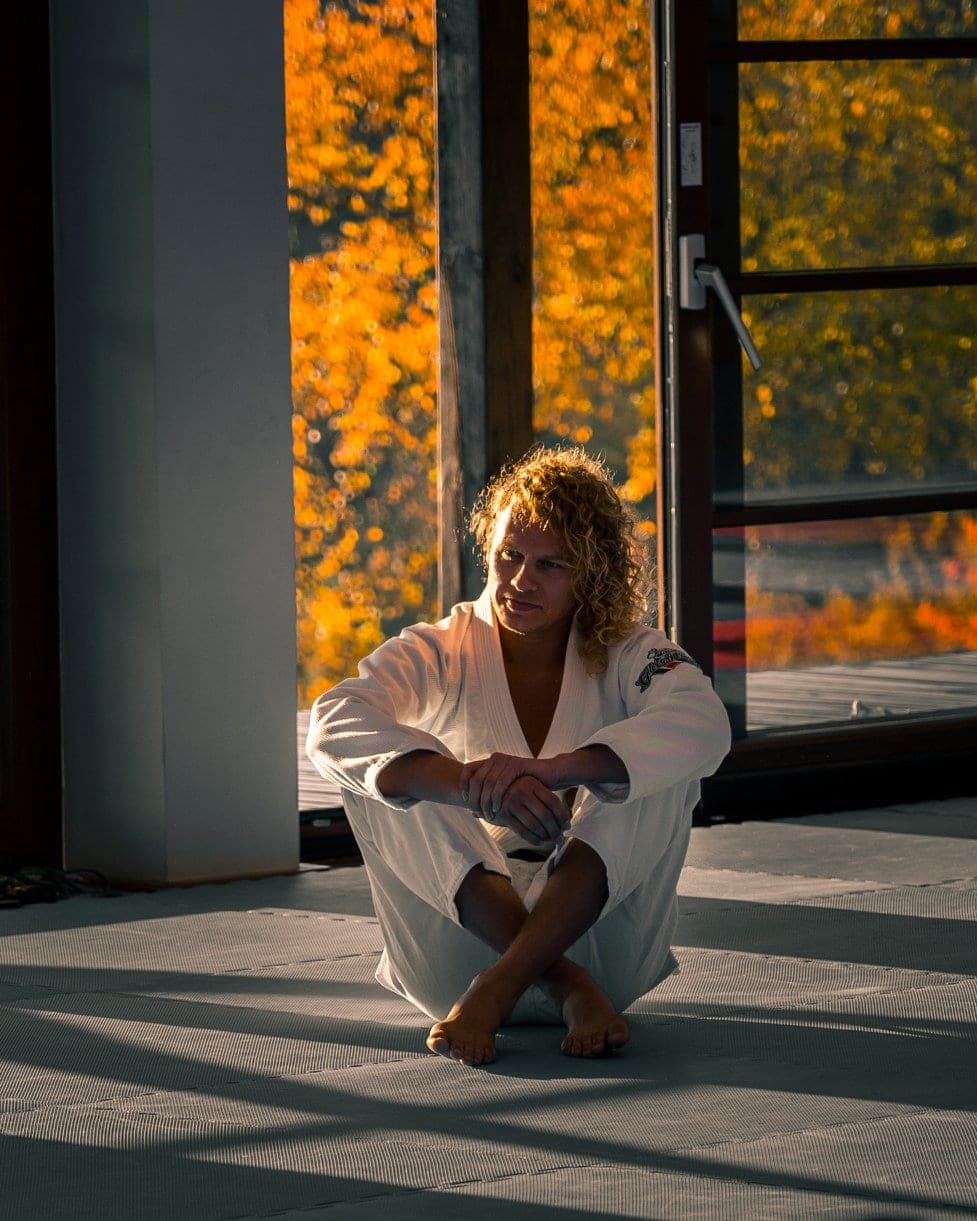
Main photo: BJJ Globetrotters; illustrative archive photograph.
The takeaway
A clear refusal is enough. Tell your partner whether you are resting, changing the activity, or finished, then follow the class procedure. You can decide what comes next without committing to a comeback before you have even sat down.
Give other people the same room to choose. Accept a stop promptly and let them decide how much to explain. Training is easier to share when a simple boundary remains simple.
Find a workable training week
Use the gym directory to explore class options, then ask the academy which sessions best suit the kind of practice and schedule you want.
FAQ
Do I need to explain why I am sitting out? A clear statement is usually enough for an adult open-rolling session. Follow the coach’s procedures and share practical information needed to organize the class, without feeling obliged to disclose private details publicly.
Can I stop halfway through a round? Yes. Signal clearly, stop, and tell your partner what you need once the exchange has ended. If a partner does not respect the stop, get the instructor’s help before continuing.
Should I promise the next round to soften a refusal? Only if that is genuinely your plan. Otherwise say you are unavailable for now. A partner can find another round more easily with a definite answer than an uncertain promise.
What if taking breaks conflicts with competition preparation? Discuss the actual pattern with your coach and adjust the plan together. Be clear about your goals and available training rather than hiding the mismatch or assuming you must solve it through willpower alone.

Rafael Moura
Rafael Moura profiles competitors as people with lives outside the bracket. Some of those stories are comebacks. Most are not, and he does not force them.
Related Posts

Mikey Musumeci gives up the belt to make room for MMA
Musumeci is vacating his UFC BJJ title to focus on MMA training. What he is leaving, what continues, and why the transition matters.
IBJJF membership: finish the paperwork before the deadline
IBJJF membership and tournament entry are separate steps. Plan documents, professor approval, renewals, and junior accounts before registration closes.
Choosing a BJJ seminar worth your time and travel
Choose a BJJ seminar by the subject, teaching format, access, and total cost. Know what to ask the host before buying a ticket.
Comments (0)
Loading comments...