

Mixed-level BJJ classes: share the lesson, change the task
Quick answer: A mixed-level BJJ class can give students a shared position while assigning different tasks within it. A beginner may need to recreate the starting connection; an experienced student may need to solve a particular response. Follow the instructor's format, make partner roles clear, and use the lesson's actual purpose to judge the work.
The same demonstration can give two students different jobs. One is locating the correct sleeve. The other already knows the grip and needs to understand why it disappears when the partner moves.
A mixed-level room can accommodate both, but the difference needs to stay visible. Doing the same movement beside someone does not establish that you are learning the same detail. The useful question is what each person is supposed to examine in this part of the lesson.
Identify the problem before expanding the technique
Listen for the position the lesson begins from and the response it is meant to address. A guard pass may be taught because the defender keeps a particular frame, not because the instructor intends to cover every possible pass that evening.
If you are new, ask the coach to name the starting connections and show the direction of the movement. If you are experienced, check which detail the demonstration emphasizes before adding your preferred variation. Both questions keep the practice attached to what is being taught.
The public description of Lachlan Giles' Side Control course, for example, includes control, submissions, and transitions within one position. A class can focus on one of those tasks without needing every student to master the complete position during the session.
Give your first rep a recognizable beginning. If the teacher starts with an established grip and your partner starts without it, you may be solving a different problem before the movement has even begun. Confirm the starting arrangement rather than rushing to reproduce the most memorable part of the demonstration.
A different task can fit inside the same position
As a suggested example, consider a lesson about maintaining side control. A newer student might be asked to hold the taught arrangement while a cooperative partner identifies its contact points. A more experienced pair might examine one controlled frame-recovery response. The teacher should decide whether those tasks suit the lesson and the students.
The distinction comes from the work, not simply the belt colors. Someone may have a high rank and little familiarity with the particular grip being taught. Another person may have practiced that grip often while still needing help with what follows it.
Ask for an appropriate task rather than declaring the exercise too basic or too advanced. “Which response should the partner give me?” is a more specific question than asking whether you should do something harder. It lets the instructor adjust the work without replacing the entire lesson.
Keep the endpoint clear. Reaching a position, retaining a connection, and finishing a submission are different outcomes. A student's useful task may stop before the dramatic final movement, even when the demonstration includes it.
The partner needs an instruction too
The person receiving the rep is part of the exercise. They need to know whether to cooperate, provide an assigned response, or take part in limited positional work. Being silent and hoping the other student guesses the role is a poor way to keep a practice task consistent.
If you are the experienced partner, do not turn a cooperative demonstration into an unannounced test. Removing every grip may prove that the beginner has not yet learned to retain it. That was already apparent. The assigned response should help identify the next correction instead of creating a new problem on every rep.
If you are the newer partner, ask what posture or connection you should provide. A technique may require a particular obstacle so the movement has a purpose. Collapsing automatically can hide that purpose just as effectively as adding too much resistance.
A short agreement can cover the practical details: the starting position, expected response, pace, and stopping point. Ask the coach when the role remains unclear. You do not need to settle a disagreement about the technique through progressively more forceful demonstrations.
Repetition can contain a harder question
An experienced student does not have to add another submission every time the basic sequence feels familiar. The existing movement may contain a timing or connection question that the earlier repetitions never answered. Find that question before building a longer chain.
You might examine when a grip becomes available, what changes if the partner regains one frame, or where your weight prevents you moving again. These are suggested observation tasks. The instructor can identify which one belongs to the lesson and whether the pair is ready to introduce it.
The fundamentals guide for experienced students looks at that choice more closely. A familiar starting shape can support detailed work when the response and endpoint remain precise. The word fundamentals does not require every rep to be identical forever.
Nor should a beginner feel required to copy an advanced pair's additions. Learn the assigned version well enough to describe it. A complicated chain on the neighboring mat is not an instruction that the whole class has quietly changed its task.
Changing partners can reveal a change in the problem
A new partner may have a different reach, posture, or response to the same connection. That gives you another example to examine. It also means the rep's conditions may have changed, so identify the change before declaring the original instruction wrong.
Reestablish the exercise together after a rotation. Show the starting grip and state the response the coach assigned. A partner who joined after the first demonstration may have received a different task, or may need the beginning shown again.
The guide to changing drilling partners addresses the practical conversation. In a mixed-level class, avoid assuming the person with more rank automatically owns the explanation. The instructor remains responsible for the lesson, and either student can ask for clarification.
Pay attention to what is actually observable. The wrist turns before the sleeve slips, or the defender's elbow returns inside before the pass stalls. Describing that moment lets the coach evaluate a specific exchange. “It works on everybody except this partner” gives far less information about what changed.
Agree on resistance before the round begins
If the class moves into positional work, listen to its boundaries. A limited round may allow one person to recover a guard while the other tries to hold the pin. It may have a different objective from ordinary rolling, even when the timer and partners look familiar.
Use a brief check before starting:
Confirm the exact starting position and connections.
State what counts as completing the assigned task.
Identify which responses the instructor allows in this exercise.
Agree on the pace and how either partner stops or resets.
These are practical questions for following the class. They are not permission to create your own rules while the coach is running a different exercise. If a submission is included, use the instructor's directions, apply pressure gradually, and release immediately on a tap or request to stop.
An experience difference can affect the appropriate pace without making the round meaningless. The coach may assign a narrow defensive response or a particular objective for each person. Follow that arrangement rather than using the first exchange to establish who deserves to be challenged more.
Leave with the correction your own reps required
Two students can finish the same class with different notes. One may need the starting hand placement. Another may need the adjustment after a defended entry. Record the detail that was actually corrected rather than copying someone else's summary because it sounds more advanced.
Ask the instructor to check uncertain wording before it becomes a permanent instruction in your notebook. A short note should preserve the setup and the correction, not invent a general rule from one example. “Keep this grip until this response” is more usable than “never let go.”
If you did not get the main task, say so. The quiet-student guide offers ways to ask without having to dominate the room. A question after the demonstration or during an appropriate coaching moment can be enough to make the next rep clearer.
For the next session, bring the unresolved detail back in the same starting position. That gives the coach something recognizable to assess. You can add the next response once the original question is understood, rather than changing the whole setup every time you try it.
Mixed-level training is easier to discuss through these concrete tasks. The shared class supplies a position and a teacher. The student's job is to know which part of the work belongs to them and which partner response they have agreed to study.
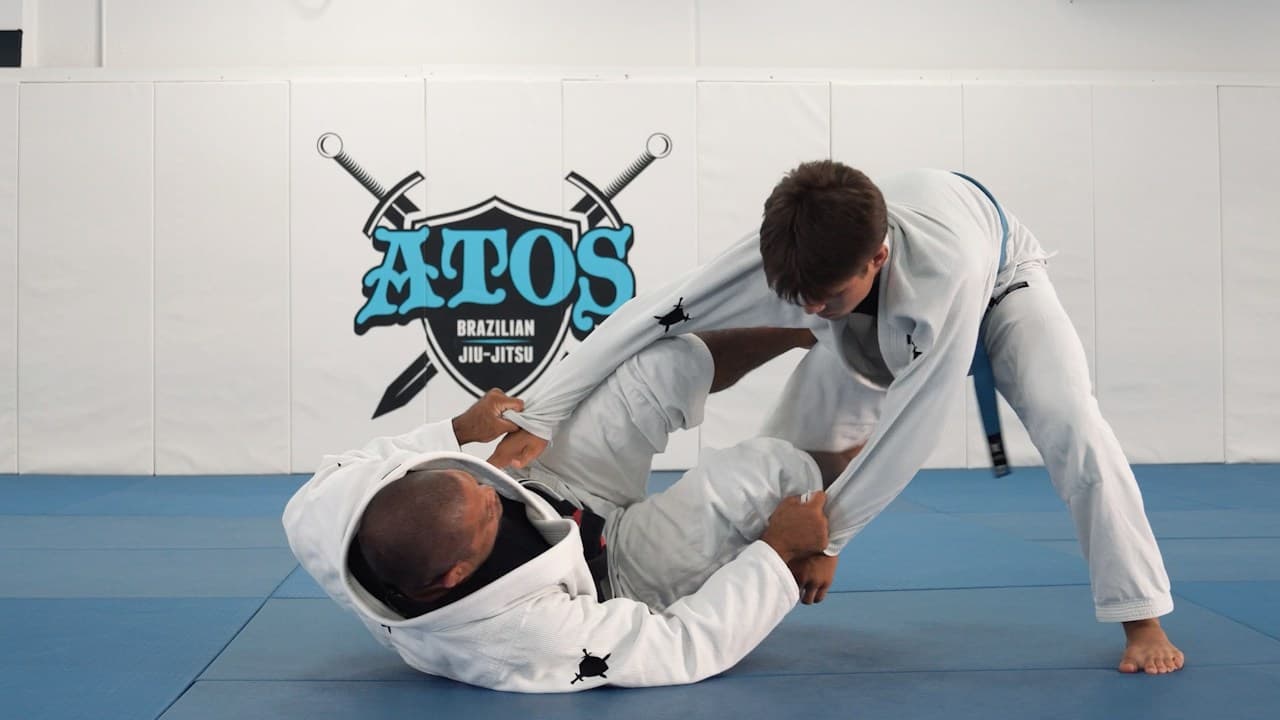
Main photo: BJJ Globetrotters; illustrative archive photograph, photographer not identified.
The takeaway
A mixed-level lesson can hold one position steady while giving different students different questions. Make the beginning, partner role, and endpoint explicit. The belt helps the coach understand experience, but it does not replace an explanation of the current task.
Use the instructor's format to choose appropriate resistance and record your own correction afterward. The session has supplied useful work when you can recreate the problem more clearly, even if another student leaves with a different detail from the same demonstration.
Find a class suited to your experience
Explore gyms on Let's Roll, then ask which classes welcome your level and how new students are introduced to mixed-level sessions.
FAQ
Can a complete beginner attend a mixed-level BJJ class? Ask the school. Some classes accept beginners with a defined introduction, while others require prior experience or attendance in another program.
Should experienced students always add more techniques? No. A familiar movement can contain a specific connection or timing problem. Ask the instructor which adjustment or defensive response fits the lesson before adding a longer sequence.
Who decides how much resistance to use during drilling? Follow the coach's exercise and agree on the partner role. A cooperative rep, limited positional task, and full round are different activities; do not switch between them without a clear instruction or agreement.
What should I write down after the class? Record the starting position and the correction you actually received. Keep uncertainty visible and ask the instructor to clarify it rather than turning one example into an unsupported universal rule.

Nina Okada
Nina Okada explains positions the way a good training partner does: one problem at a time, with the limits of the explanation said out loud. She is careful about the difference between what footage shows and what it only suggests.
Related Posts
Sharing a BJJ private lesson: two people need one clear plan
Sharing the booking works best when the training problem connects both students. Agree on roles, price, and the next practice before the lesson.

An open mat can be useful without a single full roll
Bring one familiar position, ask the host, and agree with a partner. Open mat can support useful drilling without turning every block into a full round.

BJJ class waitlists: when a booking becomes a commitment
Know when a waitlist offer becomes a booking, how cancellation rules apply, and how to release a class place you will not use.
Comments (0)
Loading comments...