
Switching drilling partners tests what you actually learned
Quick answer: Changing drilling partners can reveal which parts of a BJJ movement you understand and which depend on a familiar response. Reset the starting position, agree on the task and pace, and give the new partner time to learn the arrangement. Follow the coach's pairing plan rather than treating every change as a test of strength.
The technique works with your usual partner. Then the coach calls for a change, and the new person places a foot a little farther away. Suddenly the movement seems to have acquired a missing step.
That is useful information if you can keep the exchange clear. A new drilling partner brings a different body, different habits, and possibly a different understanding of the instructions. Before deciding that the technique has failed, work out which of those things changed.
Rebuild the agreement before the position
Begin with the task. Confirm what the coach asked the class to practice, which response the receiving partner should provide, and how much resistance belongs in the drill. A quick check can prevent several minutes of two people practicing different exercises together.
Do not assume that a higher belt wants a harder pace or that a larger partner can absorb any pressure. Ask about relevant limitations and communicate your own. Keep the conversation specific to safe participation rather than asking for someone's medical history.
If you are unsure how the drill is meant to work, call the instructor. The uncertainty is easier to resolve before one person begins resisting and the other interprets that resistance as a challenge.
A partner change does not reset the class into an open round. The original lesson still applies. Establishing that shared purpose gives both people permission to slow down, ask questions, and stop when the movement becomes unclear.
Notice the starting differences
Your usual partner may supply a familiar distance, grip, or posture without either of you discussing it. A new person can expose those assumptions simply by beginning somewhere slightly different.
Check the setup against the demonstration. Are the hips in the same relationship? Is the relevant limb available? Is the partner providing the reaction the instructor requested? If not, the next step may feel wrong because you are practicing another problem.
Some differences are legitimate variations. The coach may want you to adapt the movement to different builds or responses. Others are accidental departures from the lesson. Ask which kind you are dealing with before trying to solve everything through extra force.
Avoid making the new partner feel like an obstacle that needs correcting. Describe the arrangement: "I think this drill starts with your knee here; can we check?" That keeps the discussion about the exercise rather than declaring that their body or habits are the reason you cannot perform it.
Distinguish cooperation from assistance
A cooperative partner gives you the conditions needed to learn the movement. They do not have to complete the movement on your behalf. If they fall, turn, or release a grip before your action creates the response, you may reach the finish without understanding the connection.
The opposite problem is surprise resistance. Someone suddenly defending at full intensity can prevent you from examining the detail the class is teaching. That may be useful in a different exercise, but it changes this one without agreement.
Ask for the response you need in plain language. The coach can help define it: maintain a certain posture, keep a particular grip, or move in a specified direction when prompted. Then both people can judge the repetition against the same task.
Changing partners is especially informative when the cooperative conditions remain consistent. You can then notice how a different body affects the movement without also trying to interpret an entirely different level of resistance.
Change your fit without inventing a new technique
Different proportions can require an adjustment in distance or angle. That does not mean every difficult repetition needs a new technique, nor that the demonstrated version must look identical on every pair.
Ask the coach which details are fixed and which can vary. A particular control may be necessary while the exact hand position has some room for adjustment. Understanding that distinction helps you adapt without removing the mechanism that makes the movement work.
Move slowly while finding the fit. Do not force a partner's limb into the picture you remember from the demonstration, especially if they report discomfort. Stop and get the instructor's help when the arrangement seems unsuitable.
Our guide to learning BJJ left-handed uses a related idea: preserve the important relationships rather than copying surface appearance. With a new partner, the same question helps. What must this contact do, and can both people reach the position comfortably enough to practice it?
Use a short comparison rather than a verdict
After a few repetitions, identify one difference from the previous partner. Keep it descriptive. You might need to move closer before establishing a grip, or wait for the instructed reaction instead of anticipating it.
A useful comparison can follow four questions:
Did both partners begin in the same assigned position?
Did they provide the same level and type of resistance?
Which connection felt different on the new partner?
What adjustment did the instructor recommend?
This prevents a vague conclusion such as "the move only works on small people" from replacing an actual investigation. The issue might be distance, a missing setup, or a drill condition that changed between partners.
You also do not need to turn the exercise into a ranking of who is helpful. Some people are still learning how to receive the technique. Clear communication and an instructor's correction may solve the problem without assigning anyone a permanent label.
Give the new person their own repetitions
If you have already spent several minutes working on the movement, the new partner may be catching up or may have a different question. Share the practice time deliberately. Do not make them spend their whole turn helping you confirm a theory.
Let them attempt the technique before offering commentary. If they ask for help, answer the part you understand and bring the instructor over for the rest. A partner change can easily become an unsolicited lesson if the more talkative person assumes control of the exchange.
Use short feedback tied to what you felt. "I could turn when that grip came off" is more useful than a long explanation of how you think they should organize their entire game. It leaves the coach room to confirm whether that observation matters for the lesson.
When your partner needs a slower pace, honor it. The value of working with another person comes from a clear shared task, not from making every pair match the speed of the fastest students in the room.
Respect reasons to keep a pairing
Changing partners is an option within a class plan, not a requirement to ignore comfort or safety. The instructor may keep certain students together for a particular exercise, experience level, or other practical reason.
A student may also have a reason to decline a pairing without explaining it publicly. Let the coach help arrange an alternative. Do not make someone defend a boundary in front of the group or treat a declined round as a judgment of your worth.
If you want to practice with a wider range of partners, ask the instructor how to do that appropriately. They may suggest changing after a set number of turns, choosing a compatible partner for the specific position, or using a separate positional round later.
The useful variety is variety that still supports the exercise. A dramatic mismatch or an uncomfortable interaction is not automatically educational simply because it is different from the pairing you know.
Take one observation into the next class
At the end, note what the partner change revealed. Perhaps your familiar partner had been supplying a reaction early. Perhaps you understood the grip but needed help adjusting the distance. Perhaps the new person asked a question that clarified the movement for both of you.
Write the observation in a form you can test again. "Establish the connection before asking the partner to turn" is more actionable than "need better technique." Bring the question back to the instructor when the position returns.
Avoid using one difficult pairing as proof that your previous practice was wasted. It may have established the outline well enough for you to notice a more precise problem. That is a reasonable progression in a class, even if the new detail briefly makes the movement feel less fluent.
The next partner gives you another chance to check your understanding. You are looking for a movement whose important relationships remain recognizable across people, with adjustments you can explain instead of compensations you make without noticing.
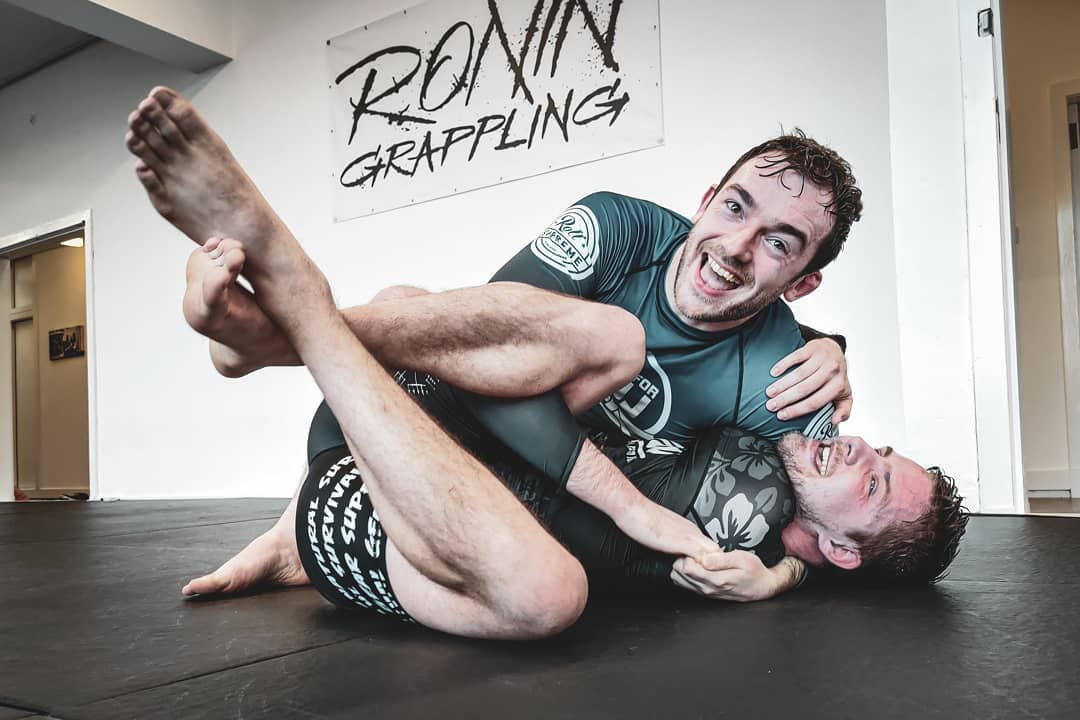
Main photo: BJJ Globetrotters; illustrative archive photograph, not a reported visit or a named subject in this article.
The takeaway
A new drilling partner can reveal assumptions hidden inside a familiar repetition. Reset the task, compare the starting conditions, and ask the coach which connections must stay intact as the fit changes.
Keep the exchange cooperative and shared. The aim is clearer understanding for both people, with enough variation to expose a useful question and enough consistency to answer it.
Find a place to practice together
Explore BJJ gyms on Let's Roll, then ask how the academy organizes partner drills and supports students during technical practice.
FAQ
Should I change drilling partners every class? Follow the instructor's plan. Variety can be useful, but some lessons or individual circumstances may benefit from a consistent pairing or a particular partner match.
Why does a technique stop working with a new partner? Check the starting position, response, resistance, and distance before drawing a conclusion. A change in any one of those can create a different problem from the drill you practiced first.
How much resistance should a drilling partner give? Use the level and response assigned by the coach. Cooperation should make the exercise possible without secretly doing the technique for the other person or adding unexpected full resistance.
Can I decline a partner change? Communicate with the instructor if a pairing is unsuitable or uncomfortable. You can request an alternative without turning the decision into a public explanation of personal circumstances.

Owen Bellamy
Owen Bellamy writes for the person training twice a week around a job. Nothing he suggests requires quitting the job.
Related Posts
Jiu-jitsu in Montreal: build the visit around a real class
Plan BJJ training in Montreal around confirmed classes, language arrangements, winter travel, visitor policies, and equipment that is ready to use.
Competing in gi and no-gi on the same day takes two plans
Prepare for gi and no-gi competition on the same day with separate rule checks, complete outfits, schedule coordination, and a realistic second-bracket plan.
BJJ gi pants that fit standing up can still fail on the mat
Check BJJ gi pants at the waist, rise, knees, and cuffs so a good-looking size label becomes a uniform you can actually move in.
Comments (0)
Loading comments...