
Sharing a BJJ private lesson: two people need one clear plan
Quick answer: A shared BJJ private lesson works best when both students agree on one connected training problem and the coach confirms the format. Ask how the session is priced, how partner roles will work, and what each person should leave able to practice. Sharing a booking doesn't automatically create two separate lessons inside the same hour.
Splitting a lesson sounds simple until one person wants help with half guard and the other arrives with four questions about takedowns. The booking is shared. The plan hasn't caught up.
Two students can make a useful pair because each supplies a partner for the positions being examined. They can also compete for the coach's attention if the session is treated as two unrelated appointments happening simultaneously.
Agree on the purpose before asking about availability. The arrangement becomes easier to evaluate when the coach can see the problem and both students understand why they are attending together.
Choose a question that links both people
A connected problem gives the session a workable center. One person may want to improve a particular passing entry while the other wants to understand the defensive frame that stops it. They have different interests within the same exchange.
That doesn't require identical belt ranks or identical games. It requires enough shared context that both can participate in the task. Ask the coach whether the combination is suitable and how much of the lesson each person needs explained from the beginning.
If the questions are unrelated, separate bookings may be a clearer choice. The issue is the fit of the work, not whether two people are allowed to have different interests. A coach may also propose a structure that connects the requests in a way neither student had considered.
The guide to preparing for a private lesson covers how to bring a useful question. For a shared session, take one additional step: explain why the other person belongs in the same exercise instead of simply supplying half the payment.
Confirm what the coach is actually offering
Ask whether the instructor offers lessons for two people, how the session is described, and whether the rate is per booking or per student. Don't infer the arrangement from a price advertised for an individual lesson.
Confirm the length, location, and what happens if one participant cannot attend. A coach may be able to run the session with the remaining student, or may need a different booking. Resolve that question before the change happens.
If the gym has its own booking process, use it. A personal agreement with your friend doesn't replace the school's terms for visitors, waivers, equipment, or access to the training space.
Keep the confirmation in one place both students can reference. There is no benefit in each person arriving with a different understanding of when the session begins or which topic has been agreed. A short message confirming the participants and purpose can save the first part of the lesson from becoming an administrative meeting.
Agree on partner roles without making one person an assistant
Both students should understand whether they are receiving instruction, providing a specific response, or simply helping demonstrate. Those roles can change during the lesson, and the coach can decide how they should alternate.
One student may have more experience and be able to supply a steadier response. That doesn't mean they should automatically spend the whole session acting as unpaid support for the other student's lesson unless everyone knowingly chose that arrangement.
Ask how the coach intends to give each person useful work. In a connected passing-and-defense problem, one student's rep can also help the other understand what the pressure or frame feels like. The instruction still needs to make those learning tasks explicit.
Stay cooperative with the assigned role. If the coach asks for one defensive response, don't add an unexpected counter to demonstrate that the move can fail. There will be time to discuss resistance if it serves the lesson. A surprise test may only replace the agreed problem with a new one before either student has understood the first.
Give each person a clear outcome
A shared lesson can be specific without promising a dramatic change in one hour. Ask the instructor to identify what each student should be able to recreate afterward and what remains a question for further training.
For the passing example, one person might leave understanding the grip needed before entering. The other might leave recognizing when the defensive frame must be established. Those are related outcomes, even though they are not identical.
Write the goals in ordinary language. Better half guard is too broad to check after a session. Recognizing the position before a particular entry gives the coach and students something clearer to examine.
Avoid adding new goals every time the coach explains a detail. A useful answer can create more questions, but that doesn't mean all of them need to be answered immediately. Keep a small list for later. The session earns its value by making the original problem clearer, not by touching every subject either person can remember.
Bring evidence without turning the lesson into a screening
If you have a relevant training clip and permission from the people shown, ask the coach whether they want to see it in advance. Identify the exchange and the question rather than sending a large folder without an explanation.
A short description can also be enough. You repeatedly reach the same passing position, then lose the connection when the defender moves a knee. That gives the instructor something to recreate, even if neither student remembers the official name.
Keep claims about the partner modest. Describing what happened is more useful than announcing that the other person always does something wrong. The coach may find that both students are reacting to a detail neither has noticed.
Our guide to partner feedback explains how to make the conversation useful. The shared lesson should give both students room to ask questions without becoming a formal opportunity for one friend to correct the other in front of an authority figure.
Settle payment between yourselves before the session
The coach's fee and the students' private split are separate arrangements. Decide who makes the booking, who pays the instructor, and how any reimbursement between the students happens.
Use a short planning list:
Confirm the total charge and what the coach has agreed to provide.
Agree on each student's share without assuming it is automatically equal.
Check cancellation and rescheduling terms.
Decide what happens between you if one person withdraws.
These are suggested questions, not a statement that every gym uses the same terms. A shared rate may make the booking more affordable, but compare the actual session you will receive rather than dividing an advertised solo price in your head.
A friend can also contribute differently by choice. If one person is treating the other to a lesson, say that clearly. You don't need to disguise a gift as an obligation to provide exactly half the instructor's attention. Clear payment expectations leave more room to concentrate on the training.
Plan the first practice after the lesson
Before leaving, ask which exercise the coach wants both of you to repeat and where the rep should stop. A shared lesson is particularly useful when you already know whom you will practice with, provided the later session follows the gym's rules.
Agree on a realistic next opportunity. It might be a short block before class or a host-approved drilling period at open mat. Don't book an ambitious follow-up schedule neither person can attend.
If you take notes, each student should record the cue they need. One shared note may preserve the general sequence while missing the different detail each person was asked to correct. Check uncertain wording with the coach before treating it as an instruction.
When you practice again, keep the initial task recognizable. If the position changes, mark that as a new question rather than concluding the private lesson didn't work. Bring one unresolved detail back to the instructor or the next appropriate class. You can continue learning without needing to purchase another session every time a partner responds differently.
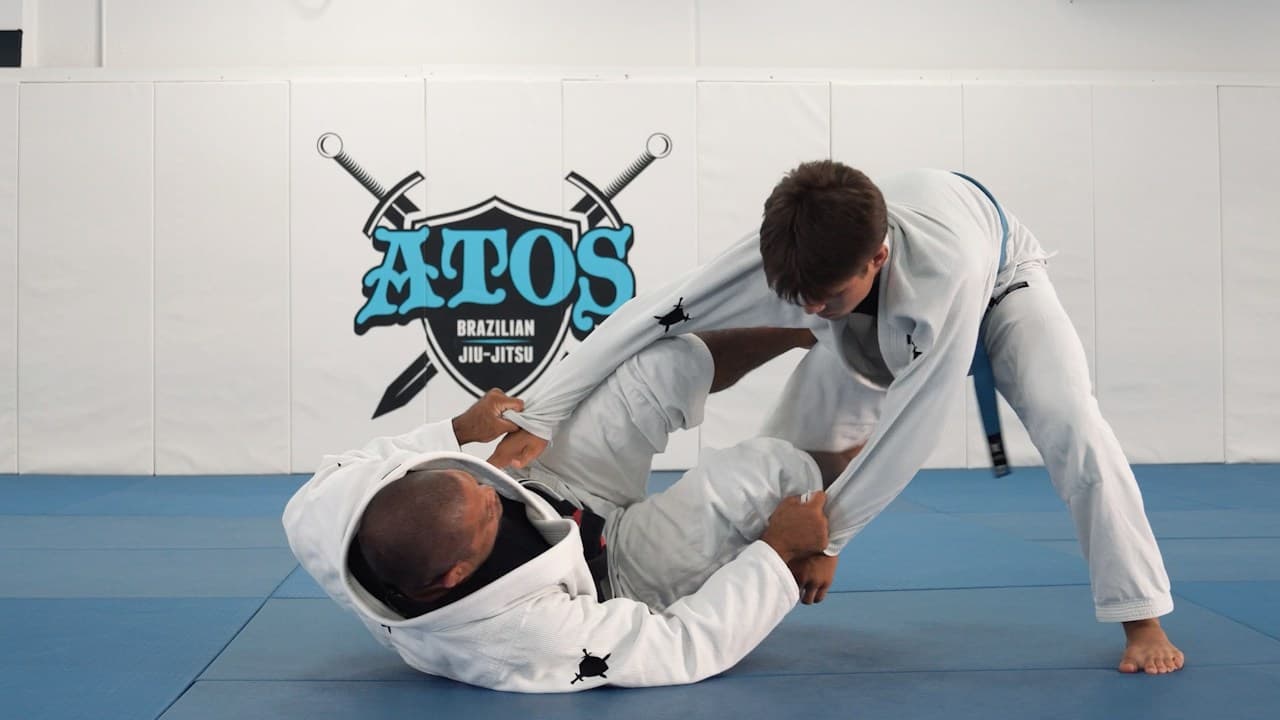
Main photo: Atos BJJ On Demand, double-sleeve guard instructional still; illustrative, not a private lesson.
The takeaway
A shared private lesson needs a shared purpose, a confirmed format, and a clear role for each student. The arrangement can be useful when both people are working on the same exchange from different sides. Unrelated goals deserve a different plan rather than an argument about who received more minutes.
Settle the price and cancellation questions beforehand, then leave with one practice task both students understand. The booking has done useful work when it makes the next session easier to begin, with the starting position and correction still clear after the coach has left.
Find an instructor for the question
Explore gyms through Let's Roll, then ask directly about private or shared lesson options and the coach best suited to your topic.
FAQ
Is a shared private lesson always cheaper per person? Ask for the actual rate and format. A two-person booking may have different pricing from a solo lesson, and the value depends on whether the work suits both students.
Do both students need the same belt rank? Not necessarily, but the coach should confirm that both can participate in the planned task. Experience differences may change how the roles and explanations are organized.
Can we each bring an unrelated topic? You can ask, but confirm how the instructor would structure the session. One connected question may use the shared format more effectively; separate lessons can be clearer when the goals don't overlap.
What if my friend cancels? Check the coach's booking terms and your private payment agreement before reserving. Confirm whether the remaining student can attend alone, whether the price changes, and how rescheduling works.

Owen Bellamy
Owen Bellamy writes for the person training twice a week around a job. Nothing he suggests requires quitting the job.
Related Posts
Lucas “Hulk” Barbosa’s best work is in the details
Lucas Barbosa’s nickname explains the first impression. His gi world title, no-gi record, and 2022 ADCC final give viewers more to study.

João Miyao’s record deserves its own first name
João Miyao’s adult world title and 2026 Master1 results tell a distinct story, even when his brother appears beside him on the podium.

Jena Bishop made time for a second sporting life
Jena Bishop’s 2026 PFL title followed a deliberate move from championship jiu-jitsu into learning a different sport.
Comments (0)
Loading comments...