
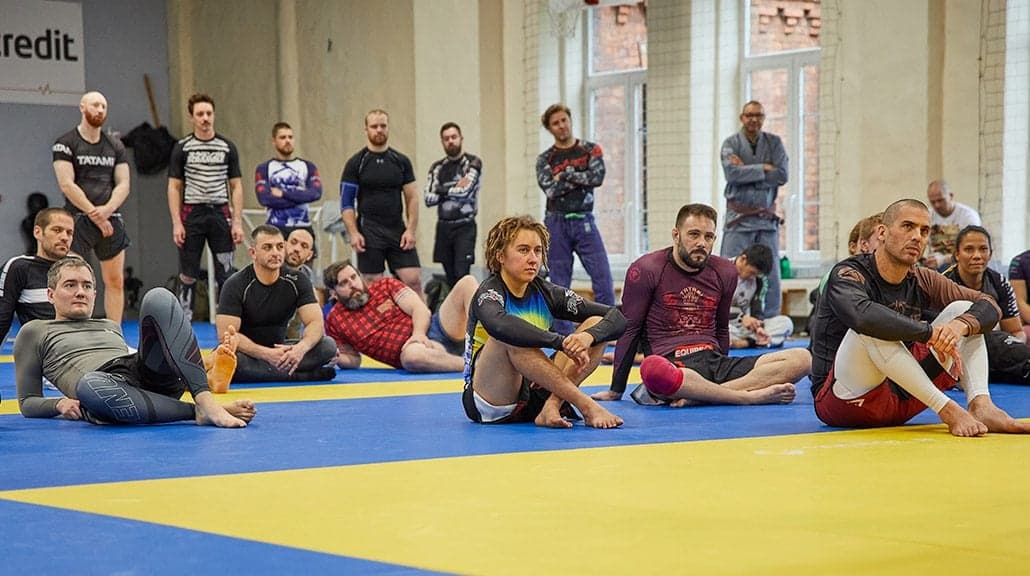
The quiet student belongs in the BJJ room, too
Quick answer: Quiet students do not need to become outgoing to belong in a BJJ gym. They need clear ways to ask for help, choose partners, and communicate during training. A welcoming room makes those things possible without treating every reserved person as a problem to solve.
Someone can train beside you for months and still have very little to say before class. That tells you how much they have said before class. It does not tell you how much the place means to them.
BJJ asks for a peculiar kind of closeness. You can know how a person defends an underhook before you know what they do for work. For a quiet student, that arrangement can be comfortable. The trouble starts when everyone else decides comfort ought to look more sociable.
An invitation does not need a performance
A useful invitation has somewhere for the answer to go. Ask whether someone wants to drill together, then accept yes or no. There is no need to append a comment about how quiet they always are. That changes a straightforward offer into an assessment they now have to manage.
The same applies after class. Mention the coffee stop, say who is going, and make it clear that joining is optional. If they decline, invite them another time without keeping score. An invitation offered with a grievance attached is a small obligation wearing friendly clothes.
This is a recommendation for how to make room for people, not a claim that every reserved student secretly wants company. Some do. Some want an hour of training and a quiet drive home. Others will feel differently from one Tuesday to the next.
A gym can leave that question open. Belonging should not depend on giving the room a satisfying explanation for your personality. Sometimes a nod across the mats is the whole exchange, and both people leave pleased with it.
Training communication can be brief and exact
There are things a partner needs to know. You want a lighter round. You do not understand the drill. You want to stop. Being quiet does not remove those needs, but neither does it require a speech to express them.
Short, specific language is often the easiest place to begin. A student might say that they are working only from guard today, ask to see the starting grip again, or decline the next round. Those are complete messages. They do not need a personal story to justify them.
A coach can help by explaining what students should communicate before a round and how to stop an activity during it. That is ordinary instruction. It should be available to the whole class, rather than saved for someone who has been labelled shy.
Partners have a responsibility here as well. Take a clear request seriously the first time. If a person has to become unusually forceful before their words count, the room has created the communication problem it may later blame on them. A quiet voice is still a voice, and a tap still ends the exchange.
Questions need somewhere smaller to land
Asking a question in front of a full class is a different task from having a question. A student may be quite willing to learn and quite unwilling to interrupt twenty people while they find the right words.
Offer another route. A coach can pause beside a pair, leave a moment after the demonstration, or let a student know when a brief question after class will fit. None of that requires making the student the subject of a public kindness. The useful part is access to an answer.
For students, a small amount of preparation can help. Identify the point at which the movement became unclear: the grip, the direction of the turn, or the partner's expected response. You can ask about that single point instead of attempting a full account of everything you missed.
If the answer differs from something taught elsewhere, the guide to learning from different coaches offers ways to compare the situations without turning the question into a challenge. A quiet student should not have to choose between pretending to understand and starting an argument they never intended.
Partner selection should not reward only speed
An open invitation to find a partner can leave some students standing for reasons that have little to do with training. Friends pair up quickly. Regulars know whom to look for. A new or reserved person may still be deciding whether it is appropriate to approach someone.
A coach does not have to eliminate choice to notice this. They can help the remaining students pair up without announcing that someone needs rescuing. They can also explain whether partners should stay together, rotate, or seek a particular level of experience.
A few ordinary habits make the process easier:
Offer a clear invitation before assuming someone is available.
Accept a declined round without demanding a reason.
Tell a new partner what the drill is meant to involve.
Leave space for them to ask for a reset or clarification.
These habits help more than quiet students. They reduce guesswork for visitors and anyone returning after time away. The aim is not to make every pairing a carefully arranged social event. It is to stop familiarity from becoming the only way a person gets to participate.
Do not confuse attention with affection
Drawing someone into the center of a joke can feel inclusive to the person doing it. It may feel quite different to the person now required to smile at an audience. A nickname, an imitation, or a running comment about their silence is not automatically harmless because nobody objects aloud.
There is no need to diagnose the reaction. If you are uncertain, ask privately whether the joke is welcome and be willing to stop. Do not make the answer another test of whether they fit in. The relationship can survive without that particular bit.
Coaches can distinguish encouragement from exposure. Praising a specific piece of work gives the student information. Announcing that the quiet person finally spoke gives the class a spectacle. The second may make the next question harder to ask.
Nor does every conversation need to become personal. Someone can be a thoughtful training partner while keeping work, relationships, and family matters outside the gym. Respecting that boundary leaves room for trust to develop at its own pace, including the possibility that it remains a training friendship and nothing more.
The quiet student can make a small request
None of this means waiting indefinitely for the room to guess what would help. If you are the student struggling to find a partner or a chance to ask questions, try one concrete request. Ask the coach to suggest a drilling partner. Ask when questions are easiest to fit in. Say that you are new to the class format.
Choose something another person can actually do. It is easier to respond to a request for help joining the next drill than to an unspoken hope that the gym will somehow feel different tonight.
You can also build familiarity through repetition. Saying hello to the same person, thanking a partner, or asking one training question is enough for a day. There is no quota. You do not need to manufacture enthusiasm or collect everybody's contact details to justify your membership.
If a reasonable request keeps being ignored, pay attention to that pattern. A particular academy may not offer the environment you want. You can compare other gyms and training locations without making a public accusation about the place you are leaving. Sometimes the fit is wrong even when nobody has committed a dramatic offense.
Leaving promptly does not cancel the evening
The last round ends, and one student heads straight for their shoes. It is easy to write a story about that departure. Perhaps they dislike everyone. Perhaps they are unhappy with training. Perhaps, less interestingly, they need to leave.
A room becomes easier to return to when leaving it is uncomplicated. Goodbyes can be brief. Skipping the group photo need not become a negotiation. Missing dinner afterward should not require an apology before the next class.
For organizers, put the information people need in a place that does not depend entirely on staying late. A schedule change mentioned only during a long conversation beside the shoe rack may never reach someone who catches a bus or goes home to a family. Quiet participation should not mean secondhand access to basic logistics.
The social life of a gym can be generous and enjoyable. It works best as an additional offer. Let the student decide how much of it to accept, and leave their place on the mats intact when the answer is less than yours.
Main photo: BJJ Globetrotters; illustrative archive photograph.
The takeaway
A quiet student does not need to prove that they are secretly outgoing. They need a room where a short question receives an answer, a declined round is accepted, and an invitation can be refused without changing the next day's welcome. Those are practical standards, not personality preferences.
Students can meet the room halfway through clear requests and considerate training. The rest can remain undecided. A person may eventually stay for the long conversation after class, or they may keep heading home with very little to say. Either way, they trained beside you.
Find another room to train in
Browse open mats, confirm the visitor arrangements with the host, and choose a session whose format suits the kind of training you want.
FAQ
Do I have to be outgoing to train BJJ? No. You do need to communicate training needs, respect partners, and ask for clarification when necessary. Those tasks can be handled with brief, direct language rather than an outgoing personality.
How can I find a partner if everyone already knows each other? Ask the coach for help pairing up before the drill begins. You can also offer one person a straightforward invitation. A declined invitation does not require an explanation or mean you cannot ask someone else.
Should a coach call on quiet students more often? Not automatically. Offer ways to ask questions and check understanding without publicly identifying someone as the quiet student. Different people will prefer different amounts of attention, so a private conversation is more useful than a blanket rule.
Is it rude to leave immediately after BJJ class? A brief goodbye and following the academy's closing routine are usually enough. You can tell the coach about a recurring early departure if it affects class participation. You do not owe the room a longer social evening.

Rafael Moura
Rafael Moura profiles competitors as people with lives outside the bracket. Some of those stories are comebacks. Most are not, and he does not force them.
Related Posts

Mikey Musumeci gives up the belt to make room for MMA
Musumeci is vacating his UFC BJJ title to focus on MMA training. What he is leaving, what continues, and why the transition matters.
IBJJF membership: finish the paperwork before the deadline
IBJJF membership and tournament entry are separate steps. Plan documents, professor approval, renewals, and junior accounts before registration closes.
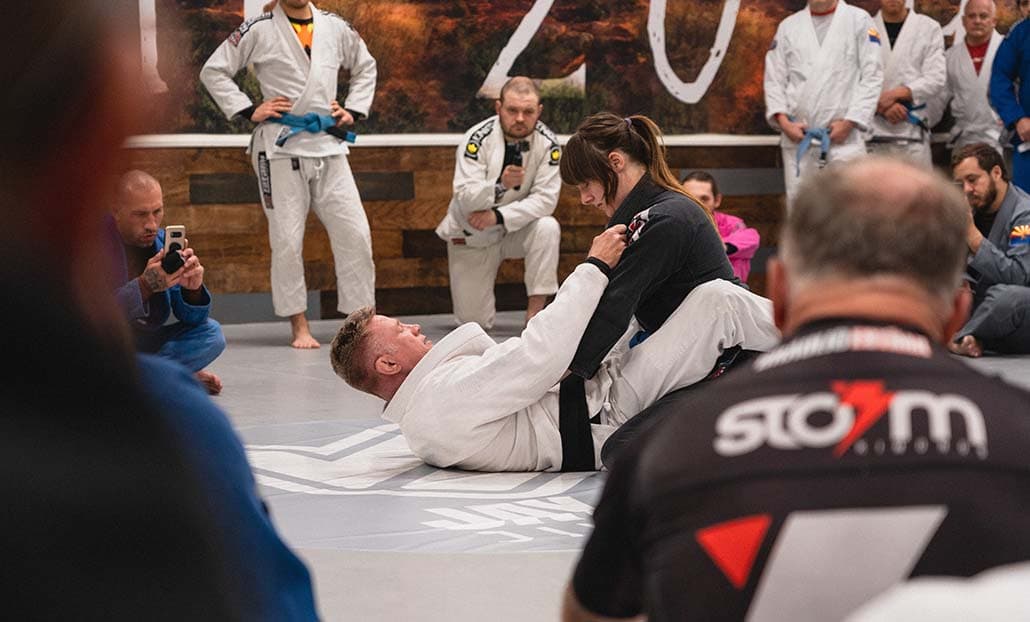
Choosing a BJJ seminar worth your time and travel
Choose a BJJ seminar by the subject, teaching format, access, and total cost. Know what to ask the host before buying a ticket.
Comments (0)
Loading comments...