

BJJ friends do not have to progress at the same speed
Quick answer: Friends in BJJ can progress at different speeds without changing the value of the friendship or the quality of their training together. Keep promotion decisions with the instructor, talk about the practical changes that affect your rounds, and find shared goals that do not require matching belts.
Two friends start jiu-jitsu together. For months, the arrangement is simple: meet outside, complain about traffic, survive class, and get something to eat afterward. Then one gets promoted. The other is pleased for them and, inconveniently, has feelings about their own belt at the same time.
Both reactions can exist without making anyone a bad teammate. The trouble begins when an uneven promotion becomes an explanation for the whole friendship. A belt changes something in the training room. It does not tell you everything about the people wearing it.
Shared beginnings do not produce identical weeks
Starting on the same date can create an expectation of parallel progress. It is an understandable expectation and a poor measuring instrument. After the first class, the two training histories begin to separate. Different schedules, partners, questions, and interruptions shape what each person practices.
One friend may attend more often. Another may spend more time in a particular class or receive feedback that resolves a persistent problem. Those differences do not have to be dramatic to matter. Two people can share a membership and still experience quite different versions of the same academy.
Avoid auditing your friend's attendance to build an argument about the promotion. You will not necessarily know everything the instructor considers, and counting sessions can turn a useful routine into a competition neither person agreed to enter. The relevant questions about your own progress belong in a conversation with the coach.
There is also no need to explain away the friend's achievement to make yourself feel better. You can acknowledge their work without deciding that the same result should have arrived for you on the same evening. The starting date was shared; the assessment was individual.
Congratulate the person without settling your own question
A promotion ceremony is a poor place to resolve uncertainty about your own rank. Congratulate the friend and let the event belong to them for a while. You do not have to announce that you feel uncomplicated joy if that is not true, but you can choose not to make the moment about the comparison.
Keep jokes proportionate. Repeated remarks about favoritism, easy standards, or how the new belt will change their personality can become tiring even when each one is delivered lightly. A friend should not have to defend a promotion they did not award themselves.
If you need to discuss your disappointment, choose someone and a moment that can hold that conversation. The newly promoted friend may be supportive, but they should not automatically become responsible for reassuring you that their achievement says nothing bad about you.
A useful private question is what you actually wanted from the promotion. Recognition, reassurance, access to a class, or evidence of progress may all be part of it. Naming the concern can help you seek the appropriate conversation instead of arguing silently with the color around someone else's waist.
Keep rank questions with the person who assesses rank
Ask your instructor what to work on and how they evaluate progress at your level. Give the discussion a practical purpose. You want an understanding of the next period of training, not a comparison in which the coach must explain why your friend deserved something you did not receive.
An instructor may identify a technical area, a decision-making issue, or another expectation within the academy's system. Ask for an example you can recognize in class. A concrete task is more useful than leaving with a vague instruction to train harder and a fresh collection of guesses.
Do not turn your friend into an unofficial assessor. They may know your game well and offer valuable feedback, but that does not make them responsible for predicting your promotion. Repeatedly asking whether you are ready can put pressure on the friendship without producing an authoritative answer.
The article on waiting for a BJJ promotion goes further into that conversation. Keep the two relationships clear: the instructor assesses rank, while a training friend can help you practice and notice changes within the work you have agreed to do.
Renegotiate rounds where something actually changes
A new belt may change competition categories or eligibility for certain classes, depending on the academy and event. Those are practical matters worth discussing. Do not assume that every part of ordinary training must become different because one person received a promotion.
Ask what the friend wants to work on. Perhaps they are preparing for unfamiliar opponents or adjusting to a different competition division. You may be able to help by providing a specific starting position or response, even if you are not pursuing the same event.
Avoid using the round to test whether the promotion was deserved. Catching the friend in a submission does not revoke their rank, and being submitted does not prove that yours is wrong. A training exchange includes tasks, experiments, fatigue, and choices that are not visible from the final tap alone.
The opposite problem is suddenly treating the friend as untouchable. You can still attempt the exercise honestly and ask for a sensible pace. Respect does not require turning every round into a demonstration for the higher belt. Agree on what the round is for and train accordingly.
Find goals that are allowed to be shared
Friendship can support training without requiring the same outcome. You might attend a regular session together, help each other prepare questions, or review one position after class with the instructor's permission. The shared activity can remain stable while each person works on a different problem.
Possible arrangements include:
Meeting for one class that suits both schedules.
Taking turns supplying the response needed for a drill.
Sharing travel to an event while entering different divisions.
Comparing notes on a seminar without demanding identical takeaways.
Making time outside the gym that does not involve discussing rank.
Choose something both people actually want. A higher belt should not be assigned permanent unpaid coaching duties because the friendship began at white belt. A lower belt should not be expected to serve only as a convenient practice partner for the other's competition plan.
Keep the exchange balanced over time rather than counting every repetition. Sometimes one person needs more help. The arrangement becomes uncomfortable when that need is treated as an entitlement or when gratitude is replaced by an assumption that the other person's training is less important.
Leave room for different ambitions
Friends may discover that they want different things from jiu-jitsu. One becomes interested in competing frequently; the other wants dependable evening classes and a good room to train in. Neither preference has to be framed as a failure to keep up with the original plan.
Be honest about the parts you want to share. You may enjoy attending a tournament as a supporter without entering it. You may want to train together but not spend an entire holiday visiting academies. Clear answers prevent an unspoken expectation from turning into resentment later.
Avoid making ambition a character judgment. More competition does not automatically mean someone cares more about the friendship or the sport. A quieter training schedule does not prove that a person has become lazy. Work, family, interest, and practical limits can change without requiring a moral explanation.
The discussion of taking BJJ seriously without competing offers another way to think about commitment. A friendship can accommodate different forms of participation when neither person insists that the other use their own goals as the standard.
Notice when the comparison has left the mat
An occasional uncomfortable comparison is different from a friendship organized around keeping score. If every conversation returns to who won rounds, who received attention, or who is improving faster, consider changing the setting. Spend time together where neither person is performing a training identity.
A direct conversation may help if specific behavior is causing strain. Describe the repeated joke, unwanted advice, or competitive framing rather than accusing the friend of having become a different person. Ask for the change you need in terms they can understand and act on.
You can also change training partners for a while without ending the friendship. Different rounds may give both people room to work without the familiar comparison attached. Explain that choice plainly if needed, especially if a sudden withdrawal would otherwise be confusing.
Some training friendships remain close outside the academy; others belong mainly to a particular period or schedule. Neither outcome needs to be forced. What matters is allowing the relationship to reflect the people involved rather than using a shared first class as a contract to progress together forever.
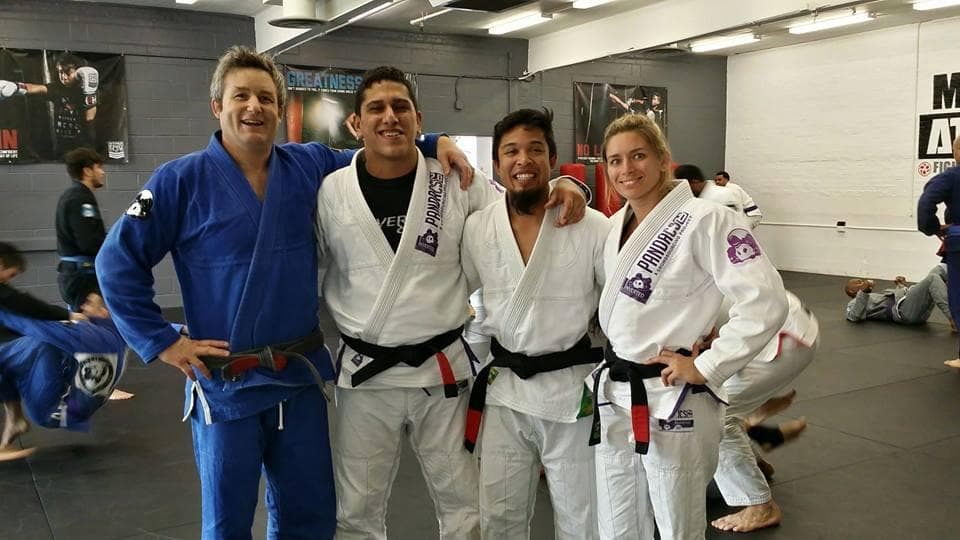
Main photo: BJJ Globetrotters; illustrative archive photograph.
The takeaway
Starting BJJ together does not create a shared promotion timetable. Congratulate your friend, discuss your own progress with the instructor, and keep ordinary rounds from becoming arguments about who deserves which belt.
You can continue helping each other while training toward different goals. The friendship needs consideration and clear expectations; it does not need matching ranks to justify its place in the room.
Keep a shared session on the calendar
Explore BJJ open mats on Let's Roll, confirm the host's requirements, and choose a session where both of you can train toward your own goals.
FAQ
Is it wrong to feel disappointed when a friend gets promoted first? Mixed feelings can happen. What matters is how you handle them. Let the friend enjoy the promotion and take questions about your own progress to the instructor privately.
Does submitting a higher-belt friend mean I should have their rank? A training result does not establish a complete assessment. Rounds involve different tasks and conditions, and the instructor's promotion decision considers more than a single exchange.
Should the higher-belt friend coach the lower-belt friend? Only when both want that arrangement and it fits the class. Friendship does not automatically create a permanent teaching obligation or make informal advice a promotion assessment.
Can we still be good training partners with different goals? Yes. Agree on the purpose and pace of each round, take turns supporting specific tasks, and avoid requiring identical competition plans or attendance schedules.

Rafael Moura
Rafael Moura profiles competitors as people with lives outside the bracket. Some of those stories are comebacks. Most are not, and he does not force them.
Related Posts
Your First Month After Changing Jiu-Jitsu Gyms
Settle into a new BJJ gym by learning its routines, meeting partners, and confirming training expectations. Evaluate the fit without turning rounds into tests.
The Portuguese hiding in your jiu-jitsu class
Faixa, guarda, treino, mata-leão: a few words that make Portuguese-language jiu-jitsu easier to follow, without turning class into an exam.

The open-mat playlist has one job
Good music can give a training room some personality. It does not need to win an argument with the round timer.
Comments (0)
Loading comments...