
The Portuguese hiding in your jiu-jitsu class
Quick answer: Start with Portuguese words attached to things you already recognize on the mat: belts, training, guard, and familiar submissions. Learn them in a sentence or demonstration, then ask someone how they use them. You do not need to speak Portuguese to train BJJ, and knowing a technique's name does not mean you know the technique.
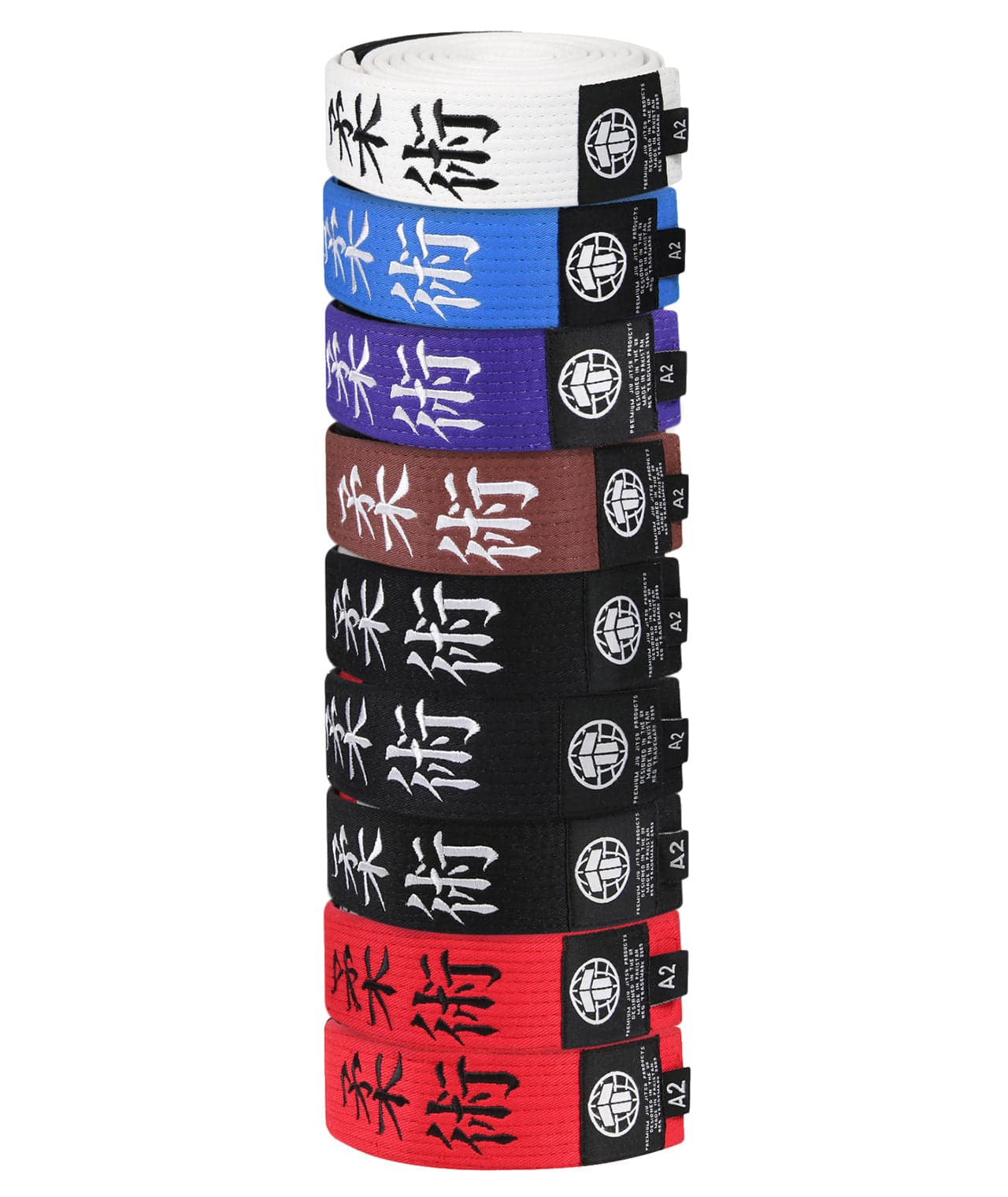
Your belt and a track on an album can share a Portuguese word. Both appear among the meanings of faixa in Priberam's dictionary. Context does a fair amount of work. Nobody is promoting you to the third song on a playlist.
That is a useful way into the Portuguese scattered through jiu-jitsu. A word heard beside a demonstration makes sense; the same word dropped into a translation app may come back wearing an entirely different outfit. You recognize the movement but wonder why the internet has handed you a road lane.
There is no language entrance exam for the mats. Still, a small working vocabulary can make an instructional less opaque, a tournament caption easier to follow, or a conversation with a visiting coach more interesting. Start small enough that you will actually remember it.
Faixa is the thing you can point at
In the gym, faixa is the belt. That concrete object makes it an agreeable first word: you can hear it, see it, and connect it to something without needing a lecture. The dictionary's other meanings explain why translating an isolated word does not always land where a grappler expects.
Try learning a whole phrase from the person using it. A belt announcement, for instance, gives you more than the noun. It shows you how that speaker builds the description around it. Save the phrase rather than a screenshot of five disconnected translations.
The temptation is to collect every rank and color immediately, then quiz yourself as though a Brazilian customs officer might demand the adult belt sequence. Resist. One phrase you can recognize next week is more useful than an ambitious note you will never reopen.
And do not turn someone else's promotion into your language practice session. Congratulate them first. There will be another opportunity to ask about the spelling when everyone is no longer trying to take the same photograph.
Guarda is familiar, but the demonstration still matters
Guarda gives an English speaker a helpful foothold. Priberam includes a defensive posture among its meanings. In a BJJ lesson, the surrounding demonstration tells you which guard the instructor means and what they want you to do from it.
Recognition is only the beginning. Hearing a familiar noun can make the rest of a sentence feel more understood than it is. You catch the word for guard, nod confidently, and miss the instruction that changes whose turn it is. The nod is doing advanced work your vocabulary cannot yet support.
Watch who is demonstrating and where the movement begins. Then ask for the part you missed. A precise question about the starting position is easier to answer than announcing that you understood absolutely nothing, particularly when you understood quite a bit.
For video study, bookmark a short passage with a clear view of the bodies. Return to that same passage with its captions. The goal is to connect a sound with an identifiable part of the lesson, not to turn every unfamiliar syllable into a new technique.
Treino belongs on the calendar
Treino is a wonderfully practical word because it can describe training or a training session. Priberam's entry includes preparation for an activity or competition and the individual sessions in that preparation. It gives you something useful to recognize before anyone even starts grappling.
A schedule or a teammate's caption offers a different language lesson from an instructional. The question may be when people are training, not what they are drilling. Learning only submission names leaves you oddly well equipped to discuss a choke and poorly equipped to establish whether the door opens at six.
Treat dates and times as their own information. If you are arranging a visit, get the day, local time, and class type confirmed clearly. Recognizing one word in a message is a poor reason to assume you have understood the entire invitation.
When browsing gyms to visit, use the listing to find the place and the gym's own contact details to confirm the practicalities. A friendly message in plain language beats an elaborate translated paragraph that accidentally makes a very confident request you did not intend.
Mata-leão is memorable without an invented origin story
Some vocabulary does not need much help staying in your head. Mata-leão combines words associated with killing and a lion; the dictionary identifies the hold as a choke applied from behind. In English-language BJJ conversation, you will usually meet the relevant technique as the rear-naked choke.
That literal image is memorable. It is not evidence that someone once tested the move on a lion. A vivid name and a documented history are different things, and the space between them can fill up with an impressive amount of gym folklore.
Keep the name separate from the instruction, too. Recognizing the term in a video does not explain hand placement, a partner's defense, or when to release. Those require actual coaching and controlled practice. A translation should never become permission to improvise a submission on an unsuspecting partner.
The useful language exercise is much simpler: recognize the term, identify what the instructor is discussing, and notice how the surrounding words change across explanations. You can enjoy a dramatic name without making your next round unnecessarily dramatic.
Build a tiny notebook, not a second syllabus
A useful vocabulary note should tell you where you heard a word. Without context, a list can become a small museum of things you vaguely remember knowing. Add a link or a sentence and the word has somewhere to live.
Try four fields for a new entry:
The word as the speaker or caption spells it.
A plain-English meaning appropriate to that particular lesson.
The video timestamp, class topic, or message where you found it.
One question you still need someone to answer.
Five entries are plenty for a start. Revisit them before adding another twenty. If a word keeps appearing and still confuses you, that is a better candidate for attention than an elaborate submission name you have never heard outside one highlight reel.
Keep any pronunciation note provisional. Your own English spelling of a sound can be a useful reminder, but it is a reminder for you, not an authoritative guide to Brazilian Portuguese. Listening to the original speaker again is more useful than becoming fiercely loyal to the approximation you typed on the bus.
Ask for meaning without asking someone to perform
A teammate who speaks Portuguese is a person at training, not an on-call translation department. Ask if they have a moment. Show them the short phrase you mean. Accept a quick answer, and let them get on with the round they came to have.
There is also a difference between asking what a word means and demanding an explanation of an entire culture. A question about a caption is manageable. A request to settle every naming dispute in jiu-jitsu before the timer sounds is quite a shift to be handed for free.
Be comfortable using English if that is the language both of you share most clearly. Adding a Portuguese word should help the conversation, rather than make it a performance of belonging. Nobody needs you to audition for the role of someone who has been training longer.
If you have misunderstood a word, a correction is enough. Write the corrected version down. You do not need a lengthy apology, an account of what the translation app said, or a defense of why your version was technically plausible. The person has given you something useful; make it easy for them to do so again.
Use the language to follow more of the sport
A modest vocabulary can change what you choose to open. A Portuguese caption no longer has to be an automatic skip. You may recognize enough to understand the subject, then check the rest carefully instead of relying on a guess.
For competition language, go to the organization itself. The CBJJ's books and videos page provides Portuguese rules materials and points viewers toward rules videos. Use those materials for their actual purpose, especially if you need to understand how a term is being used in a scoring decision.
A dictionary meaning cannot settle a rules argument. Nor can a translated comment below a match. If a term appears to determine points, an advantage, or a penalty, check the relevant event's rules and the sequence itself. Everyday language and a competition definition do different jobs.
For everything less consequential, allow yourself a little incompleteness. You can follow the broad subject of a conversation without catching every joke. You can enjoy an interview while needing subtitles. Learning enough to become curious is a perfectly useful result; fluency does not have to be the price of admission.
Main photo: Tatami Fightwear / Ultra Deluxe belt product photograph.
The takeaway
Start with words attached to something you can already recognize: the belt around a waist, the guard being demonstrated, the session on the schedule. Keep the source beside the translation and ask short, specific questions when the meaning remains unclear.
The best sign that the vocabulary is helping is fairly ordinary. You understand a little more of a lesson or a message, and the conversation continues. There is no need to announce that you have acquired four Portuguese words. They can simply do their jobs.
Put the vocabulary next to some actual training
Find a suitable open mat, confirm the details with the host, and arrive ready to learn what that room calls things.
FAQ
Do I need Portuguese to learn BJJ? No. Choose instruction you can understand, and ask for clarification when a term is unfamiliar. Portuguese vocabulary can help you follow more material, but it is not a prerequisite for starting.
Does faixa always mean a martial arts belt? No. The word has several meanings, including a strip or band and a music track. The gym conversation supplies the context that makes the belt meaning relevant.
Should I copy an instructor's pronunciation exactly? Listening carefully is useful, but prioritize being understood and recognizing the word in context. Ask for a correction when appropriate instead of treating an improvised phonetic spelling as a fixed rule.
Can I use a translation app for a gym visit? Yes, as a practical aid. Confirm important details such as the date, start time, fees, and class type directly. A plausible translation is a starting point, especially if the message affects your plans.

Kit Langford
Kit Langford covers the louder parts of jiu-jitsu — the marketing claims, the arguments, the gear that promises more than gear can deliver. The jokes are expected to survive a fact-check.
Related Posts

Mikey Musumeci gives up the belt to make room for MMA
Musumeci is vacating his UFC BJJ title to focus on MMA training. What he is leaving, what continues, and why the transition matters.
IBJJF membership: finish the paperwork before the deadline
IBJJF membership and tournament entry are separate steps. Plan documents, professor approval, renewals, and junior accounts before registration closes.
Choosing a BJJ seminar worth your time and travel
Choose a BJJ seminar by the subject, teaching format, access, and total cost. Know what to ask the host before buying a ticket.
Comments (0)
Loading comments...