
Your First Month After Changing Jiu-Jitsu Gyms
Quick answer: Treat the first month at a new jiu-jitsu academy as time to learn its routines and build working relationships. Explain your training background honestly, confirm class and equipment expectations, and ask questions without turning every difference into a debate. Evaluate how the gym fits your actual week, not just how your first few rounds went.
You know how to escape mount. You don't know where this academy puts its shoes, whether partners choose each other, or which instructor takes the class you can attend after work.
That is an odd combination of experience and uncertainty. A move across town can make a purple belt feel new again without changing anything about the belt around their waist.
The first month is a useful period to observe and ask questions. It is not a mandatory probation or a promise that every academy will suit you. You can appreciate your previous gym and still give the new one a fair chance to become part of your week.
Explain the move without delivering a courtroom speech
Introduce yourself to the instructor with the information they need to place you: your rank, approximate training experience, recent attendance, and the kind of classes you hope to take. Mention relevant limitations privately so you can discuss appropriate participation.
Your reason for moving can be ordinary. A changed commute or a better class time doesn't need an argument about which academy produces superior jiu-jitsu. If you want to discuss a difficult previous experience, choose a private conversation and describe it accurately.
You don't owe every new training partner the full story. Repeating grievances beside the mat can turn introductions into an uncomfortable referendum on people they may know. Keep the first exchanges focused on names and the practice in front of you.
Likewise, praise your former coaches without using them to grade every detail of the new class. Appreciation is easy to hear. A running announcement that your old professor explained everything differently gives the new instructor little room to teach the lesson you came to attend.
Confirm the routine before buying into assumptions
Ask which class is appropriate for your first visit and confirm the equipment policy directly. The information that mattered at your previous academy may not be enough here.
BJJ Fanatics' guide to visiting other gyms recommends contacting the school about class times, what to bring, and fees, then arriving early enough to handle the unfamiliar routine. A permanent move benefits from that same initial clarity, even though the later membership conversation is different from a drop-in visit.
Check the practical details that will affect your week:
Which sessions your membership includes and whether booking is required.
What clothing is permitted for the classes you plan to attend.
How the academy communicates closures and timetable changes.
Who handles membership questions, including any written cancellation process.
Read the actual terms supplied to you rather than relying on another student's recollection. This is a recommendation to understand the arrangement, not legal advice about a contract. Get unclear costs explained before assuming a package includes every class on the timetable.
Tell new partners what kind of round you want
New partners do not yet know your ordinary pace or how you communicate during practice. Start with a brief introduction and discuss the round where needed. Your rank does not tell them whether you want competition intensity tonight.
Ask about the allowed techniques and the instructor's expectations for that class. If the answer is unclear, check with the instructor before experimenting. What was normal at your old open mat may not belong in this session.
Keep your first rounds readable. Work at a pace you and your partner have agreed to, stop promptly when asked, and avoid escalating because an unfamiliar person passed your guard. You can learn a great deal about a partner without turning their first impression of you into a scoreboard.
Our guide to being a good training partner applies here too. The new relationship is built through actual behavior across several sessions. You do not need to demonstrate every submission you know before someone will remember your name.
Learn the local version before comparing it
A familiar position may be taught with a different grip, starting angle, or response. Try to understand the specific problem the instructor is addressing before deciding that the difference is an error.
Ask a question about the movement itself. You might explain that you are used to placing the hand elsewhere and ask what this placement is intended to control. That invites a useful answer without recruiting your previous coach into an argument they aren't present to have.
During partner practice, work on the assigned lesson. Don't replace it with your preferred variation unless the instructor has invited that exploration. Your partner may be trying to learn today's version for the first time.
The 2018 BJJ Fanatics visitor-etiquette article cautions against arriving as a self-appointed teacher. Becoming a member gives you a relationship with the school; it still doesn't appoint you to run the other students' lesson. Share knowledge when it is welcome and appropriate, with respect for the person responsible for the class.
Keep your rank out of an imaginary admissions test
After changing gyms, it is easy to treat every round as evidence about whether you deserve your belt. The first unfamiliar guard player who catches you can make a normal training exchange feel like an evaluation.
Ask the instructor directly how the academy handles transferred students and future promotion discussions. Don't assume a policy, and don't promise yourself a timetable based on what happened at your former school.
You can be honest about gaps without making a speech about being the worst blue belt in the room. Tell the coach what you want help with. A specific problem, such as difficulty recovering guard after a certain pass, is easier to address than a global verdict on your rank.
Nor do you need to seek out lower belts to recover your confidence. Choose appropriate partners and work on the session's task. Your first month will supply enough ordinary training information without constructing a private tournament to prove that your old academy promoted you correctly.
Build a routine around the classes you can actually attend
A gym can have an appealing timetable and still fit poorly around your real life. During the first month, track the sessions you attend and the door-to-door time they require.
Perhaps you joined for evening no-gi but keep arriving late because of traffic. Perhaps the morning class fits well and has suitable partners, even though it wasn't the main attraction during the trial. Use those observations rather than judging the membership against a schedule you have not managed to follow.
Our guide to finding a BJJ gym covers the initial search. Once you have moved, the question becomes more concrete: can you regularly reach the instruction and practice you wanted?
If a mismatch appears, talk with the academy about available options. There may be another class or a different membership arrangement. Don't invent flexibility that hasn't been offered, but don't assume the first inconvenience means the move was a mistake either. Ask, then decide with the actual information.
Stay connected without making anyone choose sides
You may want to keep friends at the former academy, visit an open mat, or attend a seminar there. Discuss relevant cross-training and visitor policies with the schools instead of relying on rumors about what either coach permits.
Nobody needs a dramatic public announcement for an ordinary membership change. Let the people who need the practical information know, handle the old membership through its stated process, and preserve the relationships you value where that is welcome.
When someone asks about the other gym, speak from what you actually experienced. Avoid repeating stories about a coach's motives or another student's departure. You can explain that a schedule worked differently for you without labeling a school bad.
The same restraint applies online. A photograph at the new academy does not need a caption implying you finally found real jiu-jitsu. If there is a serious concern to report, address it accurately through the appropriate route. Ordinary changes of address and routine don't require a public feud.
Review the first month with specific questions
After several ordinary visits, review the move using the things you wanted from it. Did you receive clear answers about classes? Could you train at suitable times? Were your questions and stated boundaries handled respectfully?
Separate an unfamiliar experience from a recurring problem. Being confused about a different warm-up once is not the same as repeatedly being unable to get clarification about participation. Similarly, one difficult round doesn't explain the whole academy, but a concern you raise should receive an appropriate response.
Ask the instructor for guidance on the next month. You might need a different class level or a narrower training focus. There is no requirement to wait exactly thirty days if something needs addressing sooner; the month is simply an organizational frame for this article.
You are allowed to decide the fit isn't right. Make that decision from concrete experience and the options available to you. You can leave respectfully, or stay and adjust, without turning either choice into a judgment about every person who trains there.
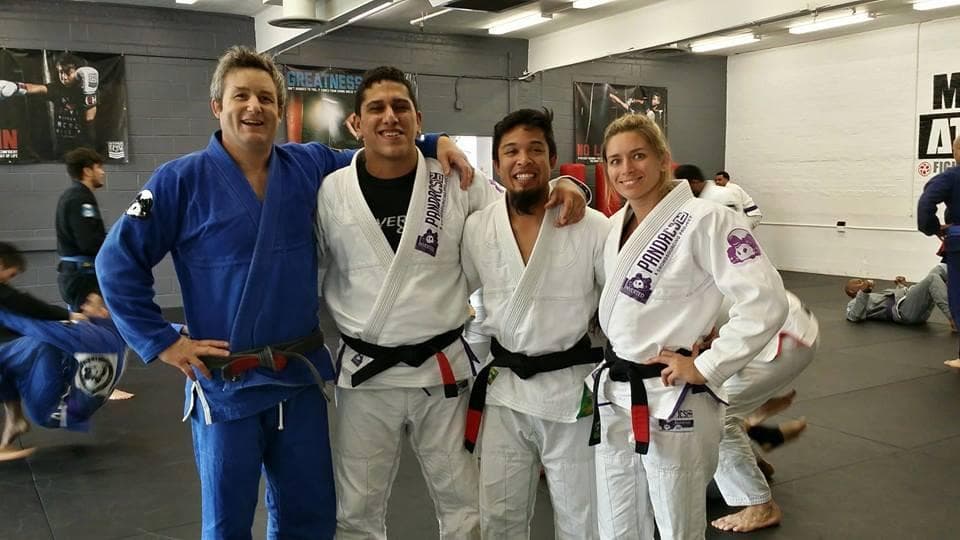
Main photo: BJJ Fanatics; archival academy photograph.
The takeaway
The first month at a new gym contains practical questions that have little to do with winning rounds. Learn the routines, communicate your background, and give unfamiliar teaching a fair attempt. Ask directly about the arrangements that affect your membership and training.
Keep the review specific to your needs and experience. A new academy doesn't erase the value of the old one, and appreciating the old one doesn't prevent you from settling in somewhere else. The next useful step may simply be finding the class you can attend consistently.
Compare the options around your actual routine
Use the gym directory to identify academies near home or work, then confirm the classes, policies, and membership details directly before making your next move.
FAQ
Do I need to prove my belt at a new academy? Explain your background honestly and ask how the instructor handles transferred students. Avoid turning ordinary rounds into a private rank test or assuming a promotion policy you haven't discussed.
Should I correct a technique that differs from my old gym's version? First ask what the instructor is trying to accomplish and practice the assigned version. A different setup may address a different problem; comparisons work better as questions than interruptions.
Can I keep visiting my old gym? Check the relevant visitor and cross-training policies with the academies. Keep friendships where welcome, but don't assume a former membership still grants access to classes or open mats.
How long should I give the new gym before deciding? There is no universal trial period. Several normal visits can provide useful information, but address safety or other serious concerns promptly and make practical decisions using your actual circumstances.
Related Posts

Cobrinha's 2017: five major titles at 37
Cobrinha's 2017 season brought five major titles at age 37. Follow his gi and ADCC results, the Mendes rivalry, and the wrestling work behind that run.

Rafael Mendes: six Worlds titles and a life after competing
Rafael Mendes won six featherweight Worlds titles and retired at 27. Explore his ADCC rivalry with Cobrinha and the academy he helped build.

Training with women in BJJ: listen before you roll
Be a better BJJ training partner with women: agree on intensity, provide honest resistance, ask before coaching or filming, and respect a declined round.
Comments (0)
Loading comments...