

Being on the receiving end of a BJJ drill is a real job
Quick answer: In a cooperative BJJ drill, the receiving partner helps maintain the starting position and supplies the response the coach has assigned. That job is different from collapsing to make a movement succeed or adding an unrequested counter to make it fail. Ask what your role is, keep it consistent and change the task only with the instructor's direction.
The person receiving a technique can change the drill without making a single attack.
They can move the starting grip, turn before the demonstrated response or go loose at the moment when the other person needs a particular position to work with. The active practitioner then appears to be repeating the lesson while facing a different problem on every attempt.
Call that person the receiving partner here. The term describes a role in the exercise, not who is allowed to learn. A useful repetition needs both participants to understand the task.
Find the instruction for both partners
When the coach demonstrates, watch the person supplying the position as well as the person performing the movement. Where do they begin? What do they maintain? Which response makes the next stage of the lesson relevant?
A hypothetical passing drill might ask the bottom partner to present a particular guard while the top partner practices an entry. If the bottom partner switches to another guard immediately, the top partner has not simply received a harder version of the same assignment. The assignment may have changed.
Ask for the missing instruction before beginning. A concise question about what the bottom person should do can settle several minutes of uncertainty for the pair. It also gives the teacher an opportunity to show a detail that the demonstration left unclear.
The class may deliberately give both people competing goals. That is another arrangement. Stephan Kesting's description of competitive two-person drilling illustrates exercises built around limited goals against resistance. Establish which kind of task your coach has actually assigned before choosing how much opposition to provide.
Reset the start instead of carrying the last attempt forward
A cooperative repetition needs an agreed beginning. If one partner starts with different grips or a different distance after each reset, the movement can feel inconsistent for a reason unrelated to the detail being practiced.
Return to the position the teacher specified. In the hypothetical passing lesson, that may mean placing the legs and hands back where the entry begins. Do not quietly preserve a grip gained at the end of the previous attempt unless the drill calls for that continuation.
This is especially useful when switching roles. The former active practitioner may reset into the position they personally prefer to use in a round. Their partner then begins from a setup the class has not been working on.
The check is visible: can both people identify the same starting arrangement before movement begins? If not, stop there and ask. A coach can correct that position without having to infer it from a failed sequence performed several steps later.
Supply the response the lesson needs
A drill can depend on a receiving partner taking a particular action. The instructor might ask that person to maintain a frame, keep a stated grip or move in a specified direction. Listen for that instruction instead of replacing it with your favorite defense.
The response should remain recognizable across repetitions. Otherwise the active practitioner may think they are practicing one transition while each attempt requires another decision. Those changing decisions can be useful in an appropriate game, but they need to be part of the actual assignment.
A hypothetical example makes the distinction clearer. Suppose the coach asks the receiver to keep a certain frame while the other person studies how to address it. Dropping the frame before it is challenged removes the problem. Adding an entirely different grip can introduce another one. Neither change tells the pair much about the task they were given.
If you cannot comfortably supply the requested position, tell the instructor rather than forcing the arrangement or improvising around it. The coach can adjust the pairing or exercise. A receiving role is still a role you can ask questions about.
Cooperation does not require making the result happen
Going completely loose can make a repetition look successful while removing the condition the active practitioner was meant to solve. The receiving partner does not need to perform the finish on the other person's behalf.
At the same time, retaining the demonstrated position is not an invitation to turn the exercise into a contest. The useful middle ground comes from the teacher's instructions: provide the relevant arrangement, allow the agreed movement and report when the pair has lost track of the task.
For a hypothetical sweep lesson, do not decide in advance that you must fall at a particular moment regardless of what happens. Ask the coach how to receive the movement and where the repetition ends. That is a better answer than either tipping over automatically or planting yourself against every attempt.
Keep the lesson's scope in view. A cooperative exercise may be introducing a new sequence. A later resisting task may test something different. The appearance of success in the first does not settle the outcome of the second, and the first exercise does not need to pretend that it does.
Agree before changing the resistance
A receiving partner can feel that the active practitioner is ready for more opposition. That feeling should begin a conversation, not trigger a surprise change halfway through a repetition.
Ask whether the coach wants the response altered. They may be checking the starting position rather than the finish, or may have another stage planned for the whole class. An extra counter can obscure what they are trying to observe.
If the instructor does assign a resisting version, establish the allowed actions and the reset. Kesting's competitive-drilling examples are useful for this distinction: restricting the problem can still leave an opponent genuinely trying to achieve a goal. Resistance does not have to mean adding every action available in a full round.
Keep the new agreement specific. Saying that the next attempt should be harder does not tell the receiver which movement is now permitted. Saying that the receiver may try the particular escape the coach named gives the pair something they can recognize and stop when the stated objective is reached.
Describe what you felt without taking over the lesson
The receiving partner has information the active practitioner may not have. They can say that a grip released before the next movement, that the starting frame changed or that they were unsure when to supply the response.
Describe that observation before explaining why it happened. A sensation can be useful without establishing a complete technical cause. The active practitioner may have been following a detail that you missed, and the coach may need to see the pair repeat the setup.
Academy Jiu Jitsu's code of conduct requires instructor permission before students coach or instruct others. Your own academy's directions govern the class. Receiving the movement does not automatically make you responsible for teaching a replacement.
Our guide to training-partner feedback separates a usable observation from an unsolicited lecture. A short description at the reset gives the other person something to ask about. A running explanation over the movement can make it harder for either of you to follow the original instruction.
Change roles without changing the assignment
When it becomes your turn to perform the technique, keep the same agreed task long enough for the comparison to mean something. Do not make the receiving role more restrictive for your partner than it was for you.
A proposed role check can be brief:
Agree where the repetition begins and ends.
Name the receiving response the coach requested.
Use the same approved turn arrangement when switching roles.
If a different body shape or range of movement changes the fit, ask the instructor to adjust it. Consistency does not mean forcing two people into an arrangement that is unsuitable for one of them. It means keeping the task clear enough to identify what needs adjusting.
Our three-person drilling example addresses turn allocation when the class has an odd number. With two people or three, the receiving partner's work remains visible: help set up the intended problem, give the agreed response and make the next reset understandable.
A useful final question is small. Which part of the assignment changed when you switched roles? That may reveal a missed instruction in the receiving job, rather than a mysterious difference in the technique itself.
The takeaway
The receiving partner supplies part of the position that makes a BJJ drill possible. Keep the start, response and reset attached to the instructor's actual task. Cooperation does not require producing a finish for your partner, and a resisting exercise does not require introducing every counter you know.
Ask about your own role as carefully as you ask about the active movement. That gives both people a clearer repetition and gives the coach a specific point to correct when the exercise drifts.
Ask the coach about both roles
Find BJJ classes on Let's Roll and ask the instructor what each partner should supply during the drill you are learning.
FAQ
What does the receiving partner do in a BJJ drill? They maintain the agreed starting arrangement and give the response the instructor requested. The job changes with the drill, so ask rather than assuming every exercise requires the same cooperation or resistance.
Should I go completely limp during drilling? Follow the coach's instructions. Going loose can remove the position the other person needs to practice, while unrequested resistance can change the task. Ask how to receive this particular movement.
When should I add a counter? When the instructor's assignment includes it or the coach approves the change. Agree the allowed response and reset before starting rather than surprising someone in the middle of a cooperative repetition.
Can I tell my partner why the technique failed? Begin with the specific observation and ask whether feedback is welcome. Keep technical instruction with the coach or within the permission your academy gives students. Your experience of the movement may help form a question without settling the answer.

Nina Okada
Nina Okada explains positions the way a good training partner does: one problem at a time, with the limits of the explanation said out loud. She is careful about the difference between what footage shows and what it only suggests.
Related Posts
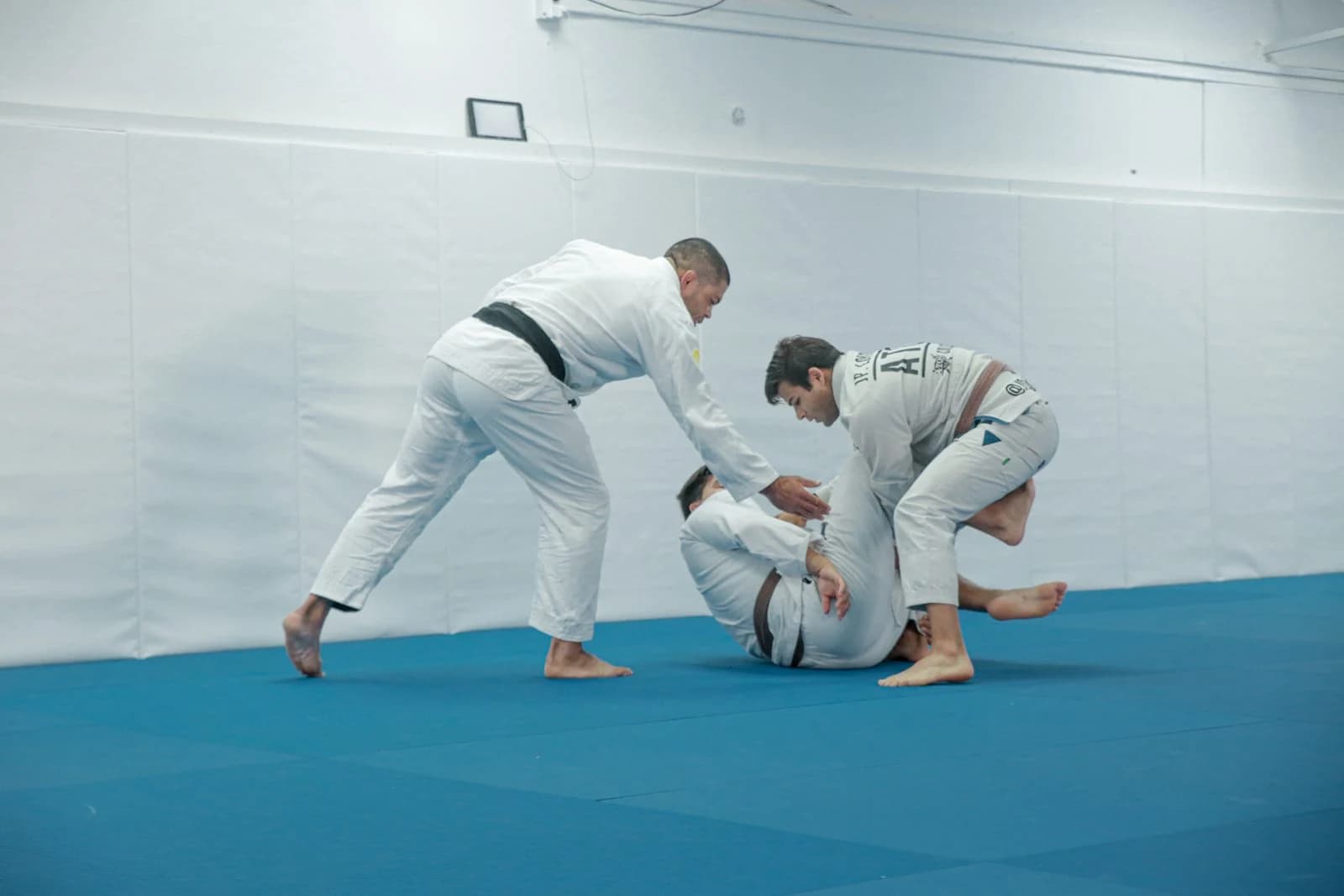
Drilling BJJ with three people: give the third person a job
A six-turn rotation gives three training partners a clear order, an observation task and a way to keep drilling the coach’s actual lesson.
BJJ with low vision: make the class easier to follow
A useful first session starts with access arrangements, clear explanations, and asking the student what works for them.

Cycling to BJJ: plan the ride home before the first round
Make riding to jiu-jitsu workable with a route check, secure kit, a parking plan, and an honest decision about the journey home.
Comments (0)
Loading comments...