
A Close IBJJF Match: Read the Score Before Choosing the Move
Quick answer: In a close IBJJF match, read points first, then advantages, then penalties, along with the time remaining. Choose a realistic action from the position you actually occupy and keep following the rules while protecting a lead. Practice these decisions with a coach before tournament day rather than trying to invent a new game in the final minute.
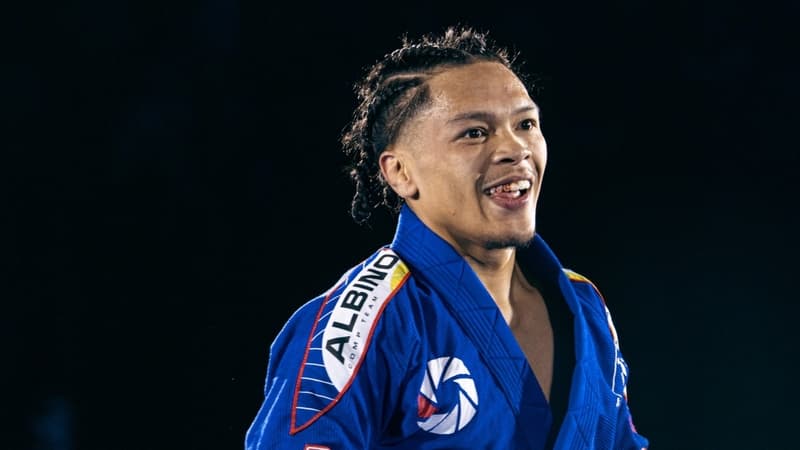
An advantage decided the 2026 Worlds roosterweight final. In its official black belt recap, the IBJJF reported that Jalen Fonacier's straight-footlock attack produced the advantage lead he used to beat Thalison Soares. The difference on the board mattered even without a submission finish.
Your own tournament might be far from a World final, but a close score creates a similar practical demand: understand what is happening before choosing what to do next. A coach shouting that you need something is less useful than a score you can interpret.
The examples here are hypothetical adult IBJJF situations for discussion and supervised practice. They are not a complete rules course or a guarantee that a particular attack will score. Check the current official rules for your event and division.
Read the board in its actual order
The IBJJF rulebook resolves a completed match by points first. If those are tied, advantages decide; if both are tied, fewer penalties decide. An ordinary match still tied across all three goes to the referee's decision, which considers offense and proximity to scoring or submission.
An advantage therefore is not a point you can add to the larger number. Being down two points with several advantages is still being down on points. Keep the categories separate when you and your coach discuss the situation.
Before competing, ask how your side of the scoreboard will be identified and practice reading it. You should not have to solve the display layout for the first time while holding a sleeve and listening to your corner.
Also establish how the coach will communicate time. A short, agreed call is easier to use than several people simultaneously announcing estimates. The aim is accurate information you can act on, not a constant commentary track that competes with the referee.
Connect the needed score to the position in front of you
IBJJF scoring assigns two points to a takedown, sweep, or knee-on-belly position; three to a guard pass; and four to qualifying mount or back-control positions. Each has its own criteria. Reaching something that resembles the position is not enough by itself.
Suppose you are two points behind and passing an open guard. A scored pass would change that arithmetic more than an advantage would. That doesn't mean you should rush a pass you cannot control. It means you and your coach should recognize what a successful action would actually accomplish.
If you are underneath, the available problem is different. A passing plan written on your phone does not help until you can reach top position. Start with the position you occupy rather than mentally jumping to the finish you prefer.
Our guard-passing guide covers broader passing development. In a short competition scenario, use the options you have already practiced and discuss their scoring requirements with the coach. The scoreboard tells you the need; it does not supply the technique.
Leave time for control after the transition
The rulebook's general positional scoring requirement is three seconds of stabilization, with further conditions and exceptions explained in the rules. A late transition can therefore need more than merely reaching the far side of the legs.
When practicing a final-minute scenario, include the period after the movement. Ask the coach to evaluate whether the position actually meets the criteria instead of awarding yourself points the moment you feel ahead in the scramble.
A useful hypothetical task is to begin in a familiar passing position with a short clock and an assigned deficit. Work on reaching a scoring position while the other person provides agreed resistance. Keep enough supervision to resolve questions and enough control to stop normally when either person needs to.
Don't rehearse the finish by having your partner freeze as soon as you clear the legs. That can hide the exact part of the exchange you wanted to study. Equally, don't make every repetition an uncontrolled race. The coach can shorten the task or change the start when the practice becomes unclear.
An advantage needs more than an enthusiastic gesture
IBJJF advantage rules include qualifying near-scores and submission attempts that place the opponent in real danger of submitting. The referee assesses the attempt. An athlete's belief that something was close is not the award itself.
That distinction matters if your plan depends on a particular exchange. Ask the coach to show why a recorded example met the standard, rather than assuming any attack with the same name earns an advantage.
For the Fonacier example, the official recap establishes the reported advantage result. It does not give us permission to claim that every straight-footlock grip will produce the same call. The details of the actual attack still matter.
During practice, let a knowledgeable observer judge the exchange and explain the decision afterward. If partners score their own near-attempts generously, the session may teach the wrong expectation. Keep the question technical and specific. You are trying to understand the rule, not train a louder reaction for the next referee.
Protect a lead without forgetting the penalties
A lead is information about the current score, not permission to stop following the rules. IBJJF penalties for serious fouls and lack of combativeness can accumulate, with escalating consequences. Review the sequence and the relevant positional exceptions with your coach.
Don't reduce that discussion to a slogan about always moving. Movement can be purposeless, and different positions require different decisions. Ask which actions demonstrate legitimate progression in the position you actually use and what behavior risks a penalty there.
Imagine an adult practice round where you begin ahead but already have a penalty marked. Have the coach supervise the situation and stop afterward to discuss the decisions. The exercise should help you recognize the score and continue appropriate jiu-jitsu, not search for a way to deceive an official.
Avoid treating the mat boundary as an escape plan. Follow the referee's commands and practice restarting as directed. If you don't understand how a boundary situation should be handled, study it before competition with someone qualified to explain it. A close match is a poor place to improvise a rules interpretation.
Give the corner one clear communication job
Agree on a few short calls before the event. The exact words can be yours; what matters is that the athlete understands the information and the coach uses it consistently.
For a practice session, define:
How the coach announces a points deficit or lead.
How advantages and penalties will be distinguished from points.
Which time reminders the athlete wants to hear.
What the coach should say when the athlete's planned position is unavailable.
Avoid packing a score update and several new techniques into the same breath. A competitor who is fighting a grip may only catch part of the sentence. Make the first information useful on its own.
Our competition-nerves guide addresses preparation around the emotional side of the day. This communication plan has a narrower aim: reduce confusion about the board and the immediate task. It cannot make a difficult opponent easy or guarantee that the athlete hears every word in a loud venue.
Practice both sides of the same close score
A scenario is more informative when both partners experience it. If you always start behind, you never practice reading the same position while defending a lead. If you always start ahead, you may avoid the decisions that require changing the exchange.
Ask the coach to select a familiar, appropriate starting position and a short duration. Assign a hypothetical score, work through it, then switch roles. Use the event's rules for the practice rather than adding an advantage system to a format that doesn't use one.
After each attempt, discuss one decision. Did the athlete understand the score? Did the chosen action fit the available position? If the movement succeeded, did it meet the scoring criteria? You don't need to debate every grip from the round.
Record the assigned score in your notes so the result makes sense later. Losing a scenario that began with a large deficit is different from losing an even match. The value lies in the decision you can now inspect, not in constructing another set of gym standings.
Review the earliest decision that changed the ending
The final exchange is easy to remember because it sits beside the result. It may not be the only useful place to look. A choice made earlier could have left you needing an unrealistic score with very little time.
Review the match with a coach and identify where the available options changed. Perhaps you spent too long rebuilding a preferred grip while the opponent controlled the pace. Perhaps the final scramble began because you misunderstood which side had the advantage lead.
Describe what the footage shows and leave unclear calls unresolved until someone can explain them. A recording angle may not reveal every detail the referee saw. Avoid converting disappointment into a claim about an official's motives.
Choose one practice question for the next session. It could be reading the board sooner or continuing control after a pass. You do not need to replace your entire competition game because one close match exposed a detail you hadn't practiced under a clock.
Main photo: IBJJF; 2026 World Championship archive photograph.
The takeaway
Close-match decisions depend on knowing what the score means and which actions are available from your current position. Use the IBJJF rules for IBJJF preparation, including the scoring criteria and penalty context, then practice with a coach who can identify what your attempts actually earned.
Keep communication brief and rehearse both leading and trailing. The useful review is a specific decision you can improve. A last-second attempt may still fail, but it should come from an accurate reading of the match rather than an imagined score.
Prepare for the rules of the event you enter
Use our BJJ tournament guide to organize preparation, then confirm your event's official rules and division requirements before building competition scenarios around them.
FAQ
Can several advantages overcome a points deficit? No. In the IBJJF hierarchy described here, points are considered before advantages. Keep those categories separate when reading the board or communicating with your coach.
Does passing the legs automatically earn three points? No. The pass must meet the rulebook's positional and stabilization requirements. Ask a qualified coach or referee to explain the complete criteria rather than treating a brief transition as a guaranteed score.
What happens if points, advantages, and penalties are all tied? An ordinary completed match is decided by the referee under the rulebook's decision criteria. Do not assume an overtime format borrowed from another organization applies.
Should I only train last-minute scenarios before competing? No. They are one optional part of preparation with your coach. Keep ordinary positional and technical work, and use short scenarios to inspect decisions that a full round may not isolate clearly.
Related Posts
ADCC 2026 results: the stories that survived the predictions
ADCC 2026 results from Krakow: Jaworski, Maciel, Crevar, Pena, the women's champions, and the superfight outcome, with official podiums and match context.
Xande Ribeiro: from absolute titles to the masters mat
Explore Xande Ribeiro's absolute Worlds victories, two ADCC titles, Six Blades, and the distinction between his 2022 Worlds farewell and later masters gold.
Bernardo Faria: the champion who kept asking questions
Follow Bernardo Faria from Juiz de Fora and Alliance to the 2015 Worlds and BJJ Fanatics, with context on his competition game and move into teaching.
Comments (0)
Loading comments...