
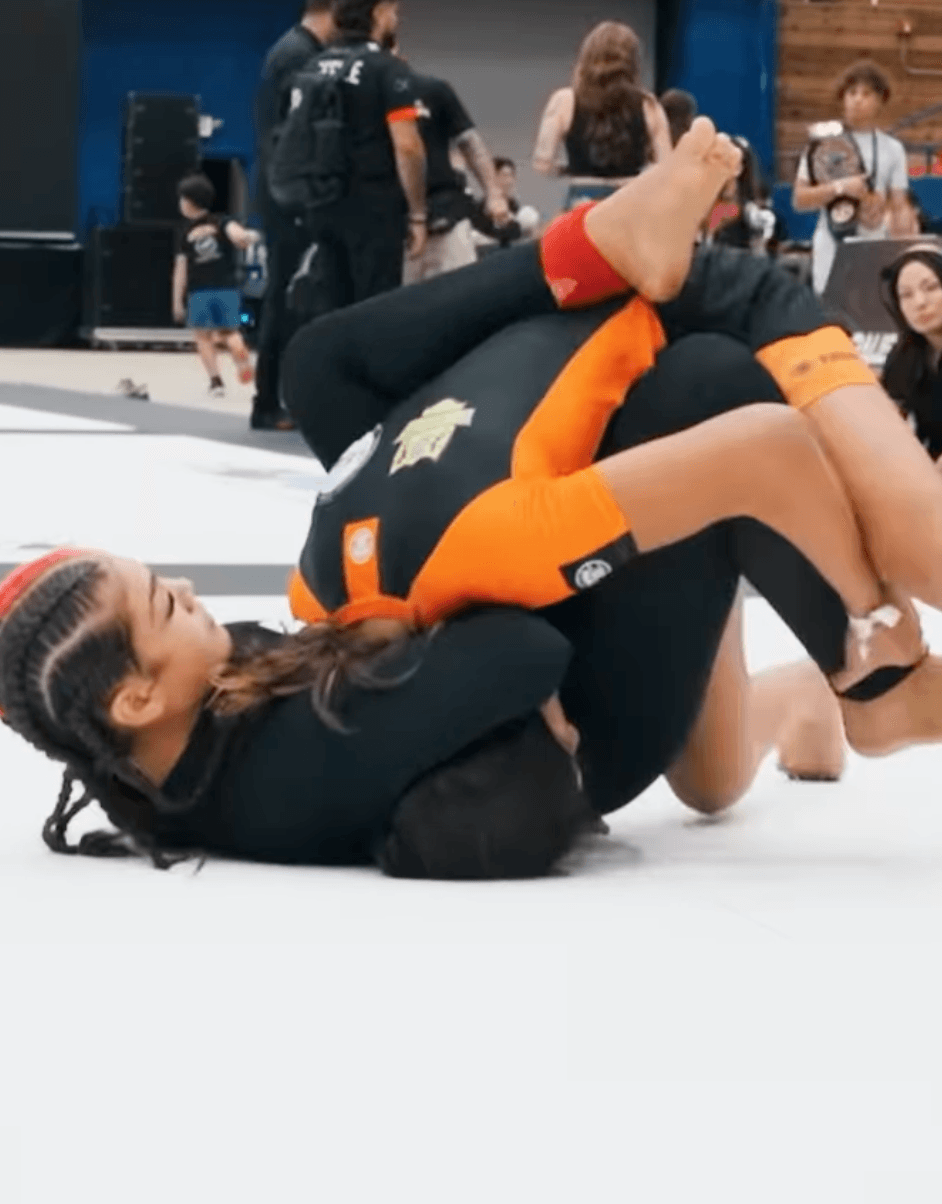
Competition nerves in BJJ: what the adrenaline dump really does
Quick answer: The shaking, the dry mouth, the fourth bathroom trip in twenty minutes — that's your sympathetic nervous system flooding you with adrenaline before you've touched anybody. It costs you fine motor control, peripheral vision, and a large chunk of your gas tank inside the first ninety seconds. You can't delete it, and you shouldn't try. What holds up is a rehearsed warm-up, long exhales, and reframing the feeling as readiness rather than dread. What doesn't hold up is telling yourself to calm down.
The bullpen at a big tournament is one of the strangest rooms in sport. Forty grown adults in a taped-off square of mat, most of them silent, a few doing shrimps nobody needs, one guy asleep on his gym bag like a psychopath. A coach shouts a name and half the room flinches.
Then you get called, you walk to mat six, you slap hands, and forty seconds later all the jiu-jitsu you own has been replaced by an intense desire to grip something and pull. Almost no one warns you about this part.
Your heart rate was already high before you touched anyone
The interesting number isn't what happens during the match. It's what's already happened before it.
In a small 2012 study in Kinesiology, Andreato and colleagues tracked twelve male BJJ athletes through seven-minute matches. Heart rate went from 122 beats per minute before the match to 165 after. Blood lactate went from 2.5 mmol/L to 11.9. Asked how hard the fight felt, the athletes mostly said light to somewhat hard.
Sit with that first number. Trained competitors in a controlled simulation, hearts at 122 before the referee said anything. New competitors misread that as being unfit. You're not unfit. You're pre-loaded, and at a real tournament with a real bracket the baseline sits higher and arrives hours early. Which is why the first match feels like a bar fight you're losing. Physiologically you started it in the middle of somebody else's third round.
Why you gas in ninety seconds with a good gas tank
The dump costs you three ways, and they compound. The first is metabolic. You start elevated, your breathing is shallow and high in the chest, and you grip like the gi owes you money. Grip is expensive. A death grip on a collar you don't need burns forearms in under a minute, and forearms are what you want in minute four.
The second is that high arousal switches off everything that makes jiu-jitsu cheap. You stop breathing through transitions. You muscle a sweep you'd normally time. You panic-explode out of a position you escape calmly a hundred times a month in the gym.
The third is perceptual. Tunnel vision, no peripheral awareness, that strange audio flatness where you can't hear your coach even though he's four feet away and screaming. Those are documented features of high sympathetic arousal; a frequently cited survey of officers involved in shootings found most reported time distortion, and a majority reported auditory exclusion and visual disturbance.
One caution, because this corner of the internet is full of confident nonsense. You'll see a chart, traced to Bruce Siddle and popularized in Dave Grossman's On Combat, mapping exact heart rates to exact skill losses: 115 bpm this, 145 that, above 175 you're a caveman. The phenomena are real. The numbers aren't well supported, Grossman himself later added caveats, and fear drives most of it rather than a number on your watch.
The warm-up is nervous-system equipment, not muscle equipment
Most people warm up for their muscles. At a tournament the warm-up does something more useful: it gives your nervous system somewhere to dump its output before the referee does. Twenty to thirty minutes before your division, get your heart rate up properly. Not a jog. Hard shrimps, sprawls, a few explosive rounds of standing grip fighting. Then the part people skip: two or three minutes of positional flow at 40 percent with a partner you trust, so the first time you feel another human's weight today isn't in the match.
Then let it settle. Arrive at the mat having already spiked and come down once, because the dump hits hardest when the first spike of the day is the one that counts. Competing alone, this still works against a wall, and you will look unhinged. Everybody there has looked unhinged.
Breathing protocols: what the evidence supports
Extended-exhale breathing is the one intervention here with decent research behind it, and it still isn't magic. The clearest study is Balban and colleagues, Cell Reports Medicine, January 2023, out of Stanford. They randomized 108 people to five minutes a day of one of three breathing practices or mindfulness meditation for a month. The exhale-emphasized protocol they called cyclic sighing (full inhale, a second short sip of air on top, then a long slow exhale) produced the biggest improvement in mood and the biggest drop in respiratory rate.
The caveats matter. A 28-day daily practice, not something done once in a bullpen. About a hundred non-athletes, not grapplers. No significant change in heart rate variability or resting heart rate in any group. The defensible claim is narrow: daily exhale-focused breathing has real evidence behind it for mood and breathing rate. Four sighs in the bullpen rescuing a panicking white belt does not.
The mechanism is still sound and free to try. Heart rate rises slightly on the inhale and falls on the exhale, so an exhale roughly twice the length of the inhale nudges you parasympathetic. Use it in the ten minutes before you're called and again the second your match ends. Practice it in the gym for a month first, exactly like the study did. A protocol you've never rehearsed is a thing you'll forget to do.
"Just relax" is the worst advice in the room
Somebody will say it to you. Your training partner, your coach, a stranger at the check table. Relax. Calm down. It never works, and there's a reason.
Anxiety and excitement are nearly identical inside your body. Both are high-arousal states. Telling yourself to calm down asks for a trip from high arousal to low arousal, which your endocrine system has no intention of taking in the next four minutes. You fail, then you get anxious about being anxious.
Alison Wood Brooks tested the alternative in studies published in the Journal of Experimental Psychology: General in 2014. Across karaoke, public speaking, and a timed math task, people told to say "I am excited" outperformed people told to stay calm. Jeremy Jamieson's group at Rochester has a related line of work on arousal reappraisal, including a 2016 study where reframing stress as helpful improved performance on real classroom exams.
The mat version isn't a mantra, it's a label. Hammering heart in the bullpen, and the sentence is this is my body getting ready. Same sensation, different file. The effect is smaller than the self-help version of this research implies, these were lab and classroom tasks rather than brackets, and it won't make you fearless. It will stop you spending your last ten minutes fighting your own chemistry.
Put the day on rails
Everything above works better rehearsed. Write the day down hour by hour, once, a week out.
Sleep, food, and the drive: decided the night before. No improvising at 6am.
Arrival: early enough to weigh in without sprinting. Check the bracket board yourself, and pick one teammate as your handler.
Three techniques, not twelve. Your takedown or pull, your primary pass or sweep, your first submission. That's the whole plan under adrenaline.
Our first competition checklist covers the logistics.
What to do in the ten minutes between matches
This is the part hardly anyone plans, and it decides a lot of brackets. You just finished, your hands are shaking, and you're either euphoric or furious. Both are expensive. The next match might be in eight minutes or an hour, and you will not be told which.
Walk. Don't sit down straight away, don't lie down at all. Keep moving while your breathing comes back, then start the long exhales. Sip water rather than chugging it. Put your gi top back on, because a cold body called to mat four spends its first ninety seconds warming up instead of competing. And don't watch the match back on somebody's phone or relitigate the referee.
It never fully goes away, and the calm ones are lying by omission
Here's what experienced competitors confirm privately and rarely say out loud: the nerves don't disappear. Black belts throw up before matches. People with twenty medals still feel the elevator drop when their name gets called.
What changes is your relationship to it. Research on competitive anxiety broadly finds that more experienced, higher-level athletes report lower cognitive anxiety and higher self-confidence than younger, greener ones. That isn't less arousal. It's arousal they've stopped reading as a warning.
The competitor sitting in the bullpen looking serene has been in that room forty times. Their first was as bad as yours, probably worse. The only known method for becoming that person is entering enough tournaments that the room stops being novel. Unsatisfying answer, excellent success rate.
The takeaway
The adrenaline dump isn't a character flaw or proof you weren't ready. It's a predictable event with predictable costs, and knowing that in advance turns a frightening mystery into a variable you can plan around.
The interventions are unglamorous. Warm up hard enough to spike and settle before you're called. Practice long-exhale breathing daily for a month so it's there when your hands shake. Relabel the feeling as readiness instead of arguing with it. Carry three techniques. Stay warm between rounds. Then go again. The gap between your first tournament and your fifth is mostly nerves rather than jiu-jitsu, and competing has real costs as well as benefits worth weighing first. But sign up more than once. One tournament teaches you what the dump feels like. Four teaches you what to do with it.
The only real cure is a second bracket
You don't talk your way out of competition nerves. You out-repeat them. Find a BJJ tournament near you and give yourself eight weeks.
FAQ
Why do I gas out in competition when my cardio is fine in the gym? Because you didn't start the match at rest. Adrenaline lifts heart rate and breathing before the first grip, and under that arousal you grip harder and muscle techniques you'd normally time. One study of simulated BJJ matches recorded athletes at 122 bpm before combat began. Your gas tank is fine. Your starting point moved.
How do I stop shaking before a BJJ match? Mostly you don't, and chasing it makes it worse. Shaking is adrenaline doing its job. What helps: a proper warm-up 20 to 30 minutes out so you spike and settle once beforehand, extended-exhale breathing you've already practiced, and keeping your hands busy with grip work instead of staring at the bracket.
Does the physiological sigh work for competition nerves? The best evidence is a 2023 Stanford randomized trial in Cell Reports Medicine: five minutes a day of exhale-focused breathing over a month improved mood and lowered respiratory rate more than mindfulness meditation. It didn't test single-use effects in a bullpen and found no change in heart rate variability. Treat it as a habit, not a panic button.
Do experienced competitors stop feeling nervous? No. Black belts get nervous and some get sick before matches. Research on competitive anxiety suggests experienced athletes report less cognitive anxiety and more self-confidence, meaning they read the same physical arousal as normal rather than as a threat. That comes from repetition, not talent.
Related Posts
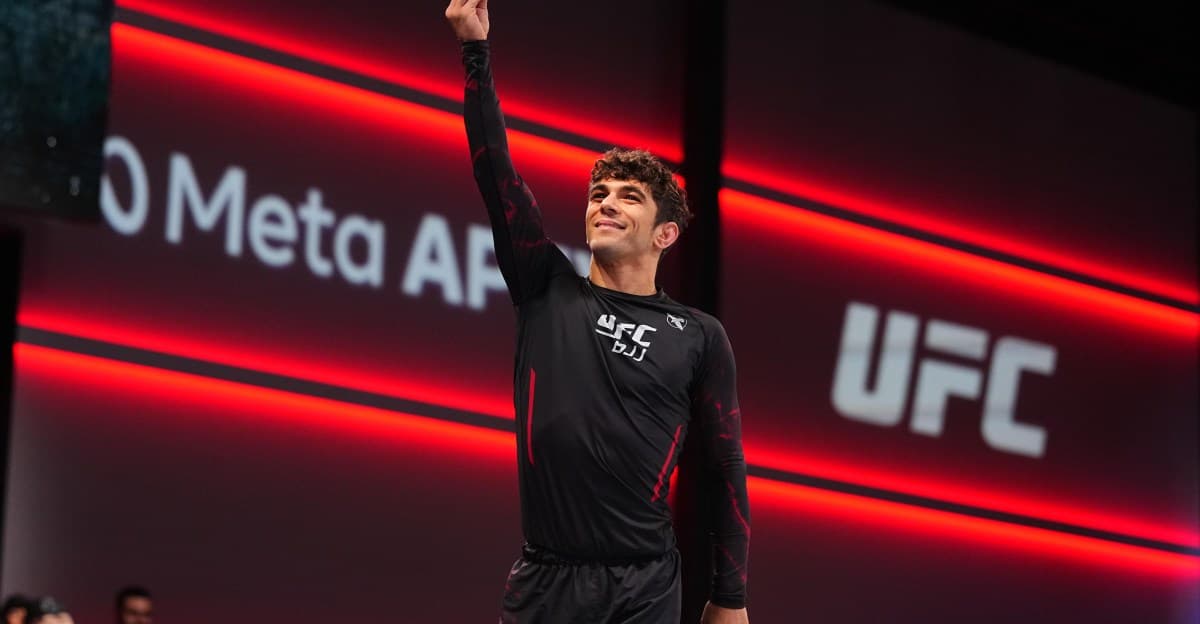
Mikey Musumeci gives up the belt to make room for MMA
Musumeci is vacating his UFC BJJ title to focus on MMA training. What he is leaving, what continues, and why the transition matters.
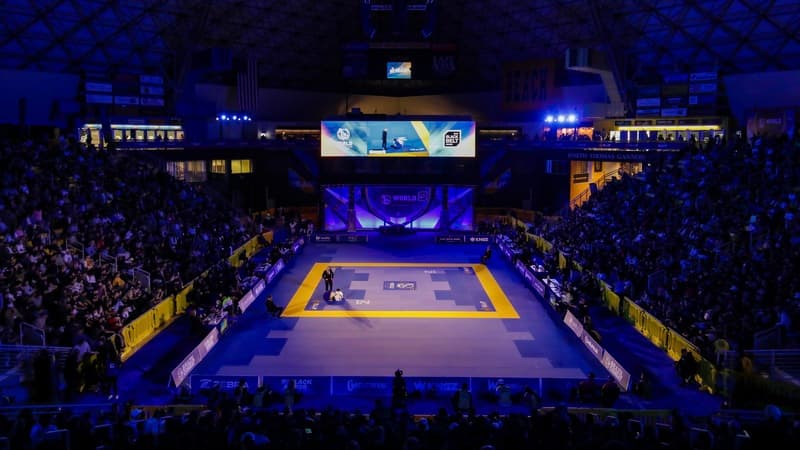
IBJJF membership: finish the paperwork before the deadline
IBJJF membership and tournament entry are separate steps. Plan documents, professor approval, renewals, and junior accounts before registration closes.
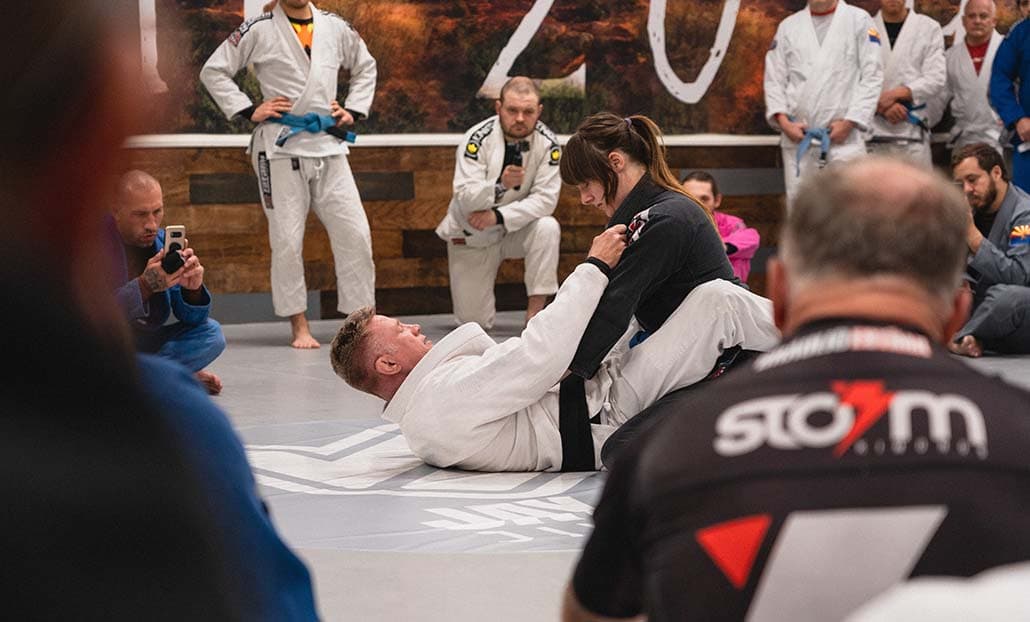
Choosing a BJJ seminar worth your time and travel
Choose a BJJ seminar by the subject, teaching format, access, and total cost. Know what to ask the host before buying a ticket.
Comments (0)
Loading comments...