
ADCC 2026 results: the stories that survived the predictions
Quick answer: Pawel Jaworski won the men's under-88kg title on home soil at ADCC 2026, while Kennedy Maciel took under-66kg gold and Felipe Pena won the absolute. Helena Crevar, Ana Carolina Vieira, and Jasmine Rocha won the women's divisions. The September 12–13 championship in Krakow produced several different kinds of final, from quick submissions to decisions and an injury stoppage.
The predictions have a shelf life. By Sunday evening in Krakow, the interesting question was no longer who looked strongest on a bracket graphic. It was which athletes had converted two days of work into a place at the top of the podium.
Our ADCC preview looked ahead to the tournament. This is the week after: a look at the names, the routes, and the results worth revisiting. The official venue was Tauron Arena, and the ADCC results page now gives those predictions something solid to run into.
Jaworski gave the home crowd a champion
Pawel Jaworski's under-88kg gold is the result that ties this edition most tightly to its location. ONE Championship's September 14 account identifies him as the first Polish athlete to win an ADCC world title. Winning in Krakow gives that distinction a geographical neatness that no promoter could guarantee when the event was booked.
His final against Marlon Tajik was decided by a penalty, according to that report. That matters when a compact results line appears to show a scoreless match. A final decided through the rules is still a final; it also deserves an accurate description rather than an invented sweep or takedown.
Jaworski finished ahead of Tajik and bronze medalist Jozef Chen. For a Polish beginner looking through the results, there is now a particularly direct answer to the question of whose competition footage to start with. Local interest need not stop at national pride. Following one athlete through a whole bracket is a much better introduction to elite competition than treating a highlight finish as the entire sport.
Kennedy Maciel added his own gold to the family record
Kennedy Maciel won under 66kg ahead of Gavin Corbe and Diego Pato. Maciel's father is Rubens Charles, better known as Cobrinha, whose name appears at the top of the same weight category in the official 2017 results.
That connection is irresistible, but the son has a career of his own. BJJ Heroes' Maciel biography describes him joining his father in California in late 2012 and receiving his black belt from him in June 2018. It is more specific than the easy assumption that every champion's child spends infancy on the mats.
Maciel's gold gives viewers a reason to revisit that career without turning every match into a referendum on his father. Family comparison can explain why somebody first gets attention. It cannot perform the rounds for him.
For parents watching with a child who trains, there is a useful distinction here. Enjoy the shared family achievement. Leave the career projection alone. A child's Tuesday class does not need to become the opening chapter of an ADCC documentary because a famous father and son have both won gold.
Crevar's three finishes deserve a full replay
Helena Crevar won the women's over-65kg division. ONE's post-event report records submissions against Matilda Reid, Elizabeth Mitrovic, and Anabel Lopez: a rear-naked choke, a straight ankle lock, and a short choke respectively. That is a more useful starting point for understanding her weekend than an argument about an imaginary pound-for-pound matchup.
Those finishes make a compact viewing assignment. Watch the sequence before each submission, then watch how the opponent tries to interrupt it. The names of the finishes tell you that the ending changed; they do not tell you which earlier exchange made the ending available.
There is also a difference between admiring a professional's performance and carrying its fastest movement straight into Tuesday's mixed-level class. Choose the control detail you can discuss with your instructor. Ask for an appropriate way to practice it. A highlight is permission to become curious, not permission to surprise an unsuspecting partner with a new joint lock.
Lopez took silver and Paige Ivette Clymer bronze. Their places belong in the account too. A division is more than its winner's social post.
Vieira and Rocha kept the women's story wider than one name
Ana Carolina Vieira won under 65kg, with Sarah Galvao second and Joslyn Molina third. Jasmine Rocha won under 55kg, ahead of Ana Rodrigues and Ana Mayordomo. Those are separate championships with separate fields, not supporting acts for the heaviest women's bracket.
For someone catching up after the weekend, this is where a winner-only highlight feed can become misleading. It is very easy to learn one name, see that athlete's finish repeatedly, and come away believing you have followed the women's event. Three gold medals require three lines of attention.
Build the replay queue deliberately. Watch a final, then choose one earlier match involving the silver medalist. That gives the losing finalist a sporting identity beyond being the person on the wrong end of the championship clip. It also makes the final more interesting: you arrive knowing something about what both athletes were trying to bring to it.
There is no need to rank the divisions against each other to justify watching them. Give each final its own time slot, just as you would for the men's brackets.
The men's heavier brackets produced different champions
Luke Griffith took under-99kg gold, with Kaynan Duarte silver and Daniel Schuardt bronze. Victor Hugo won over 99kg ahead of Josh Saunders and Mark Macqueen. Magomed Dzharbaev won under 77kg, followed by PJ Barch and Mateusz Szczecinski.
FloGrappling's complete results distinguish the methods: Griffith submitted Duarte, Hugo submitted Saunders, and Dzharbaev beat Barch by referee decision. Reading only the winners would erase that difference.
A decision final asks something different of a viewer from a short finishing clip. You have to stay with the exchanges that did not produce a submission. Watch the attempted entries, the resets, and the choices around the edge. Decide what you think happened after seeing the match, rather than borrowing the loudest comment underneath a cropped clip.
None of those methods makes the other champions less legitimate. The point is that an ADCC weekend contains more than one kind of problem. An athlete may need a clean finish in one round and enough control of a close contest to advance in another.
Pena's absolute title reaches back to 2017
Felipe Pena won the absolute, with Roosevelt Sousa second and Ruslan Abdulaev third. Put that result beside the 2017 official podium, where Pena finished ahead of Gordon Ryan and Marcus Almeida, and the span becomes clear: absolute gold in two editions nine years apart.
The 2026 final ended in a submission over Sousa at 10:03, according to FloGrappling. Pena's absolute bracket also included a points win over Eoghan O'Flanagan and a submission of Abdulaev. The methods alone make it a more varied run than a single finishing clip suggests.
Nine years is a long gap to place between two championship photographs. It invites a career comparison, although photographs cannot explain every training decision between them. For a viewer, the useful comparison is concrete: start with the two finals, then examine the rounds that brought him there.
Do not flatten the absolute into a heavyweight award. It is a separate bracket, and its result deserves to be recorded separately from the weight divisions. That distinction is why an event recap can name Hugo as over-99kg champion and Pena as absolute champion without any contradiction.
The superfight ended with an injury stoppage
The official ADCC summary lists Yuri Simoes as the superfight winner over Kaynan Duarte by injury stoppage at 22:26. That is the result to carry forward. It does not require a diagnosis from a spectator watching on a phone.
An injury ending leaves an obvious sporting question unfinished: how would the rest of the match have gone? Nobody can replay that alternate version. You can discuss the exchanges that occurred and still stop short of awarding a hypothetical victory to either athlete.
Duarte's under-99kg silver and the superfight result also belong on separate lines. Combining them into one vague description of a bad weekend discards an actual podium finish. Results coverage should be able to describe disappointment without turning an athlete into a punchline.
For coaches sharing footage with a class, this is a reasonable moment to end the clip and move on. There is no instructional obligation to replay an injury repeatedly. The official outcome remains the same after the first viewing.
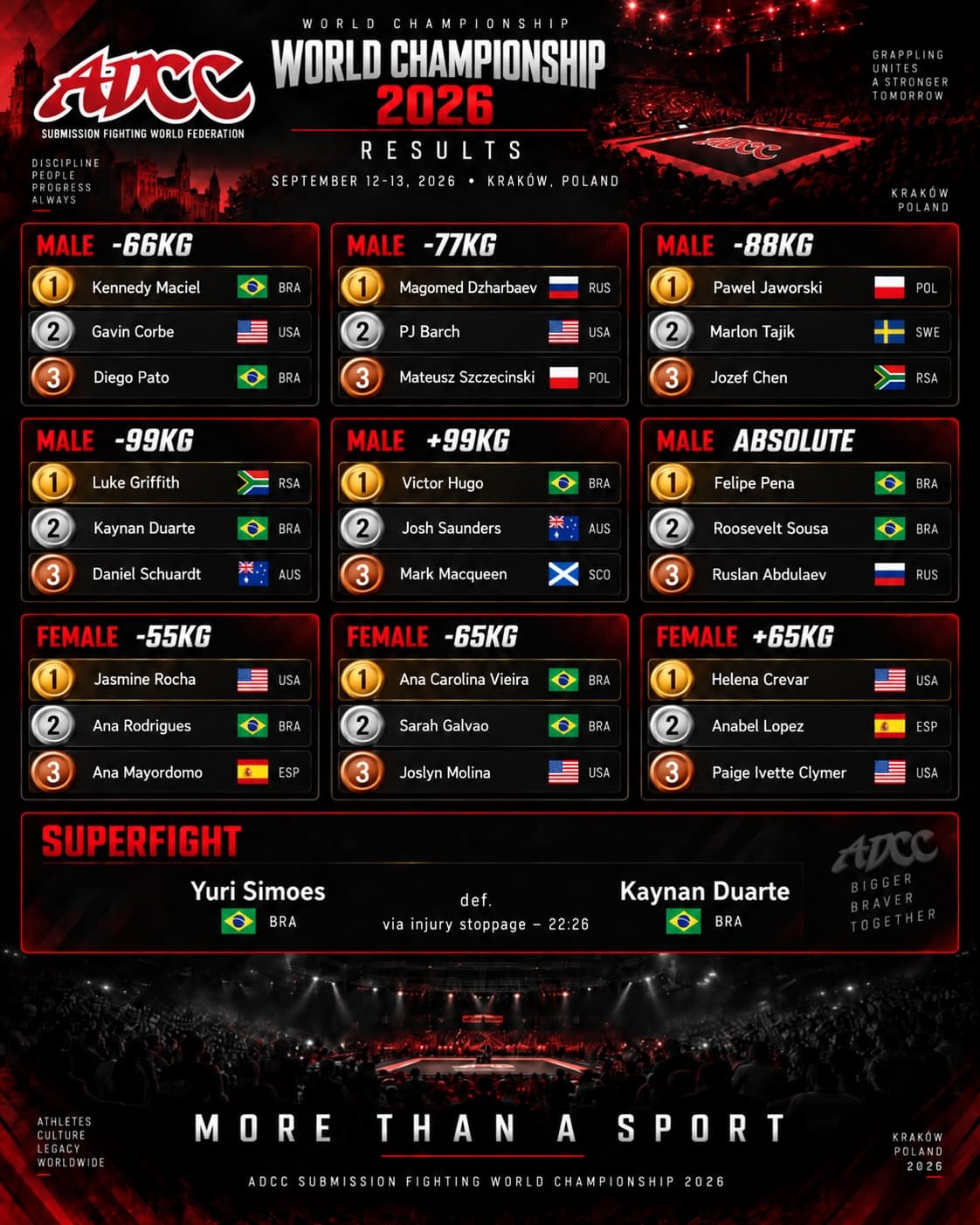
Photo: ADCC, official 2026 championship results graphic.
A useful catch-up queue needs more than the fastest finishes
If you missed the broadcast, avoid trying to consume the entire championship through autoplay. Pick a small set of matches with a reason for each selection:
One complete gold-medal run, so you can follow the same athlete against different opponents.
A decision final, watched without skipping the scoreless exchanges.
A women's bracket you did not follow live.
An older final involving a 2026 medalist, for a comparison across time.
Keep the official bracket open beside the video list. It prevents a semifinal from becoming a final in your memory and helps identify which version of a matchup you are watching.
The ADCC rules also explain why the clock deserves attention: finals have a period without positive scoring, while negative points can apply from the start. Do not assume that an early scoreless exchange and a late scoreless exchange present identical choices. That small amount of preparation can make a slow-looking match much easier to follow.
New viewers can start with the gi and no-gi comparison before examining the details specific to ADCC's rules.
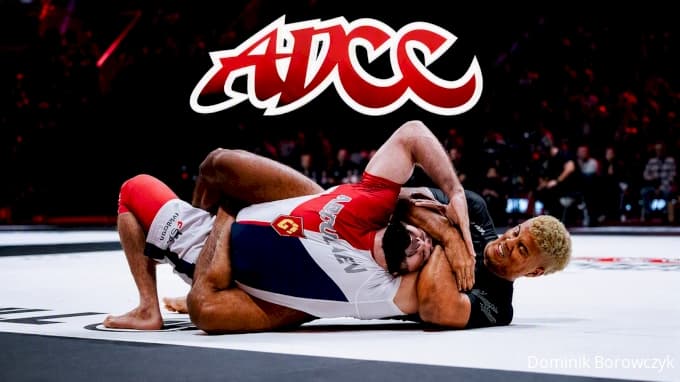
Main photo: Dominik Borowczyk / FloGrappling; illustrative ADCC coverage photograph.
The takeaway
Krakow's results give several different places to begin: Jaworski's home-country title, Maciel's place alongside a champion father, Crevar's finishes, and Pena's second absolute gold. The women's divisions and the decision finals deserve room in that account, not just the clips most likely to circulate first.
Start with the official result, choose a complete match, and allow the performance to be more complicated than its caption. There is enough actual grappling in this weekend to discuss without predicting the next decade or diagnosing an injury from a replay.
Find the next event you can attend
Browse upcoming tournaments and check the organizer's own schedule, divisions, and spectator information before making plans.
FAQ
Where was ADCC 2026 held? The September 12–13 championship took place at Tauron Arena in Krakow, Poland. ADCC's official event page records the venue and publishes the brackets and podium results.
Who won the 2026 absolute division? Felipe Pena won gold, Roosevelt Sousa silver, and Ruslan Abdulaev bronze. Pena also won the absolute in 2017, so the 2026 victory adds a second title in that category.
Which women won gold? Jasmine Rocha won under 55kg, Ana Carolina Vieira won under 65kg, and Helena Crevar won over 65kg. Check the bracket weight labels when looking up individual matches.
Did the superfight finish by a normal tap? The official ADCC summary describes Yuri Simoes' win over Kaynan Duarte as an injury stoppage at 22:26. That description is more precise than speculating about the injury or how an uninterrupted match might have ended.
Related Posts
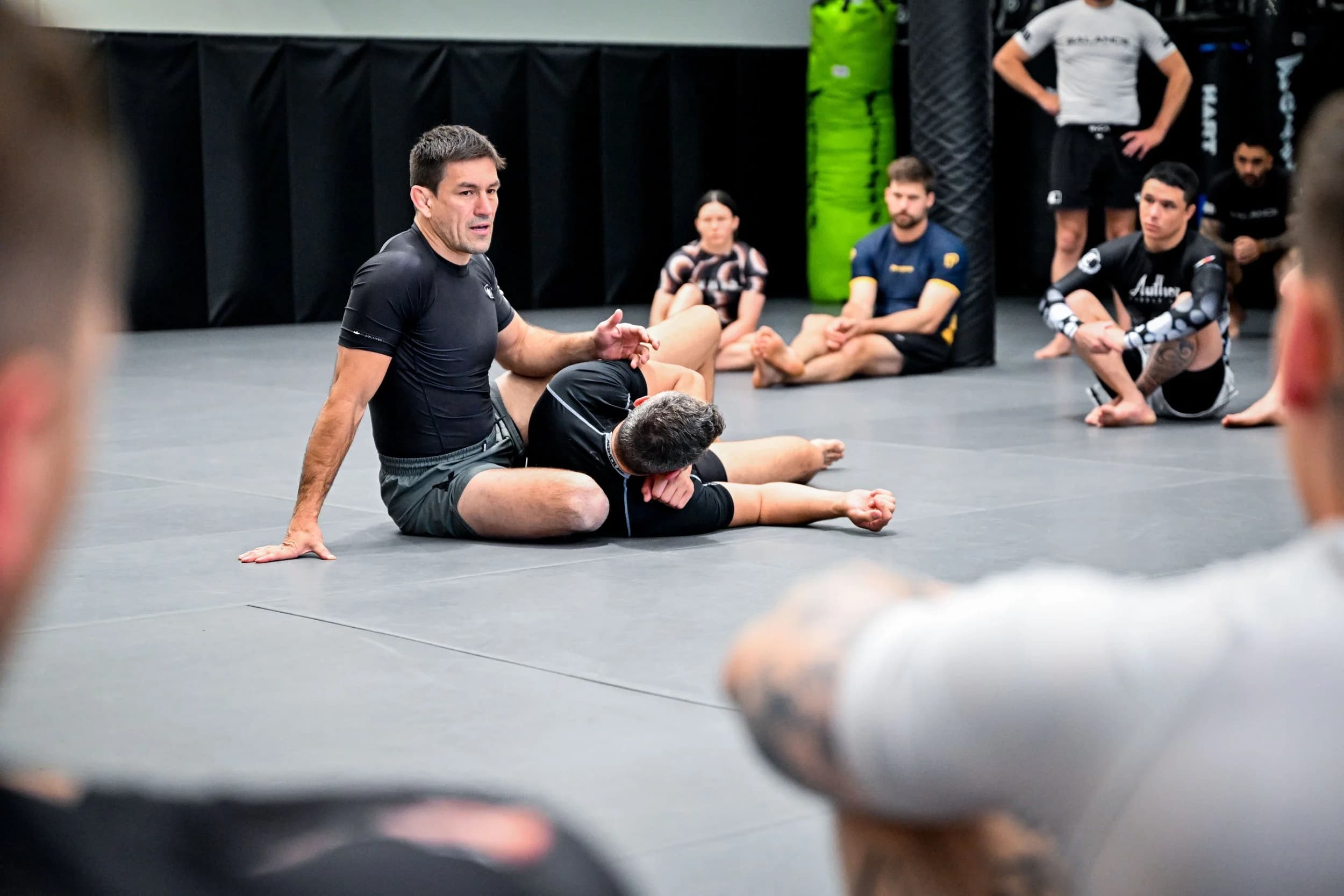
Demian Maia made the route to the back worth watching
Demian Maia won ADCC gold and challenged for two UFC titles. Revisit his routes to the back, major submissions, and the fights that tested his grappling.
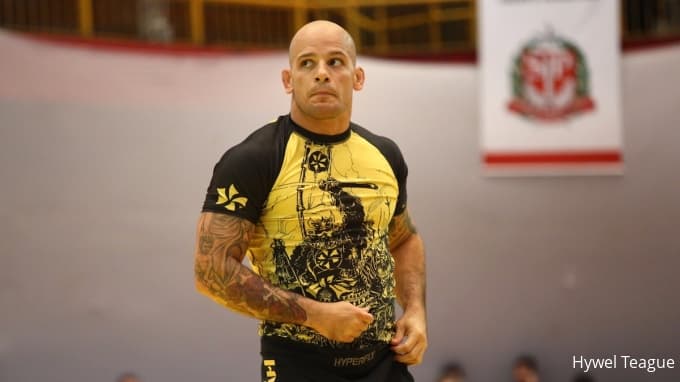
Xande Ribeiro: from absolute titles to the masters mat
Explore Xande Ribeiro's absolute Worlds victories, two ADCC titles, Six Blades, and the distinction between his 2022 Worlds farewell and later masters gold.
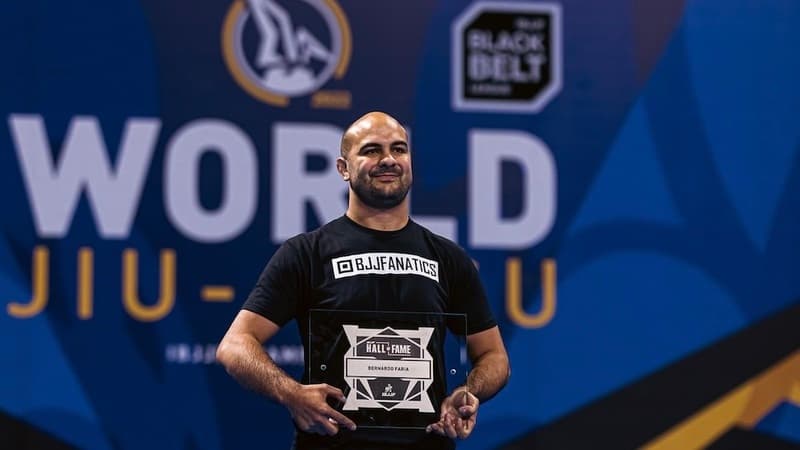
Bernardo Faria: the champion who kept asking questions
Follow Bernardo Faria from Juiz de Fora and Alliance to the 2015 Worlds and BJJ Fanatics, with context on his competition game and move into teaching.
Comments (0)
Loading comments...