
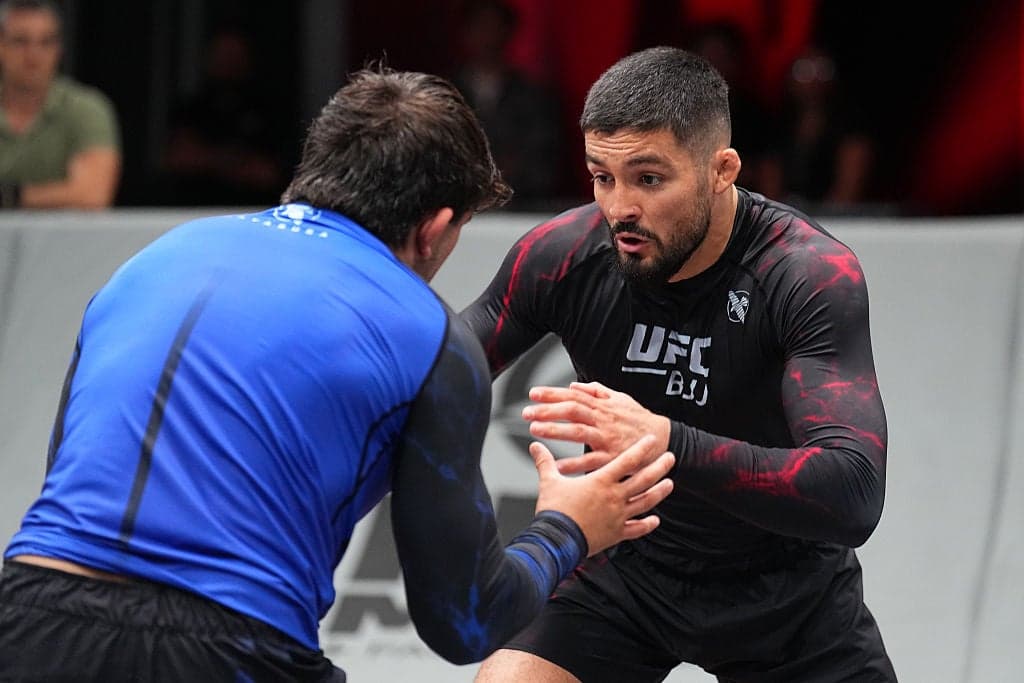
UFC BJJ vs ADCC: the rules that change the match
Quick answer: Professional UFC BJJ uses three five-minute rounds and judges scoring under a 10-point must system. ADCC World Championship matches use continuous periods, timed scoring phases, and fixed positional points. Both can end in submissions, but their clocks, boundaries, and scoring incentives create different decisions for athletes.
A guard pass can receive a fixed three-point value at ADCC. The same named movement in professional UFC BJJ contributes to a judged round without automatically adding three points to a positional scoreboard. That single difference changes how a viewer should read the action.
The comparison also needs a specific ADCC format. World Championship qualifying rounds, finals, Trials, and Opens do not all use the same duration. This guide compares the professional UFC BJJ rules with ADCC’s published championship rules, then identifies where the shorter ADCC formats differ.
The clocks divide the contest differently
The professional UFC BJJ rules schedule three five-minute regulation rounds with one-minute rests. The rounds are individually judged. An athlete has to respond to the scoring period in progress as well as the opponent.
The official ADCC championship regulations specify ten-minute World Championship qualifying matches, with a possible five-minute overtime. Finals, absolute finals, and the superfight have twenty-minute regulation periods and potentially longer overtime provisions.
Those are continuous regulation periods rather than three separate five-minute rounds. The distinction affects what a score means at a particular point in the match. An ADCC athlete carrying a positional lead into the final minute is managing that match score; a UFC BJJ athlete is also dealing with the separate allocation of rounds.
Do not transfer the Worlds clock to every event carrying ADCC branding. The published rules list six-minute regulation matches for Trials qualifying rounds and eight-minute finals, with their own overtime durations. Checking the event type is part of understanding the format.
ADCC scoring phases require a second clock check
ADCC World Championship qualifying matches begin with five minutes without points, followed by five minutes with positive and negative points. The official rules give finals a different opening phase: the first ten minutes have no positive points, but negative points can count.
That difference makes the phrase no-points first half incomplete. A viewer needs to know whether the match is a qualifying round or a final, and whether negative points are active. The relevant phase cannot always be inferred from how long the athletes have been moving.
UFC BJJ does not publish the same first-half positional-scoring switch. Its judges compare effective offense within each five-minute round under the hierarchy of submission threats, offensive progression, and control.
A hypothetical takedown at the same elapsed minute can therefore occupy different competitive contexts. At ADCC, its scoring eligibility depends on the phase and the qualifying requirements. In UFC BJJ, its contribution is assessed within the round and in relation to higher-priority offense. The name of the movement alone does not settle either question.
Positional values create different arithmetic
ADCC publishes fixed positive values, subject to the required control and freedom from submission danger. A guard pass is worth three points; mount is worth two; back control with the accepted hooks or body triangle is worth three. Takedowns and sweeps can be worth two or four depending on the resulting position and the stated conditions.
The three-second establishment requirement matters. A brief arrival is not automatically the same as a scored position, and arriving while still in a submission threat creates an additional qualification. The official rules also contain details about continuous motion and transitions that cannot be replaced by a bare list of numbers.
Professional UFC BJJ judges use 10-point must round scores instead. The same pass or takedown can be meaningful offensive progress without generating a fixed positional total. Effective submission threats requiring meaningful defense sit above that category.
A practical comparison is to watch the same kind of exchange in each format. At ADCC, check the phase, control, and awarded points. In UFC BJJ, follow the resulting threat and compare it with the other athlete’s work in that round. The ADCC introduction supplies the wider tournament context.
Guard pulling is governed by different conditions
ADCC’s regulations describe a negative point when an athlete voluntarily goes from standing to a non-standing position and remains down for three seconds or more, subject to the rules’ exceptions and the active scoring phase. The timing and the way the action begins matter.
Professional UFC BJJ’s illegal-actions list instead identifies guard pulling that does not result in immediate initiation of action with the opponent. That wording cannot be summarized accurately as an identical ADCC guard-pull penalty, or as a complete prohibition on playing guard.
The useful viewing unit is the whole entry. Watch the initial contact, the move toward the floor, and what happens next. A replay beginning with an athlete already seated may have removed the part needed to understand the referee’s decision.
For athletes, neither short description replaces a full reading of the relevant event rules. ADCC’s published text includes specific examples concerning takedown attempts and subsequent guard pulls. UFC BJJ leaves professional enforcement with the referee. A general statement that both promotions prefer action does not make the provisions interchangeable.
A slope and a flat boundary pose different problems
ADCC’s championship rules describe a ten-by-ten-meter competition area without a cage or fence. When athletes leave the area, the referee can restart them in the center in the established position, with the rule specifying how standing and connected situations are handled.
UFC BJJ uses the Bowl’s sloped perimeter. The incline can participate in a standing or grounded exchange, changing the support beneath the athletes. It does not remove the referee’s published authority to stop action or order positional resets.
This is one reason an athlete’s movement toward the edge cannot be evaluated without the format. On a flat competition area, the next event may be a boundary intervention and restart. On the Bowl’s slope, the exchange may change elevation before the referee needs to act.
The strategic implications are an inference from those different environments, rather than a claim that every athlete uses the boundary in the same way. A slope does not guarantee continuity, and a flat mat does not permit a competitor to stop independently before the referee’s instruction.
The legal-technique overlap does not erase exceptions
Both published professional or championship rule sets permit grappling submissions and prohibit striking. That shared foundation explains why many of the same athletes and techniques can appear in both contexts. It does not mean every prohibited-action provision is worded identically.
Slamming is a useful example. UFC BJJ prohibits it except when used to escape a fully applied submission. ADCC’s championship rules also describe a submission-related exception and state that if the opponent releases the submission while the slam is being attempted, the athlete must release the slam.
Those are narrow competitive provisions, not general training recommendations. A short comparison should preserve the condition instead of saying that either format simply allows slams. Technical legality also does not establish whether an action is suitable for an ordinary class or an unfamiliar partner.
ADCC has separate rules for beginner and intermediate divisions. A professional or World Championship allowance should not be imported into those brackets. The same caution applies to UFC BJJ Opens: the amateur series has been announced with an adjusted ruleset, rather than a guarantee of the professional television format.
Overtime and judges resolve different kinds of ties
A UFC BJJ championship draw after regulation can lead to a three-minute fourth round, following a two-minute rest. If no submission occurs, three judges decide the winner based solely on that period. An ordinary match can end in a draw.
ADCC’s championship page specifies a possible five-minute overtime for World Championship qualifying matches. Its finals, absolute finals, and superfight can have ten-minute overtime periods, with a maximum of two. The active positive and negative scoring conditions are part of those periods.
A draw on a UFC BJJ title scorecard and tied ADCC positional totals therefore lead into different procedures. Calling both overtime without specifying the duration and decision mechanism leaves out most of what an athlete or viewer needs to understand.
The UFC BJJ format overview can help readers new to its round structure. Neither format’s tiebreak should be assumed to apply to another promotion merely because the match is no-gi and the score appears level.
Compare the task before comparing performances
A useful comparison starts with the rules the athletes were actually solving. A competitor protecting an ADCC points lead is facing a different closing problem from someone who needs a UFC BJJ final round to influence the judges. The same movement can carry different consequences.
Before assessing a sequence, identify:
The specific event type and regulation clock.
Whether positional points and negative points are active.
The scoring value or judging priority attached to the action.
The boundary rule and the tie procedure.
That checklist also makes historical results more useful. A familiar name winning under one format does not establish how the athlete would perform in an imagined match under another. It establishes a result against a named opponent under particular conditions.
Viewers can still compare technical decisions across formats. The comparison becomes stronger when it describes the constraints first. A takedown, pass, or guard entry is easier to understand once the athlete’s scoring problem is visible, instead of judging every match against an unwritten preferred style.
Main photo: Chris Unger/Zuffa LLC, via UFC.
The takeaway
UFC BJJ and ADCC share the possibility of winning by submission, while organizing the rest of the contest differently. Separate judged rounds, continuous periods, fixed positional points, scoring phases, and boundary rules all change the task.
Keep the event type attached to the comparison. ADCC Worlds, Trials, and Opens have different clocks, just as professional UFC BJJ should be separated from its amateur Opens program. Accurate comparison begins with those distinctions before it reaches an opinion about the action.
Choose a format before preparing for it
Use the tournament directory to find an event and read the organizer’s published rules. Prepare for the actual division and format available, rather than the rules used in a favorite professional highlight.
FAQ
Does UFC BJJ use ADCC points? No. Professional UFC BJJ uses judges scoring individual rounds under a 10-point must system. ADCC’s championship rules assign fixed positional values, with the availability of positive and negative points depending on the match phase.
Are all ADCC matches ten minutes? No. World Championship qualifying matches are ten minutes in regulation, while the listed finals and superfight use twenty. Trials and national or Open events have shorter durations in the published championship regulations, so the event type matters.
Is guard pulling identical in both formats? No. ADCC’s regulations describe negative-point conditions around voluntarily going to the floor, with timing and exceptions. UFC BJJ prohibits a guard pull that does not immediately initiate action with the opponent. Neither is adequately explained by a blanket slogan.
Does the UFC BJJ Bowl remove referee resets? No. Its slope changes the physical boundary, but the professional rules retain the referee’s authority to stop and reset action. ADCC’s flat competition area has its own published out-of-bounds restart procedure.

Tess Hanley
Tess Hanley reads the rulebooks, the entry fees and the fine print. When a federation or a gym changes something, her first question is who ends up paying for it.
Related Posts
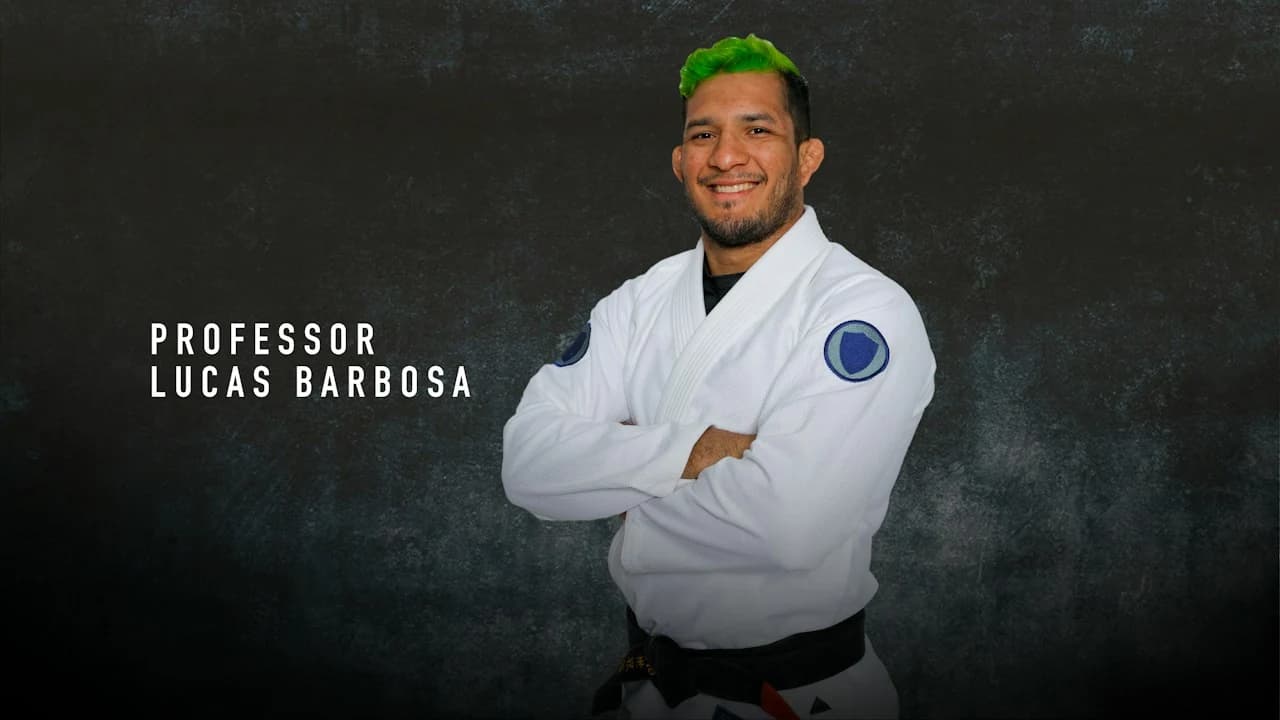
Lucas “Hulk” Barbosa’s best work is in the details
Lucas Barbosa’s nickname explains the first impression. His gi world title, no-gi record, and 2022 ADCC final give viewers more to study.

João Miyao’s record deserves its own first name
João Miyao’s adult world title and 2026 Master1 results tell a distinct story, even when his brother appears beside him on the podium.

Jena Bishop made time for a second sporting life
Jena Bishop’s 2026 PFL title followed a deliberate move from championship jiu-jitsu into learning a different sport.
Comments (0)
Loading comments...