
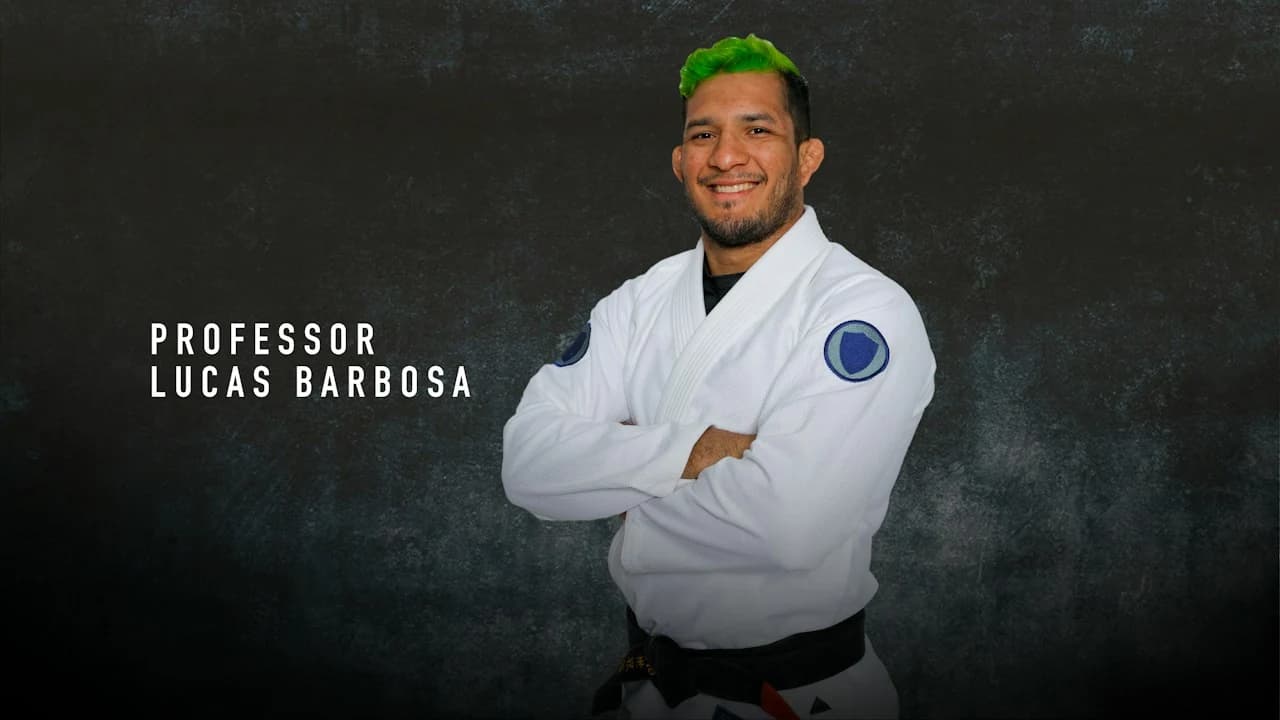
Lucas “Hulk” Barbosa’s best work is in the details
Quick answer: Lucas “Hulk” Barbosa is a Brazilian jiu-jitsu black belt under André Fabiano, a 2018 adult black belt gi world champion, and a multiple-time No-Gi Worlds champion. He also won ADCC silver in 2022. His most interesting matches show why pressure is a technical question, not a complete explanation by itself.
Lucas Barbosa reached mount on Giancarlo Bodoni in the 2022 ADCC under-88 kg final. He attacked an arm triangle. Bodoni escaped, returned to the wrestling exchanges, and eventually finished Barbosa from the back.
That sequence, recorded in FloGrappling’s contemporary coverage, makes a better introduction than the nickname. Hulk suggests an outcome through force. The final contains a position gained, an attack resisted, and a change in who controlled the next exchange.
Barbosa’s career rewards that closer view. The large movements draw attention. The useful questions often concern what he secured before making them, and what an opponent had to do to get moving again.
The brown belt appeared on a web series
BJJ Heroes’ biography identifies Copa Pódio’s 2014 web series, The Team, as an important stage in Barbosa becoming more widely known. He competed on Leandro Lo’s squad while still a brown belt. The platform put a developing competitor in front of an audience beyond a local bracket.
That detail belongs beside the later titles because visibility has its own history. Many viewers encounter an athlete only after a major black belt result. By then, a training background and a series of competitive decisions have already accumulated outside their attention.
Barbosa’s earlier teachers included Diego Lopes, Cristiano Carioca, Fabiano, and Márcio Rodrigues. Those names describe stages of development rather than a single academy doing all the work. Rodrigues’ Rio de Janeiro team was part of the brown belt period; Atos became part of the black belt career that followed. Keeping the sequence straight gives the nickname a person behind it.
The black belt came before California
Atos’ own November 2024 promotion record states that Fabiano awarded Barbosa his black belt in July 2015, before Barbosa moved to California to train under André Galvão. In that recording’s announcement, Galvão awards his third degree.
The move followed a brown belt world title that same year. Barbosa arrived in California with a successful competition background and a new belt that put him among established black belts. Atos supplied the next training environment; the earlier coaches had helped him reach the point at which that move was possible.
That sequence makes 2015 a useful hinge in the career. The athlete who had appeared on The Team now had to compete in the highest belt division. The first no-gi world title followed in that debut black belt year, according to FloGrappling’s later account of his championship run. The opportunity became a result quickly.
The 2018 gi title has a precise division
The official 2018 Worlds results place Lucas Daniel Silva Barbosa first in male adult black belt medium-heavyweight, with Atos teammate Gustavo Espindola Batista second. Renato Cardoso and Rudson Teles occupy the bronze places. Those names put the title inside a particular field rather than leaving it as an unspecified world championship.
The jacket changes the available connections. A passer can attach to cloth that a no-gi opponent can deny by changing the angle of an arm. A guard player gets different tools for slowing the approach. Barbosa’s gi title gives anyone interested in his no-gi passing a second setting in which to examine how he solves the same broad problem.
The Let’s Roll guide to BJJ world championships is useful for locating the right event. Once there, choose the early part of an exchange rather than only the arrival in side control. The opponent’s guard is still working at that point. You can see what has to change before the passing position becomes available.
The 2017 double gold included five submissions
A contemporary account of the 2017 No-Gi Worlds gives the four-title total some texture. Barbosa had won medium-heavyweight in 2015 and heavyweight in 2016. In 2017, he added super-heavyweight and absolute gold, submitting five opponents across six matches.
The finishes were varied. Flo lists north-south chokes against James Brasco and João Assis, a kimura against Eliot Kelly, an arm triangle against Joshua Aaron Bacallao, and a rear-naked choke against Jackson Sousa. The open-class final against João Gabriel Rocha ended 2–0 on points.
That last result belongs beside the five finishes. An athlete can build a submission-heavy run and still need to win a final another way. Barbosa’s opponents did not all supply the same opening, and the title did not depend on forcing one preferred finish into every match. His range becomes visible in the different endpoints of that single weekend.
For a viewer, the north-south finishes and the arm triangle offer a useful comparison. Both concern the upper body, but they arrive from different positions. Examine the control before the neck attack rather than treating every submission as one more item in a highlight reel.
The 2022 final was competitive before it changed direction
Barbosa’s ADCC silver came at under 88 kg. Flo’s account describes Bodoni defending Barbosa’s arm triangle after the scramble into mount, then gaining the back following a successful takedown during the points period. Bodoni finished with a rear-naked choke.
The mount matters even though Barbosa lost. Removing it would turn a contested final into a flat description of the eventual champion’s superiority. Keeping it shows the question Bodoni had to answer before he could build his own offense.
I think this is where a loss can be particularly useful to a viewer. The opponent supplies an answer to a position the athlete had already achieved. You can then ask what contact was lost, what movement became available, and why the next phase began standing rather than with Barbosa still on top. Those questions concern the actual exchange; they do not require a verdict on either athlete’s determination.
A complete replay is worth more here than a finishing clip. Begin before the mount and carry the review through the return to wrestling. Otherwise, the decisive change arrives without the position it changed from.
Pressure needs a body part and a direction
Pressure passing is a useful description of an approach, but an incomplete instruction to a student. Someone watching Barbosa still needs to identify where the contact occurs and which defensive movement it restricts. Getting closer is not enough if the guard player can freely replace a knee between the bodies.
The distinction is familiar to anyone trying to understand a passing lesson. The top player may feel heavy while the bottom player still has a clear route to recover guard. Conversely, an apparently quiet grip can deny the movement that would have allowed the recovery. The coach’s explanation should connect the contact with that particular job.
Atos’ public catalog identifies Barbosa teaching split-pass drills and variations in an August 2024 fundamentals class. That is a specific subject to investigate alongside his competition record. It moves the conversation beyond an adjective and toward a repeatable position that a teacher can explain.
For your own study, the guard-passing article offers a way to frame the problem. Ask which defensive option remains available before choosing a faster finish to the pass.
A calf slice widened the picture at CJI
At the 2024 Craig Jones Invitational, Barbosa beat Kenta Iwamoto by decision, then submitted Jozef Chen in the under-80 kg quarterfinal. Flo’s results record lists the Chen finish as a knee crush in the third round. Atos later published Galvão’s breakdown of the winning calf slice.
The familiar picture of a strong passer does not prepare a viewer for every available attack. A lower-body finish belongs to the same competitor who had won with north-south chokes years earlier. Levi Jones-Leary then beat him by decision in the semifinal, so the run also contains a limit on how far those answers carried him that weekend.
Those matches offer a second study route after the Bodoni final. Leave the submission mechanics to an appropriate lesson with a coach. As a spectator, start by noticing when the opponent’s legs become the subject of the exchange, and what happened to the previous passing problem.
Choose an exchange rather than borrowing the nickname
Calling a competitor Hulk can make an ordinary student dismiss the useful material too quickly: that works because he is strong, so there is nothing to learn. Physical attributes can matter without explaining every grip, angle, or decision inside a match.
A better first comparison is small. Choose two passing attempts from the same event and keep the conditions visible. Did the defender begin with the same guard? Did Barbosa reach the same contact before advancing? Did the opponent prevent a step that succeeded in the other exchange?
For a coach-assisted viewing session, record:
The guard and grips before the passing attempt.
The first defensive movement that succeeds or gets blocked.
The position reached before either athlete begins the next attack.
The aim is to leave with a question the coach can work on in class. A recreational student does not need Barbosa’s travel schedule or competitive workload to examine one moment when a knee was kept outside. If the proposed explanation fails in a controlled drill, the explanation needs adjusting. That is useful feedback, rather than a reason to retreat to the nickname.
The takeaway
Lucas Barbosa’s record spans a 2018 medium-heavyweight gi world title, repeated No-Gi Worlds success, and a 2022 ADCC final in which he created a serious threat before losing. That range supplies more than a reputation for physicality. It provides different opponents and settings in which to examine how he reaches an attacking position.
Start with the Bodoni final or one clearly identified passing exchange. Keep the defense in view and ask what changed before the next position appeared. Barbosa becomes more interesting once the nickname stops doing all the explaining.
Study the position with a coach
Find local classes through Let’s Roll’s gym directory and bring one specific passing question to a session suited to your experience.
FAQ
Who awarded Lucas Barbosa his black belt? André Fabiano awarded it in July 2015. Barbosa later moved to California to train under André Galvão at Atos; Galvão’s documented November 2024 promotion awarded his third degree.
Which gi world title did Lucas Barbosa win? He won the male adult black belt medium-heavyweight division at the 2018 IBJJF Worlds. The official podium lists Gustavo Batista second, followed by Renato Cardoso and Rudson Teles in the bronze places.
Did Lucas Barbosa win ADCC in 2022? He took silver at under 88 kg. Giancarlo Bodoni won their final by rear-naked choke after Barbosa had earlier reached mount and attacked an arm triangle, according to the contemporary event report.
Should a beginner copy Barbosa’s pressure passing? Choose one appropriate position with a coach rather than copying a complete competitive game. Identify the contact, the defensive option it addresses, and the endpoint of the drill before increasing resistance.

Miles Serrano
Miles Serrano writes about competitors and the decisions that shaped their careers. He is more interested in the adjustment someone made in the third minute than in the medal count afterward.
Related Posts
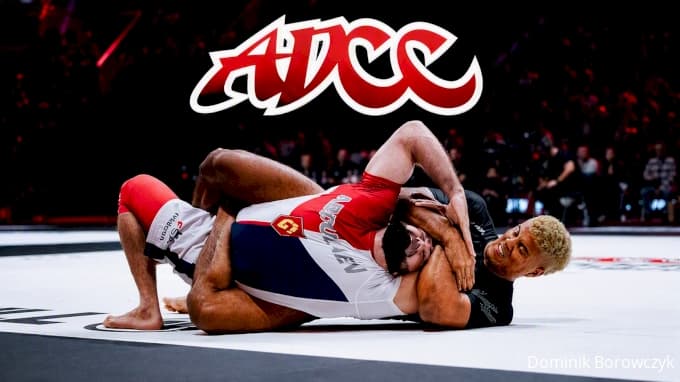
ADCC 2026 results: the stories that survived the predictions
ADCC 2026 results from Krakow: Jaworski, Maciel, Crevar, Pena, the women's champions, and the superfight outcome, with official podiums and match context.
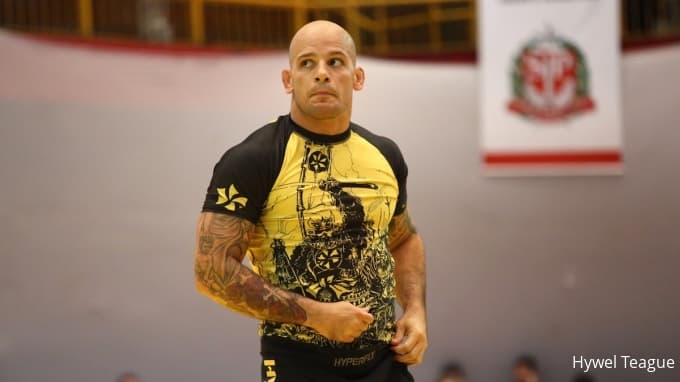
Xande Ribeiro: from absolute titles to the masters mat
Explore Xande Ribeiro's absolute Worlds victories, two ADCC titles, Six Blades, and the distinction between his 2022 Worlds farewell and later masters gold.
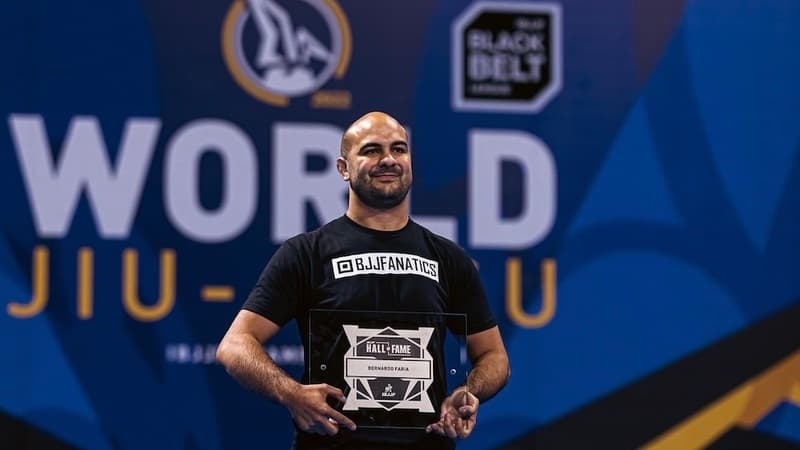
Bernardo Faria: the champion who kept asking questions
Follow Bernardo Faria from Juiz de Fora and Alliance to the 2015 Worlds and BJJ Fanatics, with context on his competition game and move into teaching.
Comments (0)
Loading comments...