

Remembering names at BJJ is a training habit, too
Quick answer: Learn BJJ teammates' names by introducing yourself before training, using the name naturally, and asking again when you forget. Make the habit welcoming rather than intrusive: a person can be part of the room without sharing their job, social accounts, or private life.
You have spent three rounds trying to escape someone's side control. You know which arm they prefer to trap and that they slow down when your knee gets caught. Then class ends, and you realize you cannot introduce them to the friend standing beside you.
This is an ordinary gap in a contact sport. Familiarity arrives through movement before it arrives through conversation. Closing that gap does not require becoming the gym's social coordinator. It takes a small habit at the beginning of the next round.
Introduce yourself before the details become awkward
The easiest introduction usually belongs before the first grip. Offer your name, ask theirs, and make sure you heard the answer. A loud timer, music, or a mouthguard can make a straightforward exchange surprisingly unclear. Repeating the name once is more useful than pretending you understood it.
Keep the introduction proportionate to the moment. Your partner may be preparing for a drill or listening for instructions. A name and a brief question about the exercise are enough. There will be other opportunities to talk if both people want to.
Avoid attaching a test to the introduction. Asking someone's name does not require immediately asking their rank, competitive record, or how long they have trained. Those details may become relevant to a round, but a person should not have to present a résumé to be greeted.
If the instructor assigns partners quickly, introduce yourself as you take position. The habit can survive a busy class because it is short. Waiting for an ideal social opening often means reaching the end of another session with the same familiar stranger.
Ask again before inventing a workaround
Forgetting a name becomes harder to fix when you decide it is too late to ask. Several weeks of nodding can turn a simple question into a private administrative problem. You start waiting for someone else to say the name, then miss it again when the timer sounds.
Ask directly and briefly. Say that you have forgotten and would like to get it right. There is no need for a lengthy explanation about memory, age, work stress, or the number of people you know. The other person came to train, not to reassure you through an apology.
Check pronunciation if you are uncertain. Let the person supply the version they use, including a preferred shortened name. Do not rename them because their name is unfamiliar to you or because a joke seems easier to remember.
A correction is useful information. Accept it without turning the next minute into repeated attempts performed for the whole group. Use the name properly the next time it belongs in conversation. Getting it right in ordinary use matters more than making a ceremony of the correction.
Connect the name to a shared task
A name is easier to place when it belongs to an actual interaction. The person helped you understand the drill, agreed to begin from guard, or pointed out where visitors leave their shoes. Those are ordinary shared details that can support recognition at the next class.
Avoid reducing someone to a physical feature or a joke. A private description may seem harmless until it becomes the label everyone uses. People deserve more room than a nickname based on their size, accent, injury, or one uncomfortable moment during training.
Use the name naturally when asking about the task. Thank the partner after the round or check whether they want another repetition. Repeating it in every sentence will sound less like attention and more like a customer-service exercise.
The aim is recognition, not memorizing a roster. If you learn a few names through the people you actually train with, the room becomes less anonymous over time. You do not need to leave the first week knowing everyone from the morning class to the last open mat.
Help introductions travel beyond your pair
Once you know two people, you can make the next introduction easier. If a newcomer joins your group, offer your own name again and introduce the teammate beside you. Keep it simple and let each person decide what else to share.
This matters especially when regulars fall into conversation that assumes everyone already knows the cast. A new student can spend several minutes listening to names, nicknames, and references without knowing whom anyone means. A brief introduction gives them a way into the exchange.
Do not turn a person's belt or achievements into the entire introduction. Mentioning an appropriate role can help when introducing an instructor, but ordinary teammates do not need to be ranked socially before they speak. The newest white belt is allowed to have a name before becoming a project.
Our guide to welcoming new BJJ teammates covers other small ways to make the first sessions easier. Introductions are particularly useful because they require little time and can be repeated by anyone in the room.
Respect the amount of conversation someone wants
Remembering a name does not entitle you to personal information. Some people enjoy talking about work and family after class. Others prefer a friendly greeting and a round. Either approach can coexist with being a considerate training partner.
Notice the response without diagnosing it. Short answers may mean someone is tired, focused, shy, in a hurry, or simply uninterested in that topic. You do not need to identify the reason before allowing the conversation to end.
A few habits keep introductions comfortable:
Ask for the name the person wants used at the gym.
Keep private details out of group introductions unless invited.
Let a conversation end when the person needs to leave.
Ask before adding someone to a group chat.
Avoid treating social-media access as part of joining the room.
There is also a difference between remembering and recording. A quiet personal note that helps you learn a name is one thing; compiling a shared directory of people's jobs, phone numbers, and schedules is another. Use the gym's approved communication systems for anything that involves personal contact information.
Let familiarity improve the round without making assumptions
Knowing your partner's name makes it easier to communicate, but it does not tell you how they want to train today. The teammate who usually enjoys hard rounds may want light drilling. The person you know well may be returning after time away or managing a limitation they have not discussed.
Ask about the task and pace as you would with another partner. Familiarity should make that exchange easier, not make it disappear. A name is a way to get someone's attention clearly; it is not a substitute for listening to the answer.
Keep boundaries separate from social closeness. You can decline a round with a friend, request a reset, or stop an exchange that feels wrong. You can also train productively with someone you barely know. Good communication should be available in both situations.
The training-partner guide offers a useful reference for the practical side. Learning names helps establish contact. The quality of the round still depends on control, attention, and honoring the agreement you made before starting.
Make returning easier than explaining an absence
A familiar greeting can matter when someone comes back after missing classes. Use their name, say hello, and let them settle into the room. They may want to explain where they have been. They may prefer to begin training without giving an account of the missing weeks.
Avoid opening with a public attendance review. Even a joking complaint can make the person feel that returning requires an explanation. You can be pleased to see someone without asking them to justify the time they spent elsewhere.
The same restraint applies when a teammate changes schedules. A person who disappears from evening class may be attending mornings, working different hours, or taking a break. Do not fill the information gap with a story about motivation or loyalty.
Over time, a room becomes welcoming through these repeated ordinary encounters. Someone remembers the name, makes space in the group, and asks whether you want to drill. That is a modest contribution, but it is one available to the student who has no interest in speeches, leadership titles, or organizing a social event.
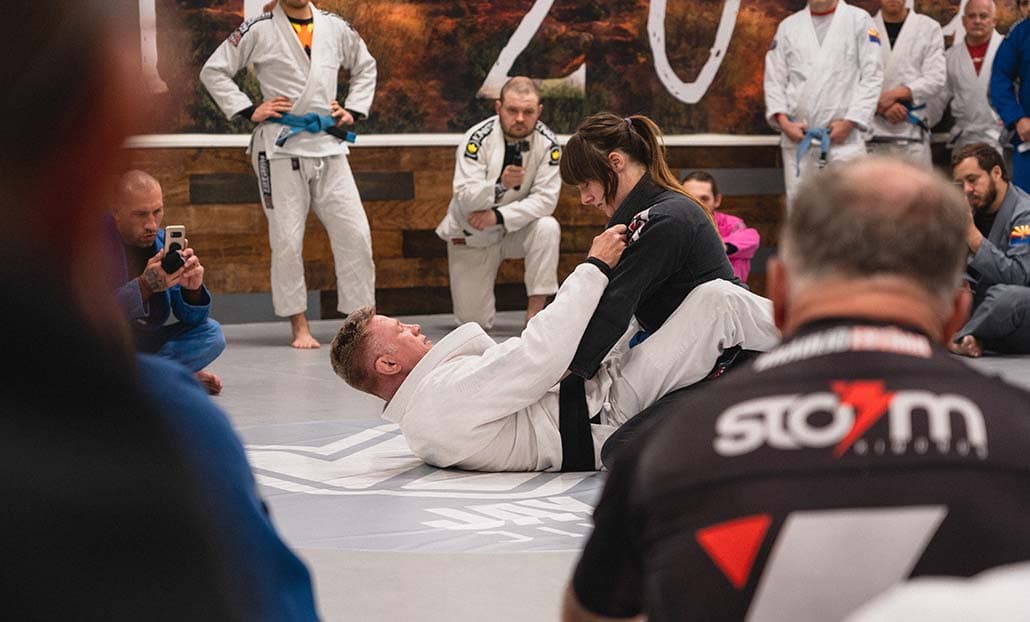
Main photo: BJJ Globetrotters; illustrative archive photograph.
The takeaway
Learn the names of the people you train with, and ask again when you forget. Use introductions to make the room easier to enter, without demanding personal information or turning every conversation into a performance of friendliness.
The habit is small enough to repeat before an ordinary round. Its value is practical: you can address your partner clearly, introduce them to someone else, and recognize them when they return.
Meet the people in your next training room
Find BJJ open mats on Let's Roll, confirm the host's visitor requirements, and start the first round with an introduction.
FAQ
Is it rude to ask someone's name after training together several times? Asking briefly is usually better than continuing to avoid it. Acknowledge that you forgot, listen to the answer, and use the name naturally afterward.
Should I give a new teammate a nickname? Use the name they prefer. A nickname based on appearance, accent, or an embarrassing moment can make someone uncomfortable even if the intention was friendly.
Do I need to socialize after every class? No. A greeting, clear communication during training, and a thank-you afterward can be enough. People have different preferences and commitments outside the gym.
What should I say when someone returns after a long absence? Welcome them and let them decide whether to explain the time away. Avoid making their attendance the subject of a public joke or interrogation.

Rafael Moura
Rafael Moura profiles competitors as people with lives outside the bracket. Some of those stories are comebacks. Most are not, and he does not force them.
Related Posts
Choosing a BJJ seminar worth your time and travel
Choose a BJJ seminar by the subject, teaching format, access, and total cost. Know what to ask the host before buying a ticket.

Claudio Calasans and the second bracket of ADCC 2015
Claudio Calasans won gi Worlds and ADCC absolute gold in 2015. The separate brackets tell a better story than a simple comeback slogan.

A university BJJ club needs a plan for after graduation
Keep a university BJJ club running after graduation with clear coaching arrangements, newcomer information, and a practical committee handover.
Comments (0)
Loading comments...