
How to be a good BJJ training partner: the unwritten skill
Quick answer: Being a good training partner mostly comes down to controlling how much of your strength you use, finishing submissions slowly enough that people can tap, saying your injuries out loud before the round instead of after, giving real resistance when you're drilling, and turning up clean. None of it is on the curriculum. All of it decides whether people cross the mat to roll with you or find something else to do.
There's a moment at the end of warm-ups when everybody pairs off, and it takes about four seconds. Watch it once and you've seen the social structure of the gym. Certain people get asked immediately. Certain people watch two rounds go by and then find the coach.
The list is never announced. It exists anyway, built almost entirely out of things that have nothing to do with how good you are. You can be a mediocre grappler and be the most wanted partner in the room, or a very good one people quietly avoid.
The room keeps a ledger on you
Everyone you roll with is running a calculation. Am I going to get hurt, am I going to learn anything, and am I about to spend six minutes as a crash test dummy for somebody's ego.
They will not tell you their answer. They just stop pairing with you, and you get slightly worse training for years without finding out why. Everything on that ledger is fixable this week, because it's behavior rather than skill.
Rolling with someone sixty pounds lighter
This is the one people get most wrong, in both directions.
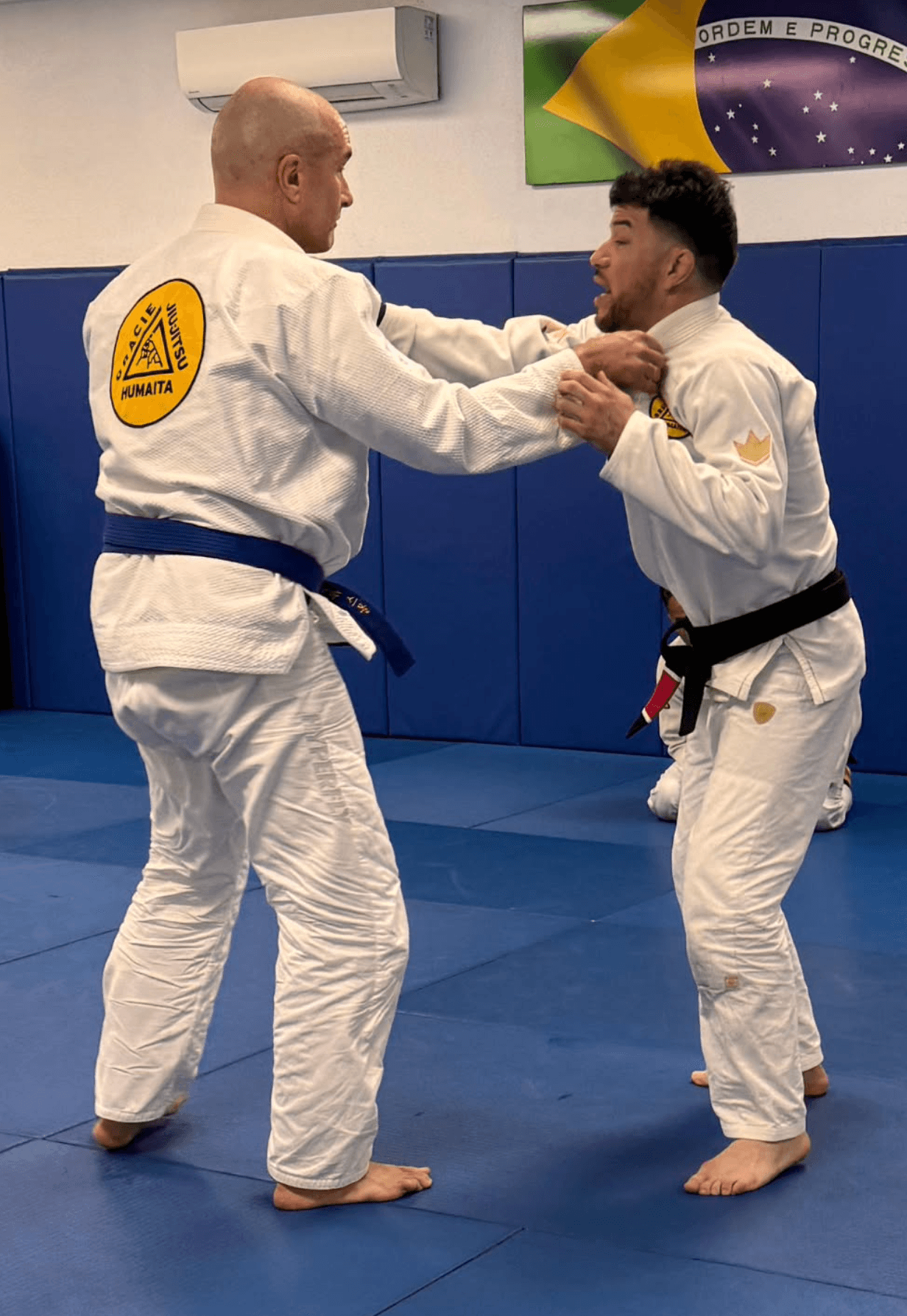
If you're the bigger one, the mistake isn't going hard. It's using weight where you'd normally use technique. Dropping a hundred kilos of chest onto a 130-pound blue belt's ribs isn't a pressure pass, it's gravity, and it teaches neither of you anything. The adjustment isn't "go easy," which is condescending and makes for a garbage round. Make it a technical problem instead. Pass with your hands and hips. Let them reach positions they could really reach. When you're stuck, stay stuck instead of muscling out. You get precision work, they get a real roll, and neither of you gets broken.
If you're the smaller one, speak up early when the weight is genuinely unsafe on your neck or ribs. Good big partners want to know.
The new person, in two versions
Somebody's first month decides whether they train for ten years or quit by March, and you'll get handed those people constantly.
The ordinary version is easy. Don't submit them eleven times to make a point. Give them a position and let them work from it. Let them pass your guard, then take it back, so they feel what progress feels like. Explain one thing at the end, not seven. And when they gas out in ninety seconds, sit up and let them breathe. Controlling someone gently is harder than smashing them anyway. What rolling is is a decent thing to hand a new person after class.
The spazzy version needs a different response than most gyms give it. He isn't malicious. He's terrified, he can't breathe, and he's flailing because he has no idea what's happening. Your fingers get bent backwards. He cranks a neck crank he doesn't know is a neck crank. The wrong answer is a beating so he "learns respect," which produces a scared person who flails harder. The right answer, in order: take a dominant position and make the round boring, say plainly what to stop while it's happening ("don't grab fingers", "slow down, you're safe"), then tell a coach so someone with authority handles the intensity conversation. Most of these people are untrained rather than reckless, and turn into good partners inside three months.
Rolling with a woman
The instruction most guys get is "be careful," which is useless and slightly insulting to everyone involved.
The useful version is the size rule again, because it usually is a size rule. Control your weight, don't use strength you wouldn't need against someone your own size, and give a real technical round rather than a soft one. The complaint you hear most often from women who train isn't that partners go too hard. It's the partner who goes so limp the round is worthless, or who finds a reason not to pair with them at all.
Two extra things. Be deliberate about hand placement, and if something lands somewhere awkward in a scramble, move it and say nothing dramatic. And treat a "no thanks" as information rather than a slight.
How to apply a submission you already know is finished
This is the clearest single marker of a good partner, and it shows up in one second of one movement.
You have the armbar. The elbow is isolated, their defense is gone, the finish is a foregone conclusion. So: do you extend your hips like you're closing a car door, or like you're kicking one in?
The good version is slow and progressive, so the tap arrives before the damage. The bad version is a snap that arrives before the person's brain does. No one gets a medal for that one and everybody remembers who did it. Knee bars, heel hooks, and shoulder locks deserve twice the caution, because the tap-to-injury window on a heel hook is short enough that "he didn't tap in time" isn't an excuse.
The corollary is letting go. Let go the instant you feel a tap, hear a tap, or see a hand move. Mat, floor, your leg, or the word, it's over. If someone is stuck where they can't tap, stop.
Most rooms do get this right. The authors of a 2017 survey of BJJ training injuries, published in Sports, explained the gap between their training numbers and competition injury data by noting that athletes are less willing to load a partner's joints in the gym than in a match. That norm holds only because individuals uphold it, round by round.
Say the injury out loud before the fist bump
"Oh yeah, my knee's been bad for a month" is a useless sentence after the round.
Three seconds before you slap hands: "left knee's dodgy, no leg locks that side today." Done. It costs you nothing, and the person opposite now knows which parts of the map are closed. Same for a tweaked rib, a healing finger, a fresh tattoo, and being forty-two on a Wednesday.
It runs in reverse too. If someone tells you their shoulder is bad, you're now responsible for it. Don't test it to see how bad, and don't hunt it because it's the fastest submission available.
The person who only has one gear
Every gym has one. Usually not a bad person and usually unaware of it, but every round is 100 percent and every session is a tournament final in his head.
The cost lands on the room rather than on him. People stop drilling honestly around him, newer members avoid his class, and eventually somebody's neck goes and they're out for two months. Two months out is often how a hobbyist becomes an ex-hobbyist.
If that's you, the fix isn't going soft. It's being able to pick an intensity on request: one hard round with the competitor, three medium with the guys who have jobs, one light with the new person. If it's someone else, say it directly and privately once, then tell your coach.
Hygiene is something you owe the room, not a personal preference
That same 2017 survey turned up something most people never hear about. Across 140 practitioners, skin infections were the most common medically diagnosed condition of any kind, ahead of every knee and shoulder problem, and ringworm was the single most frequent one.
That isn't bad luck. It's transmitted, by people, one round at a time. A clean gi every session, showering after, short nails, covering anything on your skin, and staying home while you're contagious are partner obligations rather than personal preferences. We've covered the full prevention routine separately. The short version: a two-week ringworm outbreak almost always traces back to one person who trained through it.
Drilling: give real reps, not dead fish
The other half of partnering is the half no one thinks about, because there's no winner. Dead-fish drilling is lying there like laundry while your partner performs a technique on a body that isn't doing anything. It feels cooperative. It's useless, because what they're grooving only works on someone who has given up.
Give the resistance the drill calls for. Partner learning a guard pass? Keep your knees between you and them. Learning an escape? Hold the pin at half strength and add to it as they improve. Ask "how much do you want?" once at the start, then deliver exactly that, and count out loud so neither of you comes up short on reps.
The etiquette people break most often: don't coach from the bottom. If you aren't the instructor, skip the better version mid-drill, especially to a stranger or a lower belt who didn't ask. Two exceptions. Safety, always and immediately. And a direct question, answered briefly before you point them at the coach. Training somewhere new, our drop-in etiquette guide is the same idea for visitors.
The takeaway
None of this is complicated and none of it is on any curriculum. Use technique instead of weight when you outweigh someone. Give beginners positions instead of beatings. Apply submissions like you're closing a door and let go at the first sign of a tap. Say your injuries out loud beforehand and respect other people's. Pick an intensity on request. Turn up clean. Give real resistance when you drill, and keep your opinions to yourself when you aren't the coach.
What comes back is disproportionate. Upper belts who could smash you start giving you real rounds instead of polite ones. People who know things start showing you things. Your partners stick around for years instead of quitting in March, which matters more than any of it, because your jiu-jitsu is built almost entirely out of the bodies of the people who kept showing up next to you.
Go be a good guest somewhere
The fastest way to find out what kind of partner you are is rolling with people who've never met you. Find an open mat near you and introduce yourself at the desk.
FAQ
How hard should I roll with a beginner? Hard enough that it's a real round, soft enough that they finish it. That means controlling position without strength, letting them work from places they could reach, and finishing submissions slowly if at all. When they gas in ninety seconds, sit up and let them breathe rather than smashing someone who has stopped defending.
What should I do if my training partner is too rough? Say something during the round, plainly and without heat: "slow down a bit," or "ease off the neck." Most people genuinely don't know how hard they're going. If nothing changes, tell your coach. Managing intensity is part of their job, not something a member should have to enforce alone.
Do I have to tell people about my injuries before rolling? Yes, and beforehand rather than after. Three seconds before the fist bump ("left knee, no leg locks that side") is all it takes, and it gives your partner what they need to keep you training. If someone tells you about an injury, that area is off limits rather than a target.
How do I know if people don't want to roll with me? Watch who partners with you at the start of class. Regularly last to be picked, left with whoever's remaining, or noticing the same people find a reason to sit out your round: that's the answer. It's almost never about skill level. It's usually intensity, submission control, or hygiene, and all three are fixable inside a week.
Related Posts

Mikey Musumeci gives up the belt to make room for MMA
Musumeci is vacating his UFC BJJ title to focus on MMA training. What he is leaving, what continues, and why the transition matters.
IBJJF membership: finish the paperwork before the deadline
IBJJF membership and tournament entry are separate steps. Plan documents, professor approval, renewals, and junior accounts before registration closes.
Choosing a BJJ seminar worth your time and travel
Choose a BJJ seminar by the subject, teaching format, access, and total cost. Know what to ask the host before buying a ticket.
Comments (0)
Loading comments...