
Choosing a BJJ seminar worth your time and travel
Quick answer: Choose a BJJ seminar by what you want to learn, who the material is intended for, and how the session is organized. Confirm the format, access, total cost, and cancellation terms with the host. A famous instructor can make an event appealing without making every event the right purchase for you.
The poster has one job: make the seminar look like the place you ought to be. Your job is slightly different. You need to decide whether the actual session fits your training, budget, and weekend.
That decision does not require being cynical about visiting instructors. A seminar can offer a useful explanation, a different teaching approach, and time with people outside your usual room. You get more from choosing the experience you actually want than from hoping an impressive name settles every other question.
Start with a subject you can name
Write down why this seminar interests you before reading the biography again. Perhaps the advertised position appears constantly in your rounds. Perhaps you want to hear how a particular instructor explains a familiar problem. Either is a clearer reason than a general feeling that serious practitioners should attend famous seminars.
Look for a stated topic. If the announcement only names the instructor, ask the host whether a subject has been confirmed. Do not infer the entire lesson plan from the technique the athlete is best known for in competition.
A broad seminar can still be worthwhile, particularly if your goal is exposure to a teacher or a social training day. Just call that the goal. Expecting a narrow solution from an event that never promised one makes disappointment easier to manufacture.
Discuss the topic with your coach if you are unsure where it fits. You may discover that a small amount of preparation would help, or that another event is better aligned with the positions you currently understand.
Read the small format details
Gi or no-gi should be settled before you arrive. So should the session’s intended level, duration, location, and visitor policy. Those details can be more useful than another paragraph of competition achievements.
For a concrete example, Revolution Dojo’s announcement for João Miyao’s October 9, 2026 seminar specifies its Katy location, a two-hour session, gi-only training, and access for all levels. That is the kind of information a prospective attendee can act on. Check the host for the event’s current status rather than treating an old announcement as a live ticket inventory.
“All levels” tells you who is welcome. It does not guarantee that every detail will be equally familiar to every attendee. Ask whether a newer student should know a particular position first or whether any part of the session has separate prerequisites.
Also check the exact branch. A host with several locations can have one recognizable name and several very different drives. The correct city is not quite the same accomplishment as the correct door.
Look for teaching you can follow
Competition footage shows you what an athlete does against an opponent. A teaching sample can show you how they explain it. Both are interesting, but they answer different questions.
Watch a publicly available lesson if one exists. Pay attention to the setup, the pace, and whether the explanation helps you identify what matters. You do not need to understand the entire subject to notice whether the instructor makes the starting position clear.
Avoid turning personal preference into a verdict on the teacher. A concise demonstration may suit an experienced practitioner and leave a beginner needing more context. Another instructor’s slower explanation may fit you better for this particular topic.
Ask the host about the structure if it affects your decision. Will there be time for questions? Is the session mainly demonstration and drilling? Is any open training included afterward? The event should be judged by what it offers, not by extra access you silently added to the ticket.
Distinguish a seminar from a camp
A single seminar and a multi-day camp can both involve visiting teachers, but the practical commitment is different. Compare the actual schedule rather than dividing a headline price by the largest advertised number of hours.
BJJ Globetrotters describes its camps as a mix of classes from different instructors and open mats, with participants choosing which sessions to attend. That is one model of a training trip. It is not the same purchase as a focused local session with one teacher.
If you want depth on one subject, ask how the event supports that. If you want several teaching perspectives and time meeting new partners, a camp may fit that aim better. Neither format is automatically superior.
Consider your actual availability too. Paying for a long schedule does not mean you can attend all of it. Work, travel, and ordinary fatigue remain part of the plan. Build your comparison around the sessions you reasonably expect to use, leaving space to enjoy the rest of the trip.
Count the cost outside the ticket
Write down transport and lodging before deciding an event is inexpensive. Include the time involved. A nearby seminar at a higher ticket price may still cost less overall than a distant bargain once the journey is counted.
Read the host’s payment instructions carefully and verify that you are using the official booking route. Ask about cancellation, transfer, and instructor-change policies where they are not clear. Those questions are easier to settle before a payment than during a hurried exchange the week of the event.
For a shared trip, agree on the budget before booking accommodation. Be clear about which expenses are shared and what happens if someone drops out. A group chat full of enthusiasm is not a cancellation policy.
Set a spending limit that includes follow-up training. If the seminar uses the entire budget you had available for regular classes, consider whether the trade is worthwhile for you. A special event should be assessed alongside the training it is meant to support.
Ask about partners, access, and recordings
Some practical questions are best sent directly to the host. Keep the message short and specific rather than asking for a complete personalized syllabus.
Are visitors from other academies welcome, and is registration required in advance?
Should attendees bring a drilling partner, or will partners be organized there?
What equipment and uniform are required?
How are questions handled during the session?
What is the recording policy, and is any official recording included?
Do not assume a room that permits photographs also permits recording the instruction. The Arizona Globetrotters camp page says many classes will be professionally filmed for its library. That is an explicit feature of that event, not a general rule for seminars elsewhere.
If you need an accessibility arrangement, ask about the actual venue and session early enough for the host to respond. A building address does not answer questions about entrances, changing facilities, or how the room will be arranged. Give the host the information needed to address your request.
Leave room in the week afterward
Before buying the ticket, identify when you could revisit the material. You do not need a grand training plan. You need a realistic opportunity to return to one part of the lesson while your questions are still clear.
A willing partner helps, but do not sign someone up for an unpaid teaching session in your imagination. Ask whether they want to work on the subject and agree on a suitable time. Follow the academy’s rules about space and independent practice.
Our seminar follow-up guide covers what to do after the event. The buying decision is earlier: whether you have a useful place for this material in the training you actually do.
There is also nothing wrong with attending partly because you want to meet a respected instructor or spend a day with teammates. Those are real reasons. Problems arise when you buy a social experience and expect it to produce a completely rebuilt game by Monday. Choose the event honestly, and it has a fairer chance of meeting the expectation.
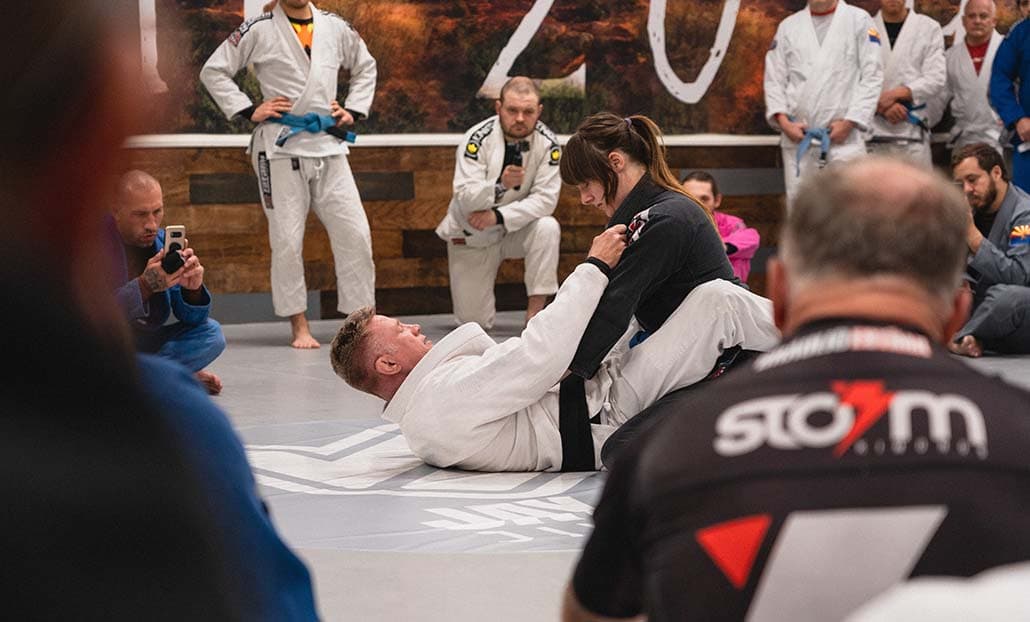
Main photo: BJJ Globetrotters.
The takeaway
The strongest seminar choice connects a clear reason for attending with a confirmed format and a manageable total cost. Read the announcement, sample the teaching where possible, and ask the host about the details that determine whether you can use the session.
Keep some time for the material afterward. A useful explanation needs somewhere to go once the group photograph is finished, even if that means returning to a single question in your normal class.
Find the next suitable session
Browse BJJ seminars on Let’s Roll, then confirm the topic, availability, and booking details with the organizer before paying.
FAQ
Are BJJ seminars worth it for white belts? They can be when the level and subject are appropriate and the host welcomes beginners. Ask about prerequisites and choose an event you can follow rather than relying only on the instructor’s reputation.
Should I bring a training partner? Ask the host. Partner arrangements vary, and you should not assume the event requires a partner or guarantees a particular pairing. If a teammate comes with you, agree on what you both want from the session.
Can I record the techniques at a seminar? Only according to the instructor’s and host’s policy, with appropriate consent from anyone included. Check before recording and distinguish a promised official recording from permission to make your own.
Is a famous competitor always the best seminar choice? Fame can make an event appealing, but the topic, explanation, access, and cost still need to fit you. A teaching sample and a clear event description provide more useful purchasing information than reputation alone.

Kit Langford
Kit Langford covers the louder parts of jiu-jitsu — the marketing claims, the arguments, the gear that promises more than gear can deliver. The jokes are expected to survive a fact-check.
Related Posts

Mikey Musumeci gives up the belt to make room for MMA
Musumeci is vacating his UFC BJJ title to focus on MMA training. What he is leaving, what continues, and why the transition matters.

IBJJF membership: finish the paperwork before the deadline
IBJJF membership and tournament entry are separate steps. Plan documents, professor approval, renewals, and junior accounts before registration closes.
The turtle position needs an exit plan
Turtle can interrupt a pass, but staying there creates another problem. Learn to identify the threat, control a connection, and choose an exit.
Comments (0)
Loading comments...