
BJJ world championships: which Worlds are you watching?
Quick answer: A BJJ world title needs context: organizer, event, year, format, and division. IBJJF Gi Worlds, World No-Gi, World Master, and the ADCC World Championship are distinct competitions. Read the full result before comparing titles or deciding which event you want to watch.
The words “world champion” can fit in an Instagram bio. The competition they describe usually needs another line.
That missing line is where much of the meaning sits. A belt division, an age category, or the difference between gi and submission grappling changes the field and the conditions. Adding that information does not diminish a result. It lets the reader understand what was won.
Begin with the organizer and the event name
The IBJJF results archive separates its championships by event and year. Use that full title as your starting point. Searching only for “jiu-jitsu world championship” can put several different competitions in front of you without explaining the distinction.
For an article, a coach’s biography, or a conversation about a match, identify the organization before treating two results as equivalent. The word world is part of an event’s title; it does not automatically put every event with that word into one shared competition system.
This is also the quickest way to find a replay. Search the full event name, year, athletes, and division instead of adding more enthusiastic adjectives to a vague search. If the result still looks wrong, check whether you have found the same athletes competing at a different event.
You do not need to memorize every tournament brand. You need a habit of asking which competition the speaker means before building a conclusion around it.
Gi Worlds contains more than the headline finals
The 2026 World IBJJF Jiu-Jitsu Championship results show divisions separated by sex, age category, belt, and weight. The same event record contains juvenile and adult categories, rather than one undifferentiated list of champions.
That structure matters when you read a career history. An athlete can have an important result before reaching adult black belt. It belongs in the account, with the category attached. Removing the category can make a developmental achievement sound like a different achievement altogether.
For spectators, choose the part of the event you actually want to follow. Watching one complete bracket can tell you more about a competitor’s day than a montage of finals from unrelated divisions. You see the sequence of opponents and the decisions that brought the athlete to the last match.
For a newer practitioner, a colored-belt division may also be interesting on its own terms. Watch how competitors organize familiar positions under pressure. There is no requirement to make every viewing session a search for the most famous name in the building.
No-Gi Worlds is a separate event
The IBJJF archive lists World No-Gi separately from the gi championship. Keep that distinction in the title when recording an athlete’s result. A person may have results in both, but the categories should not disappear when the totals are discussed.
The practical viewing difference begins with the uniform. Without a gi available to grip, sequences involving sleeves and lapels are not the same sequences. When comparing an athlete’s matches across formats, look at the specific positions and connections rather than assuming one set of habits transfers unchanged.
Do not use the absence of a gi as a shortcut to assume an event uses ADCC rules. The organizer still matters. Two no-gi matches can be governed by different scoring, timing, and legal-technique rules.
Before watching, open the organizer’s current rules and the event information. That small check can explain why a competitor chooses a certain pace or position. Otherwise, a tactical decision can look like a mistake simply because the viewer is applying the wrong competition’s expectations.
World Master needs its age category attached
The World Master results are organized across master age groups as well as belts and weights. A result described as Master 3 is different from one described as adult, even when the athlete wears a black belt in both settings.
Treat the complete division as information, not a footnote you apologize for including. People enter the competition available to their category and circumstances. Accurate wording respects that specific contest instead of trying to improve it through ambiguity.
This is especially relevant when writing about a local academy. A teammate winning a master division may be a major event for the room. Describe the bracket, the result, and the person’s preparation where those details are documented. There is no need to borrow the language of another category to explain why teammates care.
For the reader choosing an event, the category also answers a practical question: who is this competition for? The name alone cannot establish eligibility. Read the current event’s division information before treating a compelling match video as a registration invitation.
ADCC belongs in a different column
The ADCC championship rules distinguish World Championship matches from trials and open events, including different match durations. World Championship qualifying rounds include an initial period without points, while finals have their own timing provisions. That structure is part of the contest, not an incidental detail.
An ADCC World Championship result should therefore be identified as such. So should a trials result or an ADCC Open result. The shared organization does not make those event stages interchangeable.
When watching, read the match format before deciding why an athlete acted early or waited. The meaning of an action depends partly on when it occurs within the rules. A highlight clip often removes exactly that timing context.
Avoid trying to settle the relative value of every gi and no-gi achievement with one universal ranking. A more useful comparison starts by saying what you want to compare: success under a particular ruleset, performance against a particular field, or consistency across several kinds of competition. Those are different arguments and need different evidence.
Open class and weight class should stay visible
A weight-division result and an open-class result should be recorded separately. The official event record tells you which category the athlete won. Preserve that description instead of compressing everything into a total that readers must reverse-engineer.
The same applies to the phrase double gold. Say which two divisions produced it. That is a short addition with a large effect on clarity, especially for someone who has only recently started following the sport.
An academy team result is another distinct measure. Do not mistake a team standing for a single athlete’s bracket result. If you are describing a school’s performance, make clear whether the claim concerns an individual division, an overall category, or the team standings published by the organizer.
For your own viewing notes, keep the event and division at the top of the page. A remembered finish becomes more useful when you can find the match again. “The final where someone took the back” describes a great deal of jiu-jitsu and very little searchable information.
Read a title claim without making it an interrogation
There is a courteous way to request context. Ask which event, year, and division the result refers to. Most of the time, that is enough to locate the record and continue the conversation with a better understanding.
For an article or academy profile, a simple verification sequence works:
Find the organizer’s official event result.
Match the athlete’s name and academy to the relevant division.
Record the full event, year, belt, age group, and weight or open class.
Check whether the organizer has published a correction or update.
Use the organizer’s current record rather than relying solely on an old screenshot. If two sources disagree, describe the discrepancy internally and resolve it before publishing a confident total. A copied number does not become more reliable each time another website repeats it.
The same care helps when comparing tournaments to attend. A famous event name may interest you, but the available division, format, and logistics determine whether it is the right event for your next entry.
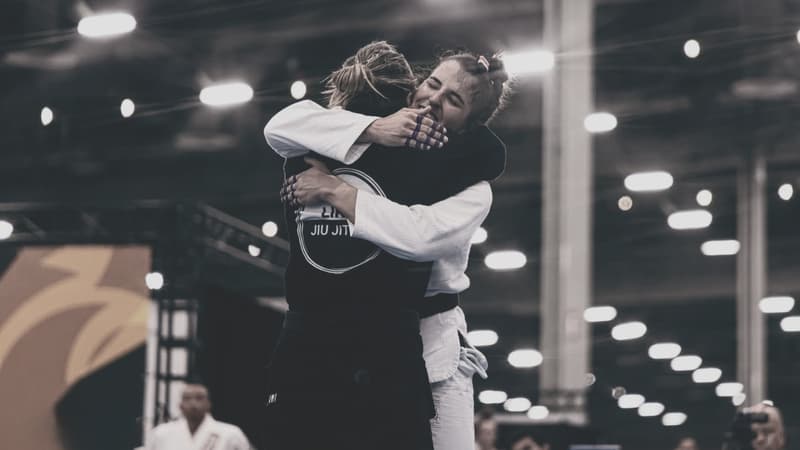
Main photo: IBJJF.
The takeaway
World championship results become easier to understand when the full competition stays attached to the achievement. Organizer, year, format, and division give the reader enough information to assess the result without guessing.
That precision improves viewing too. Follow a bracket, learn the rules governing it, and watch the decisions in sequence. The match usually becomes more interesting once you know what its competitors are trying to win and under which conditions.
Take a question back to training
Use Let’s Roll’s gym directory to find a training environment where you can ask about the positions and competition formats you have been watching.
FAQ
Are IBJJF Worlds and ADCC the same competition? No. They are run under different competition systems. Identify the organizer and event before comparing results or assuming that a match uses the rules you already know.
Does every world title mean adult black belt? No. Read the complete division. Official results can distinguish age categories, belts, and weights, and those details belong in an accurate description of the achievement.
What does double gold mean? It describes two gold medals, but the phrase alone does not identify the divisions. Check the event record and state the categories rather than assuming which pair was won.
Where should I verify an athlete’s world championship result? Start with the organizer’s official results for the exact event and year. Match the athlete to the division and check for any published updates before repeating a title count.

Miles Serrano
Miles Serrano writes about competitors and the decisions that shaped their careers. He is more interested in the adjustment someone made in the third minute than in the medal count afterward.
Related Posts

Mikey Musumeci gives up the belt to make room for MMA
Musumeci is vacating his UFC BJJ title to focus on MMA training. What he is leaving, what continues, and why the transition matters.
IBJJF membership: finish the paperwork before the deadline
IBJJF membership and tournament entry are separate steps. Plan documents, professor approval, renewals, and junior accounts before registration closes.

Choosing a BJJ seminar worth your time and travel
Choose a BJJ seminar by the subject, teaching format, access, and total cost. Know what to ask the host before buying a ticket.
Comments (0)
Loading comments...