
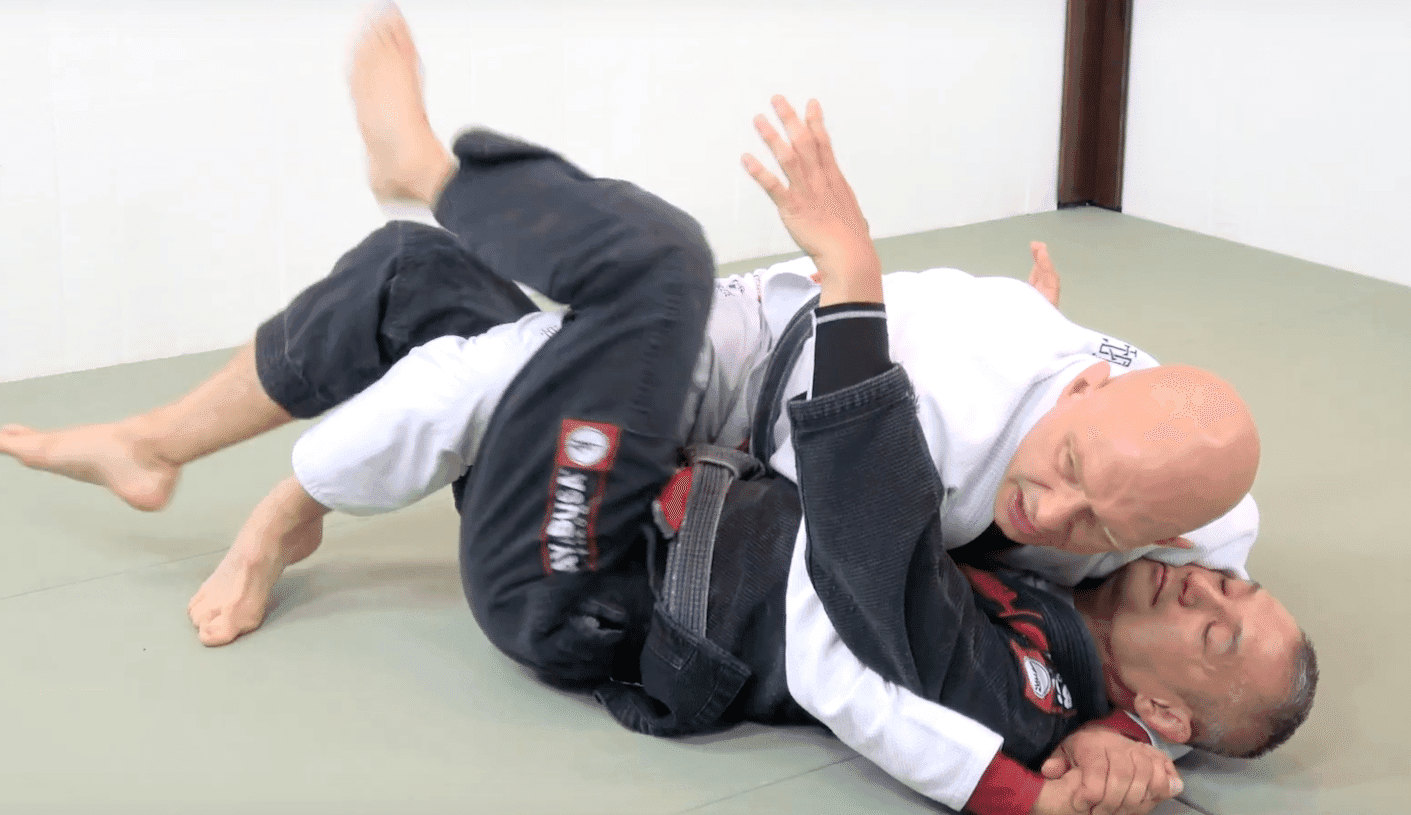
Your knee cut is past the knee. Your foot is still stuck.
Quick answer: Getting your knee across does not finish a knee-cut pass if the opponent still controls your foot. Check the upper-body connection before trying to extract the leg, and have your coach teach a clearance that fits that exact entanglement. Practice the final transition into a pin separately from the entry.
The knee is on the far side. Your chest is low. From the waist up, the pass looks finished. Then the bottom player tightens their legs around your ankle, and the next minute becomes an increasingly annoyed attempt to pull your foot out.
This is a useful place to stop a practice round. The foot may be the visible obstacle, but it is worth checking everything you would lose while freeing it. An ankle coming loose is a small victory if you immediately give back both knees and land in open guard again.
Call the position accurately before trying to leave it
Half guard with your knee trapped and a late passing position with only your ankle held are different problems. Your coach may use quarter guard for the latter, although the exact position still needs a demonstration rather than a label.
In a 2014 interview with Grapplearts, Brandon Mullins describes progressing from half guard to quarter guard, where only the ankle remains controlled, before completing the pass. The point is useful without turning it into a compulsory sequence for every exchange: partial progress still leaves another job.
Show your instructor the actual leg configuration. Include which way the bottom player is facing, which arm is underneath, and whether your chest is already connected. If you begin the demonstration with a better underhook than you had in the round, you are asking for a solution to a nicer problem.
A phone note can be short: right knee clear, right foot caught, opponent on their side. That description is more useful than “knee cut stuck again,” especially when you return to it several classes later.
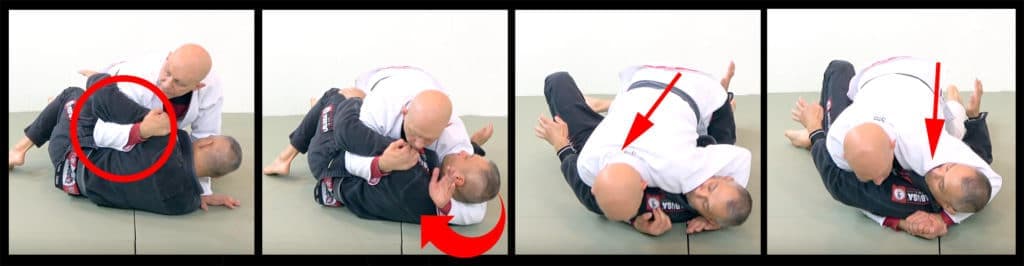
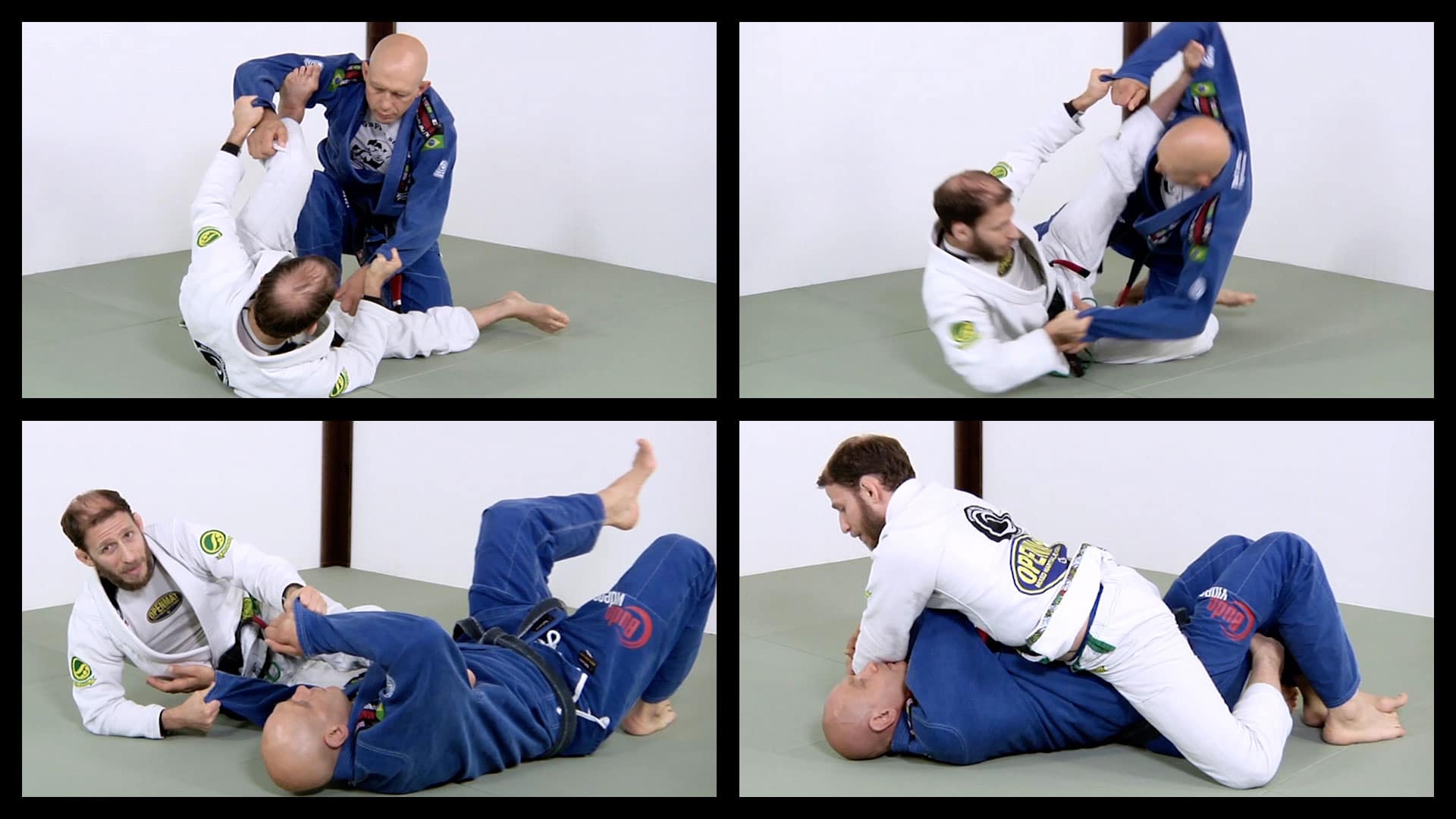
Photo: Grapplearts / Stephan Kesting.
Look upstairs before staring at your ankle
Stephan Kesting's 2017 knee-cut lesson presents two ways of managing the opponent's upper body: a crossface-and-underhook approach, and a gi option using sleeve and lapel control. Both address the opponent's ability to turn while the passer advances.
Do not treat those as interchangeable hand positions. Ask what your chosen grip prevents and what changes when you release it. If one hand is keeping the near arm out of the way, sending it down to pry at the legs may reopen exactly the space you worked to close.
Reconstruct this at low resistance. Freeze the late pass, then remove one upper-body connection at a time while the bottom player tries to recover position. You are looking for the first meaningful change, not a dramatic escape. Perhaps they get onto an elbow. Perhaps a knee returns between your bodies. Now you have something concrete to preserve during the clearance.
This is also a good reason to avoid judging pressure by discomfort. Your partner can be uncomfortable and still have the frame they need. Ask what movement you are preventing, not whether the position feels heavy.
The bottom player still has a plan
An ankle grip is not necessarily a last act of desperation. A defender can use a surviving connection to start rebuilding their position.
Kesting's mount-to-deep-half escape demonstration, published in February 2020, uses a briefly established quarter guard to move into deep half. That is a different starting situation from a knee cut, so it should not be copied across without adjustment. It does show why treating the trapped foot as a harmless detail is a mistake: a remaining connection can become the beginning of an escape.
Give the person on bottom a clear task during practice. They should try to recover a usable guard or improve their angle, rather than simply squeeze the ankle as hard as possible until the timer sounds. You need to learn what happens while you work, not merely whether you can win a static pulling contest.
Swap roles before discussing the round. Feeling which upper-body control makes recovery difficult can clarify why a clearance that looked identical from above produced a different result when you tried it.
Do not manufacture a release by twisting harder
There is no responsible universal foot-extraction instruction for every version of this position. The leg configuration and direction of pressure matter. If your knee or ankle feels caught in an awkward line, stop, reset, and ask for help.
That does not make the exercise useless. It identifies the part that needs hands-on instruction. Have the coach demonstrate the clearance with the same foot trap, then try it slowly while the partner says what they feel. You should understand which part moves first and what remains connected to the mat.
Avoid turning this into a contest over how long the bottom player can refuse to release a compromised position. The aim is to practice a controlled pass against sensible resistance. Either partner can stop the repetition. Neither owes the other a painful demonstration of determination.
If a solution only seems to work when you surprise the partner with a sudden movement, it is not ready for your ordinary training rounds. Return to the slower version and find out what you were skipping. Save the argument about match pace for after you can perform the movement predictably.
A defender's knee can return while you celebrate
Jon Thomas's knee-cut counter lesson, published by Grapplearts in December 2022, emphasizes preserving the defender's elbow-knee relationship. It shows several ways to rebuild distance, including a knee shield and foot-on-biceps control. The lesson is from the bottom player's side, which makes it useful homework for a passer.
Watch the space the defender is trying to reclaim. Then inspect that same space in your late passing position. When you focus completely on the trapped foot, do your elbow and hip drift far enough apart to let something back in?
For a short exercise, ask the defender to announce when they feel a useful opening. Stop there. You do not need to let every opening become a full escape before studying it. Compare the position immediately before the clearance and immediately after it.
Keep this separate from a general guard-passing overhaul. Our guard-passing guide covers the larger picture. This session has a narrower question: what returned while you were busy getting the foot free?
Make the last transition the whole round
You can spend an evening on entries and reach the troublesome final position only twice. For this problem, start there. Get your instructor's approval for the position and the permitted movements first.
Try this practice format:
Begin with the passer's knee clear and the same foot connection that caused trouble in sparring.
Give the passer the task of clearing the foot and settling into the agreed pin.
Give the defender the task of recovering a useful guard or escaping the upper-body control.
Reset after either task is completed, or immediately if the leg position becomes uncomfortable.
The format is an editorial suggestion, not a tested prescription for how many rounds anyone needs. Use a short timer so the exercise stays focused, and change partners if one pairing turns into a repeated stalemate neither person understands.
Keep the finish honest. Agree that the passer must settle long enough for both people to recognize the pin, rather than calling success the instant the foot slips free. This is a practice criterion, separate from whatever scoring rules apply at your next event.
Change one condition before abandoning the pass
Once you can finish from the favorable start, remove a little of that advantage. Let the defender begin with a stronger frame, or start the passer a movement earlier. Change one condition at a time so you can see what caused the failure.
Do not immediately add every grip fight, submission threat, and scramble available in a normal round. That gives you a full round again, which is useful later but makes this particular investigation harder to read. You are trying to find where your late pass stops being reliable.
Write down the condition that broke it. For example, if it worked with the underhook already established and failed without it, the next assignment may be obtaining the underhook under resistance. More repetitions of the final foot clearance will not answer that earlier question.
If two coaches show different finishes, ask them which starting details they are assuming. Different answers can fit different leg configurations. There is no need to settle a dispute about the best knee cut while your own foot is still trapped in a position you have not described accurately.
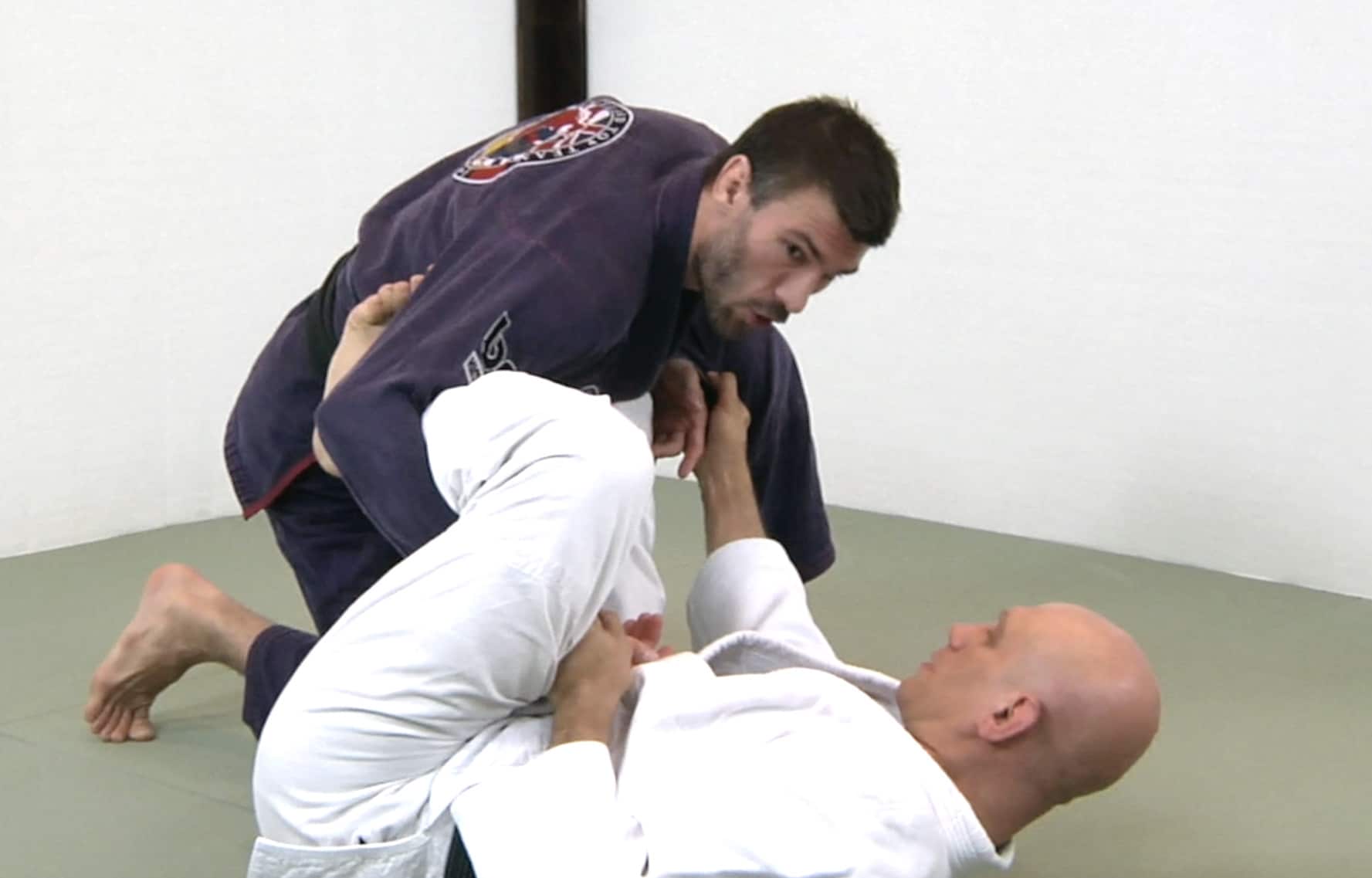
Main photo: Grapplearts / Stephan Kesting.
The takeaway
The last part of a knee cut is worth its own practice time. Identify exactly what still controls the leg, check what you would surrender by reaching for it, and learn a clearance that preserves a usable top position. Count the transition as finished when you arrive where you intended, not merely when the ankle is free.
Take one troublesome repetition to your coach with its untidy details intact. Start from that position for a few controlled exchanges. If the same frame keeps coming back, fix the frame problem. If the foot clearance itself is unclear, have that movement taught before adding speed.
Work on the finish with a coach
Find a BJJ academy near you and check which classes cover positional sparring. A coach who can see the trapped foot and the defender's frames has information an article cannot get from the name of the pass.
FAQ
Have I passed if my knee is clear but my foot is trapped? You have made progress, but you still need to resolve the remaining leg control and establish the intended top position. For competition scoring, consult the rules for that event rather than treating this training description as a referee's ruling.
Is quarter guard the same as half guard? Coaches use quarter guard for certain positions where the ankle or foot remains trapped after the knee has cleared. The exact configuration matters more than the label. Demonstrate it to your instructor before choosing a finish.
Should I reach down and peel the opponent's legs away? That depends on the position and what the reaching hand was controlling. Ask your coach to check the trade-off. Giving up a useful upper-body connection can let the defender recover position while you work on the foot.
What if freeing the foot hurts my knee? Stop the repetition and reset. Do not force a painful twist or ask your partner to hold tighter so you can test it. Get the movement checked in person, and seek appropriate medical care if pain or an injury persists.
Related Posts
De la Riva guard: make the standing passer take a step
Your de la Riva hook is in, but the passer is comfortable. Study ankle control, the free leg, and the balance reaction that makes an attack possible.
Lasso guard: know when to keep the sleeve and when to leave
A lasso hook can buy time or trap you in a grip battle. Give the free leg a purpose, keep useful sleeve control, and recognize when to change guards.
Spider guard: give each foot a job
Make spider guard easier to read. Learn how sleeve tension, different foot positions, and the passer's posture shape your next sweep or transition.
Comments (0)
Loading comments...