
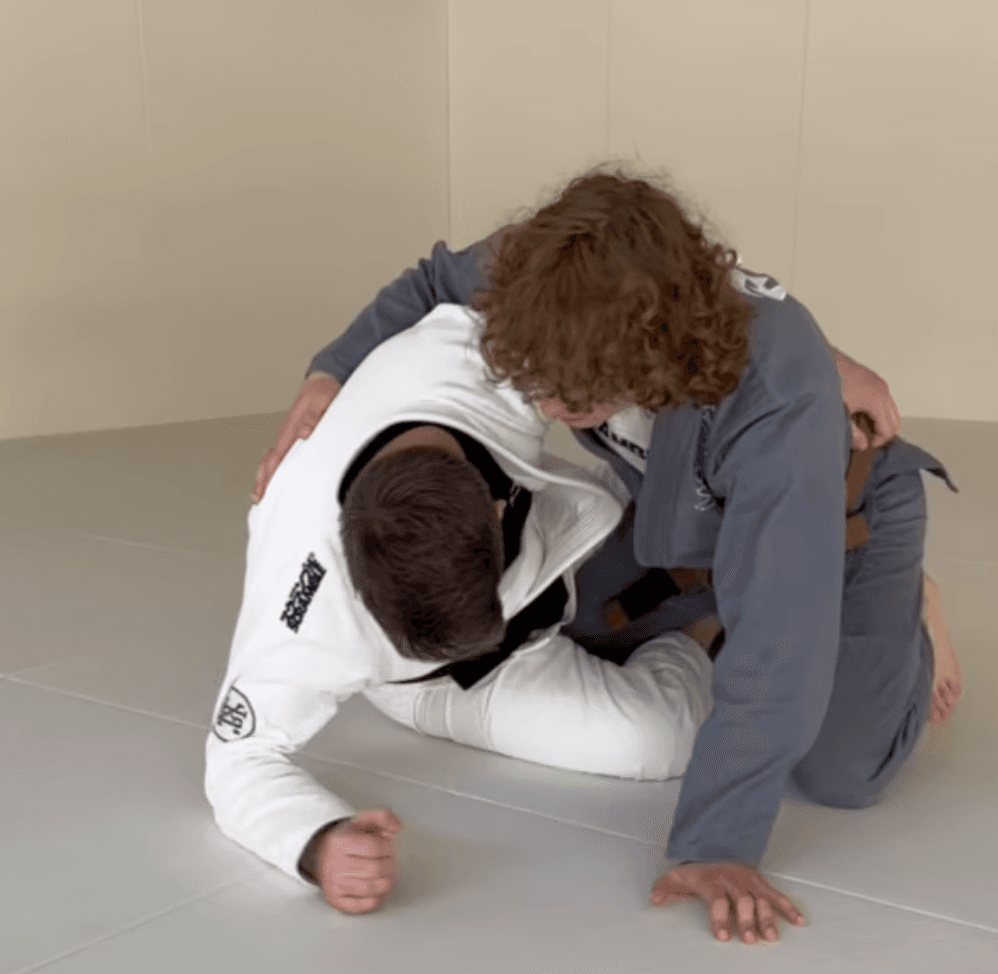
Half Guard for Beginners: From Survival Position to Weapon
Quick answer: Half guard is the position where you've trapped one of your opponent's legs between yours. It was once treated as half a lost battle — the last stop before getting passed — but modern BJJ turned it into a genuine attacking guard built on the underhook, the knee shield, and staying off your back. For beginners, it's the most important position to understand, because you'll end up there constantly whether you plan to or not.
If closed guard is where beginners start rolls, half guard is where they actually live. Every failed guard retention, every half-finished escape, every scramble that stalls out — they all seem to land in half guard. Which is lucky, because it's quietly become one of the best positions in the sport.
From "half a bad position" to real guard
For a long stretch of BJJ history, half guard had a bad reputation. It was where guards went to die — a delay tactic, half a pass already conceded. Old-school competitors treated getting stuck there as a countdown.
That changed over the last few decades. Injured and undersized competitors — famously including Roberto "Gordo" Correa, widely credited with developing the modern half guard game — discovered the position could sweep, attack, and control rather than just stall. Later generations built entire championship games there: deep half guard players like Bernardo Faria won world titles diving underneath people, and Lucas Leite's half guard system became one of the most copied games in competition. The details vary, but the lesson stuck — half guard is offense now.
Why beginners end up here constantly
You don't have to seek half guard out. It finds you.
When someone passes your guard, catching their trailing leg is the natural last line of defense. When you're escaping side control or mount, half guard is usually the first position you can recover to. When a takedown gets sprawled on or a scramble stalls, someone's leg ends up trapped.
That's exactly why it belongs early in your education, right alongside the fundamental positions. You'll spend hundreds of hours there whether you study it or not. Studying it just decides whether those hours are miserable.
The underhook battle
Bottom half guard has one central fight, and it's worth stating plainly: whoever wins the underhook wins the position.
Get your inside arm under their far armpit and you can come up to your side, attack sweeps, and start working toward their back. Lose that fight — their arm under yours, their shoulder pressure on your jaw in a crossface — and you're flattened, carrying their whole weight, playing pure defense.
Almost everything a good half guard player does traces back to this. The dives, the shoulder crunches, the constant pummeling of arms — it's all one long argument about the underhook.
The knee shield
The other pillar is the knee shield: your top knee sliding across their torso like a crossbar, keeping their chest off yours.
The knee shield is the beginner-friendly version of half guard because it buys you what beginners lack — time and space. With the shield in place, their pressure has to go through your leg's frame before it reaches you, and you can manage distance, recover your other guard, or set up sweeps at your own pace.
It isn't passive, either. Plenty of modern players attack almost exclusively from knee shield. But even used purely defensively, it's the difference between playing half guard and being buried in it.
Deep half and the old-school game
Once the basics work, half guard branches. Deep half guard — swimming fully underneath your opponent so you're holding one of their legs beneath their hips — turns you into a sweeping machine that's genuinely hard to pressure. The old-school game stays on the surface: underhook, come up to the shoulder, take the back or run the sweep.
You don't need either as a beginner. It's just worth knowing the ceiling is high, because it changes how you feel about ending up there.
What beginners should actually focus on
Never lie flat. Flat on your back with your shoulders pinned is half guard at its worst. Stay on your side, always — this one habit is worth more than any technique.
Fight for the underhook or the knee shield, every time. One of the two must exist. If you have neither, that's the emergency, and fixing it comes before any offense.
Keep their head and hands off you. The crossface flattens you and starts every problem. Frame against the face or bicep early, not after the pressure lands.
Use it to get back to full guard first. Before half guard is a weapon, it's a recovery tool. Sweeps can come later; reliably rebuilding your guard from there pays off immediately.
The takeaway
Half guard went from a stalling position to one of the richest games in jiu-jitsu, but you don't need the fancy version yet. Stay off your back, win the underhook or hold the knee shield, and treat the position as your recovery hub. Do that for six months and the position most beginners dread becomes the one where you feel most at home.
Test it on people who don't know your game
Half guard sharpens fastest against unfamiliar partners who react honestly. Open mats are made for exactly that. Find an open mat near you on Let's Roll →
FAQ
Is half guard a good position or a bad one? Played on your side with an underhook or knee shield, it's a genuinely strong guard with real sweeping and back-taking offense. Played flat on your back, it's one step from being passed. The position is neutral — your posture inside it decides which version you get.
What should a beginner do first from half guard? Get on your side and win the underhook, or block with a knee shield if you can't. Those two habits fix most of what goes wrong, and everything else builds on them.
What is deep half guard? A variation where you swim entirely underneath your opponent, controlling one leg beneath their hips. It's a powerful sweeping position popularized at the highest levels of competition, but it's an intermediate project — the basic position comes first.
Why do I keep getting flattened in half guard? You're losing the crossface and underhook battle, usually because the fight for them started too late. Frame early, keep your top shoulder off the mat, and treat their crossface arm as the first threat to solve.
Related Posts
Mikey Musumeci gives up the belt to make room for MMA
Musumeci is vacating his UFC BJJ title to focus on MMA training. What he is leaving, what continues, and why the transition matters.
IBJJF membership: finish the paperwork before the deadline
IBJJF membership and tournament entry are separate steps. Plan documents, professor approval, renewals, and junior accounts before registration closes.
Choosing a BJJ seminar worth your time and travel
Choose a BJJ seminar by the subject, teaching format, access, and total cost. Know what to ask the host before buying a ticket.
Comments (0)
Loading comments...