

IBJJF out-of-bounds rules: the restart depends on the position
Quick answer: Going out of bounds doesn't always produce the same restart in IBJJF competition. The referee considers the position, whether it has stabilized, any submission in progress, and how the athletes left the area. Keep competing until the official intervenes, then follow the restart instructions.
The same edge of the same mat can lead to two different restarts. One pair is returned to a ground position. Another is brought back standing. A spectator who sees only the final few seconds can easily decide the official changed the rule.
The missing detail is often the position before the stoppage. Was the exchange settled? Was a scoring action still developing? Did somebody have a submission, and which athlete's movement carried it beyond the relevant boundary?
I think the productive way to learn the edge rules is to keep those questions separate. The line matters, but it doesn't answer the entire problem.
The combat area and safety area serve different roles
IBJJF competition distinguishes the combat area from the surrounding safety area. That matters because an exchange reaching the edge of the combat area is different from an exchange moving beyond the outer safety area.
Use the official rulebook to identify the areas and procedures. A video may show different mat colors without making the whole layout visible. Don't infer the legal boundary from one color change in a cropped clip.
Before your own match, pay attention to the assigned area and the referee's directions. This is practical orientation, not permission to use the edge as a substitute for defending a position. The official controls the stoppage and restart.
At a local event using different mats or a modified format, confirm the organizer's instructions. A competition promoted as following IBJJF rules still deserves a check of its published conditions. The shape of the venue doesn't explain every decision the referee will make.
A settled ground position can be preserved
For a stabilized ground position with two-thirds of the athletes' bodies outside the combat area, the IBJJF rulebook directs the referee to stop and recreate the position in the center. The restart is intended to preserve the arrangement at the stoppage.
The practical lesson is that reaching the edge doesn't automatically erase an established disadvantage. If you were controlled before the interruption, don't assume the return to center gives you a fresh standing exchange.
Cooperate with the reconstruction. The rulebook tells athletes to maintain their current positions as well as they can when the referee stops the match. Follow the official's instructions instead of releasing everything and racing back to a preferred starting place.
For preparation, ask your coach to walk through a supervised restart from a settled position. The exercise is about recognizing the procedure and listening. Nobody needs to argue over a centimeter of hand placement to understand that a stoppage isn't a free positional reset.
An unfinished exchange can produce a different restart
Standing action and ground action that hasn't stabilized receive different treatment from a settled ground position. The IBJJF text includes standing returns to center in specified boundary situations, with qualifications for a takedown already underway.
This is where comparing screenshots becomes especially unreliable. A still image may show one athlete on top without proving that the position had stabilized before the stoppage. The referee is judging an exchange over time.
Watch the approach to the boundary, rather than starting the replay at the whistle. Identify the first controlled position you can actually establish from the footage. If you can't identify one, say so instead of converting an uncertain image into a confident accusation.
Athletes can prepare by learning the procedure without trying to engineer the stoppage. Keep working within the rules and respond to the official. Hoping for a favorable restart is an unreliable plan, especially when the circumstances differ from the example you remember.
A scoring action may still need to finish
The rulebook includes a case where an athlete takes the opponent into the safety area while trying to stabilize a scoring position. When possible, the referee waits for the required control before awarding points and moving the match back to center.
That is a reason not to abandon the position merely because the edge appears nearby. It is also a reason for a spectator to avoid treating every delayed stoppage as inattention. The official may be allowing a scoring sequence to resolve under the rule.
This doesn't approve continuing after a stop command. Distinguish action before intervention from action afterward. Once the referee interrupts, follow the direction even if you believe another moment would have completed your score.
The BJJ rules resource supplies the broader scoring vocabulary. Boundary procedures add another question to that vocabulary: where did the sequence develop, and what stage had it reached when the referee intervened?
A submission changes what the referee is evaluating
The IBJJF rules distinguish an active submission in the safety area from movement beyond that area. They also distinguish whose movement caused the exit. Those details can affect the restart and the award considered by the referee.
Don't shorten that into a universal rule that leaving the mat gives the attacker two points. The text includes a specific defender-initiated exit case, and a different treatment when the attacking athlete's movement causes the exit. The exact sequence matters.
For a rules discussion, describe the hold and movement without pretending to know private intention. Footage may show who traveled in a particular direction; whether the official judged the exit under a certain provision needs the full circumstances.
Training remains a separate setting. Partners should stop when required and release promptly when someone taps or asks to stop. A competition boundary discussion doesn't create permission to continue a submission toward a wall, a neighboring pair, or an unsafe part of the academy.
Deliberately leaving can have its own consequence
IBJJF's serious-foul provisions address deliberately running out to avoid an inferior position or an opponent's score. The specified case can involve a penalty and two points for the opponent. Going out is therefore a decision with potential consequences, not a universally available escape.
That provision deserves a fair reading. An athlete reaching the edge during a legitimate exchange isn't automatically guilty of deliberately fleeing. The referee has to judge what occurred under the rules.
The reader should keep two ideas together: exits can be penalized, and a partial camera angle doesn't prove every exit was deliberate. A strong opinion about the result isn't evidence of intention.
For your own preparation, spend time on the permitted defensive options in the position. If the only plan involves hoping the referee restarts you somewhere better, the edge has become responsible for a problem your training should address. Ask the coach to help define that problem more clearly.
A restart should be part of the rehearsal
A controlled practice restart can make an unfamiliar competition procedure less confusing. Have the coach stop an agreed exercise, move the pair as directed, and resume from the instructed arrangement. Keep the lesson about procedure rather than turning it into another hard round by surprise.
Before beginning, agree on a few details:
Which official rules and division the exercise represents.
Who controls the stop, move, and restart instructions.
How the partners will pause and release if either needs to stop.
These are editorial suggestions for a supervised practice, not a replacement for the event's officiating. Your coach may choose a different way to teach the same recognition.
Afterward, identify what caused confusion. Perhaps an athlete released every grip before hearing the instruction, or assumed standing was guaranteed. Those are specific habits that can be corrected. A vague instruction to understand the rules better doesn't give the next session a clear task.
Judge a replay with the whole sequence available
Boundary clips are tempting material for instant verdicts because the stoppage is visible and the rule looks as simple as a line. The actual decision often depends on moments the short clip leaves out.
Check the beginning of the exchange, the state of the position, and the relevant mat areas. Then compare the sequence with the rule. If the camera doesn't show the boundary or the referee's instruction clearly, that limits the conclusion.
It is reasonable to ask why a call was made. It is less useful to invent certainty about a referee's motives. Keep the disagreement attached to the procedure or visible evidence, and acknowledge what the recording cannot establish.
The article on close matches and scoreboards considers another place where the replay and the immediate spectator impression can diverge. In both cases, the useful question is narrower than whether the official ruined everything. What rule applies to the sequence we can actually verify?
The takeaway
The boundary is part of an IBJJF match, and its procedures depend on more than reaching the edge. A stabilized position, an unfinished exchange, and a submission in progress don't create identical problems for the referee.
Learn those distinctions before competing. Follow the stop and restart instructions, ask your coach about the cases you don't understand, and avoid relying on the edge to remove a disadvantage. When reviewing a call, begin early enough in the footage to see what position the official was judging.
Find the event and read its conditions
Browse BJJ tournaments on Let's Roll, then confirm the organizer's current boundary and restart rules.
FAQ
Does going out of bounds always restart an IBJJF match standing? No. A stabilized ground position can be recreated in the center. Other situations have different procedures, so the position and sequence matter.
Should I stop when I think we're outside the combat area? Follow the referee's directions. Don't independently assume that crossing a visible color change ends the exchange or permits you to release the position.
Does every submission exit award two points? No. The rulebook distinguishes the circumstances, including whose movement caused the exit. A short summary isn't enough to decide every case.
Can an athlete be penalized for deliberately leaving? Yes. IBJJF addresses deliberate exits to avoid an inferior position or the opponent's score. That doesn't mean every boundary exit proves deliberate evasion.

Tess Hanley
Tess Hanley reads the rulebooks, the entry fees and the fine print. When a federation or a gym changes something, her first question is who ends up paying for it.
Related Posts
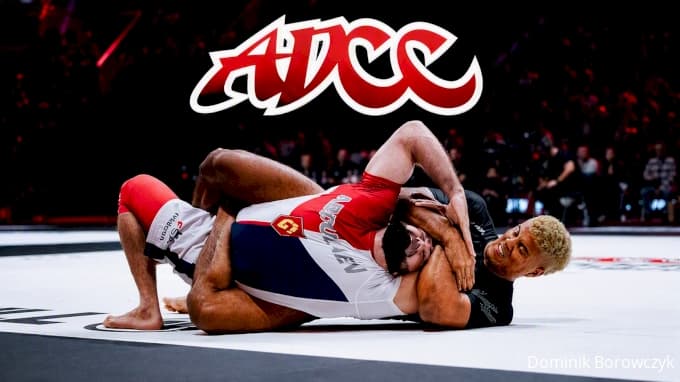
ADCC 2026 results: the stories that survived the predictions
ADCC 2026 results from Krakow: Jaworski, Maciel, Crevar, Pena, the women's champions, and the superfight outcome, with official podiums and match context.
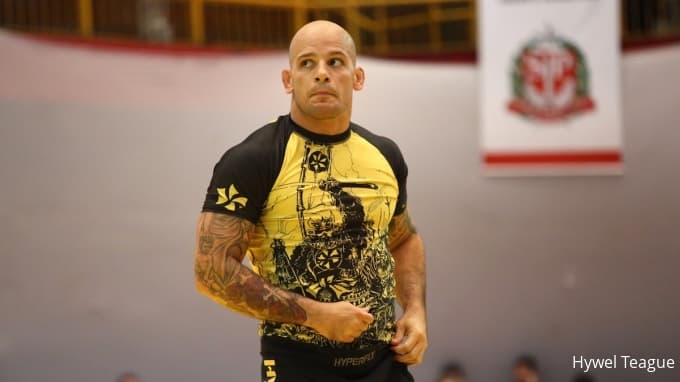
Xande Ribeiro: from absolute titles to the masters mat
Explore Xande Ribeiro's absolute Worlds victories, two ADCC titles, Six Blades, and the distinction between his 2022 Worlds farewell and later masters gold.
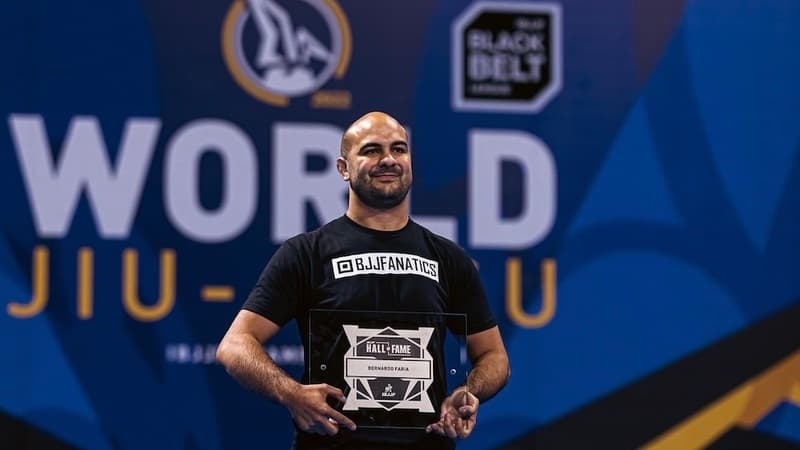
Bernardo Faria: the champion who kept asking questions
Follow Bernardo Faria from Juiz de Fora and Alliance to the 2015 Worlds and BJJ Fanatics, with context on his competition game and move into teaching.
Comments (0)
Loading comments...