
The Crown 2026: the September names worth watching
Quick answer: The IBJJF plans to hold The Crown on November 8, 2026, at the Walter Pyramid in Long Beach. September announcements have added Larissa Dias, Ingridd Alves, and Jackson Nagai to a field mixing established champions with new black belts. This preview covers information available by September 24; the full brackets and eventual results are still ahead.
A good tournament announcement gives you somebody to look up before the next one arrives. The Crown's September rollout has supplied several: an established champion returning for another attempt, a veteran moving into a demanding weight bracket, and prospects whose brown belts were still tied around their waists earlier this year.
That is enough to make November interesting without pretending the draw is finished. There is a temptation to turn every invitation into a prediction, then every prediction into a certainty. Better to start with the names already confirmed and the matches that explain why they belong in the conversation.
Six brackets give the event a manageable shape
The official Crown website describes six eight-person divisions, with four men's brackets and two women's brackets. The men's classes are featherweight, middleweight, heavyweight, and ultra-heavyweight. The women compete at lightweight and super-heavyweight. Together, that makes a planned field of 48.
For somebody who trains but rarely watches professional gi competition, that format offers a reasonable entry point. Pick one bracket. Learn the names before the first match. Follow the people who advance, including the athlete who beats your original favorite. You do not need an opinion on every competitor to enjoy the afternoon.
The September announcements advertise a $20,000 prize for the champion. That gives the invitation a concrete professional stake, although a purse tells us nothing by itself about an athlete's camp expenses or take-home pay. Those are separate questions, and the announcement does not answer them.
If you mostly watch no-gi, our gi and no-gi comparison provides some useful background before you start trying to understand why a sleeve grip survives an exchange that looks finished.
Larissa Dias brings more than a familiar name
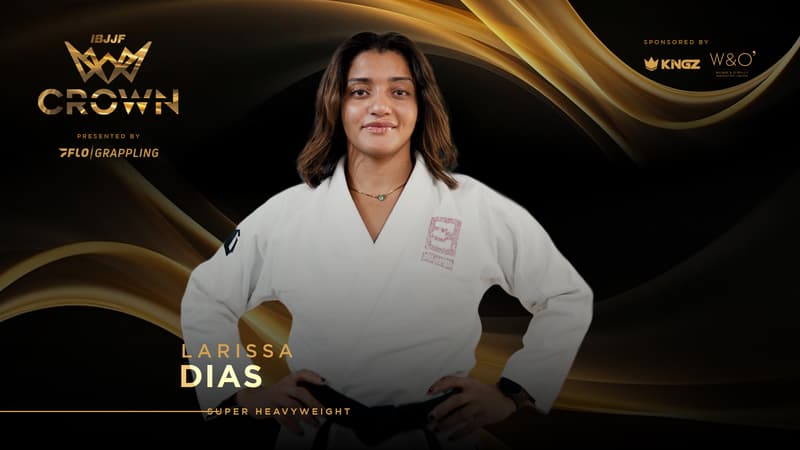
The IBJJF confirmed Larissa Dias on September 15. The Elementum athlete joins the women's super-heavyweight field after a run that includes Pan and World titles in both 2025 and 2026. Her first black belt World title came in 2022; the announcement credits her with three by this September.
There is a useful viewing distinction between knowing somebody is decorated and knowing which part of a match you want to follow. With Dias, start by choosing a complete match from one of those title runs. Leave the highlight reel for later. Pay attention to who establishes the first workable grips and whether the opening position survives the opponent's first serious response.
That is a viewing suggestion, not a claim that every Dias match follows one script. The point is to give yourself something specific to observe. A familiar name becomes much more interesting once you can recognize a decision the athlete is trying to make.
This is her second Crown appearance, according to the same announcement. A return invitation provides continuity for the event. It does not guarantee that the opponent, starting position, or route through the bracket will resemble her earlier visit.
Ingridd Alves changes the conversation about that division
On September 18, the IBJJF announced Ingridd Alves as the fourth confirmed woman in the super-heavyweight field. The Agora representative joins Dias, Yara Soares, and Hazel Rose. The announcement identifies Alves as a former Pan and European champion and a 2026 Worlds silver medalist.
It also describes her as a medium-heavyweight athlete entering this larger category. That makes size a legitimate sporting subject. It does not make the match a foregone conclusion, and it is no excuse to describe either athlete's body as a spectacle.
For viewers, the interesting question is practical: which positions allow each competitor to apply her preferred game? Watch how the athletes choose to engage before deciding that a result was simply about size. If the match starts in seated guard, for example, the relevant exchange may involve distance and grips long before either athlete settles chest to chest.
Nobody has to pretend weight is irrelevant. Equally, a preview should leave room for the athletes to show how they deal with it. A bracket graphic cannot do that work on their behalf.
Hazel Rose makes the new-black-belt story tangible
Hazel Rose is one reason this field should interest people who follow the colored belts. The IBJJF's June Worlds recap records heavyweight and absolute gold for the Alliance athlete at brown belt. It reports six submissions across those divisions, no points conceded, and a black belt promotion on the open-class podium.
Those are substantial results. They also belong to a brown belt competition. The next step is compelling precisely because it asks a different question: how does that athlete perform against an established black belt field?
It would be unfair to treat anything short of an immediate Crown title as a disappointment. A prospect can make an ambitious move without owing spectators a perfect record. Fans should be able to enjoy the test without writing the athlete's career verdict before the quarterfinals have happened.
For a parent watching with a teenage competitor, this is a good place to resist comparison. A televised invitation does not establish a timetable for your child's promotion. Discuss the decisions in the match. Leave your child's belt calendar out of it.
Jackson Nagai gives middleweight another proven contender
The IBJJF's September 18 Nagai announcement names him as the fifth middleweight entrant. The other four named there are Rafael Gamba, Tarcisio Santos, Jose Steve, and Leo Souza. Nagai arrives with a World title already on his record and, in 2026, a Pan title and Worlds silver.
The announcement links his 2024 World final. That is an unusually convenient invitation for the casual viewer: instead of accepting an adjective about his style, go and watch the match the organizer selected. Then choose another complete bout so one performance does not become your entire understanding of the athlete.
Middleweight also offers a meeting between different stages of a career. Gamba won brown belt Worlds in June and received his black belt on the podium, as the federation's Worlds recap records. The contrast with Nagai is enough to create interest without claiming that experience always defeats momentum, or the reverse.
Do not start assigning those athletes to imaginary semifinals yet. An entrant list identifies possible opponents. The draw will tell us which matchups are actually scheduled, and the matches will decide what comes afterward.
The wider field is worth learning before picking favorites
FloGrappling's September 21 update gives a useful snapshot of the other announced names. These are selected entries from that report, not complete brackets:
Women's lightweight includes Elisabeth Clay, Janaina Lebre, Nikolett Kis, and Eliza Nascimento.
Men's featherweight includes Joao Mendes, Jun Yong Cho, Will Wilson, and Keven Carrasco.
Men's heavyweight includes Fellipe Andrew, Leo Ferreira, Vinicius Liberati, and Windson Torres.
Men's ultra-heavyweight includes Seif-Eddine Houmine, Helder Rodrigues, Francisco Papasidero, and Thierry Felipe.
A practical way to prepare is to choose one unfamiliar name from the division you already enjoy watching. Find a full match, check its date and category, and spend your attention there. You will arrive with a reason to care about somebody beyond the most frequently shared promotional photo.
Keep the exercise modest. Nobody needs to convert an evening of jiu-jitsu viewing into an unpaid scouting job. One unfamiliar athlete, one complete match, and one thing you want to see again is plenty.
Last year's champions provide context, not automatic entries
The Crown has a short history with some strong continuity. Jits Magazine's August announcement report notes that Gabrieli Pessanha and Erich Munis won their respective divisions at each of the first three editions. Andy Murasaki collected his second middleweight title in 2025.
Those results explain why their names come up whenever people discuss the event. They do not, by themselves, confirm participation in November. Historical champions and announced entrants are different lists. As of this preview, we are keeping them that way.
The distinction matters to someone buying a ticket to see a particular athlete. Look for an explicit current announcement before making that athlete the reason for your travel. Even an announced field can change; a past winner's photograph on an event page is weaker evidence still.
A fan can hope for a rematch without publishing it as news. Keep the wish list in the group chat until the organizer supplies something firmer.
A sensible viewing plan can stay simple
The Crown site lists FloGrappling as the streaming home. Check the event page again closer to November for the finalized schedule and viewing details. Do not build your afternoon around a start time copied from an early listing and then forgotten.
For a small gym watch party, choose the bracket that interests the people actually attending. Give newer students room to ask why a referee stopped an exchange or why two athletes spent so long contesting a grip. Someone offering an explanation should distinguish the written rule from their own opinion about how the match is going.
The BJJ tournament guide is useful background for people whose competition experience is limited to watching a friend at a local event. There will still be moments worth checking afterward. Pausing a replay to look up a rule is preferable to confidently inventing one in front of the room.
A BJJ training journal can hold those viewing questions beside the positions you are currently working on in class.
Main photo: IBJJF; Larissa Dias 2026 Crown announcement photograph.
The takeaway
The strongest September story is the mix already visible in the announcements: Dias and Alves bring established major-event records, Nagai adds depth at middleweight, and athletes such as Hazel Rose and Gamba arrive with their brown belt Worlds performances still close behind them. Those are concrete reasons to pay attention.
There is more announcing to do before November 8. For now, keep the confirmed names separate from the desired matchups, watch a little footage, and let the completed brackets supply the next round of questions. This preview will not borrow answers from an event that has not happened.
Find a tournament you can attend
Browse upcoming jiu-jitsu tournaments and check the organizer's current event details before arranging travel or registration.
FAQ
When is The Crown 2026 scheduled? The announced date is November 8, 2026, at the Walter Pyramid in Long Beach, California. This article reflects announcements available by September 24.
How many athletes are planned for the event? The announced format has six divisions with eight competitors each, for 48 athletes. There are four men's divisions and two women's divisions.
Are the previous champions automatically confirmed for 2026? No. A historical title does not establish a current entry. Look for an explicit 2026 announcement, and remember that lineups can change before competition day.
Where is the event scheduled to stream? The official Crown website lists FloGrappling. Check the current event listing closer to November for the final timetable and access details.
Related Posts
ADCC 2026 results: the stories that survived the predictions
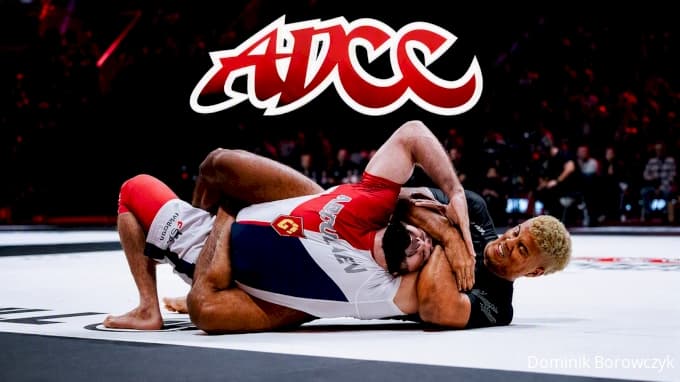
ADCC 2026 results from Krakow: Jaworski, Maciel, Crevar, Pena, the women's champions, and the superfight outcome, with official podiums and match context.
Xande Ribeiro: from absolute titles to the masters mat
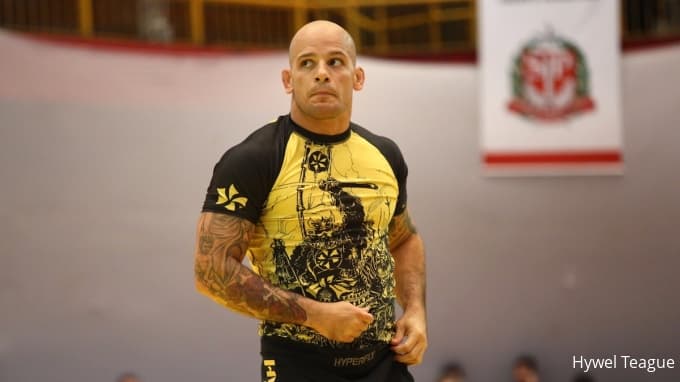
Explore Xande Ribeiro's absolute Worlds victories, two ADCC titles, Six Blades, and the distinction between his 2022 Worlds farewell and later masters gold.
Bernardo Faria: the champion who kept asking questions
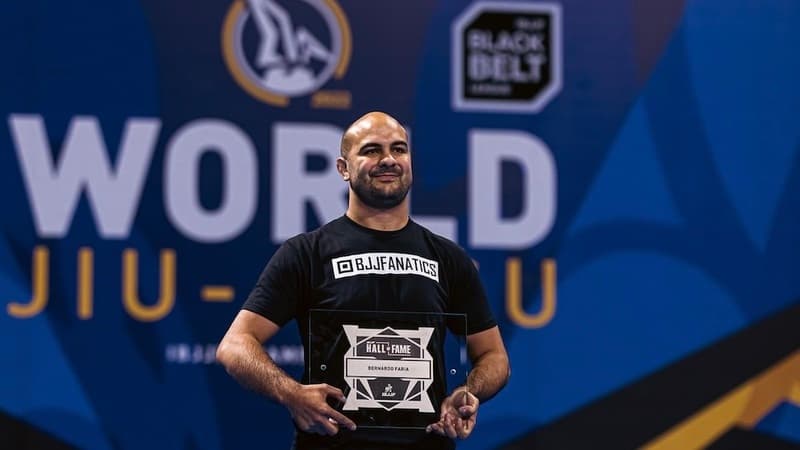
Follow Bernardo Faria from Juiz de Fora and Alliance to the 2015 Worlds and BJJ Fanatics, with context on his competition game and move into teaching.
Comments (0)
Loading comments...