
Gi vs No-Gi BJJ: Which Should You Train?
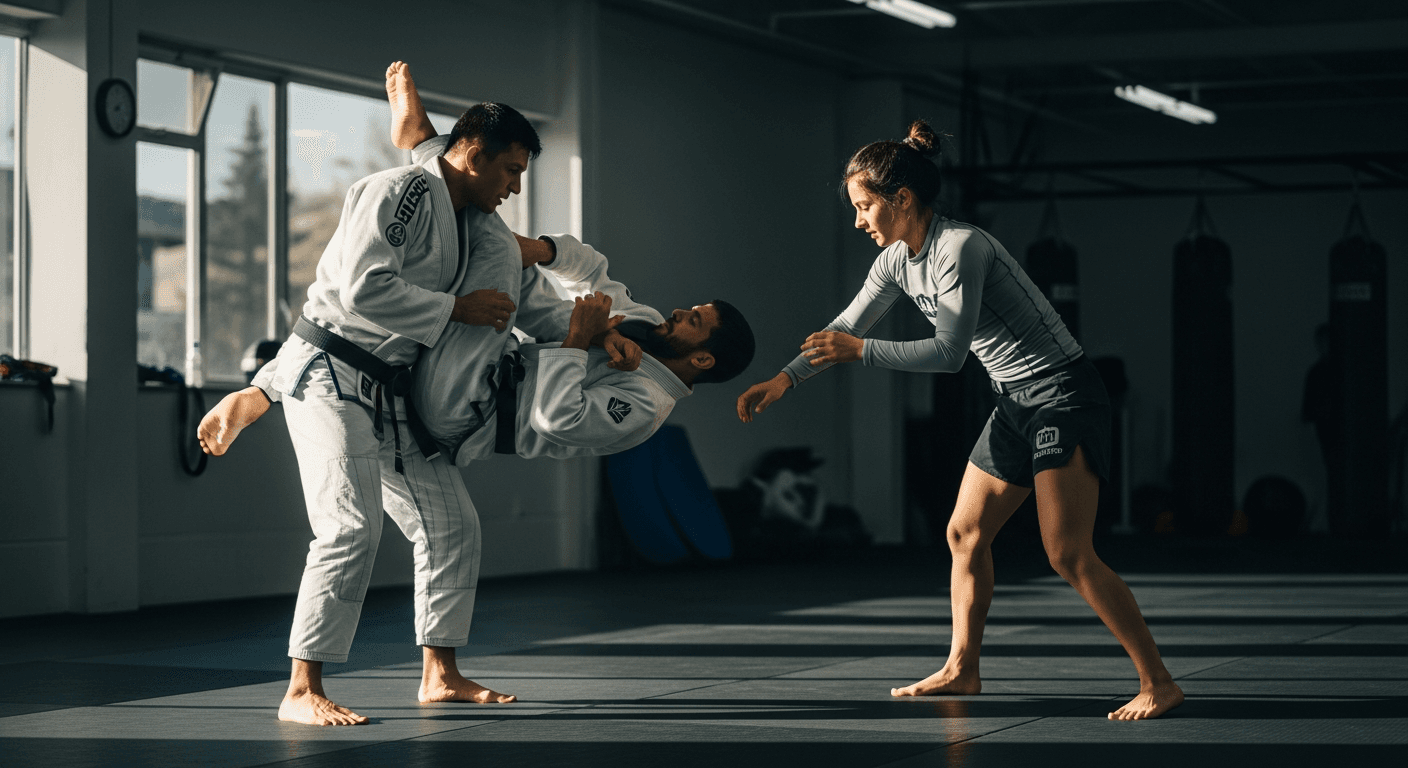
Walk into any BJJ gym and you'll see two distinct worlds sharing the same mats. On one side, practitioners in traditional white, blue, or black gis grip collars and sleeves with precision, playing guard systems built on friction and fabric. On the other, rashguard-clad athletes wrestle for underhooks and body locks, their movements faster and more scramble-heavy because there's nothing to grab.
The gi vs. no-gi debate has been running for as long as modern BJJ has existed. Is the gi traditional and technical? Is no-gi more realistic and athletic? Should you train both? Only one? The answer depends on what you want from BJJ — and understanding the differences helps you make an informed decision.
What Changes When You Remove the Gi
Grips
This is the fundamental difference. In gi, you have access to collar grips, sleeve grips, lapel grips, and pants grips — hundreds of variations that control distance, posture, and movement. These grips slow the pace, create friction, and enable techniques that simply don't exist without the fabric.
In no-gi, your gripping options shrink to body parts: wrists, necks, underhooks, overhooks, and body locks. Sweat makes everything slippery. Positions that felt stable in the gi become fleeting without friction. This forces a faster, more dynamic game.
Pace and Scrambles
No-gi is faster. Without collar and sleeve grips to control speed, transitions happen quicker, scrambles are more frequent, and positions change rapidly. This creates a more athletic, reaction-based game.
Gi BJJ is more methodical. Grips create checkpoints — once you establish a good collar grip, you can pause, assess, and choose your next move. This pacing rewards patience and strategic thinking.
Guard Systems
Many guard variations are gi-dependent. Spider guard (feet on biceps, controlling sleeves), lasso guard (leg wrapped around arm, controlling sleeve), and worm guard (lapel wrapped around the leg) all require gi grips to function.
No-gi guards tend toward butterfly guard, single leg X, X-guard, and wrestling-based positions. Leg locks have become central to no-gi guard play because the lack of gi grips makes traditional sweeps harder to execute.
Submissions
Certain submissions are gi-specific: cross-collar chokes, loop chokes, bow-and-arrow chokes, and ezekiel chokes from certain positions all use the gi fabric. No-gi submissions emphasize guillotines, darces, anacondas, rear naked chokes, and leg locks.
Some submissions work in both — armbars, kimuras, and triangles are universal.
Benefits of Training in the Gi
Technical precision: Grips force you to be precise. You can't compensate for sloppy technique with speed because your opponent can grab and slow you down. This builds a methodical, detail-oriented game.
Defensive development: The gi gives your opponent more ways to attack you — collar chokes, lapel-based submissions — which forces you to develop broader defensive awareness.
Grip strength: Training in the gi develops extraordinary grip strength. The constant gripping, breaking, and regripping builds forearm and finger strength that carries over to no-gi and everyday activities.
Self-defense application: People wear clothes. In a real-world confrontation, jacket collars, hoodie drawstrings, and shirt material can all be used similarly to gi grips.
Benefits of Training No-Gi
Speed and adaptability: Without grips to slow things down, no-gi develops fast reactions, scrambling ability, and the instinct to chain techniques together fluidly.
Athletic development: No-gi rewards explosiveness, body awareness, and cardiovascular conditioning. The pace demands a higher fitness level.
MMA relevance: If you train for MMA or self-defense in scenarios where the opponent isn't wearing a jacket, no-gi techniques translate more directly.
Leg lock development: The no-gi meta has driven the leg lock revolution in BJJ. Training no-gi exposes you to heel hooks, kneebars, and calf slicers that many gi-focused gyms underdevelop.
What the Best Grapplers Do
The most well-rounded grapplers in history — Marcelo Garcia, Roger Gracie, Gordon Ryan — have all trained both formats extensively. Marcelo dominated gi competition and then became one of the greatest no-gi competitors ever. Roger won gi Worlds with fundamental technique that transcended format. Gordon Ryan built his game on no-gi leg locks but understands gi dynamics deeply.
The pattern is clear: the best grapplers don't choose sides. They train both and let the principles of each format strengthen the other.
Choosing Based on Your Goals
If You Want to Compete in BJJ
Train in the format you want to compete in — primarily. But supplement with the other format. Gi competitors who cross-train no-gi develop faster scrambling. No-gi competitors who cross-train in gi develop superior gripping and upper body control.
If You Train for Self-Defense
Train both. Gi simulates jacket-wearing attackers. No-gi simulates shirtless or lightly clothed scenarios. The self-defense application of BJJ is strongest when you're comfortable in both environments.
If You Train for Fitness and Enjoyment
Try both and see which you prefer. Some people love the chess-like pace of gi. Others love the scramble-heavy intensity of no-gi. There's no wrong answer when your primary goal is enjoyment and fitness.
If You're a Beginner
Starting with gi is the most common recommendation — and for good reason. Gi slows the game down, which gives beginners more time to think and learn. The additional gripping options also provide more tools for controlling and submitting opponents, which accelerates the learning curve for fundamental techniques.
That said, starting no-gi isn't wrong. If your gym is primarily no-gi (like a 10th Planet school), you'll develop effective BJJ through that lens.
The Crossover Effect
Something interesting happens when you train both formats consistently: each one improves the other. Gi training sharpens your no-gi game by teaching you to control every grip exchange and anticipate friction-based attacks. No-gi training sharpens your gi game by developing speed, scrambling instincts, and body awareness that make you more dynamic in the gi.
This crossover effect compounds over time. After a year of training both, you'll notice that your gi guard retention improves because no-gi taught you to react faster to passing attempts. Your no-gi takedowns improve because gi judo grips taught you how to read balance and control angles.
The practitioners who resist training one format often plateau earlier than those who embrace both. The discomfort of training in an unfamiliar format is the exact stimulus that drives well-rounded development.
Training Both: A Practical Schedule
If your gym offers both, a practical split:
Beginners: Two gi classes, one no-gi class per week
Intermediate: Two gi, two no-gi per week (or three and one, depending on competitive focus)
Advanced: Equal split, with emphasis shifting based on upcoming competition format
Many gyms now offer both formats. Use our gym finder to search for academies that balance gi and no-gi training in their schedules.
Explore both styles at open mats near you — many open mats welcome both gi and no-gi practitioners on the same day.
Log your training across formats with the BJJ passport to see how each format develops different aspects of your game.
The Equipment Difference
Gi training requires a gi — a heavy cotton jacket and pants secured by a belt. Quality matters here. A well-fitted gi that can withstand regular washing and hard training costs between sixty and two hundred dollars. You'll want at least two gis if training more than twice per week, since washing and drying takes time.
No-gi training requires significantly less gear investment. A rashguard and grappling shorts are the essentials, running twenty to forty dollars each. Many practitioners prefer compression pants under their shorts for hygiene and comfort. The lower equipment cost is one reason no-gi has grown faster in recent years — there's less financial barrier to starting.
Regardless of format, a mouthguard is strongly recommended for all BJJ training. Ear guards are optional but prevent cauliflower ear, which is significantly more common in gi training where head-on-chest pressure occurs frequently during guard passes. Athletic tape for finger and toe protection becomes essential for serious gi practitioners — the constant gripping breaks down finger joints over time without protection.
Identity and Community Differences
Gi and no-gi practitioners often develop distinct identities within the BJJ community. Gi practitioners tend to identify with tradition, lineage, and the art's Brazilian roots. No-gi practitioners often align more with the MMA and submission grappling world, valuing innovation and athleticism. These are generalizations, of course — many practitioners inhabit both spaces comfortably.
The cultural divide is narrowing as more gyms offer both formats and more practitioners train in both. But visiting a strictly no-gi gym versus a strictly gi gym reveals noticeable cultural differences: the music, the warm-up style, the terminology, and the competitive references all differ. Neither is better — they're different expressions of the same art, shaped by different influences and priorities.
Understanding these cultural nuances helps you navigate the BJJ world more effectively. When you visit a new gym, recognizing whether it leans gi-traditional or no-gi-modern helps you calibrate your expectations and behavior appropriately. This awareness also helps you understand debates within the BJJ community — much of the online discourse around "gi vs. no-gi" is really a cultural conversation disguised as a technical one.
Regardless of which format you prefer, respect for both traditions strengthens the overall BJJ community. The gi and no-gi worlds have more in common than they have differences — and the practitioners who train in both formats often serve as bridges between these communities, demonstrating that the art is richer for having both expressions.
The Rule Set Divide
Beyond the clothing difference, gi and no-gi competitions operate under different rule sets. IBJJF gi competitions emphasize traditional BJJ positions and scoring with restrictions on certain leg locks at lower belt levels. ADCC and other no-gi organizations allow a broader range of techniques, including heel hooks and reaping, from an earlier skill level.
These rule differences influence training approaches. Gi practitioners spend more time on collar chokes, sleeve-based guards, and grip fighting sequences. No-gi practitioners invest more time in wrestling-based takedowns, guillotines, darces, and leg lock systems. Understanding both rule sets makes you a more complete grappler regardless of which format you prefer.
Frequently Asked Questions
Is no-gi BJJ the same as submission grappling?
Largely yes. Submission grappling is the broader term that includes no-gi BJJ, catch wrestling, and other grappling arts. No-gi BJJ is a subset of submission grappling that follows BJJ-specific rule sets and techniques. In practice, the terms are often used interchangeably.
Do gi techniques transfer to no-gi?
Many do. Armbars, triangles, kimuras, and basic sweeps work in both formats. The concepts of pressure, hip movement, and positional hierarchy are universal. What doesn't transfer are grip-dependent techniques — you can't play spider guard without sleeves.
Is one format harder on the body than the other?
Both have distinct physical demands. Gi training puts more stress on finger joints and grip endurance. No-gi puts more demand on neck muscles, shoulder stability, and overall cardiovascular fitness due to the faster pace. Neither is definitively harder — they're hard in different ways.

Marcus Delgado
black Belt
Black belt with 18 years on the mats. Head instructor and lifelong student of the gentle art.
Related Posts
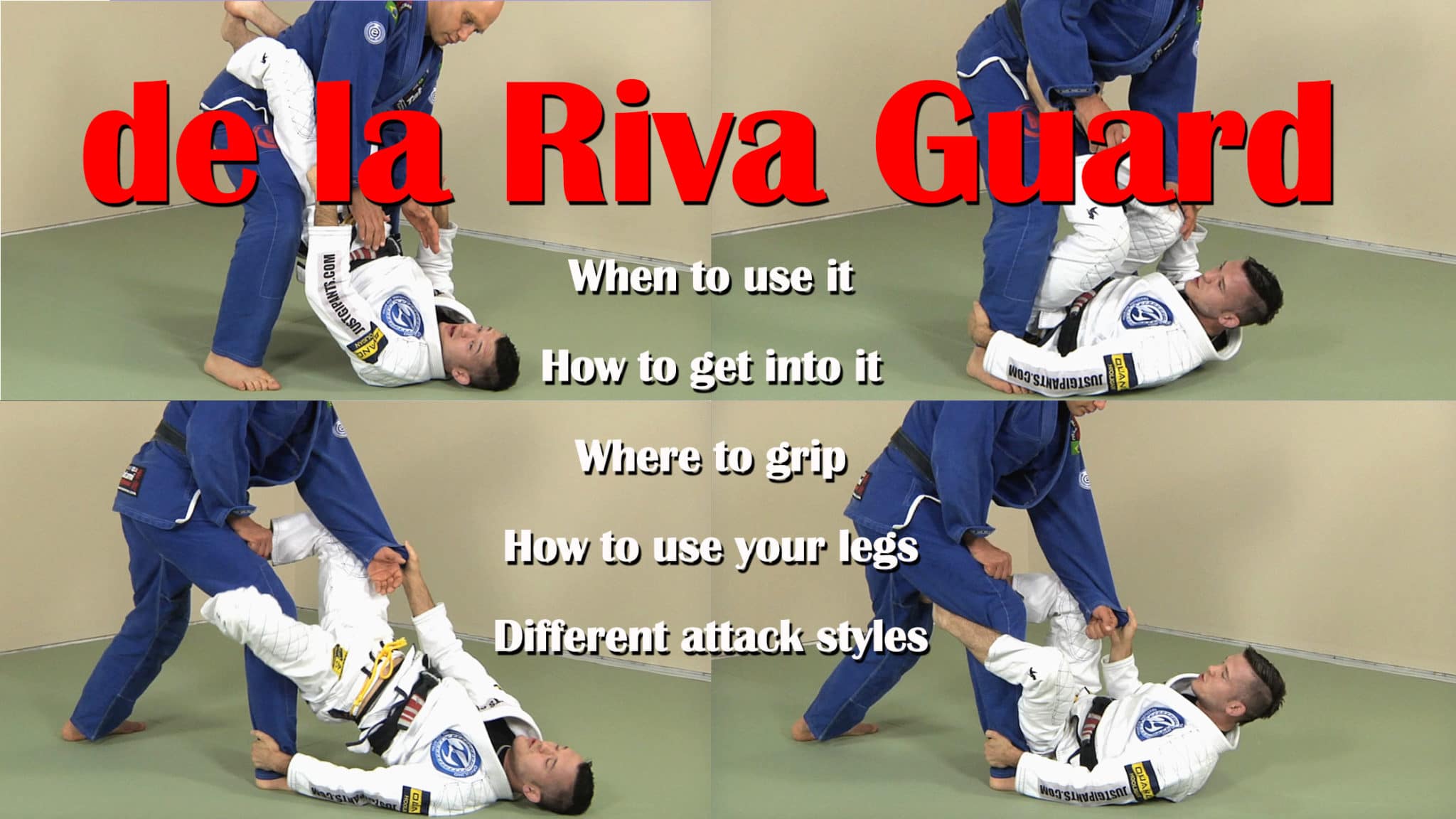
De la Riva guard: make the standing passer take a step
Your de la Riva hook is in, but the passer is comfortable. Study ankle control, the free leg, and the balance reaction that makes an attack possible.
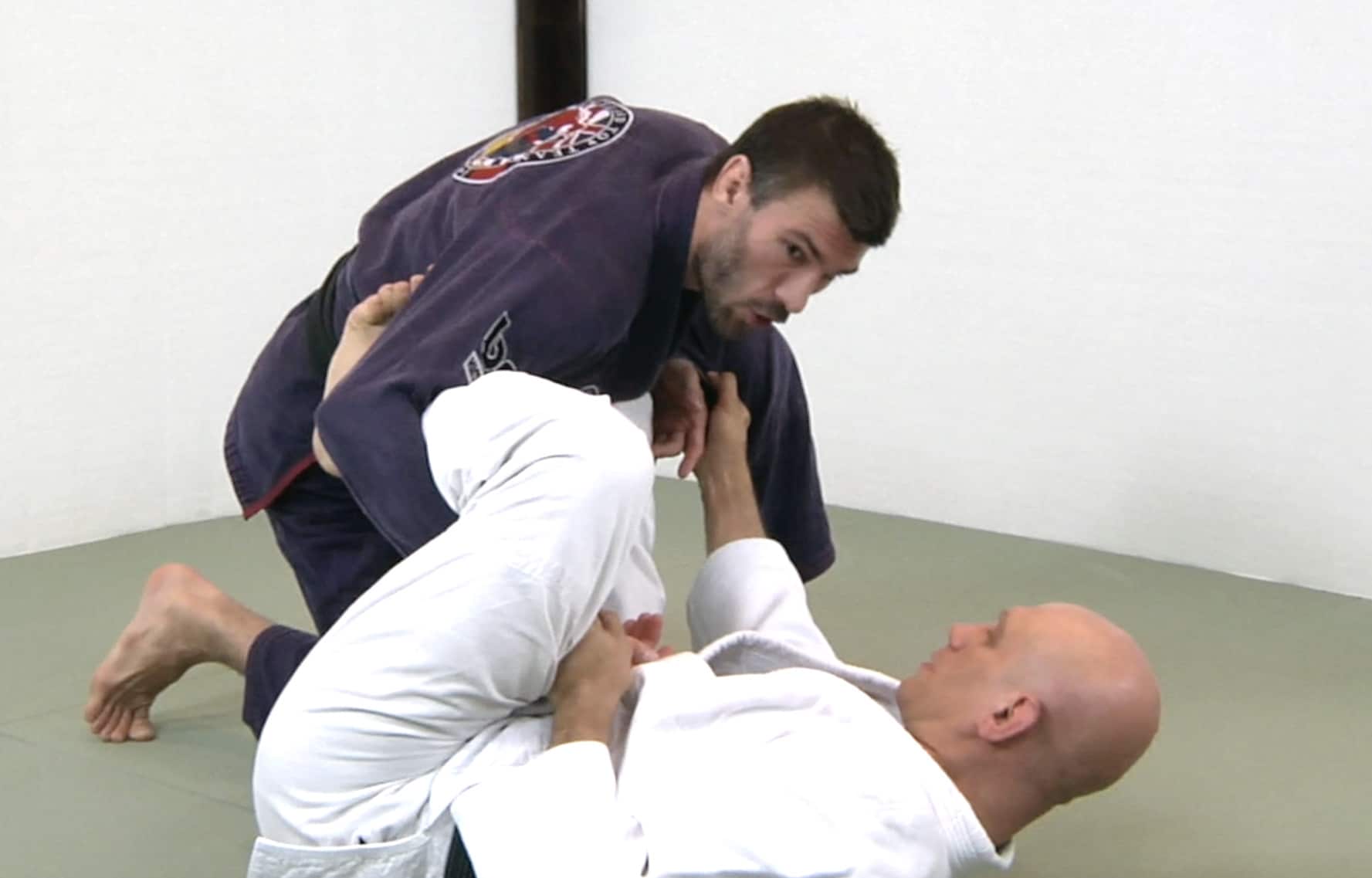
Lasso guard: know when to keep the sleeve and when to leave
A lasso hook can buy time or trap you in a grip battle. Give the free leg a purpose, keep useful sleeve control, and recognize when to change guards.
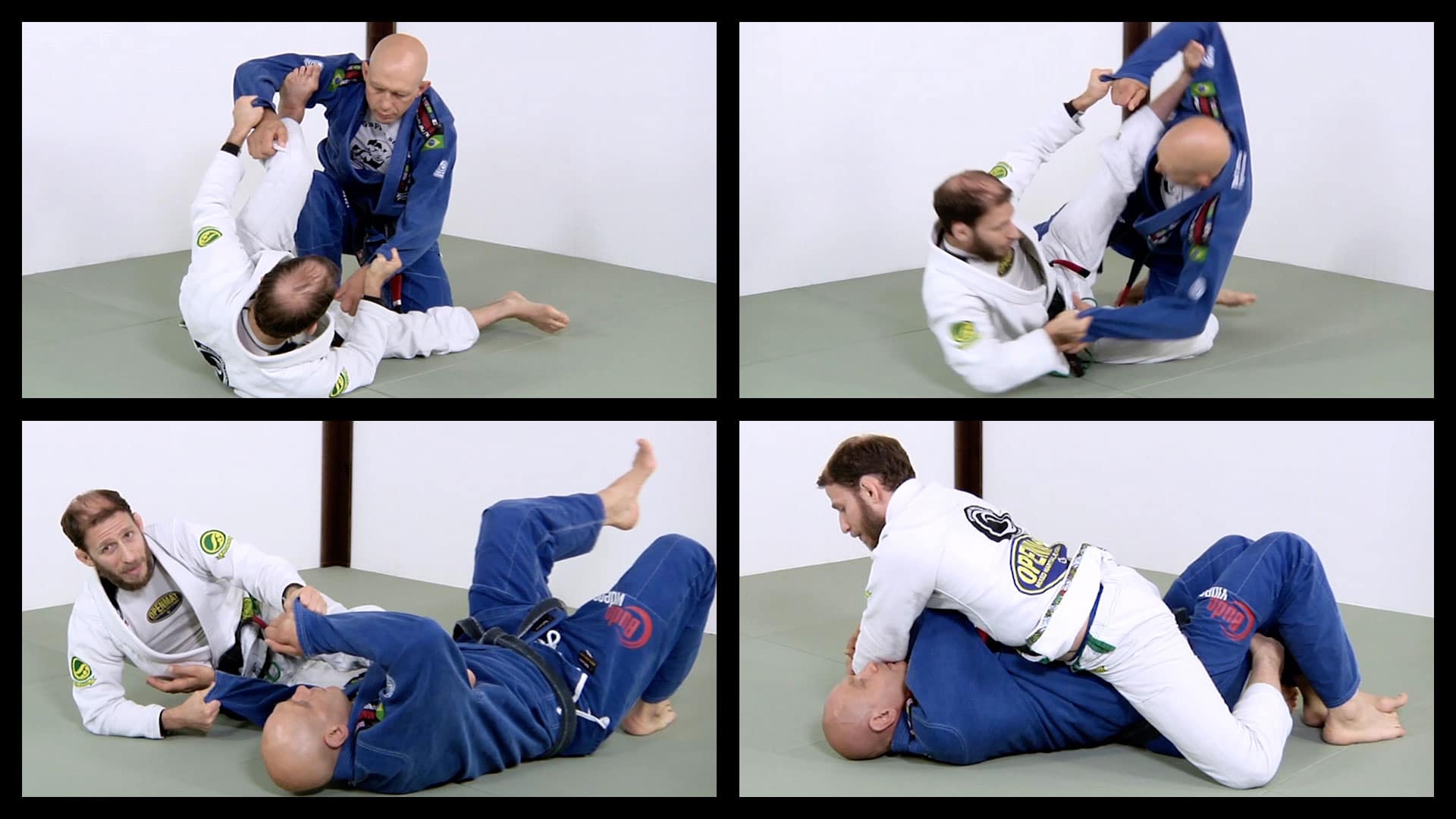
Spider guard: give each foot a job
Make spider guard easier to read. Learn how sleeve tension, different foot positions, and the passer's posture shape your next sweep or transition.
Comments (0)
Loading comments...