
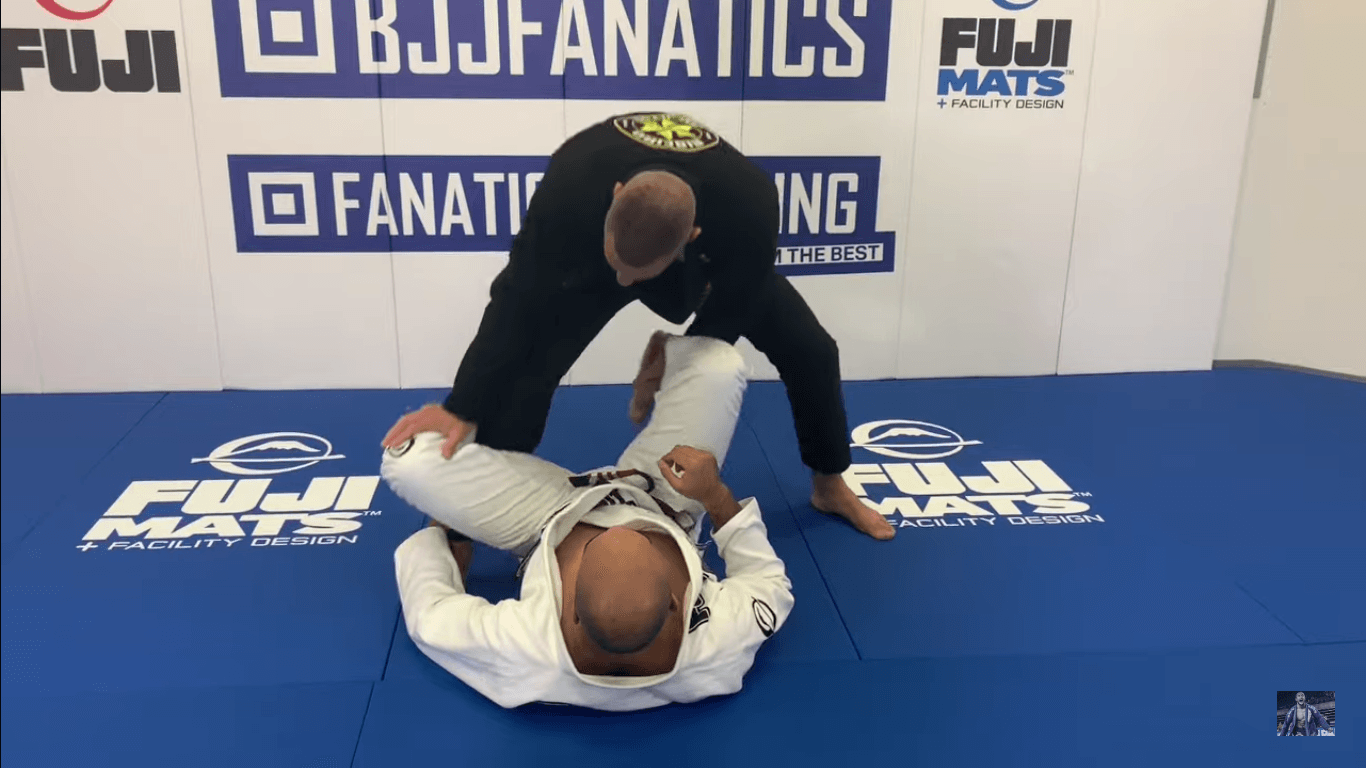
Headquarters passing: make the guard player choose
Quick answer: Headquarters is a passing position from which you can choose between several routes around or through an opponent's legs. Establish control and balance before committing to a knee cut or another finish. Practice arriving in the position, making one decision, and resetting when the guard player recovers rather than treating the starting posture as a pass by itself.
You step between the legs, lower your hips, and recognize the position from the video. Then the person underneath grabs a sleeve, turns a knee inward, and puts you back on your hands. You reached something that looked like headquarters. You did not necessarily control it.
That gap is worth a training session. The useful question is not how many passes you can name from headquarters, but whether you can arrive there without giving the guard player the grips and angle they wanted in the first place. Start with a position your instructor recognizes, then give it a small job.
Agree on the starting position before counting repetitions
In a common headquarters arrangement, the passer has stepped into open guard and uses the lower body to separate and control the guard player's legs. Rafael Lovato Jr.'s 2019 demonstration explains both an older squatting position and adjustments intended to deal with developing hooks and grips.
That variation matters when two training partners say they want to practice headquarters. One may picture a relatively upright stance. The other may expect a deeper, more connected passing position. Neither person learns much if they spend the first minute arguing over the name while holding entirely different arrangements.
Ask the instructor to show the exact starting point for today's exercise. Notice which leg sits between the opponent's legs and what prevents the free knee from returning to the middle. Check where each foot is placed before adding movement.
Take turns building that same position. You should both be able to reset it without asking the top person to guess which knee goes where. A shared starting point makes the later feedback more useful.
Enter because the position fits the exchange
Lovato's own explanation of headquarters, published in June 2021, distinguishes an opponent already attached through grips from one who is unattached. He recommends looking to outside passing against the unattached player instead of freely offering access to a leg. He also describes closing distance through small steps and adjustments rather than leaning into the person underneath.
For practice, begin a little earlier than the finished headquarters position. Give the guard player a chance to move their feet and seek an initial grip. The passer's first task is simply to reach the agreed starting arrangement while remaining balanced.
Stop there. Do not award yourself a successful entry because a desperate hop prevented a sweep after both hands hit the mat. Reset and identify what made the entry unstable. Was your step too long? Did you ignore a grip that pulled your shoulders away from your hips?
This is a deliberately limited exercise. Once you can arrive with some consistency, reconnect it to passing. Learning only from the perfect starting position leaves the hardest part of the exchange outside your practice.
Treat the legs as active obstacles
A guard player does not leave both knees in place because the passer has reached a named position. The bottom person can try to restore a frame, turn the hips, or move the legs into a different guard. Your training should include those attempts.
In Lovato's 2019 update, the free leg receives attention before he develops his preferred upper-body connection. The broader point for this session is to notice when the guard player's leg position changes. Do not keep following an old sequence after the starting conditions disappear.
Ask your partner to attempt one recovery at first, such as returning a knee between your bodies. Your task is to recognize that attempt while maintaining the control your instructor showed. If the knee gets back, stop and compare the position with the beginning.
Avoid turning the exercise into a contest over who can tolerate the most twisting pressure. If a foot is trapped and a knee feels awkward, release and reset. The point is to improve recognition, not to force a partner's leg through a route their body cannot comfortably follow.
Give each hand a reason to be there
Copying the silhouette of a pass can leave you holding fabric that does very little. Before a repetition, identify what each grip is intended to prevent or create. If you cannot explain the hand's job, ask before squeezing harder.
Gi and no-gi headquarters work need not use identical upper-body controls. In a Grapplearts demonstration with Erin Herle, published in October 2025, the passing approach uses the legs, chest, and bodyweight to control the opponent's legs while leaving the hands available to post. That is a useful example of a different allocation of the same resources.
It is not a reason to remove both hands from every pass you already know. Use the version being taught, and let your coach explain the tradeoffs. A hand controlling a sleeve is doing a different job from a hand available to prevent a fall.
During a slow repetition, briefly pause before the finish. Check whether your grips still match the situation. The bottom player may have changed the problem while you were concentrating on your feet.
Learn two related routes before collecting ten
A knee cut and a pass that moves the legs in another direction can give you a manageable first pairing. Have your instructor select versions that connect from the exact headquarters position you are practicing. There is little value in memorizing two finishes that require unrelated starting grips.
For the first round, let the bottom player provide a predictable response. Repeat the appropriate route slowly. In the next round, let them choose between two agreed responses so the passer has to look before moving.
The objective is a real decision. If the passer announces the knee cut before the guard player moves, the exercise has become another rehearsed sequence. Slow down until the response, rather than the memory of the previous repetition, tells you what to do.
Our guard-passing guide is a useful companion here. Keep the finish attached to its setup. Repeatedly reaching a trapped-foot position may mean the entry needs attention, even if the pass looks nearly complete from across the room.
Make the reset part of the exercise
Headquarters can be lost. Saying so is useful because otherwise a passer may keep driving forward long after the guard player has rebuilt a position underneath them.
Agree on a clear reset before beginning. For example, stop when the bottom player restores the particular guard your instructor has identified as outside today's exercise. Stop when the passer reaches the agreed control beyond the legs. Stop immediately for a tap or a concern about either person's joint position.
A reset is information. It tells you where the task ended. It should not feel like an argument over who would have won if the round had continued for another five minutes.
Stephan Kesting's discussion of deliberate passing practice separates fighting for a passing position from deliberately allowing an opponent to establish a guard. Both can be useful training choices. Mixing them accidentally makes it harder to understand what you are practicing.
Use that distinction when reviewing a failed entry. Decide whether next round begins earlier to work on engagement or later to work on the pass itself. Do not quietly change both and then compare the results as if the exercise stayed the same.
Give both partners a useful job
The person underneath should know what counts as progress too. If their only instruction is to provide some resistance, the session can drift between complete cooperation and an unexpected competition round.
Try this sequence with your coach's approval:
Establish the agreed headquarters position and identify a single guard-recovery goal for the bottom player.
Let the top player attempt one chosen pass while the bottom player pursues that goal at a controlled pace.
Reset at the agreed endpoint and alternate roles.
Add the second passing route only after both partners understand the first task.
Keep the rounds short enough that you can remember what happened. There is no special duration that guarantees learning. Choose a length that gives each person several meaningful attempts without turning the final minute into exhausted improvisation.
Our drilling guide can help organize the session. Afterward, ask the bottom player what they felt change. Their answer may reveal that the controlling grip disappeared before the passer noticed the knee returning.
Troubleshoot the first failure, not the loudest one
If the exchange ends with you being swept, it is easy to focus entirely on the moment your back reaches the mat. Work backward. The useful mistake may have happened when you entered with a compromised stance or allowed the opponent to establish a strong connection to an arm.
A simple note can be specific without becoming a transcript: entered too far forward; recovered balance but lost the free knee; forced the knee cut anyway. That sequence points to something you can ask about before the next class.
Keep the partner and starting task reasonably consistent while testing one adjustment. If you change the grips, choose a different pass, and switch to a much larger partner, you will have several possible explanations for the next result.
Finally, distinguish a technical question from discomfort. A pass that is stalled invites a coaching adjustment. A knee that hurts invites a stop. Do not rename the second problem as a lack of toughness because you are determined to finish a repetition.
Main photo: BJJ Fanatics; Rafael Lovato Jr. headquarters demonstration.
The takeaway
Headquarters becomes useful when it lets you control a specific exchange long enough to make a good passing decision. The name alone does not keep the bottom player's knee out, protect your balance, or explain which grip should come next.
Spend part of the session on arriving there, then practice a small pair of routes with clear resets. If you leave knowing why one entry worked and another failed, you have a more useful result than ten additional passes you can demonstrate only against a motionless partner.
Find a class where someone can check your position
Explore jiu-jitsu gyms near you and ask which classes include technical instruction and positional practice for your experience level.
FAQ
Is headquarters itself a guard pass? It is better treated as a passing position. You still need to clear the relevant leg controls and establish the finish your instructor is teaching.
Does headquarters work in both gi and no-gi? Both formats have headquarters-based passing approaches. The available grips change, so learn the connections for the format you are actually practicing.
Should I force the knee cut whenever I reach headquarters? No. Look at the guard player's response and use the route your coach has connected to it. If the original position is gone, rebuild or reset rather than forcing the remembered sequence.
What should the bottom player do during practice? Give them a specific recovery goal and an agreed pace. They should understand the reset conditions and be able to practice their own task while the passer works.
Related Posts
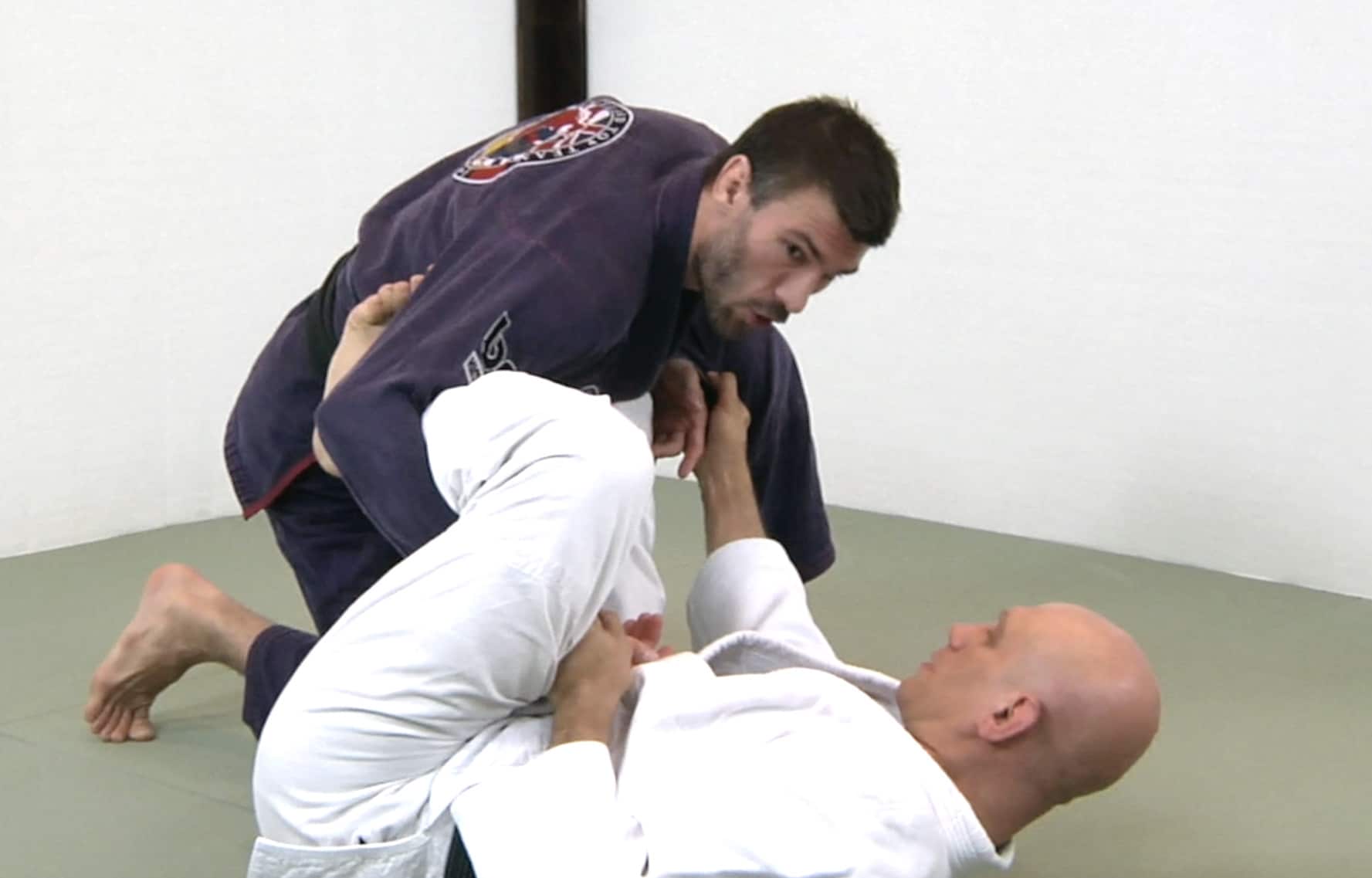
Lasso guard: know when to keep the sleeve and when to leave
A lasso hook can buy time or trap you in a grip battle. Give the free leg a purpose, keep useful sleeve control, and recognize when to change guards.
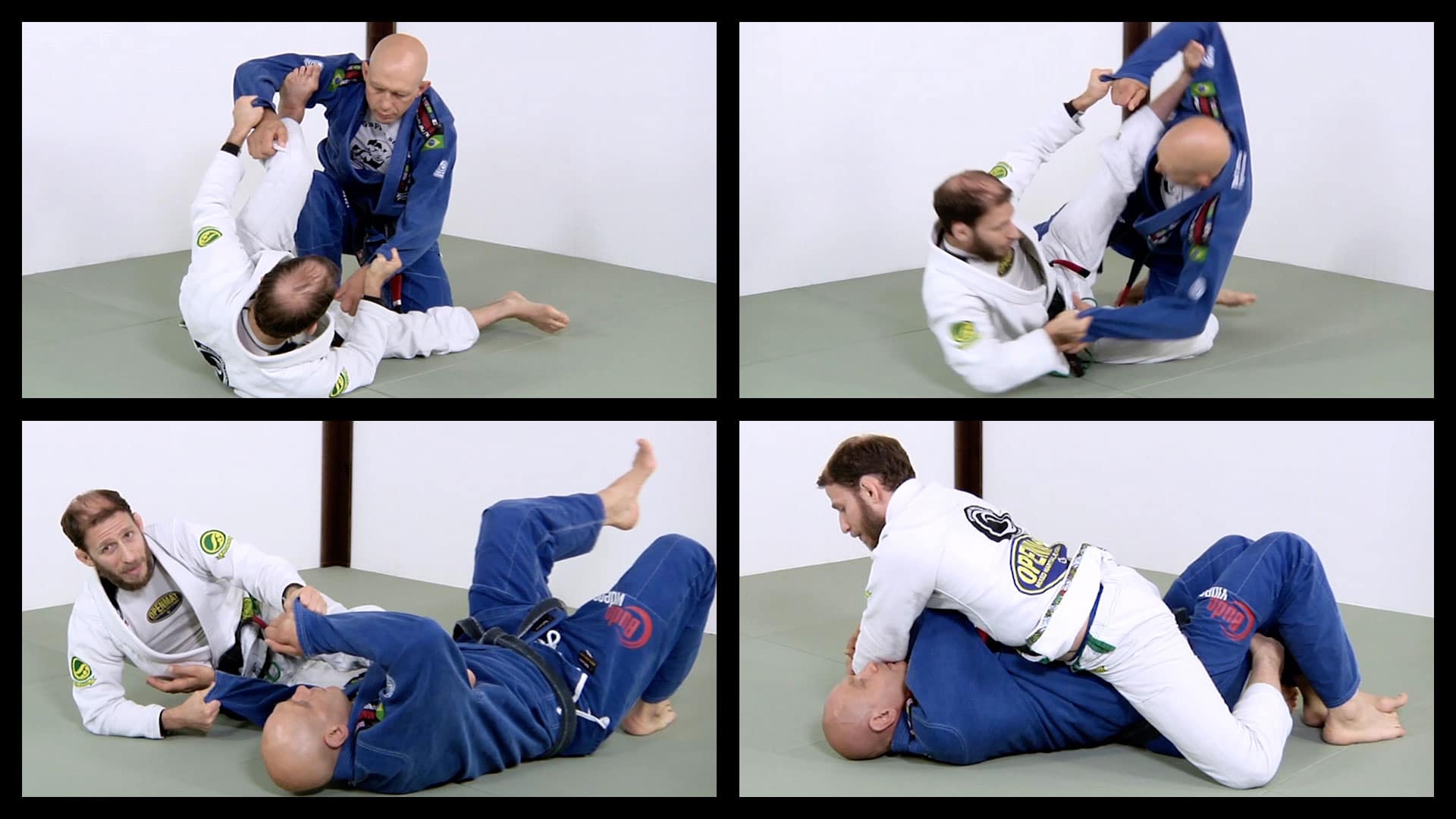
Spider guard: give each foot a job
Make spider guard easier to read. Learn how sleeve tension, different foot positions, and the passer's posture shape your next sweep or transition.
The seated arm drag starts before you pull the arm
The seated arm drag needs more than a wrist grip. Study the arm connection, hip movement, and reactions that open a back take or a route to top position.
Comments (0)
Loading comments...