

Your best BJJ tournament photo might not show a medal
Quick answer: Choose BJJ tournament photos for the moment they preserve, not only the medal they display. Find the event's official photographer, understand the purchase and sharing terms, and make sure captions describe the people and action accurately without turning one frame into a story it cannot prove.
The podium photo is easy to recognize. It has a number, a medal, and a result already arranged for the camera. The quieter image may show a coach listening, a teammate waiting with a bag, or two competitors shaking hands before anyone knows how the bracket will end.
Those photographs can become the ones that still matter after the result is no longer new. Choosing them well takes a little attention to the event, the photographer, and the difference between what a picture shows and what you remember around it.
Look for the official gallery before searching at random
Start with the event organizer's information about photography. The official gallery may be linked from the tournament page, a follow-up message, or the photographer's own site. Confirm that you have the right event and date before searching through images from a similarly named competition.
Give the gallery time to appear. A photographer may have thousands of images to sort and edit after a long day. Check the stated delivery process instead of repeatedly messaging for an immediate upload while the event is still being packed away.
When searching, use the information the gallery supports: mat, division, approximate time, or athlete details. Keep your own match schedule or registration information nearby if it helps identify the right set. A remembered opponent's uniform can sometimes be more useful than scrolling through every podium image.
If you cannot locate a photograph, ask a concise question through the photographer's preferred channel. Include the event, division, and enough identifying information to help. Avoid assuming that every match or athlete was photographed; coverage arrangements and access vary.
Decide what you want the photograph to remember
A result image and a training-history image can serve different purposes. The first records a placing. The second may preserve the people who attended, the room in which you competed, or a particular exchange you want to understand later. Neither is automatically more meaningful.
Look beyond whether you appear successful. A photograph of a difficult match can still be a useful record of participation and effort without requiring a dramatic caption about overcoming adversity. It can simply show that you were there, against that opponent, on that day.
Consider the people around the athlete. A coach's attention or a teammate's ordinary presence may explain more about the experience than another tightly cropped image of a medal. Those details are especially easy to overlook when selecting photographs immediately after an emotional result.
You can also choose a picture because it is well made. Light, composition, and a clear moment can make an image worth keeping even when it does not illustrate the story you expected to tell. The photograph does not need to earn its place by proving something about your rank.
Read the purchase and sharing terms
A gallery preview is not necessarily the file intended for posting or printing. Check how the photographer sells or supplies images, what resolution is included, and what uses the stated terms cover. Ask about a use that is unclear rather than assuming that buying a download answers every question.
Keep the original file and the purchase information together. That makes it easier to find the correct version later and remember the credit requested by the photographer. A screenshot of a preview can lose quality and may retain marks or overlays that were not meant to be the finished image.
Do not remove a watermark to avoid obtaining the photograph through the photographer's process. If the gallery offers a separate social-sharing option, follow that arrangement. If it does not, ask what is available instead of treating the visible preview as an invitation to edit away its source.
For commercial use by an academy, sponsor, or business, confirm that purpose explicitly with the photographer. A personal keepsake and an advertisement are different requests. This is a practical communication step, not a substitute for advice about a particular contract or rights dispute.
Let the caption stay within the frame's evidence
A still image captures an instant, not the full sequence. A competitor who appears trapped may escape a moment later. A dramatic expression may reflect effort rather than pain. The person on top may not be the match winner. Avoid turning those ambiguities into confident claims.
Use details you can verify: the event, division, names, and result where relevant. If the image shows only one part of a match, say what you know without pretending it tells the whole story. A straightforward caption often gives the photograph more room than an elaborate explanation of what everyone was feeling.
Be especially careful when describing the opponent. They did not become a supporting character in your account simply by entering the same bracket. Avoid assigning fear, arrogance, or humiliation to them based on an expression or position in a single frame.
The same applies to coaches and spectators in the background. A photograph cannot establish why someone looked away or failed to smile at that instant. Let ordinary faces remain ordinary unless you have a reliable reason to explain the surrounding moment.
Share with the people who are actually in it
Before posting, think about who is identifiable and whether the intended use fits the event and photographer's arrangements. A teammate may appreciate being included, while another may prefer not to appear in a public post. Asking is easier before the image has been widely shared.
For children, follow the event's and family's expectations with particular care. Do not assume that a public competition makes every possible caption, tag, or use appropriate. Avoid adding unnecessary personal details that the image itself does not require.
A short sharing check can cover:
The correct names and event details.
The photographer's requested credit.
Whether the file is the version supplied for this use.
The preferences of identifiable teammates or family members.
Any unnecessary location, school, or schedule details in the caption.
The guide to sharing kids' BJJ photos gives more context for family decisions. For adult teammates, the same ordinary courtesy helps: ask before turning a group moment into someone else's public profile picture or promotional material.
Keep competition photography separate from technical proof
A good action photograph can show a position clearly, but it rarely explains how the athletes arrived there. The grip that made the exchange possible may be hidden. The scoring sequence may have happened earlier. The still frame is a starting point for a question, not a complete technical lesson.
If you want to understand the match, use video where available and permitted. Compare the photograph with the surrounding sequence rather than building a conclusion from the most dramatic instant. Ask your coach what the image can and cannot tell you about the position.
This is particularly useful after a loss. A photograph of the final position can become a shorthand for everything you believe went wrong, even if the decisive choice happened much earlier. The match-video review guide helps move the analysis back through the exchange.
You can still enjoy the photograph without turning it into evidence of improvement or failure. Its job may be to preserve the event. Technical review is another task, and it deserves the fuller information needed to make a useful judgment.
Build an archive you can find later
Save photographs with enough context that they remain identifiable after several tournaments. Include the event name, date, and photographer in a folder or accompanying note. Keep the original download rather than relying only on a compressed copy in a social-media post.
Choose a small set if the gallery is large. A few images showing the match, the people, and the result can tell you more later than hundreds of nearly identical frames. The selection can be personal without needing to resemble a professional portfolio.
Back up the files in a way that fits your ordinary photo routine. If an image matters enough to buy, it is worth making sure that losing a phone does not mean losing the only copy. Keep any usage terms or receipts alongside the source information.
Over time, the archive may become less about medals and more about the changing cast of your training life. Teammates move, children grow, coaches teach different groups, and competition venues change. The photograph of everyone waiting beside the bags can preserve something the podium number never tried to describe.
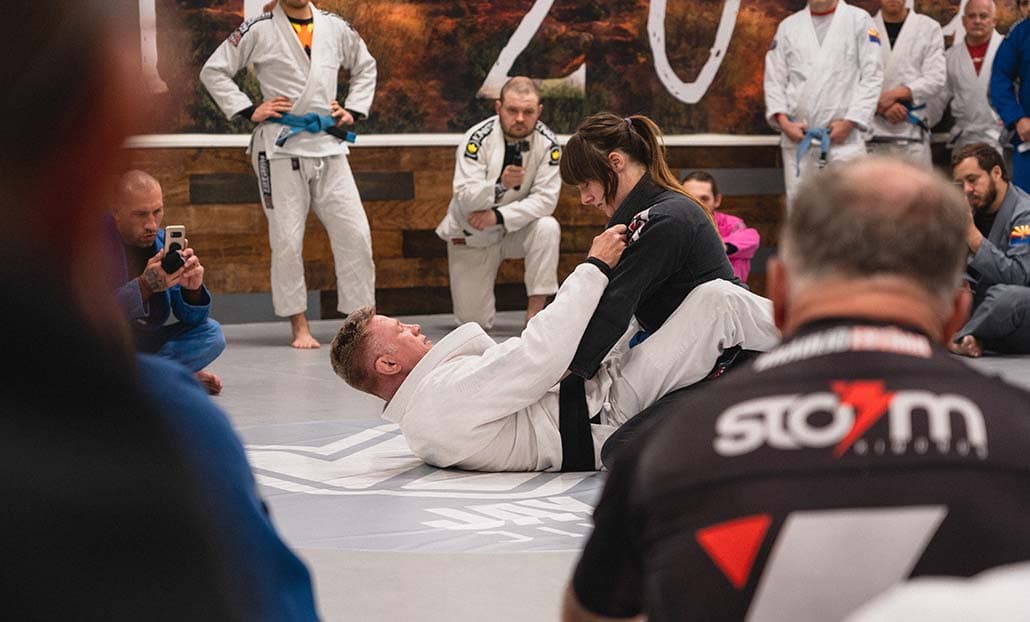
Main photo: BJJ Globetrotters; illustrative archive photograph.
The takeaway
Choose tournament photographs for the people and moments you want to remember, while respecting the photographer's process and the preferences of those pictured. Use accurate captions and keep a still image from claiming more than it shows.
Save the original files with the event details and credits. A useful personal archive can include the medal, the match, and the ordinary parts of the day that made the trip worth keeping.
Plan the day you want to remember
Browse BJJ tournaments on Let's Roll, then check the organizer's spectator and photography information alongside the competition details.
FAQ
Where should I look for official tournament photos? Start with the organizer's event page or follow-up information, then use the linked photographer's gallery. Confirm the event and date before searching by division, mat, or approximate match time.
Can I post a screenshot from a photographer's preview gallery? Check the photographer's sharing terms and use the supplied process. Do not assume a visible preview is the finished file or remove a watermark to avoid obtaining an appropriate copy.
Should the caption describe who won the exchange? Only when you can verify it. A single frame does not establish the match result, the next movement, or what the people pictured were thinking.
Are podium photographs the best ones to keep? They are useful records of results, but action images and ordinary moments with coaches or teammates may preserve other parts of the experience that matter to you later.

Rafael Moura
Rafael Moura profiles competitors as people with lives outside the bracket. Some of those stories are comebacks. Most are not, and he does not force them.
Related Posts
Choosing a BJJ seminar worth your time and travel
Choose a BJJ seminar by the subject, teaching format, access, and total cost. Know what to ask the host before buying a ticket.

Claudio Calasans and the second bracket of ADCC 2015
Claudio Calasans won gi Worlds and ADCC absolute gold in 2015. The separate brackets tell a better story than a simple comeback slogan.

A university BJJ club needs a plan for after graduation
Keep a university BJJ club running after graduation with clear coaching arrangements, newcomer information, and a practical committee handover.
Comments (0)
Loading comments...