
Before you post your child's jiu-jitsu tournament photos
Quick answer: Ask your child before sharing a tournament photo, check with the families of other identifiable children, and follow the event's photography policy. Choose the audience before uploading. A private match video for a coach and a public victory reel are different uses, even when they begin with the same recording.
The medal is still around your child's neck. Their gi is half untucked, the team is squeezing together for a photograph, and somebody is already asking everyone to tag the academy. It is a happy moment. You can enjoy it without deciding, in that same minute, where the photograph belongs online.
A tournament produces several kinds of memory. The podium picture is one. So is the quiet wait before a first match, or the tears after a submission. A parent holding a phone has to decide which of those moments to keep, which to share, and which to let pass without recording. There is no prize for uploading first.
Ask about this photograph, not photography in general
A child who likes one medal picture might dislike another. Let them see the actual photograph. Explain whether you want to send it to a grandparent, put it in the team group, or publish it where people outside the gym can see it. Those choices are easier to understand than a vague request to put something online.
NSPCC's photography guidance, updated in July 2026, recommends consulting children about taking and sharing their images. It also says that children should not be excluded from an activity because permission for photographs has not been given.
At a BJJ event, make that practical. If your child wants a picture with the coach but does not want you posting the match, accept the distinction. Do not turn a medal celebration into a negotiation about why your followers would love the footage.
For a child too young to understand a public audience, the adult still has to make the decision. Keep the audience small and leave identifying detail out where it serves no purpose. You can always share less today and reconsider later.
The opponent belongs to another family
Your camera follows your child, but a grappling match contains two children. A close-up of a successful submission is also a close-up of someone else's loss. That is worth remembering before selecting music or writing a caption.
Ask the other parent before posting footage that clearly identifies their child. If you cannot find them, there is no emergency. Keep the recording for now. The eSafety Commissioner's parent guidance recommends checking with other parents before sharing or tagging images of their children and reminds families that material from private chats can be copied elsewhere.
Do not argue that the opponent appears on a public bracket anyway. A name on an event page and a repeated slow-motion replay of a tap are different presentations. The other family may be comfortable with one and not the other.
When writing about your own child's result, leave the opponent's character out of it. You know who won the match. You do not know that the other child was arrogant, scared, or deliberately avoiding a grip. A caption does not need a villain.
Pick the audience before opening the editing app
Decide what the recording is for. If the coach wants to review a guard pass, send the relevant match through the agreed channel. If grandparents want to see the medal, a photograph may do the job. Neither purpose requires a public account devoted to every tournament your child enters.
A useful household arrangement has a few simple choices:
Family memories stay in the family collection unless somebody asks to share one.
Coaching footage goes to the child and the coach through an agreed route.
Public posts are chosen separately, with the child involved.
Team photographs follow the gym's process for permission and sharing.
These are suggested habits, not a universal legal formula. Their value is that the destination is settled before the excitement of a result takes over.
Be equally clear with relatives. If you send a match privately, say whether you are comfortable with it being forwarded. A grandparent who wants to celebrate may not realize that the other family has agreed only to a private exchange. Give them a way to enjoy the moment without guessing your preference.
Check the background as carefully as the medal
Before posting, look beyond the smiling face. A registration sheet on the table, a school logo on a sibling's clothing, or a message visible on a second phone can add information you never intended to publish. The caption can reveal more than the picture: full name, age division, regular training time, and the date of the next trip.
You do not need all of that to say your child enjoyed competing. Keep the description about the event rather than building a weekly itinerary. A public post can be warm and specific without announcing where a child will be every Tuesday evening.
Check the sound on a video too. You may be recording a nearby family's conversation while filming a match. If the audio adds nothing useful, consider sharing a still image instead. If you need the video for technical review, keep that copy in the smaller coaching audience.
A loss does not need a public lesson attached
A child sitting beside the mat after losing may be upset, tired, or simply finished with being watched. Put the phone down. The family can talk about the match without recording the conversation for other parents.
Be especially careful with before-and-after stories: tears after defeat, a speech from an adult, then a triumphant training montage. The intended message may be perseverance. The child may remember that a difficult afternoon became content before they had a chance to understand it themselves.
You do not have to erase disappointment from family life. Keep a private note if you want to remember what happened. Let the child choose whether to discuss it later. There is a large space between pretending every tournament is wonderful and broadcasting the hardest five minutes.
Our tournament guide deals with preparing for the event itself. Add one quieter preparation step at home: agree that a bad match will not automatically become a public motivational post. Then keep that promise, including when the adult thinks the lesson is excellent.
Team photos need a plan before everyone lines up
A group picture is easiest when the adults have settled the process in advance. Ask the academy how it handles children whose families prefer no public photographs. Find out who collects permission and who posts from the gym account. Do not assume that another parent has checked because they are holding the larger camera.
A practical option is to take the ordinary team photograph for the agreed audience, then a separate public photograph involving only those who have agreed to that use. The child who is staying out of the public picture should still get to celebrate with teammates. Avoid presenting privacy as a punishment or a reason somebody is less committed to the academy.
If you are helping organize the picture, stop calling names once you realize someone is trying to stay out of frame. Ask the parent quietly what works. Nobody needs a microphone announcement explaining a family's reasons.
Read the event's policy before bringing a tripod
An organizer may have rules about where spectators can stand, professional photography, or recording near the competition area. Read the event information and ask staff if the policy is unclear. A parent trying to get a better angle should not block the route between the warm-up area and the mats.
The right place for your camera is also a place where you can still pay attention to your child. If balancing the phone makes you miss the referee's call or your child's request for water, simplify. One steady recording is enough. You do not need several angles to review a first tournament.
For an official photographer, ask how images will be delivered and whether families can raise a concern about a particular image. For another spectator, make a calm, specific request rather than guessing why they are filming.
Do not photograph changing areas. Keep the distinction between the public competition floor and places where children are getting dressed completely clear. A team needs memories of the tournament, not a record of every room it used.
Keep this photography decision beside the first-competition checklist, so recording does not crowd out the practical work of supporting your child.
Remove a post without putting the child on trial
A child can like a photograph on Saturday and dislike it on Monday. A teammate may comment, or the child may simply change their mind. If they ask you to remove it, listen to the request instead of asking them to defend it in front of the whole family.
Take down the copy you control and contact anyone you sent it to if further sharing needs to stop. Be honest about the limit: deleting your post cannot guarantee that every saved copy disappears. That is a reason to choose carefully before posting, not a reason to refuse a reasonable removal request afterward.
You can also review the old collection together occasionally. Remove duplicates, check who can access shared albums, and retire links you no longer use. Keep the few photographs your child actually likes rather than treating every tournament weekend as an archive that must remain public forever.
If an image appears on a gym account, start with the person responsible for that account. Give them the exact post and the change you are requesting. A clear request is easier to act on than a general complaint in a crowded team chat.
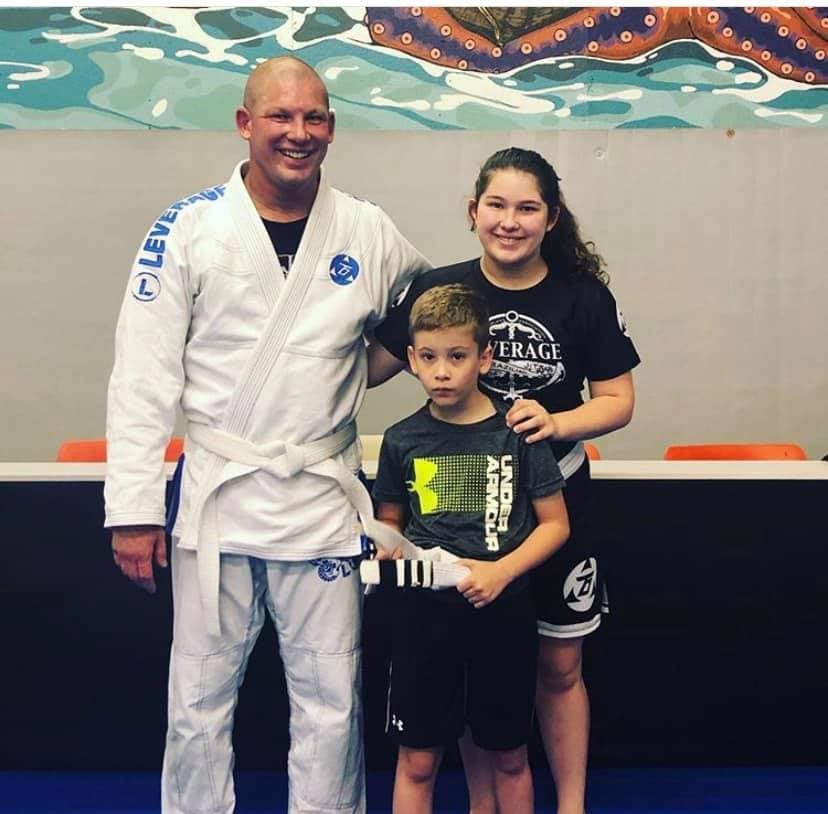
Main photo: BJJ Fanatics; illustrative family training photograph.
The takeaway
A tournament photograph can remain a happy memory without becoming a public report on your child's progress. Decide who the picture is for, ask about the other children in it, and give your own child a real say in what gets shared.
You can still celebrate the medal and thank the coach. Choose a photograph that does that job without attaching a child's difficult moment, personal schedule, or opponent's embarrassment to it. The rest can stay in the family album.
Plan the day before the camera comes out
Use upcoming tournament listings to find an event, then check the organizer's spectator and photography information alongside the competition schedule.
FAQ
Should I ask my child before posting a medal photo? Yes. Show them the image and explain who will see it. Make refusal an ordinary option, and avoid treating permission as part of being grateful for the trip or proud of the result.
Can I post a match if another child appears in it? Check with the other family and follow the organizer's policy before sharing identifiable footage. If permission is unclear, keep the recording private while you ask rather than uploading first.
Is a private team chat the same as a family album? No. The audience is different, and recipients may save or forward a file. State the intended use when sharing coaching footage or photographs involving other families.
What if my child later wants the photograph removed? Remove the copy you control and ask others to stop sharing it. Explain honestly that you may not be able to recover every copy, while still taking the child's request seriously.
Related Posts
Being a BJJ Parent on the Sideline Without Taking Over
Help your child at a BJJ tournament without adding competing instructions. Agree on parent and coach roles, respect tapping, and handle the practical work.

A family BJJ calendar should count who covers the evening
The class time leaves out travel, supervision and somebody else's plans. Build the family training week around the whole commitment.
When your jiu-jitsu kid says they want to quit
Before arguing about commitment, find out why your child wants to quit BJJ. Separate the sport from the schedule, partner concerns, and adult pressure.
Comments (0)
Loading comments...