

BJJ referee signals: watch the arm before the scoreboard
Quick answer: IBJJF referees use defined gestures and spoken commands to communicate with athletes and the scoring table. Notice which athlete the signaling arm represents before interpreting a number. Learn the official diagrams alongside the stop and restart commands, because the next instruction matters as much as the score.
Three fingers go up, the scoreboard changes, and one corner starts celebrating. A new spectator may understand the number while missing the more basic question of which athlete received it.
The referee's gesture carries several kinds of information. It can identify an athlete, communicate points, signal an advantage or penalty, and tell the pair to stop or move. Watching only for raised fingers leaves out much of the conversation.
I think the easiest place to begin is with that relationship between the referee, the athletes, and the table. Once you can follow who is being addressed, the gestures become easier to learn without treating each as a disconnected symbol.
Learn the event's system before interpreting the gesture
This article concerns IBJJF officiating. Other grappling organizations may use different commands, procedures, or scoring systems. A familiar hand movement in a different promotion isn't permission to assume the entire IBJJF interpretation applies.
Use the IBJJF's official rulebook and rules videos to study the diagrams. Text can explain what to notice, but the official illustrations show the arrangement more directly than a long description of an elbow and palm.
Start with the system you are preparing to compete under or watch. If the event publishes modifications, read those too. A competition-specific instruction should be resolved with the organizer before the match rather than by a spectator recalling another tournament.
For beginners, the aim is recognition. You don't need to acquire an official's qualification before watching a match. You do need a dependable reference for the gestures that tell you who scored, when to stop, and what the referee wants next.
Match the arm to the athlete first
IBJJF assigns the referee's arms to the athletes' identified sides. The right arm's green-and-yellow band corresponds to the matching scoreboard identification. That relationship helps the table register a signal against the intended competitor.
Look for the athlete identification established for the match. Don't rely only on your memory of who began on the left of the television screen. The athletes can move; the camera can change angle. A visual position in the broadcast isn't the whole officiating system.
Try a simple viewing exercise with a clear replay. Pause before the action starts, identify both athletes and the scoreboard sides, and then watch one scoring signal. Ask whether you can trace the referee's arm to the correct score column.
If the camera doesn't show the identifiers clearly, acknowledge the gap. Guessing which athlete owns a signal can make an accurate decision look wrong. It is better to wait for the table or commentary than build a confident explanation on a side you never established.
Two, three, and four fingers communicate different scores
The IBJJF diagrams show two extended fingers for two points, three for three, and four for four. The raised arm identifies the athlete receiving them. The gesture communicates a number; the preceding exchange explains why that number was awarded.
Watch those parts together. A viewer should be able to connect the visible position, the referee's signal, and the changed scoreboard. If one part is obscured, the full explanation may require another angle or a longer replay.
The BJJ rules resource sets out the scoring framework around the gestures. Learn the basic positions there rather than trying to infer every scoring requirement from the number of fingers alone.
A hand signal doesn't establish that every viewer's preferred interpretation of a scramble is correct. It tells you the decision being communicated. Comparing that decision with the applicable rule and full sequence is a separate task, one that benefits from slowing down instead of immediately choosing a side.
An advantage has its own gesture
An advantage isn't displayed with the same raised-finger signal as ordinary points. IBJJF's diagram shows the relevant arm extended horizontally with an open hand and palm facing downward. That is a different communication to the table.
The distinction is useful when watching a close match. A viewer who sees a movement of the arm and assumes points were awarded may spend the next minute searching the wrong part of the scoreboard. First identify the gesture, then read the column.
Don't convert the signal into a shortcut for understanding the underlying rule. The reasons an advantage may be awarded require their own explanation. The article on IBJJF advantages examines that question more closely.
For a new athlete, recognition can be enough at first. Know that the referee has communicated an advantage and keep following the match. You can review the precise sequence afterward with your coach rather than trying to settle every scoring question while an opponent is still working.
Stop and restart commands deserve early attention
IBJJF's official material pairs the start command, Combate, with its starting gesture, and the interruption command, Parou, with open arms raised to shoulder height. The spoken direction and gesture belong together.
Athletes should learn these before treating scoring gestures as the whole lesson. A referee interruption changes what you should do immediately. Continuing because you were watching the scoreboard misses the instruction that concerns the present exchange.
When the official stops the match, maintain the position as directed and listen to the next steps. A boundary move, equipment adjustment, or another intervention can require a particular restart. Don't assume every pause returns both people to their feet.
A coach can rehearse this in a controlled setting. Stop an agreed drill, give a clear instruction, and restart deliberately. The point isn't to surprise partners with unofficial commands during ordinary sparring. It is to make the competition procedure recognizable before the athlete encounters it for real.
A penalty gesture identifies an action to notice
The official diagrams include gestures for penalties and other interventions, including a clenched-fist signal associated with the relevant athlete. Learn those from the diagrams rather than deciding every raised fist has the same meaning.
The athlete being addressed and the command matter. An official may point or otherwise identify whom the intervention concerns before the table updates. Follow that sequence instead of guessing from the crowd's response.
Avoid assuming the penalty's whole history from one gesture. The current scoreboard and applicable foul provisions affect the larger picture. A single cropped clip may not show earlier penalties or the conduct that led to the decision.
For your own preparation, ask the coach to connect a few common interventions with the expected response. If a grip is identified as illegal, what should you release? If you're directed to adjust the uniform, where should you stand? Recognition becomes useful when it produces the right next action.
Rehearse with a partner and a clear purpose
A short rules session can focus on communication without turning into a full mock tournament. Choose a few gestures, explain their meaning, and practice the response with a coach overseeing the exercise. Keep the partners informed about what is being rehearsed.
A simple viewing-and-practice sequence is enough:
Identify both athletes' scoreboard sides before the exchange.
Watch a clear official example of the selected gesture.
Practice the corresponding pause, acknowledgment, or restart as directed.
Don't appoint an inexperienced partner to make final rulings on every complicated scramble. The exercise can stay narrower: recognizing a stop, keeping a position still, or tracking which side receives a score.
If a question remains unresolved, record it and return to the official material. The session doesn't need to manufacture an answer just to finish neatly. Learning which part you haven't understood is useful, provided somebody follows up with a dependable explanation.
Keep the referee and scoreboard in the same story
A scoreboard update can appear a moment after the gesture, and a broadcast angle may hide one while showing the other. Treat the sequence as connected information rather than demanding that a single frame contain the entire ruling.
On a replay, begin before the apparent scoring action. Identify the position, watch the relevant arm, and then check what the table recorded. If there is a visible correction, distinguish the initial signal from the eventual record.
This is also a useful limit on spectators' certainty. The camera may omit an instruction or identifier. Commentary can help, but a commentator's confident interpretation should still be tested against the visible sequence and official rule.
I would rather leave one ambiguous signal unresolved than invent a referee's intention to complete an argument. The next clear example can still teach the system. A reader doesn't need every disputed call settled before learning to follow an ordinary match.
The takeaway
Start by identifying the athletes' sides, then learn what the referee communicates with each arm. Points, advantages, and interruptions use different signals. The official diagrams and rules videos should sit beside any written explanation.
For competitors, recognize the instructions that change your immediate task: stop, hold the position, move, or restart. For spectators, keep the gesture and scoreboard connected to the exchange that came before them. That gives the match a clearer sequence without pretending a hand signal explains everything on its own.
Find a match to watch with the rules beside you
Browse upcoming BJJ tournaments on Let's Roll, then check the organizer's official rules before watching or entering.
FAQ
Do IBJJF referee signals apply to every grappling event? No. This article describes IBJJF procedures. Other organizations can use different systems, and event-specific instructions should be checked directly.
How do I know which athlete receives the points? Follow the referee's assigned arm and the match's athlete identification to the relevant scoreboard side. Don't rely only on where the athlete appears in a broadcast frame.
Does a horizontal arm always mean ordinary points? IBJJF uses a defined horizontal open-hand gesture for an advantage. Compare the exact gesture with the official diagrams rather than interpreting any arm movement as the same signal.
Which commands should I learn before competing? Learn the applicable start and stop commands and the response to common instructions. Ask your coach to rehearse them and use the organizer's current official materials as the reference.

Nina Okada
Nina Okada explains positions the way a good training partner does: one problem at a time, with the limits of the explanation said out loud. She is careful about the difference between what footage shows and what it only suggests.
Related Posts
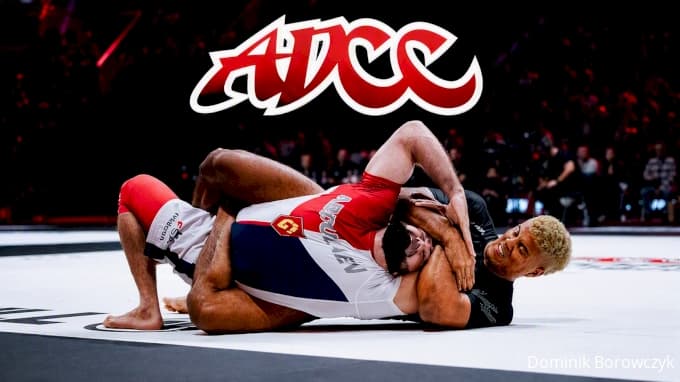
ADCC 2026 results: the stories that survived the predictions
ADCC 2026 results from Krakow: Jaworski, Maciel, Crevar, Pena, the women's champions, and the superfight outcome, with official podiums and match context.
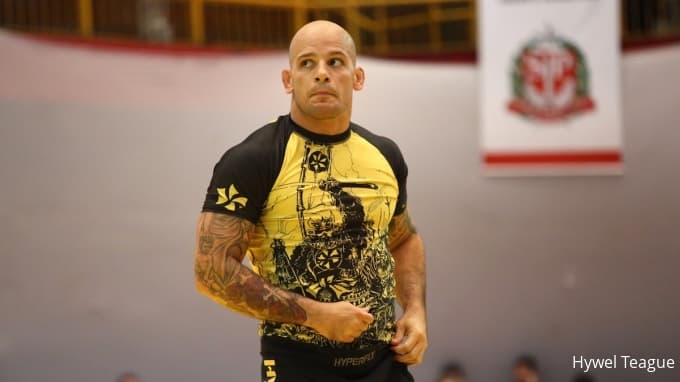
Xande Ribeiro: from absolute titles to the masters mat
Explore Xande Ribeiro's absolute Worlds victories, two ADCC titles, Six Blades, and the distinction between his 2022 Worlds farewell and later masters gold.
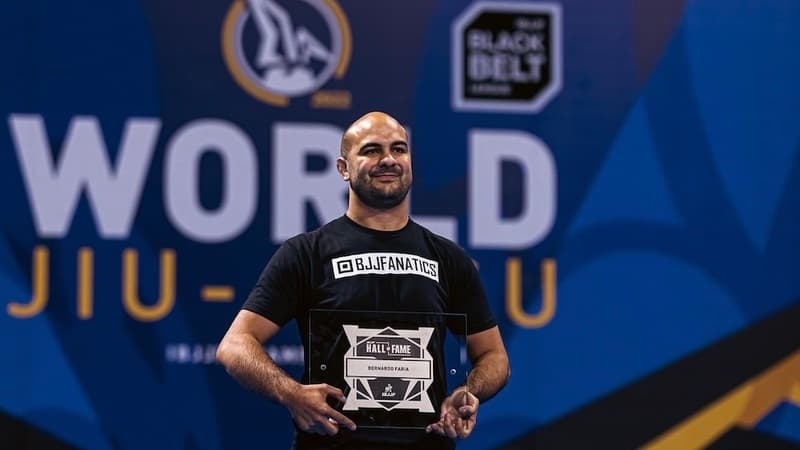
Bernardo Faria: the champion who kept asking questions
Follow Bernardo Faria from Juiz de Fora and Alliance to the 2015 Worlds and BJJ Fanatics, with context on his competition game and move into teaching.
Comments (0)
Loading comments...