
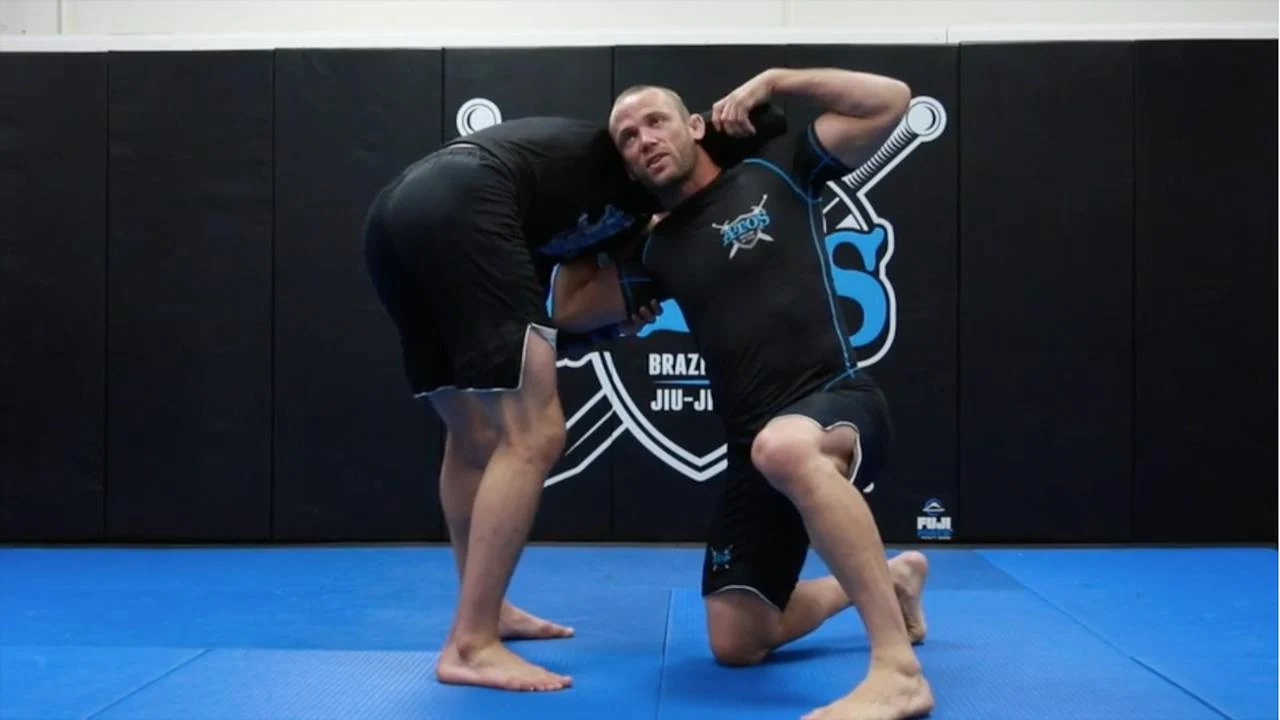
A duck under needs you to arrive somewhere useful
Quick answer: A standing duck under changes level and angle beneath an opponent's arm to reach the side or rear. Clearing the arm is an entry, not a completed takedown or back control. Learn the setup and receiving role with a coach, then define the connected position that ends the practice attempt.
Getting under an arm can feel like the whole move. For a moment, the opponent is no longer squarely in front of you. Then they turn, and you are back where you began, except that your posture may be worse and your hands have lost their old connection.
That second moment is the useful one. The duck under has to deliver you to a position you can use. I would rather learn a modest entry with a recognizable arrival than a fast dip that makes a beautiful first half and an improvised ending.
Specify the standing duck under
The phrase appears in more than one grappling context. This article concerns the standing wrestling-style entry beneath an opponent's arm. It does not describe a guard-passing system that happens to share the name.
Cary Kolat's teaching curriculum separates duck-under positioning from finishes, within a wider progression of stance, setups, and defensive skills. That separation is useful for a BJJ student. The movement beneath the arm and the connected position afterward are related tasks that both need instruction. Ask which part your next repetition is meant to test.
Ask the coach to identify the particular tie-up and arm being cleared. A collar tie, triceps control, and another starting grip can produce different versions. If you cannot name the connection before the duck, you may be trying to copy a middle frame without the opening that made it possible.
Read the arm without forgetting the torso
An elbow appearing high can suggest an opening. The opponent's whole body still matters. They can move their feet, lower the arm, or turn as you begin. The entry must fit the distance and the upper-body relationship in the taught version.
Have the receiver show a plausible position in which the arm can be cleared, followed by one in which the route is closed. Comparing those pictures teaches recognition before speed. It also gives the receiver an honest defensive task later in practice.
The attacker should not have to fold into an unfamiliar posture simply to get the head through. If that happens, pause and ask the instructor to inspect the distance and setup. Successfully passing a head under an arm is not, by itself, evidence that the intended entry has been reached.
The setup should explain the route
Pulling, steering, or otherwise influencing a tie-up can make a duck-under entry available. Which action is appropriate depends on the actual version and the opponent's response. Learn why the opening appears rather than memorizing a decorative hand movement before the dip.
Kolat's published triceps-pull duck-under lesson identifies a specific setup and follow-up in a wrestling context. Use that as a coherent instructional example. Do not treat a wrestling finish as an automatic instruction for every BJJ training round.
Our inside-position hand-fighting article offers a broader way to examine the connection. The setup should make a particular movement easier or a particular defensive response harder. If you cannot say which, ask the coach before adding the next action to the sequence.
Getting behind is different from staying behind
The defender can turn as soon as the arm clears. The attacker therefore needs the taught follow-up connection on arrival. Without it, the duck may create an angle too briefly to use. That is a different failure from never clearing the arm at all.
Agree on a checkpoint for the drill. It might be reaching a specified side or rear position with the connection your instructor demonstrates. The receiving partner then knows when to stop turning and reset. A recognizable arrival gives both people a result they can describe.
Do not add a lift or mat return merely because a clip includes one. Those are separate standing-to-ground skills with their own receiving role and practice requirements. Your first duck-under lesson can finish before anybody leaves the floor. The head has cleared the arm; the next question is whether the bodies remain connected in the intended way.
Keep BJJ's head-and-neck context present
A partial entry can leave the head underneath an opponent's control without delivering the intended angle. In BJJ, a standing exchange can continue into front-headlock or submission situations. That context belongs in the lesson, even if the original movement came from wrestling.
The front-headlock article helps name what can happen when posture and connection change. It does not mean every failed duck under becomes the same headlock. Identify what the opponent actually secured and ask the coach how the entry should avoid or recover from that specific position.
This is another reason to slow an unclear repetition. Bending farther or dipping faster can disguise a missing setup while giving the receiver a new opportunity. A useful correction keeps the head, torso, and feet in the relationship the instructor is teaching rather than treating head clearance as the only success condition.
Let the defender turn at an agreed pace
A receiving partner who remains frozen helps you learn the path. To study whether the arrival is connected, they eventually need permission to respond. Add one response at a time instead of jumping from static repetitions to an unrestricted standing round.
Here is a practice outline to discuss with the instructor. It is an editorial example and should be adapted to the class.
Begin with the named tie-up already established.
Permit the receiver a controlled turn once the arm clears.
End at the taught arrival, a lost connection, or either partner's stop.
If the defender turns before you arrive, inspect the timing and connection. If the head never clears the arm, inspect the entry. Keeping those outcomes separate gives the coach two readable problems rather than one vague complaint that the move does not work.
Use the room as part of the practice plan
Even an exercise that stops before a takedown needs space for two people to move. Confirm the coach's pairing and direction arrangements. A clear patch of mat can disappear quickly when another pair begins a standing exchange beside you.
The receiver should know whether the task ends standing. If you intend to include a takedown later, ask the instructor to demonstrate that landing and check that both people are ready for it. Nobody should discover a new finishing condition halfway through a cooperative entry drill.
A small practice note can record the actual boundary. For example, you studied clearing a right-arm tie and arriving beside the opponent, with no lift. That description is more useful than writing duck unders for ten minutes. It preserves what you practised and the part that remains to be taught.
A successful standing checkpoint also gives the receiver a clear reset. They know when to stop turning, which grips to release, and whether the partners are about to begin again. That shared endpoint matters more during early learning than making the transition resemble a continuous competition exchange. Continuity can be added once the configuration is familiar.
Main photo: live.atosbjjondemand.com (source publisher; photographer not identified). Atos still from Basic Duck Under Takedown, recorded November2018.
The takeaway
A standing duck under needs a setup, a route beneath the arm, and a useful connected arrival. Study each part and identify which one disappears when the defender responds. The movement becomes easier to discuss once getting underneath is separated from staying behind.
For the next suitable lesson, ask your coach to define a standing checkpoint that excludes the takedown. Let the receiver make one controlled turn and see whether you arrive attached. That gives the entry a concrete test without asking an unfamiliar landing to solve a problem that began much earlier.
Find a suitable standing lesson
Use Find gyms to locate an academy, then ask which class teaches standing fundamentals for your experience. Confirm visitor access and the training format directly with the host before attending.
FAQ
Is a duck under automatically a takedown? No. Clearing the arm can create a side or rear entry, but a finish requires further connection and movement. Learn the arrival and any standing-to-ground transition as distinct parts of the lesson, with the receiving role explained before practice.
Why does my partner just turn to face me? You may have cleared the arm without establishing the intended connection on the other side. Ask your coach to inspect the arrival. That is a different question from an entry in which the head never gets beneath the arm.
Does duck under always mean the same thing in BJJ? No. The name can appear in standing entries and in other systems, including guard-passing instruction. Identify the starting position and actual movement before assuming that two lessons with the same title teach interchangeable details.
Can beginners drill it without a lift? Yes, when the instructor defines an appropriate standing checkpoint. Agree that the exercise ends there, let the receiver offer the permitted response, and reset. A lift or mat return should be added only as a separately taught part of the practice.

Owen Bellamy
Owen Bellamy writes for the person training twice a week around a job. Nothing he suggests requires quitting the job.
Related Posts
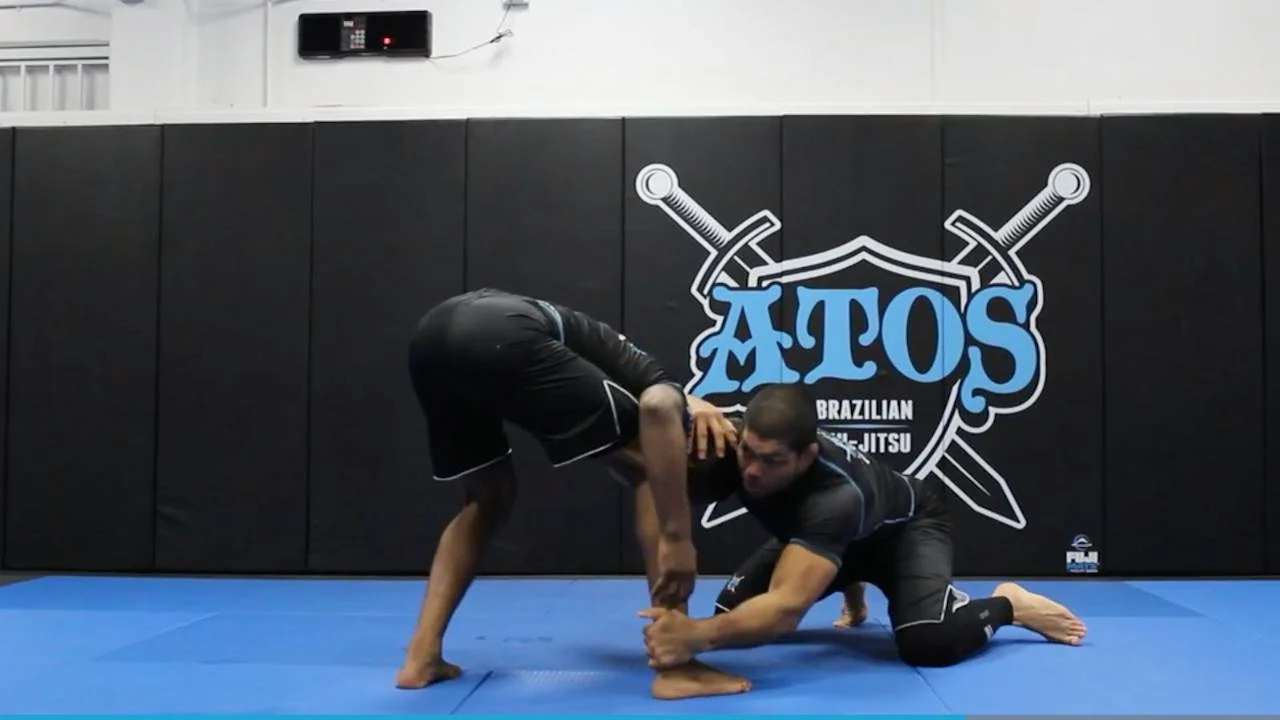
The ankle pick starts above the ankle
An ankle pick is a balance problem before a low reach. Study the upper-body connection, the available step, and the controlled arrival on the mat.
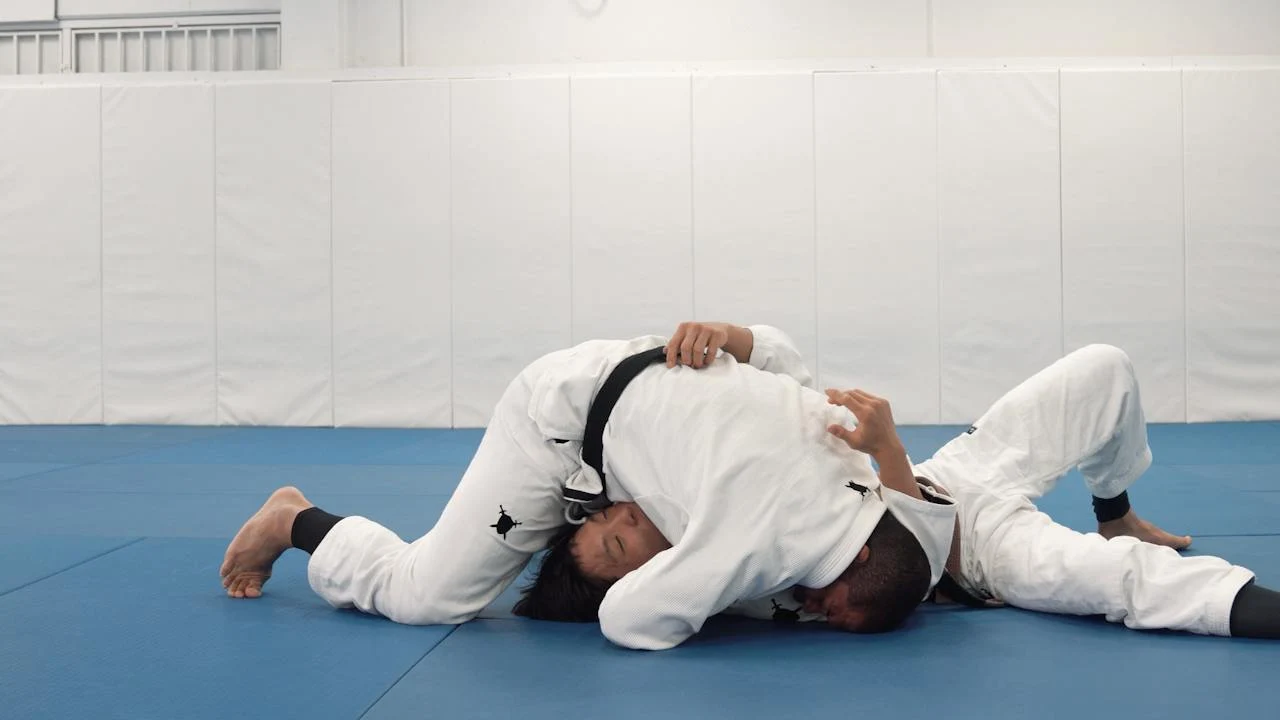
The paper-cutter choke starts with the arm beneath the pin
Study the paper-cutter choke by following the controlling arm, the collar connection, and the defender's frame before the finishing pressure.
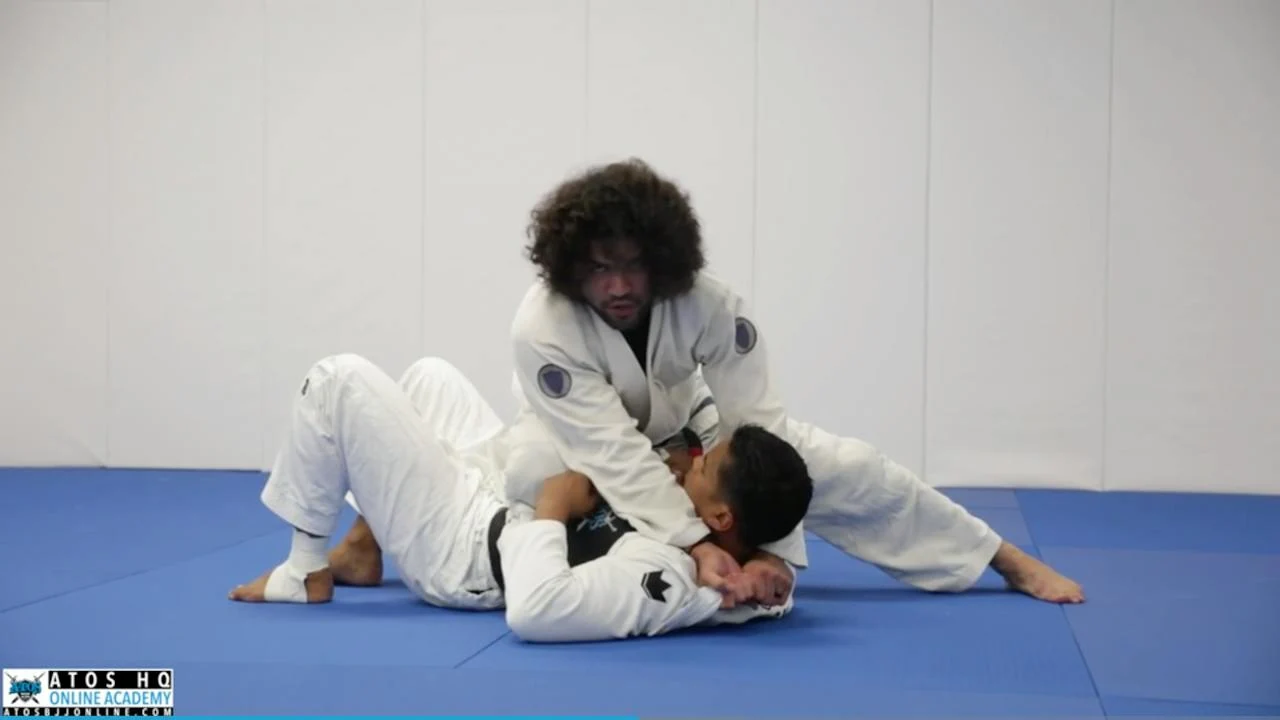
The baseball-bat choke is more than two hands on a collar
Two collar grips make the baseball-bat choke recognizable. The surrounding control explains whether the attack survives the turn.
Comments (0)
Loading comments...