
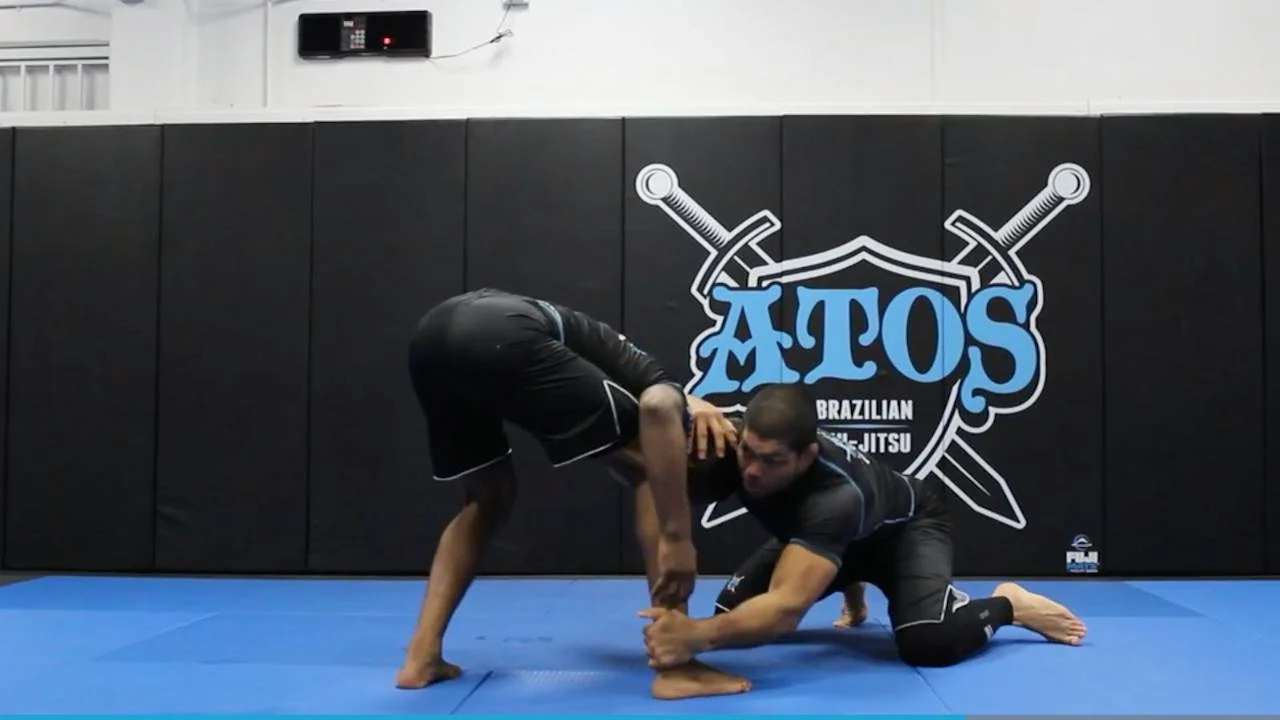
The ankle pick starts above the ankle
Quick answer: An ankle pick connects upper-body control with a low attack on the opponent's base. The reach works within a setup that changes balance and distance, rather than as an isolated attempt to grab a foot. Learn the entry, receiving role, and landing under a coach before adding live resistance.
The ankle is easy to see, so the hand goes there first. The opponent steps away, the attacker bends farther, and the exchange starts to resemble an attempt to retrieve something from under a table. The missing subject is the connection above the foot.
An ankle pick becomes more readable when you follow that upper-body relationship. Where does it move the opponent's weight? What step could they use to recover? Can you reach the lower target while remaining in the position your coach is teaching? Those questions make the hand's eventual destination less mysterious.
Identify the setup you are actually learning
Ankle-pick entries vary with stance, grips, and the opponent's reaction. A collar-based gi lesson and a no-gi tie-up do not supply identical handles. Ask the instructor to name the starting connection before treating two successful takedowns as the same complete sequence.
Kesting's takedown discussion includes ankle picks among the options he considers for BJJ. Use it as a coach's perspective on choosing a manageable standing game, rather than a promise that the word easy makes the landing or entry trivial.
For the actual lesson, identify where both athletes begin and which foot is available. The receiving partner should understand what the upper-body connection is expected to make them do. An entry copied from a finish-only clip can leave both people guessing about the first meaningful movement.
Watch the weight before reaching down
A foot can be near your hand without being a useful target at that moment. The opponent may be able to withdraw it immediately or use the remaining leg to follow. Reaching farther does not answer the balance problem.
Ask the coach to show the setup at a pace where the receiving partner's step remains visible. The upper-body action and lower-body target should belong to the same exchange. If you cannot identify why this foot is being attacked now, slow the demonstration down instead of memorizing the order of the hands.
The receiver can offer helpful feedback by describing when they needed to move and when they still felt free to choose either direction. Their account is not a substitute for the instructor's assessment. It gives the coach another observation about the timing and connection to inspect.
Keep the head and torso in the taught relationship
A low target invites a long forward bend. That movement can disconnect your upper body from the setup and create a different contest around your head and shoulders. In BJJ, the consequences of that exposure include submission and front-headlock situations that a wrestling drill may treat differently.
Our wrestlers-starting-BJJ article explains why a useful imported skill still needs the new sport's context. The ankle pick belongs in that conversation. Learn the coach's actual posture and head position, rather than assuming that reaching the foot validates whatever arrangement got you there.
If you repeatedly find your head controlled before the pick, report that sequence. Your coach can inspect the distance, the tie-up, or the timing. A generic instruction to be more aggressive does not distinguish those causes, and increasing speed can make the first lost connection harder to see.
The receiving partner needs a taught landing
An ankle pick is a standing-to-ground transition involving two people. The receiver needs to know the intended direction, the pace, and what to do when the base changes. The attacker needs to know how to follow without falling unpredictably through the partner.
Ask the instructor to demonstrate the receiving role before the first practice attempt. Use the academy's space and pairing arrangements. A small-looking trip is still a landing, and the presence of nearby partners can change whether the exercise is appropriate in that part of the room.
You can divide the lesson. One exercise might establish the grips and recognize the change of balance without completing the takedown. Another can include a controlled landing. The coach decides when those parts should be joined. You do not have to turn the first correct reach into an uncontrolled finish to count it as practice.
Add the step that removes the opportunity
The defender stepping away is useful information. It may show that the upper-body control never limited the base, that the attacker reached too early, or that the target changed. Those possibilities should remain separate.
A narrow supervised exercise can help. Discuss this editorial outline with the coach and adapt it to the actual entry.
Start from the demonstrated tie or grip arrangement.
Permit the receiver one agreed recovery step.
Let the attacker recognize the opening or abandon the reach.
The task need not require a takedown on every attempt. Recognizing that the ankle is no longer available prevents a memorized entry from becoming a chase. Add the coached follow-up later if the lesson includes it. Until then, returning to a recognizable stance is an honest result.
Arrival on the mat begins the next exchange
The partner reaching the floor does not tell you where the top player will land. A takedown can lead to guard, a scramble, or another position depending on the entry and response. Learn the intended destination rather than ending the explanation at the fall.
The BJJ positions guide offers a map for naming that arrival. It cannot predict it from the phrase ankle pick. In your lesson, ask which connection should remain during the descent and when the partners should stop the repetition.
For competition preparation, scoring is a further question. The event's actual rules determine what the transition earns and which control must follow. Do not make a technique name do the referee's work. A coached practice takedown and a completed scored action are related descriptions with different requirements.
Review the failed reach from the beginning
A useful note begins before the hand misses the ankle. Record the grip, the opponent's step, and the moment your torso changed. Perhaps the receiver withdrew the foot before your upper-body connection did anything. Perhaps the setup moved them, but your hand reached the wrong line afterward.
Those are different problems. The first asks about creating the opening. The second asks about recognizing and using the opening that appeared. Repeating the same full-speed attempt will not necessarily tell you which one you have.
If you have agreed footage, keep the feet in frame and include the seconds before contact. A camera focused on faces can make the balance change impossible to inspect. When the step is hidden, say so. A clear account of what you cannot see is more useful than a confident explanation built from the eventual landing alone.
Do not change the target after the receiver has committed to the agreed landing. If you want to practise a follow-up to their recovery step, name it before the next repetition and have the coach show the receiving role. A new direction changes the exercise for both people, even when it seems like a small adjustment to the attacker.
Main photo: live.atosbjjondemand.com (source publisher; photographer not identified). Atos instructional still from its ankle-pick lesson, recorded April2017.
The takeaway
Learn the ankle pick as an upper-body setup connected to a lower-body target. Watch the opponent's available step and your own posture before judging the reach. Then include the receiving role and the position you intend to reach on the mat.
For the next class, ask the coach to contrast one moment when the ankle is available with one when it has already moved out of the attack. Learn to recognize both. That gives the technique a decision point, so the low hand becomes part of a coherent entry instead of a long pursuit of a retreating foot.
Find a suitable standing-grappling class
Use Find gyms to locate an academy, then ask which session teaches takedown fundamentals appropriate to your experience. Confirm visitor access, the session format, and the coach's expectations before attending.
FAQ
Is an ankle pick just grabbing the opponent's foot? No. The low target belongs to an entry that also changes balance, distance, and upper-body control. A nearby ankle may be easy to touch and difficult to use. Ask your instructor to identify the setup and the step the defender can no longer make.
Can I use the same grip in gi and no-gi? Available handles differ. A gi collar or sleeve connection may not have a direct replacement in no-gi. Learn the actual no-gi entry rather than keeping the name of a grip whose controlling job has disappeared.
Should a beginner complete the takedown immediately? Follow the instructor's progression. A lesson can separate the setup, balance change, and receiving role before joining them into a controlled landing. The appropriate pace depends on the participants, the space, and the actual version being taught.
Why does my partner step away every time? The setup, distance, timing, or target may have changed. Ask the coach to inspect the moment before the reach. Chasing the foot farther can make the original problem worse while giving you less information about why the entry was unavailable.

Owen Bellamy
Owen Bellamy writes for the person training twice a week around a job. Nothing he suggests requires quitting the job.
Related Posts
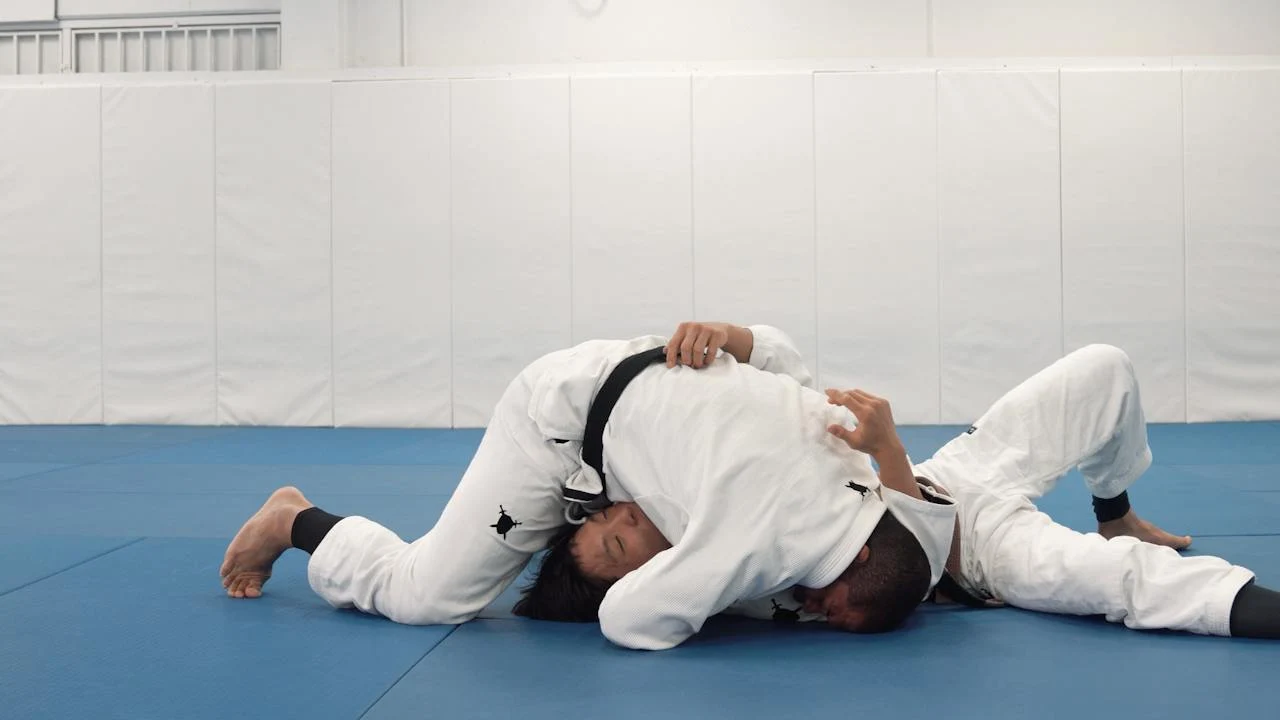
The paper-cutter choke starts with the arm beneath the pin
Study the paper-cutter choke by following the controlling arm, the collar connection, and the defender's frame before the finishing pressure.
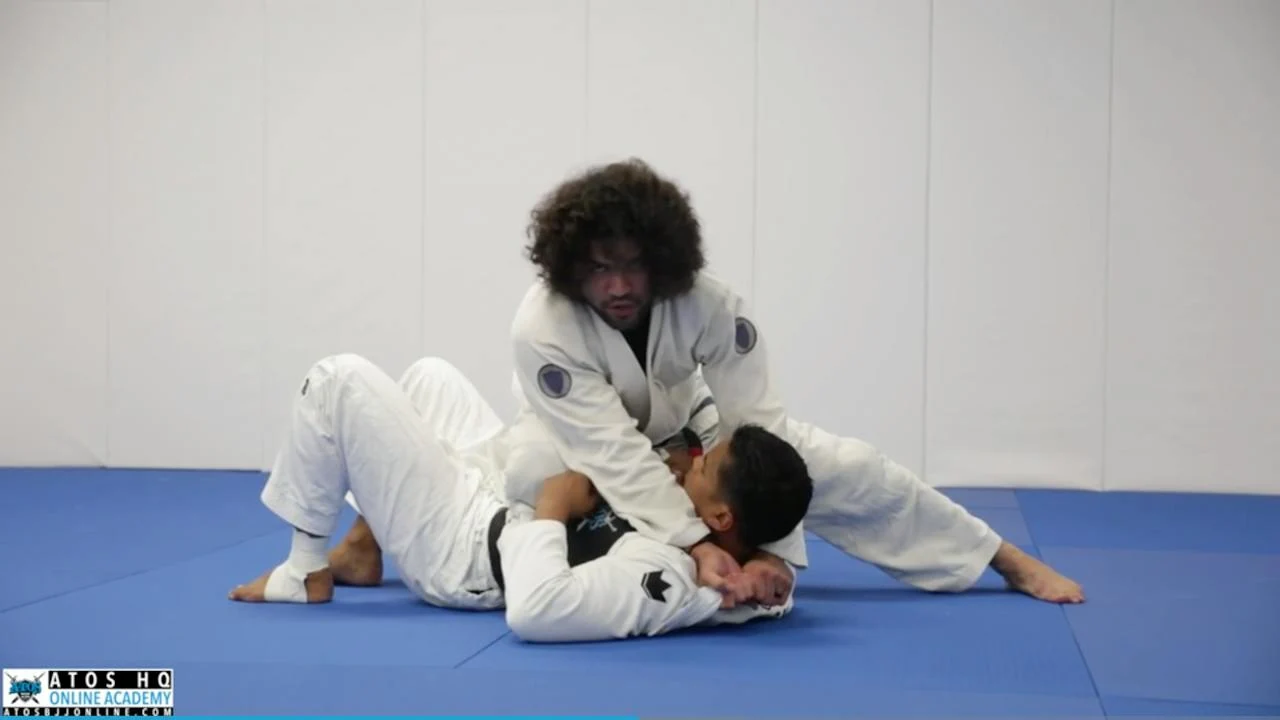
The baseball-bat choke is more than two hands on a collar
Two collar grips make the baseball-bat choke recognizable. The surrounding control explains whether the attack survives the turn.

A loop-choke grip needs a head position worth keeping
The BJJ loop choke uses the collar around a changing head position. Learn the setup, recognize when it disappears, and avoid clinging to a lost grip.
Comments (0)
Loading comments...