
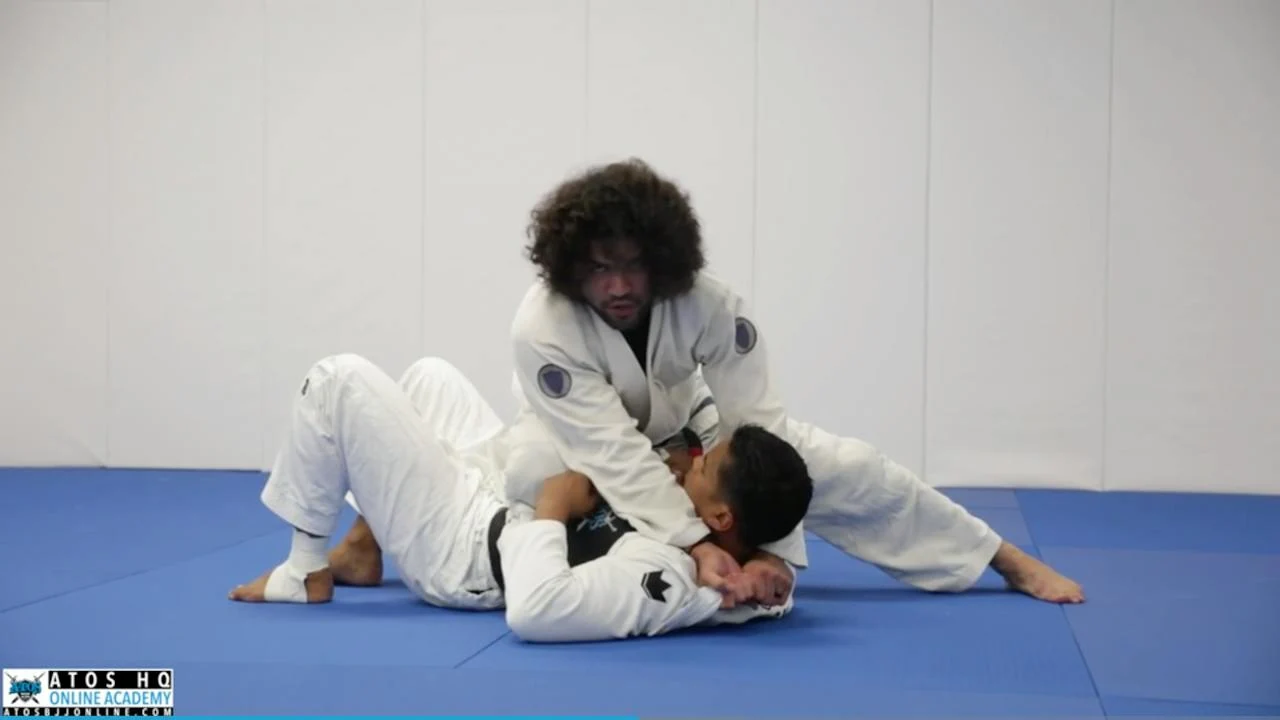
The baseball-bat choke is more than two hands on a collar
Quick answer: The gi baseball-bat choke uses a paired collar-grip arrangement with a changing body angle. The hands are a recognizable part of the submission, but they do not replace the need to control the defender during the transition. Learn one coherent version with a coach and keep pressure controlled, with immediate release on a stop.
Two hands meet at a collar, and the familiar name arrives before the rest of the position. That is useful for recognizing a baseball-bat choke in a clip. It is less useful for explaining why one attempt finishes while another gives the defender enough room to move.
The missing subject is usually the transition. The attacker changes orientation, the defender tries to follow, and the grips must remain part of a connected position. If you study only the hands, the decisive movement can happen somewhere outside the part you are watching.
Identify the top-position version being taught
Baseball-bat choke discussions can cover different entries, including attacks from top and bottom. Those positions create different tradeoffs. A lesson beginning from side control should not be treated as proof that giving up a guard pass is an interchangeable setup.
Stephan Kesting's four lapel attacks from side control includes the baseball-bat choke within a top-position teaching sequence. That supplies a clear context for the grip. Start with the actual side-control arrangement, identify the paired collar connections, and follow the demonstrated change of angle.
This article concerns reading and practising that positional transfer. It does not recommend conceding position to surprise a partner with an unfamiliar choke. If your instructor teaches another entry, learn its control and release as a separate lesson rather than importing the finish alone.
The collar grips need the body position around them
A matched pair of grips can look correct while the defender has already changed the space between the bodies. Their shoulders may turn, their elbows may return to a frame, or their hips may move far enough to alter the intended attack.
Ask the receiver to hold still while the instructor identifies which movement the top position is meant to limit. Then let them make that movement slowly. You should be able to see whether the grip and the torso connection work together or whether one remains after the other has gone.
That distinction keeps the explanation practical. Instead of saying the grip was not tight enough, you can say the defender turned the shoulder before the attacker completed the angle change. The coach has an event to inspect, and you have a question that does not require escalating pressure.
Follow what happens when the attacker turns
A turn can move the attack toward the head end of side control, but its size and direction belong to the specific variation. Copying a large circling movement without the preceding control can leave the receiver free to turn or move underneath.
Have the coach pause immediately before the turn and immediately after the intended checkpoint. Compare where the defender can put their hands in each picture. If an arm can now frame in a way the lesson was meant to prevent, the transition has created a new problem.
Our north-south control article provides context for changing orientation around the head. Arriving near north-south is a positional description. It does not certify a particular choke, and the choke's name does not establish that the head-end control has been secured. Learn both relationships rather than allowing one label to stand for the whole exchange.
Distinguish the baseball-bat arrangement from nearby gi attacks
Several collar attacks can begin from side control. They may share a lapel or a broad direction while using different grips and body relationships. Treat that as a reason for careful observation, not a reason to blend them automatically.
Kesting's source places several attacks in the same lesson, which is helpful for comparison. Ask your instructor what the second hand does in the baseball-bat version and how that differs from the collar-and-arm control of another choke. The answer should refer to the version they are demonstrating.
A useful practice note can include one contrast. In this variation, both hands retain the paired collar arrangement while the body changes angle. In another, one hand may have a different controlling task. Keep the comparison descriptive. You do not need to declare one submission more advanced or more effective to understand why their details should remain distinct.
Practise the grip-to-position transfer without finishing
There is a productive exercise before the submission itself. With the instructor's agreement, start from the taught top pin and establish the permitted grips. Let the receiver attempt one modest, agreed frame or shoulder turn while the attacker moves to the intended checkpoint.
Exclude finishing pressure from the first task.
Name the receiver's permitted movement before starting.
Reset if the grips or the relevant top connection are lost.
This is an editorial proposal for supervised practice. The class may use another arrangement. What matters is that both people can recognize success and failure without relying on the tap. A completed turn with the receiver's frame restored may be a failed positional transfer, even though the attacker's hands still resemble the demonstration.
Surprise is a poor substitute for an agreement
A partner unfamiliar with the baseball-bat grip may not recognize how quickly the next movement changes the attack. That is a reason for clear communication during learning, rather than a reason to spring it on them in an otherwise cooperative drill.
Say whether the exercise includes submissions. Release immediately on a tap, verbal stop, or request to reset. If the receiver is uncertain about the configuration, stop and ask the instructor to demonstrate the intended boundary before the next repetition.
The catch-and-release discussion is useful here because it separates recognizing an attack from applying finishing pressure. You can practise the relevant position and acknowledge the opportunity without making a partner endure an unclear finish. Both people learn more when the stopping condition is known before the turn begins.
Inspect the first missing connection after an unsuccessful attempt
If the choke does not produce the intended finish, avoid using duration or fatigue as the whole explanation. The attack might never have reached the taught configuration. The defender might have recovered a frame during the turn. Your base might have shifted away while your hands stayed locked.
Record what you can see. For an illustrative example, suppose the receiver turns to face you before your body reaches the head-end angle. That observation directs the coach toward the control during the turn. It does not establish which adjustment is correct, and it does not require a claim about the receiver's strength.
Include the entry when you review agreed footage. A clip beginning with the hands already on the collar can hide the change that decided the attempt. If a shoulder is blocked from view, leave the mechanism uncertain rather than making the later tap or escape prove an unseen detail.
Keep the receiver’s shoulders in view when reviewing the transition. If the camera is blocked, a paused frame cannot establish what happened underneath. Record that limit and rebuild the position with the instructor instead of using the eventual tap as evidence for an unseen grip. The unknown detail can remain a useful question for the next lesson.
Main photo: live.atosbjjondemand.com (source publisher; photographer not identified). Illustrative instructional still from Atos BJJ OnDemand’s Baseball Bat Choke From Knee On Belly lesson.
The takeaway
The baseball-bat choke is recognizable through its paired collar grips, but learning it means following the position around those grips. Identify the version, the control before the turn, and the checkpoint after it. Then the finish has a coherent place in the lesson.
For your next supervised practice, remove finishing pressure and test one agreed shoulder or frame recovery. If the defender restores it, find the first missing connection with the coach. A precise account of a failed transfer is more useful than a stronger pull on the same collars.
Find supervised gi practice
Use Find gyms to locate an academy, then confirm the right session and visitor arrangements with the host. Ask about the class level and partner expectations before bringing a particular submission into practice.
FAQ
Is the baseball-bat choke only a pair of collar grips? No. The recognizable grips belong within a body position and transition. The defender's available shoulder turn, frames, and distance still matter. Learn the coherent variation your instructor teaches rather than treating the hand shape as a complete attack.
Should I give up a guard pass to use it? This article studies a top-position version. Bottom entries involve different tradeoffs and should be learned separately with a coach. Do not assume that conceding position is harmless merely because you have seen a successful highlight using a collar grip.
Can we drill the turn without the choke? Yes, if the instructor and partner agree on a positional checkpoint and exclude finishing pressure. Let the receiver attempt a limited taught defence. Stop when the grip or top connection disappears, or when either person asks to reset.
What if my partner taps before I reach the intended position? Release immediately. A tap tells you to stop, regardless of whether the technical sequence was correct. Ask the instructor to inspect the arrangement before repeating it, rather than treating early discomfort as proof that the planned finish was established.

Nina Okada
Nina Okada explains positions the way a good training partner does: one problem at a time, with the limits of the explanation said out loud. She is careful about the difference between what footage shows and what it only suggests.
Related Posts

A loop-choke grip needs a head position worth keeping
The BJJ loop choke uses the collar around a changing head position. Learn the setup, recognize when it disappears, and avoid clinging to a lost grip.
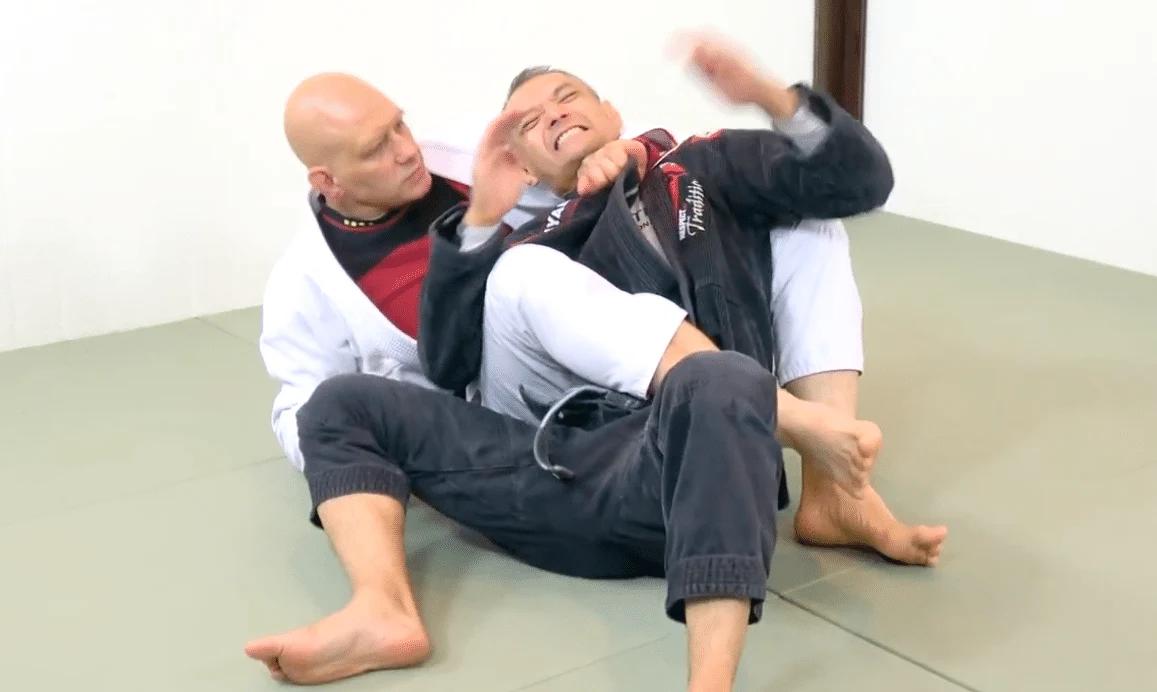
The bow-and-arrow choke changes the job of back control
A collar grip is only part of the bow-and-arrow choke. Study the shift from back control to the finishing angle and what the defender can recover.

Your arm triangle has an arm problem before a squeeze problem
The BJJ arm triangle depends on the trapped shoulder and the attacker's body position. Learn what to inspect before adding finishing pressure.
Comments (0)
Loading comments...