
Catch and release in BJJ needs an agreement before the round
Quick answer: Catch and release works best as an agreed practice format with a coach-defined stopping point. Decide what counts as the catch and whether the round continues or resets; releasing an attack does not remove the receiving partner’s responsibility to tap or either person’s ability to stop.
An imaginary submission can become the loudest result in a round. One partner releases a position, the other keeps moving, and afterward they discover that only one person believed a catch had occurred. Nobody agreed on the exercise, but somebody has already kept score.
Catch and release needs less mystery than that. Used as a clear training task, it can let partners practice recognizing an attacking position and leaving it under control. Used as an unspoken arrangement, it can create two incompatible accounts of the same five minutes.
Define the purpose before naming the format
A coach may use an exercise that stops before finishing pressure, asks the attacker to release a checked configuration, or resets at an agreed point. These are specific tasks. The phrase catch and release does not explain which one is happening.
Begin by saying what the practice should answer. Perhaps the attacker needs to recognize the taught control without rushing. Perhaps both partners are working on continuing after an attack is abandoned. Perhaps the instructor wants a limited positional exercise before adding resistance.
Those purposes need different endpoints. A reset after a checked configuration creates repeated starts. A continuation after release creates later transitions. Neither should be selected silently halfway through the round because one partner prefers what is happening.
Roy Dean’s essay on tapping, published by Grapplearts, offers a broader perspective on training beyond a simple count of submissions. It is an instructor’s viewpoint, not a universal rule for every class. Let the coach define the actual exercise you intend to practice.
Let the instructor identify the stopping point
The catch needs an observable definition appropriate to the technique and students. A coach might ask the pair to pause in a particular control configuration for inspection. That is different from the attacker privately deciding that the finish would certainly have happened.
Avoid using the receiving partner’s discomfort as the only signal that the catch has been reached. The purpose of stopping before finishing pressure is undermined if both people wait for the same pressure that would have produced a tap in an ordinary attempt.
The instructor should also explain what happens if the configuration changes. If the partner moves out before the agreed point, continue only within the approved task. Do not chase the lost position with extra force to rescue an imaginary result.
For your notes, record the actual endpoint rather than only the format name. A sentence describing the coach’s checked position and reset rule is something you can reproduce. A note saying catch everything does not tell the next partner what you are asking them to do.
A tap still means release immediately
Catch and release is not a reason to withhold a tap. The receiving partner should use the room’s stop signals whenever needed, and the attacker must release immediately. The agreement never depends on one person correctly guessing how close the other person is to needing a stop.
The same applies before the supposed catch. A partner may tap during an entry, movement, or adjustment. Release even if you think the technique has not become a submission yet. Discuss any question after resetting rather than negotiating while the position remains applied.
Do not present the format as injury-proof. It is still partner training, and the coach must select suitable techniques, intensity, and pairings. An agreement to be controlled needs actual controlled behavior throughout the exercise, not just a planned release at the end.
If a position feels unclear, stop and ask the instructor. Catch and release should make the task easier to understand. If it creates more uncertainty around a joint or neck, simplify the exercise rather than treating confusion as part of the challenge.
Choose a reset or a continuation
A reset gives both partners the same starting problem again. It is useful when the lesson concerns an entry or a particular control. The attacker releases, both return fully to the agreed position, and the next repetition begins without an accidental grip advantage left over from the last one.
A continuation has another purpose. After release, the pair keeps grappling from the resulting position under the coach’s instructions. The next decision becomes part of the work, which means both partners need to understand what the release permits.
Do not mix those formats without saying so. One player may relax because they expect a reset while the other immediately attacks the opening. That is an agreement problem rather than a clever technical success.
A proposed first exercise can stay simple: use the coach’s chosen position, pause at the checked endpoint, release, and reset. Once that is consistent, the instructor can add a continuation. There is no need to introduce every possible transition in the first version of the task.
The receiving partner should keep making real decisions
Cooperative practice does not have to mean pretending a position worked when it did not. The receiving partner can provide the specific movement the instructor assigns and communicate whether the intended control was actually present. That feedback helps the attacker learn the configuration honestly.
At the same time, the receiver should not turn a limited exercise into unrestricted escape work. If the agreed task is one slow defensive response, adding a sudden second action changes the lesson. Ask the coach to expand the task rather than surprising a partner who is practicing under another agreement.
A useful feedback sentence identifies an event: the elbow became free, the grip changed, or the attacker lost the starting pin. It does not need to include a verdict about who would have won an imaginary continuation.
Our guide to IBJJF rules is useful competition context, but a training catch is not automatically a competition result. The exercise has its own coach-defined endpoint. Keep the two ideas separate instead of importing hypothetical match outcomes into a cooperative drill.
Begin with a short agreement
The conversation before the round can be brief. The following questions form a proposed setup to discuss with the instructor, not an official catch-and-release ruleset.
Which position and technique are included in the exercise?
What observable point ends the attempt before further pressure?
Does the pair reset or continue after release?
What resistance and defensive movement are allowed?
If those answers are too complicated to remember during movement, reduce the task. One position and one response are enough to begin. The exercise can become more demanding after both people understand what they are practicing.
Repeat the agreement when changing partners. A new person does not inherit the conversation you had in the previous round. Explain the task and ask whether they are willing to do it, with the coach’s approval. They may prefer ordinary technical drilling or another exercise, which is a reason to find a compatible task rather than insist on the label.
Keep the review attached to observable work
After a set, review whether the attacker reached the taught configuration, recognized the endpoint, and released cleanly. Those are actions the coach and partner can discuss. A private count of submissions that might have happened is harder to evaluate and less useful for the next repetition.
You can also review the continuation if that was part of the plan. Did the pair understand when movement resumed? Was the next position controlled? Did the attacker release without abandoning every useful connection the coach wanted preserved? Ask the instructor which details belong in that version.
If the pair disagrees about whether a catch existed, reset and have the coach inspect. Do not settle the argument by repeating the technique harder. The purpose is to clarify the learning task, not to produce a tap that retroactively proves an earlier claim.
A good session may reveal that the chosen endpoint was too vague. Change it. Training formats are tools for a lesson, and an unclear tool can be adjusted without turning the discussion into a judgment about either partner’s ability.
Use the format when it serves the class
Catch and release does not need to replace all other training. A coach may prefer cooperative drilling for one skill, limited positional rounds for another, and ordinary rolling later. Each format should be chosen for what it helps the students practice.
The useful habit is stating the agreement and following it. That applies whether the task ends before finishing pressure or includes the instructor’s normal submission procedures. Partners should not have to infer the rules from how the first exchange feels.
For a recreational student, one clear exercise can be enough. Learn the configuration, practice release, and record one correction. The format earns its place when it produces work you can describe and repeat, rather than an extra set of invisible victories to remember afterward.
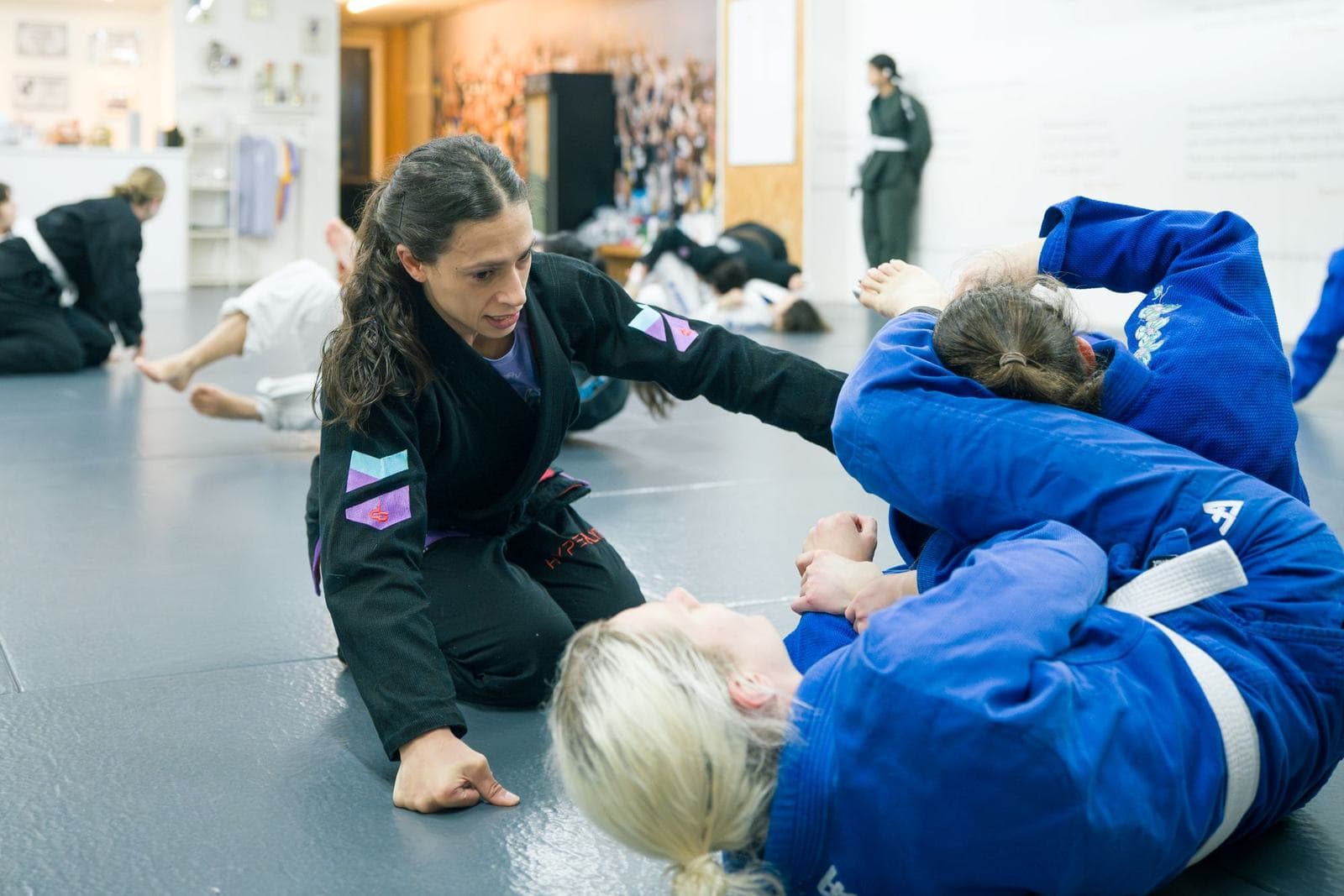
Main photo: BJJ Academy Amsterdam.
The takeaway
Catch and release needs an agreed endpoint and a clear next action. Let the instructor choose the position, resistance, and stopping point, then decide whether each attempt resets or continues. Keep immediate release to a tap or verbal stop in place throughout.
Review the control and release you actually practiced. If the supposed catch is disputed, ask the coach to inspect rather than trying to prove an imaginary finish. The useful result is a clearer movement and a partner who understands the same task.
Find partners through coached training
Use Let’s Roll’s gym directory to find classes where an instructor can set up a suitable positional exercise and explain its endpoints.
FAQ
Does catch and release mean the receiving partner should not tap? No. Tap or use the agreed stop signal whenever needed, including during the entry. The attacker must release immediately regardless of whether the planned catch point has been reached.
What counts as a catch? Use a configuration and stopping point defined by the coach for the particular exercise. The attacker’s private belief that a submission would have happened is not a shared or reliable practice rule.
Should the round reset after release? Decide before starting. A reset practices repeated entries, while a continuation includes the next transition. Both can be useful, but the partners need the same agreement.
How should we resolve disagreement about an attempt? Release, reset, and ask the instructor to inspect the position and task. Do not apply more pressure to prove the earlier attempt would have worked. Clarify the endpoint before continuing.

Owen Bellamy
Owen Bellamy writes for the person training twice a week around a job. Nothing he suggests requires quitting the job.
Related Posts

Lucas “Hulk” Barbosa’s best work is in the details
Lucas Barbosa’s nickname explains the first impression. His gi world title, no-gi record, and 2022 ADCC final give viewers more to study.

João Miyao’s record deserves its own first name
João Miyao’s adult world title and 2026 Master1 results tell a distinct story, even when his brother appears beside him on the podium.

Jena Bishop made time for a second sporting life
Jena Bishop’s 2026 PFL title followed a deliberate move from championship jiu-jitsu into learning a different sport.
Comments (0)
Loading comments...