
Long or short sleeve rashguard? Start with how you train
Quick answer: Choose a long or short sleeve BJJ rashguard by testing fit, comfort, and movement in the way you actually train. Sleeve length is a preference and equipment decision, not a guarantee of hygiene or performance; competition and academy rules still need checking separately.
Two rashguards sit in the shopping cart. They have the same design, the same size label, and enough marketing language to suggest that a sleeve is a serious tactical commitment. One stops above the elbow. The other continues to the wrist. The price difference is easier to understand than the promises.
The useful comparison is ordinary: how the garment fits, where the fabric moves, and which setup you prefer during training. You do not need to build an identity around the length of your sleeves.
Compare the whole garment before the sleeve
A long sleeve rashguard in one cut and a short sleeve model in another do not create a clean test of sleeve preference. The torso, shoulders, fabric, and seams may all differ. If one feels better, you may be responding to more than the extra material on the arms.
Start with the fit you need through the chest and torso. The garment should allow normal movement without becoming an item you constantly pull back into place. Check the manufacturer's measurements rather than assuming that every medium or large behaves the same way.
Then examine the sleeves. A good torso fit can coexist with arms that feel restrictive, while a comfortable sleeve can belong to a shirt that rides up. Treat those as separate observations when asking the seller about another size or model.
The rashguard fit guide covers the full fitting process. Sleeve length becomes an easier decision once the underlying garment works. Otherwise, you may spend money switching from long to short sleeves when the real problem was the shoulder cut all along.
Notice where the cuffs actually sit
A short sleeve should not need repeated adjustment just to remain comfortable around the upper arm. Bend and extend the elbow, raise the arm, and move through ordinary positions within your comfortable range. Notice whether the fabric gathers, twists, or pulls at the shoulder.
For a long sleeve, check what happens near the wrist and elbow during the same movements. Extra length can bunch, while insufficient length can pull when you reach. A size label cannot tell you where the cuff will land on your own proportions.
Avoid judging only in a relaxed standing pose. Training asks the garment to move while your body changes shape and direction. A sleeve that looks precise in a product photo may become distracting when you kneel, turn, or reach for a familiar grip.
If trying the garment before purchase, respect the seller's fitting and return conditions. A clean movement check can answer several questions without turning the changing area into an open mat. Keep tags and packaging until you know which decisions affect the option to exchange it.
Separate under-gi comfort from no-gi comfort
The same rashguard may feel different under a jacket than it does on its own. Layers can move against one another, and a sleeve that feels comfortable in no-gi may gather or shift beneath a gi sleeve. Test the combination you intend to wear.
For under-gi use, ask the academy about its uniform policy first. Do not assume the clothing habits of one room apply everywhere. If you are buying for an event, the organizer's requirements are a separate check from what is allowed during ordinary training.
For no-gi, consider how the top works with your shorts or spats. A secure waistband and a suitable torso length can matter more to the overall experience than the length of the sleeves. Moving one piece of the outfit can pull another out of place.
A person who trains both formats may reasonably prefer different tops for each. Another may find one model comfortable in both settings. There is no need to force a universal answer when the practical test involves your own clothing combination and class conditions.
Treat temperature as a personal observation
People have different preferences about coverage and how clothing feels during a session. The room, pace, fabric, and fit all contribute to that experience. It is reasonable to compare the two styles, but difficult to make sleeve length alone explain every difference.
Keep the comparison modest. If you already own both, try them during otherwise similar ordinary classes and note what bothered you. Did a cuff become distracting? Did fabric gather under the jacket? Did you spend the round thinking about the shirt at all?
Do not turn a preference into a performance claim. Feeling more comfortable may make a garment the better choice for you without proving that the style improves grappling or suits every training partner. The useful conclusion can be as simple as preferring one during a particular class.
Avoid buying several identical tops before testing one properly. Product photographs can establish the appearance; a few suitable sessions establish whether the cut works in your routine. If you are uncertain, a manageable first purchase is easier to learn from than a drawer full of the same mistake.
Check rules without assuming the sleeve decides compliance
Competition clothing rules may cover length, fit, markings, color, and other details. A long sleeve does not automatically make a rashguard compliant, and a short sleeve does not automatically make it unsuitable. Read the requirements for the event and division you intend to enter.
For example, Grappling Industries' rules include specific no-gi uniform provisions. Other organizers use their own standards. A garment advertised for grappling should still be checked against the relevant document rather than accepted on the strength of the product name.
If a detail is unclear, ask the organizer before ordering or altering the garment. Include a clear description or product link. A shop can explain its construction, but it cannot necessarily guarantee acceptance by every event's officials.
Keep a suitable spare if practical. Check that spare just as carefully as the main outfit. A last-minute change only helps when the replacement also meets the requirements and fits well enough to use. Two unchecked rashguards do not add up to one reliable competition plan.
Do not outsource clothing care to extra fabric
More coverage does not replace washing the garment, following the academy's hygiene expectations, or making sensible decisions about whether to train. Sleeve length should not be used as a reason to ignore a skin concern or conceal a problem from the people responsible for the class.
Follow the manufacturer's care instructions and clean training clothing between uses. Allow it to dry appropriately before packing it away. If a medical concern affects whether you should participate, ask a clinician and follow the academy's policy rather than assuming one outfit makes the decision safe.
The practical comparison includes care and storage. A garment you like wearing but repeatedly leave damp in a bag is not being managed well. Consider how many sessions you attend and how laundry fits the week before deciding how many tops you need.
The guide to washing BJJ rashguards covers the routine in more detail. The central point for this purchase is simple: long and short sleeves both remain training clothes, and neither option removes the work required after class.
Buy for the irritation you can name
The most useful reason to change sleeve length is a specific problem with the current setup. Perhaps the long cuffs bunch under your gi. Perhaps you prefer more coverage during no-gi. Perhaps the short sleeves twist in a way a different cut would solve. Name the issue before buying the proposed answer.
Use a short decision list:
Identify the format in which the top will be used most often.
Confirm the academy or competition requirements.
Check torso, shoulder, and sleeve measurements separately.
Test ordinary movement without ignoring discomfort.
Compare the return policy before committing to several garments.
Price, design, and personal taste can also matter. You are allowed to like a color without inventing a technical argument for it. The purchase becomes less confusing when preference stays separate from claims about performance that the garment cannot establish.
Once the top works, stop asking it to solve problems outside its job. A comfortable rashguard should let you think about the round instead of the fabric. That is a reasonable standard, and it does not require the sleeve to become the most interesting thing about your training.
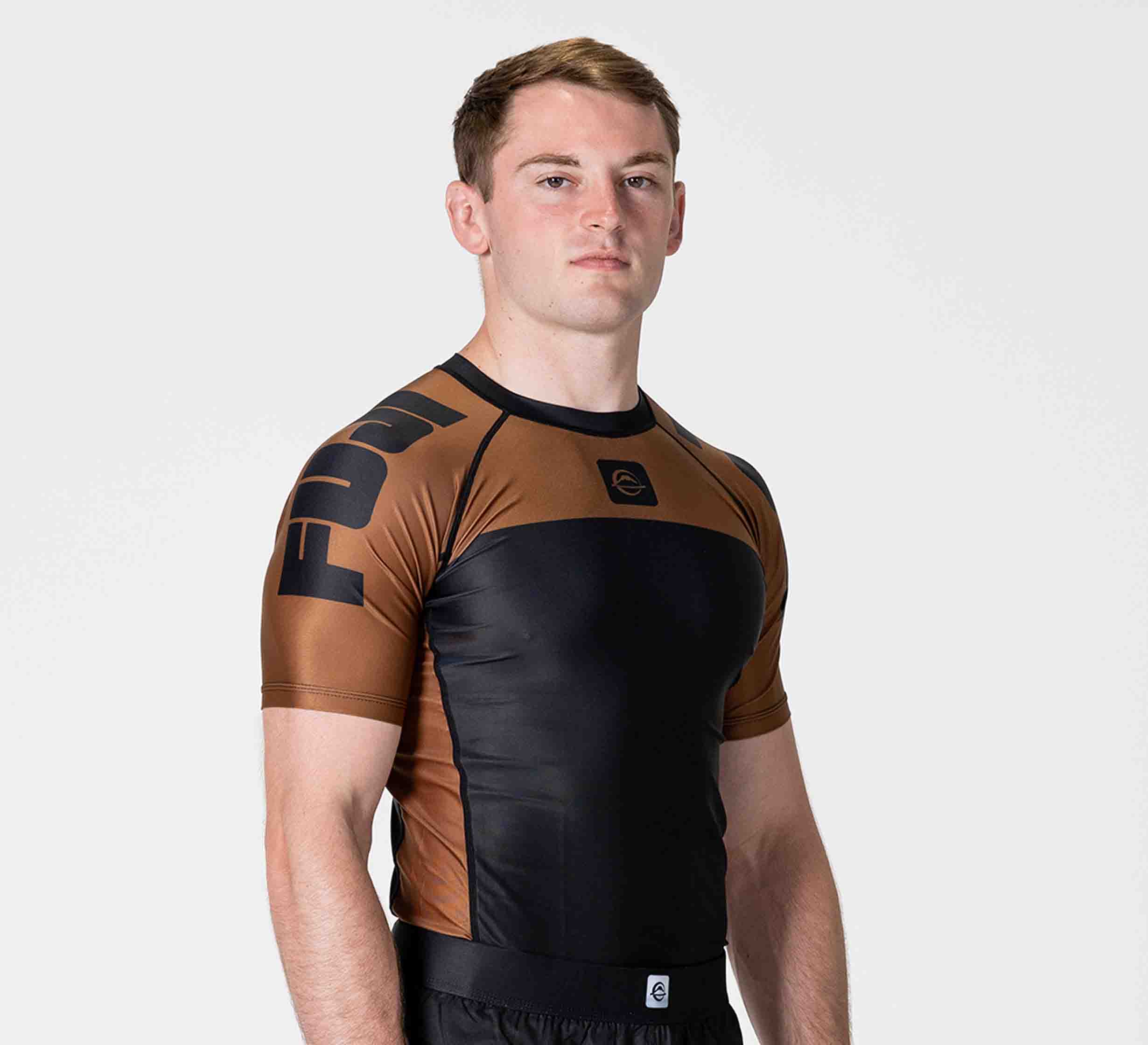
Main photo: FUJI Sports; illustrative short-sleeved rashguard product photograph.
The takeaway
Choose long or short sleeves after checking the fit of the whole rashguard and the outfit in which you will use it. Test the cuffs, shoulders, and torso during ordinary movement, then confirm any rules that apply to your class or competition.
Let comfort and preference guide the remaining choice. Sleeve length does not replace appropriate clothing care, and it does not need a grand technical explanation to be right for you.
Match your kit to the class you plan to attend
Explore BJJ gyms on Let's Roll, then ask the academy about gi and no-gi uniform expectations before buying new equipment for its sessions.
FAQ
Are long sleeve rashguards better for BJJ? Not universally. Fit, fabric, comfort, class format, and personal preference all matter. Test the garment in your actual training setup rather than assuming sleeve length decides quality.
Can I use a short sleeve rashguard in competition? Check the specific organizer's requirements for your division. Sleeve length is only one part of uniform compliance, alongside fit, markings, color, and other rules.
Should I wear the same rashguard under a gi and in no-gi? You can if it fits both uses and the relevant policies allow it. Test the combination under the jacket because layering can change how the sleeves and torso move.
Does a long sleeve rashguard replace other hygiene precautions? No. Follow garment-care instructions, academy hygiene rules, and appropriate medical guidance for any concern that affects participation. Extra fabric does not settle whether you should train.

Kit Langford
Kit Langford covers the louder parts of jiu-jitsu — the marketing claims, the arguments, the gear that promises more than gear can deliver. The jokes are expected to survive a fact-check.
Related Posts
Lucas “Hulk” Barbosa’s best work is in the details
Lucas Barbosa’s nickname explains the first impression. His gi world title, no-gi record, and 2022 ADCC final give viewers more to study.

João Miyao’s record deserves its own first name
João Miyao’s adult world title and 2026 Master1 results tell a distinct story, even when his brother appears beside him on the podium.

Jena Bishop made time for a second sporting life
Jena Bishop’s 2026 PFL title followed a deliberate move from championship jiu-jitsu into learning a different sport.
Comments (0)
Loading comments...