
Your rashguard has spent enough time in the bottom of the bag
Quick answer: Wash a used rashguard after training and follow the care label for its temperature and drying method. Keep it away from exposed Velcro and other items that can catch the fabric. Product instructions vary, so don't apply one brand's drying advice to everything in your drawer or assume a routine wash is a disinfection protocol.
The rashguard has already done its part. It survived the rounds, kept its sleeves attached, and carried you through the final drill. Its reward should not be forty-eight hours folded around a damp towel in a zipped bag.
Most of the useful work happens before you buy anything new. Empty the bag, read the label, wash the clothing properly, and put it away only when the process is finished. The difficult part is less the chemistry than remembering that training laundry continues after you sit down.
The label belongs to this particular shirt
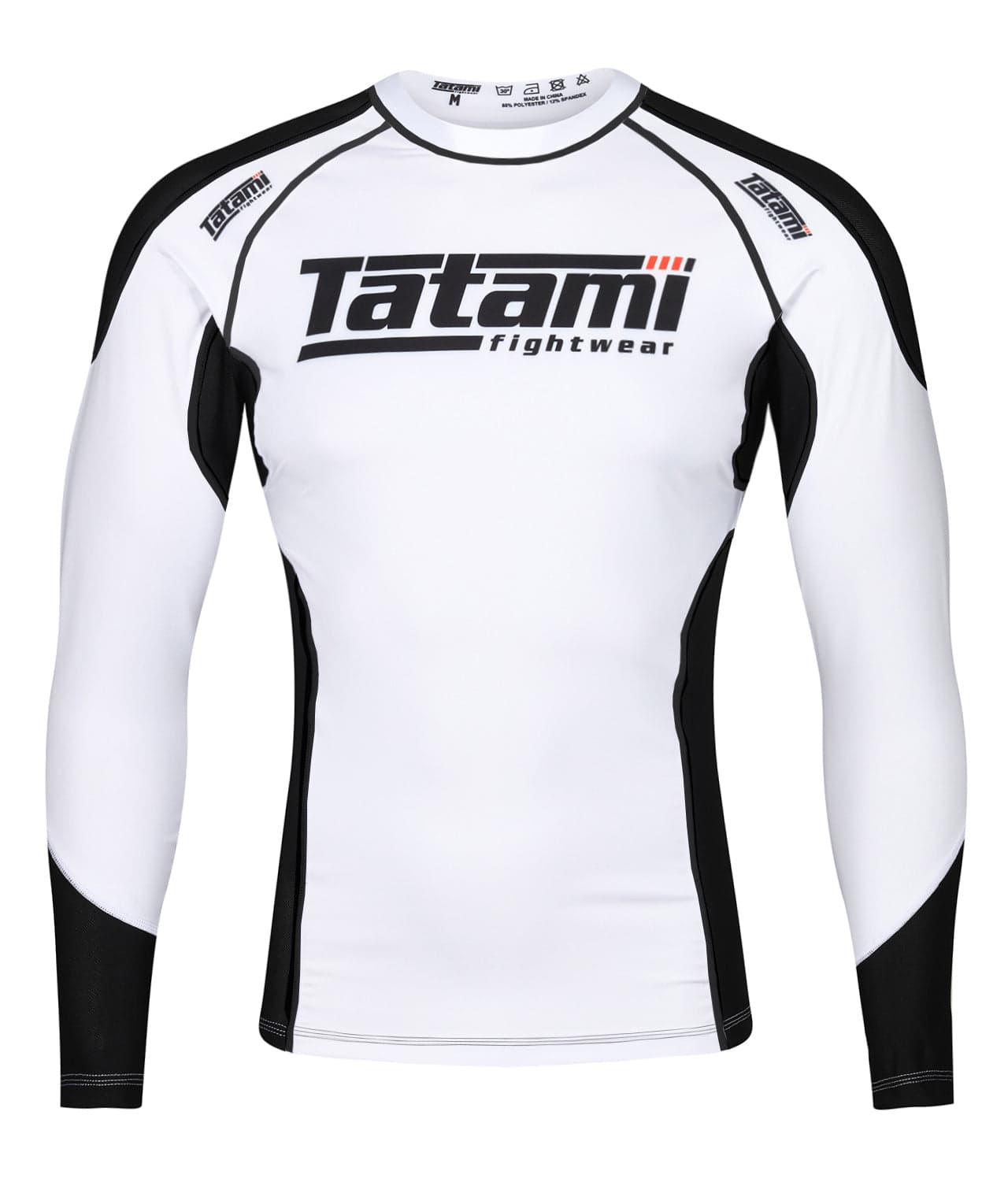
Two rashguards can look similar and come with different care instructions. Tatami's Technical Long Sleeve model specifies a cold 30°C wash and hang drying. FUJI's Flow Tech model specifies cold machine washing, low tumble drying, and no bleach. One product page is not a rule for the entire category.
Check the garment in your hand. If you cut the label out because it bothered you, save the instructions from the exact product page. A photograph on your phone is enough. Keep the model name with it, especially if your drawer contains several nearly identical black tops.
When the sewn label and the current website disagree, ask the manufacturer. Products can change between batches. Guessing based on the instructions for a newer version is an unnecessary experiment with a shirt you already own.
This also matters in a shared household. Someone helping with the laundry cannot know that one training top has different instructions unless the information is available before the load starts.
Empty the bag before the evening gets comfortable
Make unpacking part of arriving home. Remove the used rashguard and towel, check the side pockets, and separate clean items from the gear that went through class. A spare top that never left its pouch should not have to spend the night pressed against everything that did.
If you cannot wash immediately, follow a routine that keeps used gear separate and doesn't leave it sealed in the training bag. Don't mistake airing it out for washing it. The next session requires clean clothing, even if yesterday's top has become dry enough to seem usable again.
A small washable bag for transporting used kit can make the trip home less messy. It still needs to be emptied and cared for according to its own instructions. Moving the wet clothing into a different closed bag is a transport solution, not the end of the job.
Put the bag somewhere you will notice it. A system that depends on remembering a hidden compartment at midnight is asking a tired person to become more organized than they were at eight o'clock.
Keep exposed Velcro out of the load
Tatami's care guidance specifically warns that Velcro can pull fibers from rashguards and spats. It recommends avoiding contact with Velcro items and using a delicate laundry bag to reduce snagging in the machine. Grappling shorts and other equipment deserve a quick inspection before sharing a wash.
This is an easy place to prevent avoidable wear. Look at what is actually going into the drum rather than assuming everything used at the gym belongs in one load. Close fastenings where the item's instructions allow, and keep garments with exposed hooks away from soft training tops.
A laundry bag is useful, but it does not excuse overfilling the machine or ignoring labels. Give the clothing room to wash and rinse properly. If you use a shared laundry room, check the drum before loading it; the previous user's forgotten object is not part of your training kit.
Afterward, inspect obvious snags instead of pulling at them absentmindedly. If a seam is opening, ask the manufacturer or a repair professional whether it is fixable before using it for another round.
Measure detergent instead of rewarding a hard session
A difficult class does not require a celebratory extra pour of detergent. Follow the detergent's instructions for the load and your machine. If the product specifies different amounts for different conditions, use those directions rather than treating the cap as a challenge to fill.
Patagonia's fabric-care explanation notes that waxes and softeners in some laundry products can interfere with wicking treatments. That is a reason to be cautious about adding fabric softener to technical clothing, not a reason to invent a complicated replacement recipe. Check the rashguard manufacturer's guidance first.
Keep the routine understandable. If several people wash the kit, label any garment-specific requirements clearly. A shelf containing five similar bottles and an unwritten set of exceptions is not much of a household system.
Don't mix cleaning products in search of a stronger result. Use them only as directed. If a product is unsuitable for the material, adding another product does not make the combination suitable. A persistent problem is better investigated than covered with more fragrance.
Drying is where the instructions can diverge
Some manufacturers tell you to hang dry a particular rashguard; others permit a low dryer setting. Respect the difference. Don't put a hang-dry garment through high heat because another shirt has survived it. Clothing that remains in one piece has not necessarily been treated according to its care instructions.
For general sports hygiene, the CDC's athlete guidance recommends washing clothing after each use and drying it completely in a dryer. That recommendation is stricter than the hang-dry instruction supplied with some garments. The two sources address different concerns, and neither should be silently rewritten to make them agree.
If your gym or clinician has given infection-control instructions that conflict with a garment label, ask for appropriate guidance and use kit compatible with the required process. Don't treat this fabric-care article, a cold wash, or a fresh smell as proof that contaminated clothing has been disinfected.
For ordinary storage, finish the prescribed drying process before folding the shirt into a drawer. Check cuffs and seams as well as the broad panels. Packing something away because most of it feels dry is a small shortcut that creates tomorrow's chore.
Give repeated odor a practical investigation
If a clean-looking shirt still smells unpleasant, check the process before declaring the fabric beyond rescue. Did the load complete? Was the machine overloaded? Did the clothing sit wet for hours afterward? Have you followed the washer manufacturer's cleaning instructions? These are questions you can answer without buying a new additive.
The gym bag and towel also deserve attention. A properly washed shirt can be placed straight back into a bag that hasn't been cleaned according to its own care instructions. Check the whole route from the machine to the mat, not just the shirt in isolation.
Avoid treating odor as a medical test. A pleasant smell doesn't establish that something is safe, and an unpleasant one doesn't identify a particular organism. For persistent garment problems, ask the clothing maker about an approved cleaning method. For a suspected skin infection, seek medical advice rather than trying to solve it by changing the wash cycle.
There is no need to turn every laundry problem into a search for the strongest product. Begin with the step that was missed.
A second clean set changes the timetable
Owning enough kit for your actual wash schedule is more useful than owning a large collection with no clean item ready. If you train on consecutive days, count backward from when you can wash and dry clothing. The number of tops you need follows from that routine.
Before buying another one, check:
How often you train between realistic laundry opportunities.
Which drying methods the garments allow.
Whether the same top is needed for gi and no-gi sessions.
How much space you actually have for drying and storage.
A spare can prevent the rushed decision to wear something again. It can also stop a late laundry load from determining whether you attend class. You don't need a different design for every day of the week; you need a clean set when the next session starts.
If you are planning to visit another gym, add its clothing requirements to the check. The best backup is one you can actually wear there.
Travel turns laundry into part of the booking
A hotel sink is not automatically a complete laundry plan for a week of training. Before a camp or tournament trip, check what facilities are available and whether the room permits the drying arrangement you expect to use. Ask about turnaround times if someone else will wash the clothing.
Pack enough clean kit for the interval between those opportunities. Keep the care instructions accessible if a laundry service is involved. A bag of technical clothing handed over with no explanation may receive the standard process used for everything else.
Before checking out, separate used gear from the clothes you will wear home. Deal with the used kit promptly when you arrive. The return trip is still part of the routine; the zip on the suitcase has no special cleaning properties.
If the itinerary has no credible way to wash and dry training clothes, change the packing or the schedule before leaving. That is easier than improvising after the second day.
Main photo: Tatami Fightwear; Technical Long Sleeve Rash Guard product image.
The takeaway
A good rashguard routine is specific to the garment and simple enough to repeat. Read its label, protect it from obvious snagging, use cleaning products as directed, and finish the drying process before storage. Most of that costs attention rather than another purchase.
Keep fabric care and infection-control guidance distinct. Follow appropriate health advice when it applies, and don't make a manufacturer's cold-wash instruction promise more than it does. For the ordinary evening after class, begin by opening the bag.
Have a clean set ready for the next session
Find a local open mat, and check the host's clothing requirements before packing your kit.
FAQ
Can every rashguard go in the dryer? No. Some models allow low tumble drying and others specify hang drying. Check the exact garment label. Where infection-control guidance applies, ask how to reconcile it with the clothing's care requirements.
Should I wash a rashguard after every session? Yes. The CDC's athlete guidance recommends washing clothing after each use. Airing out a used top is not a replacement for washing it before the next training session.
Can I wash rashguards with grappling shorts? Check both labels and the shorts' fastenings. Exposed Velcro can snag rashguard fabric. Separating incompatible items and using an appropriate laundry bag can help reduce that kind of wear.
Do I need a special homemade soak? Not as a default. Start with the manufacturer's instructions and the detergent label. Don't mix cleaning chemicals or assume an internet recipe disinfects clothing. Ask the manufacturer about persistent fabric or odor problems.

Owen Bellamy
Owen Bellamy writes for the person training twice a week around a job. Nothing he suggests requires quitting the job.
Related Posts

Mikey Musumeci gives up the belt to make room for MMA
Musumeci is vacating his UFC BJJ title to focus on MMA training. What he is leaving, what continues, and why the transition matters.

IBJJF membership: finish the paperwork before the deadline
IBJJF membership and tournament entry are separate steps. Plan documents, professor approval, renewals, and junior accounts before registration closes.
Choosing a BJJ seminar worth your time and travel
Choose a BJJ seminar by the subject, teaching format, access, and total cost. Know what to ask the host before buying a ticket.
Comments (0)
Loading comments...