
Kyra Gracie: a competitive record beyond the family name
Quick answer: Kyra Gracie won ADCC titles in 2005, 2007, and 2011, including the first women's under-60kg championship in the event's history. Her gi achievements include lightweight and open-class gold at the 2008 Worlds. Teaching and the opening of Gracie Kore in Rio later added another chapter to a career that had already earned its own competitive identity.
In 2005, ADCC finally put women's divisions on its world championship program. Kyra Gracie won the under-60kg title. That is a sporting result with a date, an opponent, and a bracket behind it, which is a better place to begin than another paragraph about having a famous surname.
The surname belongs in the story, of course. It explains part of the environment in which she grew up and some of the attention that followed. It cannot explain away three ADCC gold medals or make the women across from her disappear. Those athletes had names and ambitions of their own.
The family gave her an introduction, not a completed career
BJJ Heroes' biography describes Kyra growing up in a household with her uncles Ralph, Ryan, and Renzo Gracie. Informal childhood jiu-jitsu became more regular training around age 11. She later trained extensively with Alexandre Soca and received her black belt from Carlos Gracie Junior.
That history offers more detail than the easy image of a child automatically inheriting a profession. Being surrounded by a sport can make it familiar. Building a competitive record still requires entering events and facing people whose interest is in beating you.
It is also worth keeping the different roles visible. Family members, training partners, and instructors do not all contribute in the same way. The person who first makes the mat feel normal may not be the person coaching a particular championship preparation.
For parents whose children train, resist turning this biography into a family assignment. A shared interest is enough. Your child does not owe the academy, a surname, or a proud parent a professional career because they started young and enjoy wearing a gi.
Before her first ADCC gold, she was already teaching
An ADCC report published in April 2005 places Kyra in New York preparing with Renzo for the coming championship. It also records that she had begun teaching women there roughly three months earlier. At the time of that interview, she was a brown belt.
The teaching detail changes the shape of the story. She was helping develop a group of students before the result that would become one of her best-known credentials. Competition and instruction were overlapping activities rather than two tidy career phases.
Do not turn that into a claim that every successful competitor is automatically a good teacher. A medal and a well-run beginners' class involve different work. The detail is valuable because it shows what she was doing, not because it proves every later teaching outcome.
For a gym trying to build women's participation now, there is a practical question here: what happens after the first interested student arrives? A welcoming advertisement needs an actual class, suitable partners, and somebody who notices whether the newcomer returns. Visibility can bring a person through the door. The ordinary experience inside still matters.
The 2005 title came through a real international field
ADCC's contemporary retrospective identifies 2005 as the debut of women's competition at the championship, with two weight categories and an absolute division. Kyra won under 60kg; Juliana Borges won the heavier division and the women's absolute.
That second name matters. The first women's edition was not a solo achievement by its most recognizable surname. It was a field of athletes taking an opportunity that had not previously existed at that tournament.
Keith Mills' report on the women's competition records Kyra's path through Erica Montoya, Megumi Fujii, and Leka Vieira. The final brought Kyra and Vieira together after each had already dealt with demanding opposition.
The names are worth reading slowly. A historical final becomes much less interesting if one athlete is reduced to an unnamed obstacle. Vieira and Fujii, in particular, are reasons to keep exploring the event after you finish Kyra's matches. A profile can introduce its subject while leaving the door open to everybody else who helped make the competition worth remembering.
Two more ADCC titles extended the story across six years
The official 2007 results list Kyra first in women's under 60kg, ahead of Tara LaRosa and Takayo Hashi. Four years later, the 2011 podium places her above Michelle Nicolini and Luanna Alzuguir in the same named category.
That produces three championship years: 2005, 2007, and 2011. They were not three consecutive editions. Keeping the years visible is a small courtesy to the reader and to the athletes who won between them.
The interval also helps explain why one highlight cannot stand for her entire ADCC career. The opponents changed. The final changed. An athlete winning again after several years gives the viewer a chance to compare decisions across different settings without pretending nothing in the sport moved.
If you are choosing footage, watch a full bout before selecting the most dramatic finish. Notice how each athlete tries to establish a position from which they can actually attack. Even a viewer who does not know the names of every guard can follow who is creating the exchange and who is trying to interrupt it.
The 2008 Worlds double gold needs its proper category label
At the 2008 Worlds, Kyra won the women's lightweight and open-class divisions. The official results label those women's categories brown/black, reflecting the combined divisions of the period. In lightweight, Luana Alzuguir finished second; in the absolute, Ana Laura Cordeiro took silver.
That category detail is useful when comparing old records with modern ones. Tournament structures are part of sporting history. A present-day label should not be pasted onto an earlier event simply because it makes a biography easier to format.
The double gold itself is straightforward. She won at her weight and in the open category at the same championship. A reader does not need an inflated lifetime tally to understand the significance of that weekend.
The gi and no-gi distinction helps explain why these results sit beside the ADCC titles rather than duplicating them. There are different grips and different competitive conditions to solve. Success in both formats is a reason to examine the athlete's choices more closely, not to assume that the same match happened twice in different clothing.
Gracie Kore turned the name on the podium into a school
Graciemag's academy profile dates the opening of Gracie Kore to 2018 at Vogue Square Barra in Rio de Janeiro. It describes a school serving women, men, children, and athletes, with Joao Alberto Barreto among Kyra's technical advisers.
That is a different kind of public work from preparing for a bracket. A school must make sense to the person who wants a first class, the child whose parent is asking about supervision, and the experienced practitioner looking for appropriate training. They may share a room while needing different explanations.
This is a researched profile, not a claim that we attended classes there. Anyone considering a visit should confirm the current schedule, visitor policy, and available programs directly with the academy. A school opening in 2018 does not tell you which class runs next Tuesday.
For other gym owners, the interesting subject is the breadth of the audience. A champion's name may attract attention, but a prospective student still needs to know where to begin. Clear class descriptions and a useful response to a simple inquiry are part of making that attention count.
For readers considering their own first class, the BJJ guide for women addresses getting started and choosing a welcoming training environment.
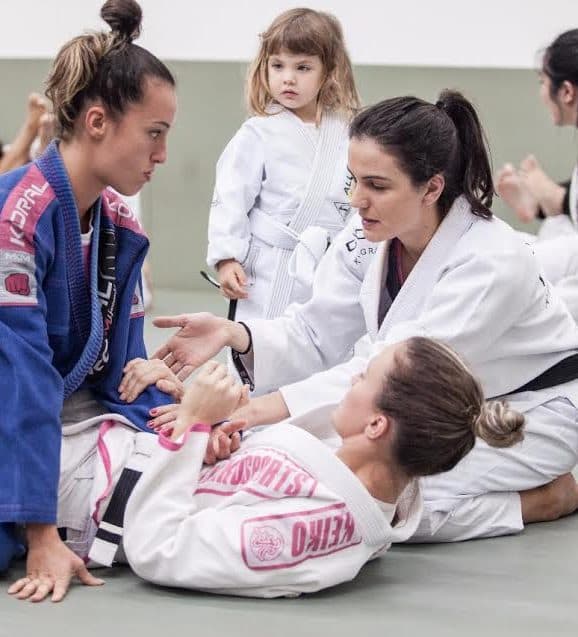
Photo: Hertz Oliveira / Graciemag; Kyra teaching at Alliance Sao Paulo.
Representation works best when the athlete remains an athlete
Graciemag's photographic profile includes competition, instruction, and television work. It also records her black belt promotion in 2006 at age 21. These are different parts of a public career, and the profile need not collapse them into one image.
There is a familiar imbalance in writing about women in grappling: the appearance, family relationship, or inspirational role can occupy more space than the actual matches. Kyra's results provide an easy way to avoid that. Name the event. Name the division. Name the opponent.
Representation still matters as a subject, but nobody can quantify the number of women who began jiu-jitsu because of one athlete from a few photographs and tournament records. We should not manufacture that number or assign a stranger's motivation to a convenient role model.
A gym can make a more concrete contribution. Put women's matches on the screen during a watch night. Know the competitors' names. Discuss a grip exchange with the same attention given to the men's final. The ordinary seriousness of that conversation does more than a poster that is admired and then forgotten.
Use her record as an invitation to learn more names
A Kyra Gracie viewing session should introduce you to more than Kyra Gracie. The opponents and medalists across her career provide a useful starting list:
Leka Vieira and Megumi Fujii from the 2005 ADCC field.
Tara LaRosa and Takayo Hashi from the 2007 podium.
Michelle Nicolini and Luanna Alzuguir from 2011.
Ana Laura Cordeiro from the 2008 Worlds open class.
Pick a competitor you do not know well and follow that person's record next. You do not have to arrange everybody into a greatest-ever ranking. Understanding who competed against whom, under which rules, is already a substantial improvement on remembering only the name that appeared in a headline.
For training partners, carry that attention into the room. Read our guide to being a good training partner, then apply it without treating a woman as a novelty pairing. Ask what kind of round she wants, respect the answer, and train the position in front of you.
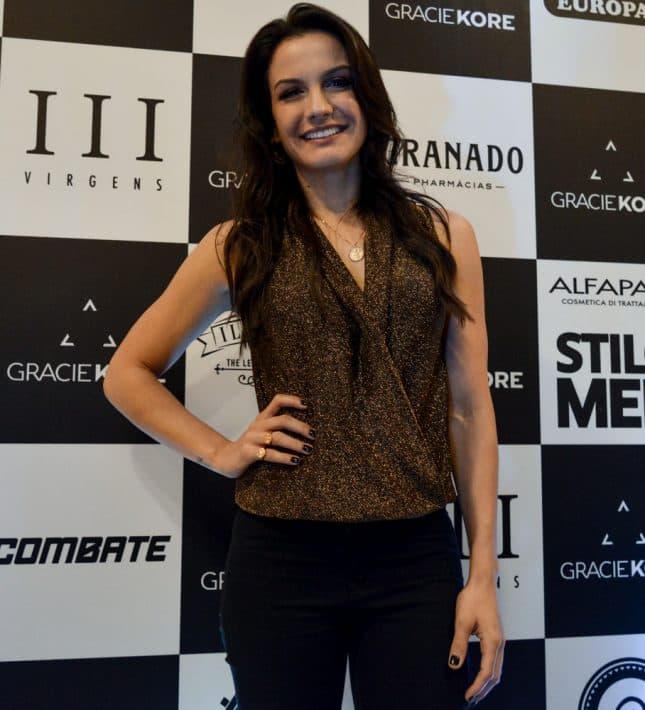
Main photo: Carlos Arthur Jr. / Graciemag; Gracie Kore opening, 2018.
The takeaway
Kyra's competitive career has enough substance to support a profile without borrowed family achievements. The first women's under-60kg ADCC title, two later ADCC golds, and the 2008 Worlds double give readers specific events to understand and revisit.
Her teaching and academy work belong alongside those results. So do the names of the women she faced. Remembering the athlete accurately means keeping the surrounding sport in the picture, including the competitors whose medals ended up one step lower on the podium.
Find a place to begin training
Browse jiu-jitsu academies and ask about beginner classes, women's programs, and the options that fit your schedule.
FAQ
Which years did Kyra Gracie win ADCC? She won in 2005, 2007, and 2011. The official records list her in the women's under-60kg category.
Was Kyra the only women's champion at ADCC 2005? No. She won under 60kg, while Juliana Borges won the heavier weight division and the women's absolute. Several women's brackets were part of that first edition.
What did she win at the 2008 Worlds? She took lightweight and open-class gold. The IBJJF's historical results label those women's divisions brown/black.
When did Gracie Kore open? Graciemag dates the Rio academy's opening to 2018. Check directly with the school for current programs and visitor arrangements rather than relying on an old profile for today's timetable.
Related Posts

Training with women in BJJ: listen before you roll
Be a better BJJ training partner with women: agree on intensity, provide honest resistance, ask before coaching or filming, and respect a declined round.
Bia Mesquita: the grappling record behind the MMA newcomer
Follow Bia Mesquita's path from 2014 Worlds double gold and a 2017 ADCC title to her 2025–2026 UFC results, with dated sources and match context.
Ffion Davies: winning across gi and no-gi
Explore Ffion Davies's 2022–2023 championship results, from gi Worlds and ADCC gold to a World No-Gi double, with context for the matches behind the medals.
Comments (0)
Loading comments...