

Isaque Bahiense and the job beyond his own bracket
Quick answer: Isaque Bahiense is a 2018 adult black belt IBJJF world champion and a leader of Dream Art. His career is useful to study because competitive decisions and athlete development sit beside each other. A strong individual record explains his standing, while the team adds a separate responsibility that no single final can measure.
In October 2022, Isaque Bahiense won a Grand Prix in two different ways. He submitted Andre Porfirio in the semifinal, then finished the final against Manuel Ribamar level on points and ahead on advantages. The same evening required an open route to a finish and a much narrower route to a result.
That is a better opening to his career than a stack of medals. It places the competitor inside a problem. The next opponent will not necessarily offer the position that worked against the last one.
Bahiense also helped build Dream Art, which makes the question larger. A competitor can prepare for his own bracket. A team leader must help create conditions in which other people can prepare for theirs.
A borrowed beginning became a serious commitment
BJJ Heroes’ account places Bahiense’s childhood in Bangu, Rio de Janeiro, and describes coach Fabio Andrade giving him a gi when equipment costs had kept him from accepting an invitation to train. It is a small, concrete intervention in a story that later includes world championships.
The useful detail is the equipment. An invitation alone did not resolve the obstacle. Providing the item needed to enter the class did. We cannot infer every later choice from that moment, but we can distinguish encouragement from practical access.
I think sports profiles often hurry past this difference. They praise an athlete’s determination without noticing the person who made the first session possible. Keeping Andrade in the account does not reduce Bahiense’s work. It explains one condition under which that work could begin, without inventing a conversation between them or a promise about the future.
That first practical obstacle also suggests a useful question for a local school considering how to welcome beginners. If somebody says they want to try a class, what remains between the invitation and attendance? Equipment may be one answer; unfamiliar booking arrangements may be another. The relevant response depends on the actual person. A school need not promise to eliminate every barrier in order to explain the next step clearly. The first gi in Bahiense’s story was a practical response to a practical obstacle. A welcoming plan should get that specific.
The world title arrived before the team became the headline
Bahiense’s 2018 adult black belt world title belongs at the center of his competitive credentials. The following season brought a Pan title and another European title, according to the same historical record. He had already established himself individually before Dream Art became the shorthand attached to his name.
Those achievements make a useful distinction between expertise and responsibility. An athlete can demonstrate that he knows how to prepare himself. Leading other athletes asks whether knowledge can be communicated, training can be organized, and different needs can be accommodated. There is overlap, but the jobs are not identical.
The Let’s Roll profile of Fabio Gurgel examines a related change in responsibility. In Bahiense’s case, Gurgel and Michael Langhi appear in his black belt history. That connection supplies context for his development. It should not become an unsupported claim that a later team reproduced any one coach’s methods unchanged.
The 2022 semifinal supplied a concrete example
The IBJJF’s own Grand Prix recap describes Bahiense taking Porfirio down, working through several guards, and finishing with a kimura. The report identifies a sequence rather than merely attaching the word pressure to a winner. It also records Porfirio generating offense before Bahiense secured the finish.
That last part matters. An opponent’s attack is information, even inside a match that the eventual winner controls. Omitting it produces an easier story and a worse explanation. The passing route existed alongside risks Bahiense had to address.
For a viewer, the productive question is where one phase changed into the next. A takedown creates a top position; that position still contains a guard; a pass still needs enough control to support an attack. The official recap gives viewers a useful sequence to look for in the recording, with Porfirio’s offense still part of the exchange.
The final did not need the same ending
The same official results list the Ribamar final at 0–0 on points and 2–0 on advantages for Bahiense. That result should remain in its original terms. Calling it a points victory without the accompanying score would make the margin sound different from the one recorded.
A finish and an advantage decision do not provide interchangeable information. One match ended early through a submission; another required the scoring system to separate the competitors. The title depended on both. There is no need to make the second match resemble the first in order to appreciate the evening.
It also complicates the idea that a recognizable style must produce a recognizable ending. An athlete can prefer top control and still meet an opponent who changes which exchanges are available. The practical work is responding to that person. The description of a game should be flexible enough to survive an actual opponent entering it.
A close final and a longer match tell different stories
In its preview of the March 2023 Tainan Dalpra match, the IBJJF recalled their 2021 Worlds final, which Dalpra won 8–6. The announced rematch would last 30 minutes. The time limit changed the context before either athlete took a grip.
The subsequent Grappling Insider report records Dalpra winning 19–2. Keeping that result in a Bahiense profile prevents a flattering selection of evidence from becoming the whole career. A title and a difficult defeat can both be relevant, without making the latter a verdict on his ability to coach.
My reading is that those meetings are worth comparing precisely because their scorelines differ. They do not establish why every exchange changed, or what Bahiense privately made of the second match. They give viewers a pair of competitive problems and a reason to examine the work between the beginning and the final score.
Dream Art adds a second measure of success
The IBJJF identifies Bahiense as Dream Art’s leader and describes its role in developing emerging athletes. That role puts other athletes’ development beside his own preparation.
A team story still needs those distinctions even when the intention is positive. Supporting athletes can mean several kinds of work, and a famous name should not stand in for the details. Nor should an individual’s result be treated as a complete audit of everyone around them.
For readers, it helps to separate the questions:
What has Bahiense demonstrated in his own matches?
What does a public source establish about the team’s organization or opportunities?
Which claimed benefit would require a participating athlete’s account to assess?
The individual record and the team’s work deserve attention on their own terms. A single final cannot measure both.
Take one decision from the career, not a whole identity
There is plenty here for a recreational practitioner, although copying an elite competitor’s schedule would be an odd place to start. A person training around work has different constraints. The useful transfer is smaller: define the problem before deciding what a good outcome looks like.
For instance, in a hypothetical positional round, a coach might ask the passer to maintain a settled position after clearing the legs rather than immediately chasing a submission. That is a proposed exercise, not a description of Dream Art’s practice. It illustrates why the outcome needs to fit the training question.
Bahiense’s Grand Prix evening makes that idea visible at a different level. The result required more than one kind of successful exchange. A complete match offers enough context to ask what the athlete was responding to, while a highlight often removes the resistance that made the eventual choice necessary.
The takeaway
Isaque Bahiense’s career has two connected lines: the competitor answering his own opponents and the team leader helping other competitors develop. Neither line should swallow the other. His world title establishes one kind of achievement; Dream Art introduces a different set of questions about the work around the athlete.
Start with the 2022 Grand Prix if you want a compact example of the competitive side. Keep the semifinal and final together, including their different endings. The contrast gives the title more shape than another paragraph declaring that the winner wanted it most.
Study with a coach
Use Let’s Roll’s gym directory to compare local training options and ask how competition preparation fits the regular class schedule.
FAQ
Who awarded Isaque Bahiense his black belt? BJJ Heroes identifies Fabio Gurgel and Michael Langhi in his black belt history, following earlier development under Fabio Andrade. That coaching background spans more than one stage of his career.
When did Isaque Bahiense become an IBJJF world champion? He won an adult black belt world title in 2018. Keep that category attached to the claim, since his earlier record also includes championships at colored belts.
Did he win the 2022 IBJJF medium-heavy Grand Prix? Yes. The official recap records a kimura submission over Andre Porfirio in the semifinal and a final win over Manuel Ribamar with points level at 0–0 and advantages 2–0.
Does Dream Art explain every result in his career? No. A team provides context, but an individual match still has its own opponent, rules, and decisions. This profile does not claim access to Dream Art’s private operations or attribute an athlete’s performance to an unverified training method.

Miles Serrano
Miles Serrano writes about competitors and the decisions that shaped their careers. He is more interested in the adjustment someone made in the third minute than in the medal count afterward.
Related Posts
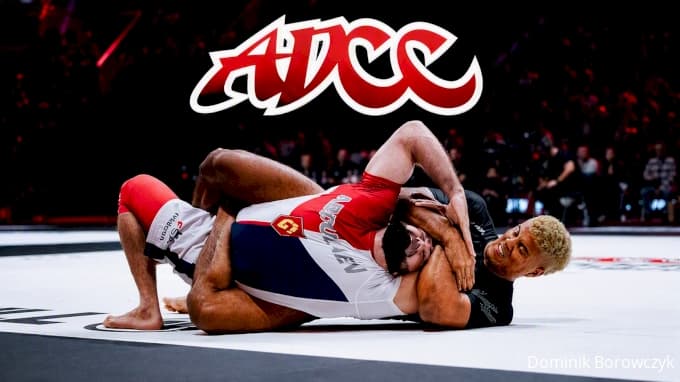
ADCC 2026 results: the stories that survived the predictions
ADCC 2026 results from Krakow: Jaworski, Maciel, Crevar, Pena, the women's champions, and the superfight outcome, with official podiums and match context.
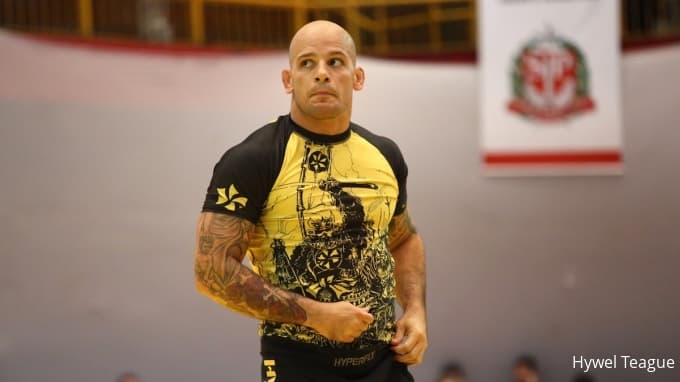
Xande Ribeiro: from absolute titles to the masters mat
Explore Xande Ribeiro's absolute Worlds victories, two ADCC titles, Six Blades, and the distinction between his 2022 Worlds farewell and later masters gold.
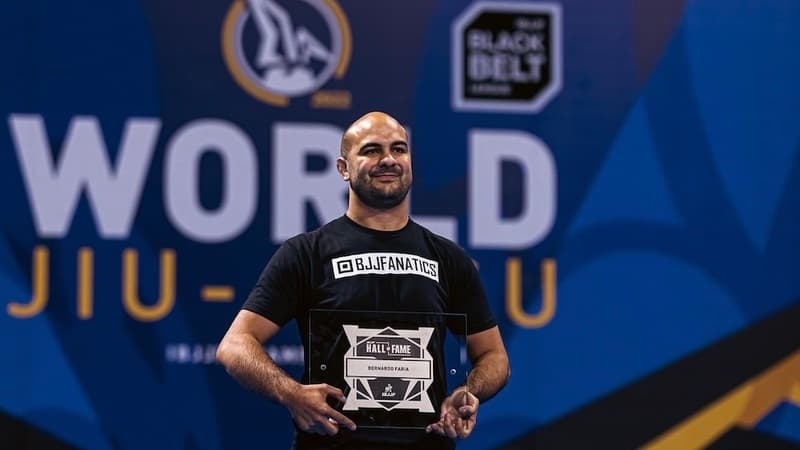
Bernardo Faria: the champion who kept asking questions
Follow Bernardo Faria from Juiz de Fora and Alliance to the 2015 Worlds and BJJ Fanatics, with context on his competition game and move into teaching.
Comments (0)
Loading comments...